How do you know... ON/KUN and beyond

今日は先生と勉強しに行きます。その後で、第20課の質問を聞きます。ありがとう。
--
Teacher canceled on me...


1.[FONT=&quot] [/FONT][FONT=&quot]食べるー>召し上がる。[/FONT]
2.[FONT=&quot] [/FONT][FONT=&quot]言うー>おっしゃる。[/FONT]
3.[FONT=&quot] [/FONT][FONT=&quot]いるー>いっらしゃる。[/FONT]
4.[FONT=&quot] [/FONT][FONT=&quot]するー>なさる。[/FONT]
5.[FONT=&quot] [/FONT][FONT=&quot]寝るー>お休みになる。[/FONT]
6.[FONT=&quot] [/FONT][FONT=&quot]来るー>いっらしゃる。[/FONT]
7.[FONT=&quot] [/FONT][FONT=&quot]見るー>ご覧になる。[/FONT]
8.[FONT=&quot] [/FONT][FONT=&quot]飲むー>召し上がる。[/FONT]
9.[FONT=&quot] [/FONT][FONT=&quot]住んでいるー>住んでいっらしゃる。[/FONT]
10.[FONT=&quot] [/FONT][FONT=&quot]読んでいるー>よんでいっらしゃる。[/FONT]
11.[FONT=&quot] [/FONT][FONT=&quot]くれるー>下さる。[/FONT]
1.[FONT=&quot] [/FONT][FONT=&quot]分かるー>お分かりになる。[/FONT]
2.[FONT=&quot] [/FONT][FONT=&quot]調べるー>お調べになる。[/FONT]
3.[FONT=&quot] [/FONT][FONT=&quot]読むー>お読みになる。[/FONT]
4.[FONT=&quot] [/FONT][FONT=&quot]聞くー>お聞きになる。[/FONT]
5.[FONT=&quot] [/FONT][FONT=&quot]座るー>お座りになる。[/FONT]
6.[FONT=&quot] [/FONT][FONT=&quot]立つー>お立ちになる。[/FONT]
7.[FONT=&quot] [/FONT][FONT=&quot]乗るー>お乗りになる[/FONT]
8.[FONT=&quot] [/FONT][FONT=&quot]入るー>お入りになる。[/FONT]
[FONT=&quot]9. 待つー>お待ちになる[/FONT]
Untitled02-1.webp

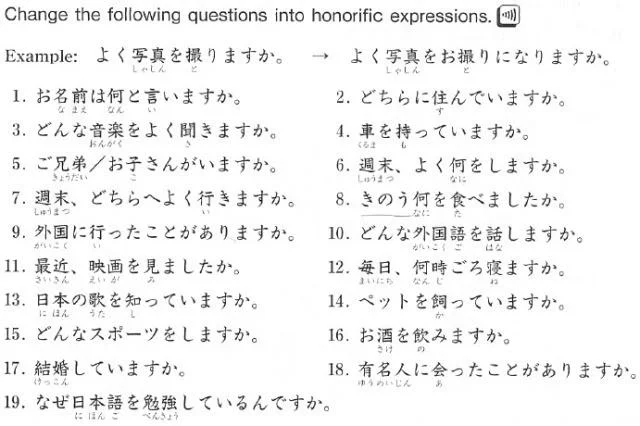
1.[FONT=&quot] [/FONT][FONT=&quot]お名前は何とおっしゃいますか?[/FONT]
2.[FONT=&quot] [/FONT][FONT=&quot]どちらに住んでいっらしゃいますか?[/FONT]
3.[FONT=&quot] [/FONT][FONT=&quot]どんな音楽をよくお聞きになりますか?[/FONT]
4.[FONT=&quot] [/FONT][FONT=&quot]車を持っていっらしゃいますか?[/FONT]
5.[FONT=&quot] [/FONT][FONT=&quot]ご兄弟・お子さんがいっらしゃいますか?[/FONT]
6.[FONT=&quot] [/FONT][FONT=&quot]週末、よく何をなさりますか?[/FONT]
7.[FONT=&quot] [/FONT][FONT=&quot]週末、どちらへよくいっらしゃいますか?[/FONT]
8.[FONT=&quot] [/FONT][FONT=&quot]昨日何を召し上がりましたか?[/FONT]
9.[FONT=&quot] [/FONT][FONT=&quot]外国にいっらしゃったことがありますか?[/FONT]
10.[FONT=&quot] [/FONT][FONT=&quot]どんな外国語をお話になりますか?[/FONT]
11.[FONT=&quot] [/FONT][FONT=&quot]最近、映画をご覧になりましたか?[/FONT]
12.[FONT=&quot] [/FONT][FONT=&quot]毎日、何時ごろお休みになりますか?[/FONT]
13.[FONT=&quot] [/FONT][FONT=&quot]日本お歌を知っていっらしゃいますか?[/FONT]
14.[FONT=&quot] [/FONT][FONT=&quot]ペットを飼っていっらしゃいますか?[/FONT]
15.[FONT=&quot] [/FONT][FONT=&quot]どんなスポーツをなさりますか?[/FONT]
16.[FONT=&quot] [/FONT][FONT=&quot]お酒を召し上がいますか?[/FONT]
17.[FONT=&quot] [/FONT][FONT=&quot]結婚していっらしゃいますか?[/FONT]
18.[FONT=&quot] [/FONT][FONT=&quot]有名人のお会いになったことがありますか?[/FONT]
19.[FONT=&quot] [/FONT][FONT=&quot]なぜ日本語を勉強していっらしゃるんですか?[/FONT]
Untitled03-1.webp


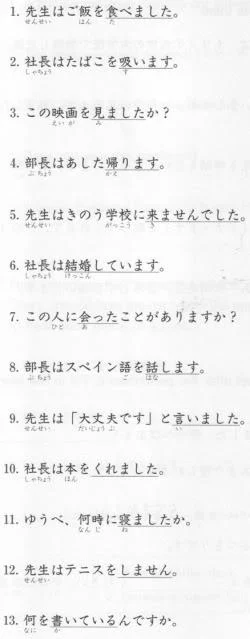
1.[FONT=&quot] [/FONT][FONT=&quot]先生はご飯を召し上げました。[/FONT]
2.[FONT=&quot] [/FONT][FONT=&quot]社長はタバコをお吸いになりました。[/FONT]
3.[FONT=&quot] [/FONT][FONT=&quot]この映画をご覧になりましたか?[/FONT]
4.[FONT=&quot] [/FONT][FONT=&quot]部長は明日お帰りになります。[/FONT]
5.[FONT=&quot] [/FONT][FONT=&quot]先生は昨日学校にいっらしゃいませんでした。[/FONT]
6.[FONT=&quot] [/FONT][FONT=&quot]社長は結婚していっらしゃいます。[/FONT]
7.[FONT=&quot] [/FONT][FONT=&quot]この人にお会いになったことがありますか?[/FONT]
8.[FONT=&quot] [/FONT][FONT=&quot]部長はスペイン語をお話になります。[/FONT]
9.[FONT=&quot] [/FONT][FONT=&quot]先生は「大丈夫」とおっしゃいます。[/FONT]
10.[FONT=&quot] [/FONT][FONT=&quot]社長は本を下さいました。[/FONT]
11.[FONT=&quot] [/FONT][FONT=&quot]昨夜、何時にお休みになりましたか?[/FONT]
12.[FONT=&quot] [/FONT][FONT=&quot]先生はテニスをなさいません。[/FONT]
13.[FONT=&quot] [/FONT][FONT=&quot]何をお買いになっていっらしゃるんですか?[/FONT]

I just want to make sure these are alright before there's a paragraph...thanks so much again.
--

I may be rusty, but isn't the right way to say this, without any honorifics

63353945-1.webp

お手洗いが二階にあります (or 二階にお手洗いがあります)
Doesn't that above say "the bathroom is the second floor"?
 
Last edited:
ツ×窶堋「窶堙≫?堙ァ窶堋オ窶堙。窶堙ゥ
ツ≫?コ窶堋「窶堙ァ窶堙≫?堋オ窶堙。窶堙ゥ

15.窶堙??堙ア窶堙鞍湛ニ竹ツーニ団窶堙ー窶堙遺?堋ウ窶堋「窶堙懌?堋キ窶堋ゥツ?
16.窶堋ィナステー窶堙ーツ渉「窶堋オツ湘」窶堋ェ窶堙ィ窶堙懌?堋キ窶堋ゥツ?

1.ツ静ヲツ青カ窶堙坂?堋イ窶敕鯛?堙ーツ渉「窶堋オツ湘」窶堋ェ窶堙ィ窶堙懌?堋オ窶堋スツ。
2.ナステ絶?卍キ窶堙哉耽ニ弛ニ坦窶堙ー窶堋ィ窶ケz窶堋「窶堙俄?堙遺?堙ィ窶堙彈COLOR="Red"]窶堋キ[/COLOR]ツ。
9.ツ静ヲツ青カ窶堙債「窶佚・ツ湘、窶「vツ」窶堙??堋ィ窶堙≫?堋オ窶堙。窶堋「窶堙彈COLOR="Red"]窶堋オ窶堋ス[/COLOR]ツ。
I may be rusty, but isn't the right way to say this, without any honorifics
63353945-1.webp

窶堋ィナスティツ静エ窶堋「窶堋ェ窶愿アナ?K窶堙俄?堋?窶堙ィ窶堙懌?堋キ (or 窶愿アナ?K窶堙俄?堋ィナスティツ静エ窶堋「窶堋ェ窶堋?窶堙ィ窶堙懌?堋キ)
Doesn't that above say "the bathroom is the second floor"?
Both 窶堋ィナスティツ静エ窶堋「窶堋ェ窶愿アナ?K窶堙俄?堋?窶堙ィ窶堙懌?堋キ and 窶愿アナ?K窶堙俄?堋ィナスティツ静エ窶堋「窶堋ェ窶堋?窶堙ィ窶堙懌?堋キ are simple description.
窶堋ィナスティツ静エ窶堋「窶堙坂?愿アナ?K窶堙俄?堋?窶堙ィ窶堙懌?堋キ is an answer to "Where's the bathroom?" or an explanation/information.
 
Hey Tori. I will look over your answers and I thank you for them as always. I have an eye condition right now so looking at screens hurts my eyes. I just wanted yo let you know that. Posting from my phone.

Happy new year and when I get better I'll be back!!
 
Oh, that's too bad. Take care of yourself and happy new year!🙂
 
Alright! I should be good to go tomorrow, but I feel fine enough. It feels good to see all I have wrong are stupid typos that I should've noticed.

Both お手洗いが二階にあります and 二階にお手洗いがあります are simple description.
お手洗いは二階にあります is an answer to "Where's the bathroom?" or an explanation/information.


That's right, don't they say "There is a bathroom on the second floor" as a descriptive. So you would use (object) は (location) にあります。 as an explanatory sentence, something maybe like this?

ペンはどこいますか?
ペンは机の上にあります。

I do wonder if there is a major difference between using は and が?Though I think there was a (few) posts on that pages back.

---

Question – if I say [FONT=&quot]おかけください[/FONT] without any context, doesn't it mean a lot of things? For example I know it is コンピュータをかける as well as to sit and 電話をかける so if I was telling someone to please use a computer, would I use okakekudasai おかけください or おつかいください? Same with phone, etc.


1.[FONT=&quot]有名な先生は大学にいらっしゃいました。[/FONT]
2.[FONT=&quot]卒業式で先生はおスピーチをなさいました。[/FONT](Not sure if おスピーチ is ok?)
3.[FONT=&quot]どんな音楽をお聞きになりますか?[/FONT]
4.[FONT=&quot]もうこの映画をご覧になりますか?[/FONT]
5.[FONT=&quot]山下先生はもっとお疲れていらっしゃるみたいです。

Untitled06jpgt1262659717-1.webp


[/FONT] 1.A. [FONT=&quot]ここに、名前をお書きください。[/FONT]
2.D. [FONT=&quot]右をご覧下さい。富士山が見えます。[/FONT](There was a note about mieru, I recall...being able to see, and becoming visible?)
3.C. [FONT=&quot]今、込んでいます。ここでお待ちください。[/FONT]
4.B. [FONT=&quot]皿が熱いですから、気をつけてお召し上がり下さい。[/FONT](Does this mean, "Because the plates were hot...please take care while eating"?)

I may have mixed up 3 and 4, this was pretty weird to do. I just want to make sure the grammar is alright so don't mind if it doesn't match with the picture.

For this section I'm pretty sure I did it all right. This was pretty easy.

Untitled07jpgt1262659883-1.webp

1.[FONT=&quot]ノートを見せてくれてありがとう。[/FONT](Let someone see the notes? This isn't in our section yet, I think it's a few sections in, but maybe this was what I was talking about with 見える)
2.[FONT=&quot]うちまで送ってくれてあるがとう。[/FONT](うち、家、major differences?)
3.[FONT=&quot]宿題を手伝ってくれてありがとう。[/FONT]
4.[FONT=&quot]おいしい料理を作ってくれてありがとう。[/FONT]
5.[FONT=&quot]昼ごはんをおごってくれてありがとう。(Thank you for treating me to a meal?)[/FONT]
6.[FONT=&quot]推薦状を書きてくださってありがとうございました。[/FONT]
7.[FONT=&quot]宿題の間違いを直してくださってありがとうございました。[/FONT]
8.[FONT=&quot]パーティーに招待してくださってありがとうございました。[/FONT]
9.[FONT=&quot]日本の文化を教えてくださってありがとうございました。[/FONT]
10.[FONT=&quot]辞書を貸してくださってありがとうございました。(貸すlend, 借りるborrow, would you use わたくしに in this instance?)

[/FONT]
Untitled08jpgt1262659940-1.webp

1.[FONT=&quot]友達と紹介してくれてありがとう。[/FONT]<- do we use [FONT=&quot]お+[/FONT]stem?
2.[FONT=&quot]招待してくれてありがとう。
[/FONT]
3.[FONT=&quot] I didn't know how to say this, actually.
Untitled09jpgt1262660039-1.webp

[/FONT] 1.[FONT=&quot]ごちそうしてくださってありがとうございました。[/FONT]
2.[FONT=&quot]金を貸してくださってありがとうございました。[/FONT]
3.[FONT=&quot]日本語を直してくださってありがとうございました。[/FONT]


[FONT=&quot]宿題をなくしちゃった!-[/FONT]Can it be taken both ways; I lost my homework and I finished my homework?

Is there a difference between [FONT=&quot]一回、一階、最初、初めての[/FONT]in terms of "first"?
[FONT=&quot]頂く[/FONT]and [FONT=&quot]いただけませんか[/FONT] are related?

I would also like to say that I have much to do...during the week of my eye infection, of course my computer crashes so I lost all the notes that I made on this topic and some of Laughing Larry's topics, so now I have to re-go through and re-comment on anything that I may have had questions on, or forgot, or something...

I've also been going through my Kanji book and like what Glenn or someone said in the beginning of the topic, memorizing Kanji in compounds and small phrases. It's working out so far but I'm slowly forgetting some of the first hundred's readings.

I actually do have some on/kun things to ask so I will ask it tomorrow.

I will also cut down the number of images per post.....you guys help me so much I don't want to burden you. I can't believe you're actually helping me this much, you guys have singlehandedly kept me on track in Japanese and helped me immensely.

もう永遠[FONT=&quot]間私の日本語を直してくださってありがとうございました。[/FONT]. :sorry:
 
Last edited:
ニ馳ニ停?懌?堙坂?堙??堋ア窶堋「窶堙懌?堋キ窶堋ゥツ?
ニ馳ニ停?懌?堙最?テキ窶堙個湘」窶堙俄?堋?窶堙ィ窶堙懌?堋キツ。
ニ馳ニ停?懌?堙坂?堙??堋ア窶堙俄?堋?窶堙ィ窶堙懌?堋キ窶堋ゥツ?
ツ(ニ馳ニ停?懌?堙債)ナ?テキ窶堙個湘」窶堙俄?堋?窶堙ィ窶堙懌?堋キツ。

Question – if I say [FONT=&quot]窶堋ィ窶堋ゥ窶堋ッ窶堋ュ窶堋セ窶堋ウ窶堋「[/FONT] without any context, doesn't it mean a lot of things? For example I know it isツ ニ坦ニ停?愴痴ニ停?ヲツーニ耽窶堙ー窶堋ゥ窶堋ッ窶堙ゥツ as well as to sit and 窶彭ヒ彙窶堙ー窶堋ゥ窶堋ッ窶堙ゥ so if I was telling someone to please use a computer, would I use okakekudasaiツ 窶堋ィ窶堋ゥ窶堋ッ窶堋ュ窶堋セ窶堋ウ窶堋「 or 窶堋ィ窶堙や?堋ゥ窶堋「窶堋ュ窶堋セ窶堋ウ窶堋「? Same with phone, etc.
ニ坦ニ停?愴痴ニ停?ヲツーニ耽窶堙ー窶堋ゥ窶堋ッ窶堙ゥ doesn't make sense, I'm afraid.😌
The most common usage of 窶堋ィ窶堋ゥ窶堋ッ窶堋ュ窶堋セ窶堋ウ窶堋「 is for "Please sit down."

1.[FONT=&quot]窶猫窶督シ窶堙按静ヲツ青カ窶堙坂?佚・ナ?w窶堙俄?堋「窶堙ァ窶堙≫?堋オ窶堙。窶堋「窶堙懌?堋オ窶堋スツ。[/FONT]
1.窶猫窶督シ窶堙按静ヲツ青カ窶堋ェナス窶樞?傳窶堙啓/COLOR]窶佚・ナ?w窶堙閏COLOR="Red"]窶堋ィツ出[窶堋「]窶堙??堙俄?堙遺?堙ィ窶堙懌?堋オ窶堋スツ。
窶堋「窶堙ァ窶堙≫?堋オ窶堙。窶堙ゥ can be interpreted as the honorific of 窶堋「窶堙ゥ especially when used with 窶堙? You'd better to use 窶堋ィツ出窶堙??堙俄?堙遺?堙ゥ to prevent being misunderstood.

2.[FONT=&quot]窶伉イ窶ケテ?スツョ窶堙?静ヲツ青カ窶堙坂?堋ィニ湛ニ痴ツーニ蛋窶堙ー窶堙遺?堋ウ窶堋「窶堙懌?堋オ窶堋スツ。[/FONT]ツ(Not sure ifツ 窶堋ィニ湛ニ痴ツーニ蛋ツ is ok?)
No, 窶堋ィ can't be used for ニ湛ニ痴ツーニ蛋.

5.ナスR窶ーツコツ静ヲツ青カ窶堙坂?堙?窶堙≫?堙??堋ィ窶敕ヲ窶堙ェ窶堙??堋「窶堙ァ窶堙≫?堋オ窶堙。窶堙ゥ窶堙昶?堋ス窶堋「窶堙??堋キツ。
5.ナスR窶ーツコツ静ヲツ青カ窶堙梗COLOR="Red"]窶堙??堙??堙?[/COLOR]窶敕ヲ窶堙ェ窶堙??堋「窶堙ァ窶堙≫?堋オ窶堙。窶堙ゥ窶堙昶?堋ス窶堋「窶堙??堋キ/窶堙ヲ窶堋、窶堙??堋キツ。

ツ≫?コ窶敕ヲ窶堙ェ窶堙??堋「窶堙ァ窶堙≫?堋オ窶堙。窶堙ゥ
ツ≫?コ窶堋ィ窶敕ヲ窶堙ェ窶堙俄?堙遺?堙≫?堙??堋「窶堙ァ窶堙≫?堋オ窶堙。窶堙ゥ
ツ×窶堋ィ窶敕ヲ窶堙ェ窶堙??堋「窶堙ァ窶堙≫?堋オ窶堙。窶堙ゥ

窶堙昶?堋ス窶堋「窶堙??堋キ is not wrong but could sound a bit colloquial/casual to me.

4.B. [FONT=&quot]ナスM窶堋ェ窶扨窶堋「窶堙??堋キ窶堋ゥ窶堙ァツ、窶ケC窶堙ー窶堙や?堋ッ窶堙??堋ィツ渉「窶堋オツ湘」窶堋ェ窶堙ィ窶ーツコ窶堋ウ窶堋「ツ。[/FONT](Does this mean, "Because the plates were hot...please take care while eating"?)
Because the plates is hot.

1.[FONT=&quot]ニ知ツーニ暖窶堙ーナ陳ゥ窶堋ケ窶堙??堋ュ窶堙ェ窶堙??堋?窶堙ィ窶堋ェ窶堙??堋、ツ。[/FONT](Let someone see the notes? This isn't in our section yet, I think it's a few sections in, but maybe this was what I was talking about with ナ陳ゥ窶堋ヲ窶堙ゥツ)
ニ知ツーニ暖窶堙ーナ陳ゥ窶堋ケ窶堙??堋ュ窶堙ェ窶堙??堋?窶堙ィ窶堋ェ窶堙??堋、ツ。
Thank you for letting me see the note.

2.[FONT=&quot]窶堋、窶堋ソ窶堙懌?堙??倪?披?堙≫?堙??堋ュ窶堙ェ窶堙??堋?窶堙ゥ窶堋ェ窶堙??堋、ツ。[/FONT](窶堋、窶堋ソツ、窶ーテ?、major differences?)
窶堋、窶堋ソ窶堙懌?堙??倪?披?堙≫?堙??堋ュ窶堙ェ窶堙??堋?窶堙ィ窶堋ェ窶堙??堋、ツ。
not so major.

6.[FONT=&quot]ツ絶?樞?櫓ツ湘ウ窶堙ーツ鞘?倪?堋ォ窶堙??堋ュ窶堋セ窶堋ウ窶堙≫?堙??堋?窶堙ィ窶堋ェ窶堙??堋、窶堋イ窶堋エ窶堋「窶堙懌?堋オ窶堋スツ。[/FONT]
6.ツ絶?樞?櫓ツ湘ウ窶堙ーツ鞘?麓COLOR="Red"]窶堋「[/COLOR]窶堙??堋ュ窶堋セ窶堋ウ窶堙≫?堙??堋?窶堙ィ窶堋ェ窶堙??堋、窶堋イ窶堋エ窶堋「窶堙懌?堋オ窶堋スツ。

10.ナスツォツ鞘?倪?堙ー窶佚昶?堋オ窶堙??堋ュ窶堋セ窶堋ウ窶堙≫?堙??堋?窶堙ィ窶堋ェ窶堙??堋、窶堋イ窶堋エ窶堋「窶堙懌?堋オ窶堋スツ。(窶佚昶?堋キlend, ナステ倪?堙ィ窶堙ゥborrow, would you use 窶堙ュ窶堋ス窶堋ュ窶堋オ窶堙 in this instance?)
Generally, no. 窶佚昶?堋オ窶堙??堋ュ窶堋セ窶堋ウ窶堙ゥ implies "to lend to me."

1.[FONT=&quot]窶認窶傳窶堙?湘絶?ーテョ窶堋オ窶堙??堋ュ窶堙ェ窶堙??堋?窶堙ィ窶堋ェ窶堙??堋、ツ。[/FONT]<- do we use [FONT=&quot]窶堋ィツ+[/FONT]stem?
No. the honorific prefix for ツ湘絶?ーテョ is 窶堋イ, plus, it should be 窶堋イツ湘絶?ーテョ窶ーツコ窶堋ウ窶堙≫?堙?窶堋イツ湘絶?ーテョ窶堋オ窶堙??堋「窶堋ス窶堋セ窶堋「窶堙??堋?窶堙ィ窶堋ェ窶堙??堋、窶堋イ窶堋エ窶堋「窶堙懌?堋オ窶堋ス for 窶堋イツ湘絶?ーテョ. It's the problem of "the level of respect."

3.I didn't know how to say this, actually.
to show around: ヒ???愿?窶堋キ窶堙ゥ

2.[FONT=&quot]窶ケテ?窶堙ー窶佚昶?堋オ窶堙??堋ュ窶堋セ窶堋ウ窶堙≫?堙??堋?窶堙ィ窶堋ェ窶堙??堋、窶堋イ窶堋エ窶堋「窶堙懌?堋オ窶堋スツ。[/FONT]
窶堋ィ窶ケテ?窶堙ー窶佚昶?堋オ窶堙??堋ュ窶堋セ窶堋ウ窶堙≫?堙??堋?窶堙ィ窶堋ェ窶堙??堋、窶堋イ窶堋エ窶堋「窶堙懌?堋オ窶堋スツ。

[FONT=&quot]ツ宿窶佚ィ窶堙ー窶堙遺?堋ュ窶堋オ窶堋ソ窶堙。窶堙≫?堋スツ!ツ−[/FONT]Can it be taken both ways; I lost my homework and I finished my homework?
No. 窶堙遺?堋ュ窶堋キ can't mean "to finish" in that context.

Is there a difference between [FONT=&quot]ヒ?ェ窶ーテアツ、ヒ?ェナ?Kツ、ツ催?鞘?ーツ、ツ鞘?ー窶堙溪?堙??堙啓/FONT]in terms of ツ"firstツ"?
ヒ?ェ窶ーテア: once(ヒ?ェ窶ーテア窶禿 can mean "first time.")
ヒ?ェナ?K: the first floor

[FONT=&quot]窶卍ク窶堋ュ[/FONT]and [FONT=&quot]窶堋「窶堋ス窶堋セ窶堋ッ窶堙懌?堋ケ窶堙ア窶堋ゥ[/FONT] are related?
窶堋「窶堋ス窶堋セ窶堋ッ窶堙懌?堋ケ窶堙ア窶堋ゥ
the negative polite form of 窶卍ク窶堋ュ + the question particle 窶堋ゥ

窶堙?窶堋、窶ーi窶ー窶彈FONT=&quot]ナ?テ版ス窶樞?堙娯?愿コ窶怒ナ津ェ窶堙ー窶卍シ窶堋オ窶堙??堋ュ窶堋セ窶堋ウ窶堙≫?堙??堋?窶堙ィ窶堋ェ窶堙??堋、窶堋イ窶堋エ窶堋「窶堙懌?堋オ窶堋スツ。[/FONT].
ツ×窶ーi窶ー窶愬?テ
ツ≫?コ窶卍キ窶堋「/窶ーi窶堋「ナ?テ
 
The most common usage of おかけください is for "Please sit down."
I see. Small question, if I wanted to say Toritoribe san is talking on the phone in honorifics, used the computer, would it be:

トリトリベさんは電話でお話になっていらっしゃいます。
トリトリベさんはコンピューターをお使いになりました。

ペンはどこにありますか?
(ペンは)机の上にあります。

Ah, so other than that typo, I correctly transposed the meaning?
Where is the pen?
The pen is on top of the desk.

1.有名な先生が私達の大学にお出[い]でになりました
いらっしゃる can be interpreted as the honorific of いる especially when used with は. You'd better to use お出でになる to prevent being misunderstood.
I will remember this, I never came across the いで reading for it though, it's always been しゅつ/だす/でる。 So in this case, we use が/いで?

疲れていらっしゃる
お疲れになっていらっしゃる
×お疲れていらっしゃる
I can definitely see why I was wrong here. I'm wondering if there is a difference between the two? In the Genki book there are examples of both used in different ways, but they seem to mean the same thing.

And you're right, I didn't see that 熱い was not in the かった form so it is in the present tense.

No. the honorific prefix for 紹介 is ご, plus, it should be ご紹介下さって/ご紹介していただいてありがとうございました for ご紹介. It's the problem of "the level of respect."
Hmm..so is this example a bit weird, in that way? It's a honorific sense itself and we are "casual-ing" it down?

The only time I've seen it as such is when we're using it with kudasai. Would you use the ご as ご紹介なさいます?

3. Thanks for showing me around
案内して下さってありがとうございました。

いただけませんか
the negative polite form of 頂く + the question particle か
A small question, isn't the negative polite form, いただきません so is this the "can" form? いただける?

もう永遠間私の日本語を直してくださってありがとうございまし た。.

×永遠間
○長い/永い間
I'm surprised the rest of the sentence was correct!

もう長い間私の日本語を直してくださってありがとうございまし た。

(Which brings up another question, sorry. The reading for 長い間 from WWWJDIC is 長い間, is there any reason I couldn't chop off the 間 and say 永遠? and if i could, would it get a に marker, since it's time?)


1.[FONT=&quot] [/FONT][FONT=&quot]留学してよかったです。[/FONT]
2.[FONT=&quot] [/FONT][FONT=&quot]敬語を習ってよかったです。[/FONT]
3.[FONT=&quot] [/FONT][FONT=&quot]日本語の勉強をやめなくてよかったです。[/FONT]
4.[FONT=&quot] [/FONT][FONT=&quot]友達に手伝ってもらってよかったです。[/FONT]
5.[FONT=&quot] [/FONT][FONT=&quot]授業をサボらなくてよかったです。[/FONT]
6.[FONT=&quot] [/FONT][FONT=&quot]この大学を選んでよかったです。[/FONT]
7.[FONT=&quot] [/FONT][FONT=&quot]授業に遅れなくて良かったです。[/FONT]
8.[FONT=&quot] [/FONT][FONT=&quot]早くレポートを書いてしまってよかった。(I'm glad I finished writing the report early, the しまう means in this sense?)
[/FONT]
9.[FONT=&quot] [/FONT][FONT=&quot]いろいろな人を知り合えてよかったです。[/FONT]
10.[FONT=&quot] [/FONT][FONT=&quot]新しいアパートに引っ越してよかったです。[/FONT]
[FONT=&quot]
Untitled11-1.webp
[/FONT]
1.[FONT=&quot] [/FONT][FONT=&quot]敬語を勉強してよかったです。[/FONT]
2.[FONT=&quot] [/FONT][FONT=&quot]田中さんと知り合ってよかったです。[/FONT]
3.[FONT=&quot] [/FONT][FONT=&quot]雨が降らなくてよかったです。[/FONT]
4.[FONT=&quot] [/FONT][FONT=&quot]止めなくてよかったです。[/FONT](I'm glad I didn't stop, same?)
5.[FONT=&quot] [/FONT][FONT=&quot]電車を逃さなくてよかったです。
[/FONT][FONT=&quot]電車を乗り遅れてよかったです。[/FONT]
(I forgot how to say miss a train. I remember it was in here but I forgot which page, I'll search. I think I'm right with 乗り遅れる so I'll look up the differences between the two.)

6.[FONT=&quot] [/FONT][FONT=&quot]友達のコンピュータを壊さなくてよかったです。[/FONT]

[FONT=&quot][/FONT]
[FONT=&quot]:sorry: Thank you once again!
[/FONT]

---

By the way, I am ramping my efforts to learn Japanese a lot. I have finished Chapter 20, am starting 21, and am doing some more stuff from my Kanji book and etc. Hopefully I will not be more of an annoyance as I will be looking towards dictionaries and WWWJDIC for sentence structures and such. :)

I have gone through just about 300 posts in this topic and commented on them, I have yet to go through Larry's posts and other topics, I am going to try to read and decipher a large amount of the 最近お出来事 topic (as I have posted in there twice) to up my reading capabilities.

I actually do have on/kun questions to ask as well.
 
ニ暖ニ椎?ニ暖ニ椎?ニ遅窶堋ウ窶堙ア窶堙坂?彭ヒ彙窶堙??堋ィヒ彙窶堙俄?堙遺?堙≫?堙??堋「窶堙ァ窶堙≫?堋オ窶堙。窶堋「窶堙懌?堋キツ。
It's not incorrect, but 窶彭ヒ彙窶堋オ窶堙??堋「窶堙ァ窶堙≫?堋オ窶堙。窶堋「窶堙懌?堋キ would be more common.
ニ暖ニ椎?ニ暖ニ椎?ニ遅窶堋ウ窶堙ア窶堙哉坦ニ停?愴痴ニ停?ヲツーニ耽ツー窶堙ー窶堋ィナスg窶堋「窶堙俄?堙遺?堙ィ窶堙懌?堋オ窶堋スツ。
Same the avobe. This would be an answer to "What did he use?" or like that.

These are the problems not of the correctness of grammar but of the naturalness of the sentence.

I will remember this, I never came across theツ 窶堋「窶堙 reading for it though, it's always been 窶堋オ窶堙」窶堙つ/窶堋セ窶堋キツ/窶堙??堙ゥツ。 So in this case, we use 窶堋ェツ/窶堋「窶堙??
窶堋ィツ出窶堙??堙俄?堙遺?堙ゥ is one of the honorific forms/verbs of 窶藩??堙ゥ like as "ツ食窶堙冷?堙ゥ <--> ツ渉「窶堋オツ湘」窶堋ェ窶堙ゥ," "ツ寝窶堙ゥ <--> 窶堋ィ窶ケx窶堙昶?堙俄?堙遺?堙ゥ." This is from the classical verb ツ出[窶堋「]窶堙?

I can definitely see why I was wrong here. I'm wondering if there is a difference between the two? In the Genki book there are examples of both used in different ways, but they seem to mean the same thing.
"窶堋ィ + pre-masu form of verb + 窶堙俄?堙遺?堙ゥ" itself is an honorific form, so 窶堋ィ窶敕ヲ窶堙ェ窶堙俄?堙遺?堙≫?堙??堋「窶堙ァ窶堙≫?堋オ窶堙。窶堙ゥ is considered more polite than 窶敕ヲ窶堙ェ窶堙??堋「窶堙ァ窶堙≫?堋オ窶堙。窶堙ゥ.
(FYI, the classical adverbial form(= pre-masu form) of ツ出窶堙 is ツ出窶堙? thus, 窶堋ィツ出窶堙??堙俄?堙遺?堙ゥ is exactly from this usage.;-))

Hmm..so is this example a bit weird, in that way? It's a honorific sense itself and we are "casual-ing" it down?
窶認窶傳窶堙ーツ湘絶?ーテョ窶堋オ窶堙??堋ュ窶堙ェ窶堙??堋?窶堙ィ窶堋ェ窶堙??堋、
窶堋イ窶認ツ人窶堙ー窶堋イツ湘絶?ーテョ窶ーツコ窶堋ウ窶堋「窶堙懌?堋オ窶堙?窶堋イツ湘絶?ーテョ窶堋「窶堋ス窶堋セ窶堋ォ窶堙懌?堋オ窶堙??堋?窶堙ィ窶堋ェ窶堙??堋、窶堋イ窶堋エ窶堋「窶堙懌?堋オ窶堋ス

Both are OK.

A small question, isn't the negative polite form, 窶堋「窶堋ス窶堋セ窶堋ォ窶堙懌?堋ケ窶堙アツ so is this the "can" form? 窶堋「窶堋ス窶堋セ窶堋ッ窶堙ゥ?
Right, my bad.:p
窶堋「窶堋ス窶堋セ窶堋ッ窶堙懌?堋ケ窶堙ア; the negative potential polite form of 窶堋「窶堋ス窶堋セ窶堋ュ

(Which brings up another question, sorry. The reading for 窶卍キ窶堋「ナ?テ from WWWJDIC is 窶卍キ窶堋「ナ?テ? is there any reason I couldn't chop off the ナ?テ and say 窶ーi窶ー窶? and if i could, would it get a 窶堙 marker, since it's time?)
窶ーi窶ー窶? eternity/permanence(noun)
窶卍キ窶堋「ナ?テ? long time

9.[FONT=&quot]窶堋「窶堙ォ窶堋「窶堙ォ窶堙按人窶堙ー窶冦窶堙ィツ坂?。窶堋ヲ窶堙??堙ヲ窶堋ゥ窶堙≫?堋ス窶堙??堋キツ。[/FONT]
9.窶堋「窶堙ォ窶堋「窶堙ォ窶堙按人窶堙?/COLOR]窶冦窶堙ィツ坂?。窶堋ヲ窶堙??堙ヲ窶堋ゥ窶堙≫?堋ス窶堙??堋キツ。

2.[FONT=&quot]窶彡窶吮??窶堋ウ窶堙ア窶堙??冦窶堙ィツ坂?。窶堙≫?堙??堙ヲ窶堋ゥ窶堙≫?堋ス窶堙??堋キツ。[/FONT]
2.窶彡窶吮??窶堋ウ窶堙ア窶堙??冦窶堙ィツ坂?。窶堋ヲ窶堙??堙ヲ窶堋ゥ窶堙≫?堋ス窶堙??堋キツ。

4.[FONT=&quot]ナス~窶堙溪?堙遺?堋ュ窶堙??堙ヲ窶堋ゥ窶堙≫?堋ス窶堙??堋キツ。(I'm glad I didn't stop, same?)[/FONT]
4.to give up: 窶堋?窶堋ォ窶堙ァ窶堙溪?堙ゥ

[FONT=&quot]窶彭ナステ披?堙ーツ湘ヲ窶堙ィ窶凅窶堙ェ窶堙??堙ヲ窶堋ゥ窶堙≫?堋ス窶堙??堋キツ。[/FONT]
5.窶彭ナステ納COLOR="Red"]窶堙閏/COLOR]ツ湘ヲ窶堙ィ窶凅窶堙ェ窶堙遺?堋ュ窶堙??堙ヲ窶堋ゥ窶堙≫?堋ス窶堙??堋キツ。
 
Thanks a lot. I haven't gotten down naturalness. I'll try to remember the 窶堋ィツ出窶堙??堙俄?堙遺?堙ゥ.

I'm also around 300 posts in the review, I'm not sure if I told you.

I actually wanted to get back to On/Kun while also incorporating my grammar studies, but I'll focus on one for now...

001-1.webp

Japanese: 窶堙懌?堋スツ 窶堙娯?堙ィ窶堋ィ窶堋ュ窶堙ェ窶堙??堋オ窶堙懌?堙≫?堋ス窶堋ク窶堙ァ
English: Again, I regretfully missed (the train).

This one was easy except for zura, I think it's another one of those male/female things.

002-1.webp

Japaneseツ:窶堙?窶堋、窶堋ア窶堙ェ窶堙??堙遺?堙ア窶堙??堙溪?堋ク窶堙ァツ?窶堙ヲ窶堙ゥ窶堋ェ窶堋?窶堋ッ窶堙??堋オ窶堙懌?堙≫?堋ス窶堋ク窶堙ァ窶堙ヲ
English: How many times is it already? The night has (something with early dawn, completed)

003-1.webp

Japanese: 窶堙や?堋ャ窶堙姑椎?ニ停?愴檀ニ置ニ停?ケニ停ぎ窶堙、窶堋ォ窶堙坂?堋「窶堙や?堋ュ窶堙ゥ窶堋ク窶堙ァ
English: When is the next (thing) destined for Lindblum coming?
I'm a bit messed up on the ツ行窶堋ォ. Is it a shortening of yukisaki?

004-1.webp

Japanese: 窶堋?窶堙娯?堋ィ窶堙??堙坂?堙樞?堋ア窶堋、窶堋ゥ窶堙ュ...ニ但ニ椎槌誰ニ探ニ停?愴檀ニ椎?ニ但窶堙、窶堋ォ窶堋ェ窶堋ォ窶堋ス窶堋ィ窶堙??堋ク窶堙ァ
English: That sound behind me...the thing destined for Alexandria has made a coming noise!

005-1.webp

Japanese: 窶堋ア窶堋ア窶堙??堙昶?堋ソ窶堋ュ窶堋ウ窶堋ュ窶堙≫?堙??堙≫?堋ス窶堙ア窶堋ゥ
English: Are you loitering there?
I actually had to look this one up since I never saw 窶堋ス窶堙冷?堙ゥ with ツ食窶堙? Not sure about the sentence after the ツ食.

006-1.webp

Japanese: PSICOM窶堙俄?堙??堋ュ窶堙ュ窶堋キ窶堋ア窶堙??堙坂?堙遺?堋ウ窶堋サ窶堋、窶堋セ窶堙
English: We didn't meet the PSICOM, good.
Is this even right? I know the overall gist of it but the exact-ness I can't grasp.

007-1.webp

Just wondering if this is 窶堋セ窶堋「窶堙問?堋「窶堋ー窶堙ア.

As for grammar,

Untitled15jpgt1263275549-1.webp

1.[FONT=&quot]窶督セ窶愿コナスナスナ陳ア窶堋ェ窶堋?窶堙ゥ窶堙娯?堙?、ニ湛ツー窶堋ウ窶堙ア窶堙債債。窶敕凪?「テ冷?ケツュ窶堋キ窶堙ゥ窶堙坂?堋ク窶堙??堋キツ。[/FONT]
2.[FONT=&quot]窶堋「窶堋「ナ?wツ青カ窶堋セ窶堙娯?堙?、ニ陳?但ニ椎?窶堋ウ窶堙ア窶堋ェナステカ窶ケテ??堙ーニ探ニ畜窶堋オ窶堙遺?堋「窶堙坂?堋ク窶堙??堋キツ。[/FONT]
3.[FONT=&quot]ニ但ニ陳?椎?ニ谷窶堙ヲ窶堙ィニ谷ニ段ニ胆窶堙娯?堙吮?堋、窶堋ェ窶佚・窶堋ォ窶堋「窶堙坂?堋ク窶堙??堋キツ。[/FONT]
[FONT=&quot]4. 窶吮??ツ坂?倪?堙可住窶堙ア窶堙??堋「窶堋ス窶堙娯?堙?、ニ淡ニ停?。ニ停?懌?堋ウ窶堙ア窶堙坂?吮??ツ坂?佛津ェ窶堋ェツ湘」ナスティ窶堋セ窶堙坂?堋ク窶堙??堋キツ。

Untitled17jpgt1263275746-1.webp


[/FONT] 1.[FONT=&quot] [/FONT][FONT=&quot]窶敕イツ行窶ケ@窶堋ェ窶ケテウツ港窶堙俄?ケテ」ナスナセ窶堙俄?吮?ヲ窶堋ュ窶堙坂?堋ク窶堙??堋オ窶堋ス窶堋ェツ、窶凅窶堙ェ窶堙??堋オ窶堙懌?堋「窶堙懌?堋オ窶堋スツ。[/FONT]
2.[FONT=&quot] [/FONT][FONT=&quot]窶認窶傳ナス窶樞?堙娯?ーテ??堙俄?堋「窶堙ァ窶堙≫?堋オ窶堙。窶堙ゥ窶堙坂?堋ク窶堙??堋オ窶堋ス窶堋ェツ、窶堋「窶堙ァ窶堙≫?堋オ窶堙。窶堋「窶堙懌?堋ケ窶堙ア窶堙??堋オ窶堋スツ。[/FONT]
3.[FONT=&quot] [/FONT][FONT=&quot]ニ弾ニ湛ニ暖窶堙才?補?堋オ窶堋「窶堙坂?堋ク窶堙??堋オ窶堋ス窶堋ェツ、窶愿ッ窶堋オ窶堋ゥ窶堙≫?堋ス窶堙??堋キツ。[/FONT]
That just wraps up Chapter 19. I'm working on passive sentences in Chapter 21.

Thanks for your help again. I'll send Elizabeth a message about one of the images. :sorry:
 
I'll just answer about the ずら ending.

It is a sentence ending (equivalent to です、よ , etc.) coming from a dialect of Nagano Prefecture , although it appears that this ending can be heard in some other dialects as well.

However, many young people have started to adopt use of various regional dialects just for the fun of it. So, the speaker may not necessarily be from Nagano but just having fun. If this is from a manga or anime, the creator may have adopted this to add color to the character, regardless of the background of the character.

I'll leave the rest to other members. :p

Added: 道草を食とったんか
食う(くう)is the same as 食べる . Usage is neutral rather than polite.
道草を食う is a fixed phrase (idiom), coming from eating grass along the road, meaning being distracted by something when one is supposed to head straight toward a destination.
Again, 食とったんか is dialect form of 食っていたのか
 
Last edited:
About 窶堋ク窶堙ァ, epigene san gave a good explanation, so I just answer about other part. :-)

Japanese: 窶堙懌?堋スツ 窶堙娯?堙ィ窶堋ィ窶堋ュ窶堙ェ窶堙??堋オ窶堙懌?堙≫?堋ス窶堋ク窶堙ァ
English: Again, I regretfully missed (the train).

You got it right. :)

Japaneseツ:窶堙?窶堋、窶堋ア窶堙ェ窶堙??堙遺?堙ア窶堙??堙溪?堋ク窶堙ァツ?窶堙ヲ窶堙ゥ窶堋ェ窶堋?窶堋ッ窶堙??堋オ窶堙懌?堙≫?堋ス窶堋ク窶堙ァ窶堙ヲ
English: How many times is it already? The night has (something with early dawn, completed)

窶禿ゥ窶堋ェ窶督セ窶堋ッ窶堙ゥツ?ーB]窶堙ヲ[/B]窶堋ェ窶堋?窶堋ッ窶堙ゥ dawn breaks
窶禿ゥ窶督セ窶堋ッツ(窶堙ヲ窶堋?窶堋ッツ) = dawn, daybreak

Japanese: 窶堙や?堋ャ窶堙姑椎?ニ停?愴檀ニ置ニ停?ケニ停ぎ窶堙、窶堋ォ窶堙坂?堋「窶堙や?堋ュ窶堙ゥ窶堋ク窶堙ァ
English: When is the next (thing) destined for Lindblum coming?
I'm a bit messed up on the ツ行窶堋ォ. Is it a shortening of yukisaki?

ツ〜ツ行窶堋ォツ(窶堋「窶堋ォツ)ツ? bound for ~ (train, bus, etc.)

Japanese: 窶堋?窶堙娯?堋ィ窶堙??堙坂?堙樞?堋ア窶堋、窶堋ゥ窶堙ュ...ニ但ニ椎槌誰ニ探ニ停?愴檀ニ椎?ニ但窶堙、窶堋ォ窶堋ェ窶堋ォ窶堋ス窶堋ィ窶堙??堋ク窶堙ァ
English: That sound behind me...the thing destined for Alexandria has made a coming noise!

ナ津シ窶堋ア窶堋、窶伉、ツ 窶堙樞?堋ア窶堋、窶堋ェ窶堙ュ not behind, but some distance from the speaker across something
The sound/noise is (from) the other side/over there
It's the noise made by/of the [machine/vehicle/train, etc] bound for Alexandria.

Japanese: 窶堋ア窶堋ア窶堙??堙昶?堋ソ窶堋ュ窶堋ウ窶堋ュ窶堙≫?堙??堙≫?堋ス窶堙ア窶堋ゥ
English: Are you loitering there?
I actually had to look this one up since I never saw 窶堋ス窶堙冷?堙ゥ with ツ食窶堙? Not sure about the sentence after the ツ食.

窶慊ケ窶伉絶?堙ーツ食窶堋、ツ(窶堙昶?堋ソ窶堋ュ窶堋ウ窶堙ー窶堋ュ窶堋、ツ) to loiter on one's way
It's a set phrase, the verb is always ツ食窶堋、 not ツ食窶堙冷?堙ゥ.

Japanese: PSICOM窶堙俄?堙??堋ュ窶堙ュ窶堋キ窶堋ア窶堙??堙坂?堙遺?堋ウ窶堋サ窶堋、窶堋セ窶堙
English: We didn't meet the PSICOM, good.
Is this even right? I know the overall gist of it but the exact-ness I can't grasp.

ツ〜窶堋キ窶堙ゥ窶堋ア窶堙??堙坂?堙遺?堋ウ窶堋サ窶堋、 it's unlikely to ~
We are not likely to encounter PSICOM.
It does not look like we're encountering PSICOM.

Just wondering if this is 窶堋セ窶堋「窶堙問?堋「窶堋ー窶堙ア.

Yes, 窶佚・窶「ツスナ陳エ is 窶堋セ窶堋「窶堙問?堋「窶堋ー窶堙ア.

Now about ツ〜窶堙坂?堋ク phrases:

1.[FONT=&quot;]窶督セ窶愿コナスナスナ陳ア窶堋ェ窶堋?窶堙ゥ窶堙娯?堙?、ニ湛ツー窶堋ウ窶堙ア窶堙債債。窶敕凪?「テ冷?ケツュ窶堋キ窶堙ゥ窶堙坂?堋ク窶堙??堋キツ。[/FONT]
2.[FONT=&quot;]窶堋「窶堋「ナ?wツ青カ窶堋セ窶堙娯?堙?、ニ陳?但ニ椎?窶堋ウ窶堙ア窶堋ェナステカ窶ケテ??堙ーニ探ニ畜窶堋オ窶堙遺?堋「窶堙坂?堋ク窶堙??堋キツ。[/FONT]
3.[FONT=&quot;]ニ但ニ陳?椎?ニ谷窶堙ヲ窶堙ィニ谷ニ段ニ胆窶堙娯?堙吮?堋、窶堋ェ窶佚・窶堋ォ窶堋「窶堙坂?堋ク窶堙??堋キツ。[/FONT]
[FONT=&quot;]4. 窶吮??ツ坂?倪?堙可住窶堙ア窶堙??堋「窶堋ス窶堙娯?堙?、ニ淡ニ停?。ニ停?懌?堋ウ窶堙ア窶堙坂?吮??ツ坂?佛津ェ窶堋ェツ湘」ナスティ窶堋セ窶堙坂?堋ク窶堙??堋キツ。[/FONT]
[FONT=&quot]

[/FONT]1.[FONT=&quot;]窶督セ窶愿コナスナスナ陳ア窶堋ェ窶堋?窶堙ゥ窶堙娯?堙?、ニ湛ツー窶堋ウ窶堙ア窶堙債債。窶敕凪?「テ冷?ケツュ窶堋キ窶堙ゥ窶堙坂?堋ク窶堙??堋キツ。[/FONT]
2.[FONT=&quot;]窶堋「窶堋「ナ?wツ青カ窶堙?/COLOR]窶堙娯?堙?、ニ陳?但ニ椎?窶堋ウ窶堙ア窶堙梗/COLOR]ナステカ窶ケテ??堙ーニ探ニ畜窶堙ァ窶堙遺?堋「窶堙坂?堋ク窶堙??堋キツ。[/FONT]
3.[FONT=&quot;]ニ但ニ陳?椎?ニ谷窶堙ヲ窶堙ィニ谷ニ段ニ胆窶堙娯?堙吮?堋、窶堋ェ窶佚・窶堋ォ窶堋「窶堙坂?堋ク窶堙??堋キツ。[/FONT]
[FONT=&quot;]4.窶吮??ツ坂?倪?堙可住窶堙ア窶堙??堋「窶堋ス窶堙娯?堙?、ニ淡ニ停?。ニ停?懌?堋ウ窶堙ア窶堙坂?吮??ツ坂?佛津ェ窶堋ェツ湘」ナスティ窶堙?/COLOR]窶堙坂?堋ク窶堙??堋キツ。[/FONT]

1.[FONT=&quot;]窶敕イツ行窶ケ@窶堋ェ窶ケテウツ港窶堙俄?ケテ」ナスナセ窶堙俄?吮?ヲ窶堋ュ窶堙坂?堋ク窶堙??堋オ窶堋ス窶堋ェツ、窶凅窶堙ェ窶堙??堋オ窶堙懌?堋「窶堙懌?堋オ窶堋スツ。[/FONT]
2.[FONT=&quot;]窶認窶傳ナス窶樞?堙娯?ーテ??堙俄?堋「窶堙ァ窶堙≫?堋オ窶堙。窶堙ゥ窶堙坂?堋ク窶堙??堋オ窶堋ス窶堋ェツ、窶堋「窶堙ァ窶堙≫?堋オ窶堙。窶堋「窶堙懌?堋ケ窶堙ア窶堙??堋オ窶堋スツ。[/FONT]
3.[FONT=&quot;]ニ弾ニ湛ニ暖窶堙才?補?堋オ窶堋「窶堙坂?堋ク窶堙??堋オ窶堋ス窶堋ェツ、窶愿ッ窶堋オ窶堋ゥ窶堙≫?堋ス窶堙??堋キツ。[/FONT]

1. and 3 are OK. As for 2, is there any reason you use keigo for the friend?
I think plain expression is more appropriate if you're talking about your friend.

2.[FONT=&quot;]窶認窶傳窶堙梗/COLOR]ナス窶樞?堙娯?ーテ??堙俄?堋「窶堙ァ窶堙≫?堋オ窶堙。窶堙ゥ窶堙坂?堋ク窶堙??堋オ窶堋ス窶堋ェツ、窶堋「窶堙ァ窶堙≫?堋オ窶堙。窶堋「窶堙懌?堋ケ窶堙ア窶堙??堋オ窶堋スツ。[/FONT]
Grammatically correct. ;-)
or you can simply say
窶認窶堋セ窶堋ソ窶堙最ス窶樞?堙娯?ーテ??堙俄?藩??堙ゥ窶堙坂?堋ク窶堙??堋オ窶堋ス窶堋ェツ、窶藩??堙懌?堋ケ窶堙ア窶堙??堋オ窶堋スツ。

I think you're doing quite well. 👍
 
Wow, thanks for coming and posting! You guys have helped me a lot :)

If this is from a manga or anime, the creator may have adopted this to add color to the character, regardless of the background of the character.

It is indeed from a video game, I'm using it to get my reading and understanding skills up. It's helped me in on/kun a bit. The guy saying it is quite quirky!

Added: 窶慊ケ窶伉絶?堙ーツ食窶堙≫?堙??堙≫?堋ス窶堙ア窶堋ゥ
ツ食窶堋、ツ(窶堋ュ窶堋、ツ)is the same as ツ食窶堙冷?堙ゥ . Usage is neutral rather than polite.
窶慊ケ窶伉絶?堙ーツ食窶堋、 is a fixed phrase (idiom), coming from eating grass along the road, meaning being distracted by something when one is supposed to head straight toward a destination.
Again, ツ食窶堙≫?堙??堙≫?堋ス窶堙ア窶堋ゥ is dialect form of ツ食窶堙≫?堙??堋「窶堋ス窶堙娯?堋ゥツ

Ah, that makes more sense. The 窶堋ュ窶堙≫?堙 part was messing me up, I thought it was some form I haven't seen. Thanks! I left rep.

ツ〜ツ行窶堋ォツ(窶堋「窶堋ォツ)ツ? bound for ~ (train, bus, etc.)
Ah, I should've gone with my first instinct, I usually read it as iki. I just thought since I was exposed to ツ行窶堋ォツ静ヲ perhaps it was different.

ナ津シ窶堋ア窶堋、窶伉、ツ 窶堙樞?堋ア窶堋、窶堋ェ窶堙ュ not behind, but some distance from the speaker across something
The sound/noise is (from) the other side/over there
It's the noise made by/of the [machine/vehicle/train, etc] bound for Alexandria.

Much more natural than my sentence, thanks.

ツ〜窶堋キ窶堙ゥ窶堋ア窶堙??堙坂?堙遺?堋ウ窶堋サ窶堋、 it's unlikely to ~
We are not likely to encounter PSICOM.
It does not look like we're encountering PSICOM.

Ah, that makes more sense. I remember 窶堙遺?堋ウ窶堋サ窶堋、 from Chapter 13 being the meaning "doesn't look like". The 窶堋ア窶堙 in here messes me up though. I'll look into it more, thanks!

-
As for 2, is there any reason you use keigo for the friend?
I think plain expression is more appropriate if you're talking about your friend.

You're right, I should use plain forms. 😌

窶認窶堋セ窶堋ソ窶堙最ス窶樞?堙娯?ーテ??堙俄?藩??堙ゥ窶堙坂?堋ク窶堙??堋オ窶堋ス窶堋ェツ、窶藩??堙懌?堋ケ窶堙ア窶堙??堋オ窶堋スツ。
Thanks!!

I'm just going to post your PM so I can review it :)

Originally Posted by Putrefaction


The question(s) I have stem from the ツー窶堙??堋ィ窶堋ュ and ツ〜窶堙??堋?窶堙ゥ forms.

Is this a time line for 窶堋ィ窶堋ュツ,窶堋?窶堙ゥツ?
窶堙「窶堋ュ窶堋サ窶堋ュ窶堙ー窶堋オ窶堙??堋ィ窶堋ォ窶堙懌?堋キツ。(I am going to make a reservation.)
窶堙「窶堋ュ窶堋サ窶堋ュ窶堙ー窶堋オ窶堙??堋ィ窶堋ォ窶堙懌?堋オ窶堋スツ。(I made a reservation in advance.)
窶堙「窶堋ュ窶堋サ窶堋ュ窶堙ー窶堋オ窶堙??堋?窶堙ィ窶堙懌?堋キツ。(I made the reservation)
窶堙「窶堋ュ窶堋サ窶堋ュ窶堙ー窶堋オ窶堙??堋?窶堙ィ窶堙懌?堋オ窶堋スツ。(I had a reservation?)​


First off, reservation is 窶能窶禿アツ(窶堙ヲ窶堙「窶堋ュツ), 窶禿ア窶伉ゥツ(窶堙「窶堋ュ窶堋サ窶堋ュツ) means "promise".

窶能窶禿ア窶堙ー窶堋オ窶堙??堋ィ窶堋ォ窶堙懌?堋キツ。 I'm going to make a reservation (for purpose)
窶能窶禿ア窶堙ー窶堋オ窶堙??堋ィ窶堋ォ窶堙懌?堋オ窶堋スツ。 I made a reservation. (in advance, for a certain purpose)
窶能窶禿ア窶堙ー窶堋オ窶堙??堋?窶堙ィ窶堙懌?堋キツ。 I made a reservation. (stating the current situation, the reservation is still kept.)
窶能窶禿ア窶堙ー窶堋オ窶堙??堋?窶堙ィ窶堙懌?堋オ窶堋スツ。 I made a reservation. (stating the past situation, maybe now it's cancelled or finished.)


it's a bit confusing to me especially when I apply it to

窶倪?ケ窶堋ェ窶「テや?堙溪?堙??堋「窶堙懌?堋キツ。ツ(I am closing the window.ツ)
窶倪?ケ窶堋ェ窶「テや?堙懌?堙≫?堙??堋「窶堙懌?堋キツ。ツ(The window is closed.ツ)
窶倪?ケ窶堋ェ窶「テや?堙溪?堙??堋?窶堙ィ窶堙懌?堋オ窶堋スツ。ツ(The window had been kept closed?ツ)
窶倪?ケ窶堋ェ窶「テや?堙懌?堙≫?堙??堋「窶堙懌?堋オ窶堋スツ(The window had been closed?ツ)​

窶倪?ケ窶堙ー窶「テや?堙溪?堙??堋「窶堙懌?堋キツ。ツ?≫?堙懌?堙??堙ー窶「テや?堙溪?堙??堋「窶堙ゥ窶堙??堋ア窶堙ォ窶堙??堋キツ。 I'm closing the window. (on-going event)
窶倪?ケ窶堋ェ窶「テや?堙懌?堙≫?堙??堋「窶堙懌?堋キツ。 The window is closed. (it was closed and now in that status.)
窶倪?ケ窶堋ェ窶「テや?堙溪?堙??堋?窶堙ィ窶堙懌?堋オ窶堋スツ。 The window was closed/has been closed and is kept at that, maybe for a certain purpose.
窶倪?ケ窶堋ェ窶「テや?堙懌?堙≫?堙??堋「窶堙懌?堋オ窶堋スツ。 The window was closed. (past form of the 2nd sentence.)


Became very, very clear. Thank you so much!:sorry:

ツ静ヲツ青カ窶堙嫁スティ窶彖窶堙≫?堙??ーツコ窶堋ウ窶堙≫?堙??堋?窶堙ィ窶堋ェ窶堙??堋、窶堋イ窶堋エ窶堋「窶堙懌?堋オ窶堋スツ。
 
Ah, I'm done with Chapter 19 then, it seems. That was a decent chapter. Do you guys use keigo a lot during day-to-day talks? I'll have to review the topic from where ever I left off until now. But I wanted to discuss a few things.

I've been using Anki recently to cement my Kanji studies. However as of a few days ago, it's become harder and harder to memorize Kanji and their compounds. I've forgotten completely 4 pages (25 Kanji) and when it comes to the compounds I'm also getting them wrong! For those who have studied them, is there anything else I should be doing?

The forgetting of compounds is my fault, I suppose. Out of 30 I usually get 10 wrong but remember by the end of them. Good program, Anki. Should've used it a lot sooner...what I've been doing (and still am, in addition to Anki) is going through 50 or so, and reviewing the past 100. Once I hit 100, I just review the entire 100...today I'm going to try to go through 500-800 though, just to make sure there isn't a whole lot I forgot.

--

To consolidate, I'm just going to paste one or two pictures of each respective excersize...if I get it right then there's no point going on further. I can just self-review.

Untitled02-1.webp


  • C. [FONT=&quot]窶彡窶吮??窶堙?申窶堋オ窶堙懌?堋キツ。窶堙ヲ窶堙ォ窶堋オ窶堋ュ窶堋ィナ?ティ窶堋「窶堋「窶堋ス窶堋オ窶堙懌?堋キツ。[/FONT]
  • B. [FONT=&quot]窶彭ナステ披?堋ェ窶堙懌?堋「窶堙ィ窶堙懌?堋キツ。[/FONT]
  • E. [FONT=&quot]窶卍ク窶堋ォ窶堙懌?堋キツ([/FONT]Now I know where it comes from in Chapter 1![FONT=&quot]ツ)[/FONT]
  • A. [FONT=&quot]ツ湘」窶堙嫁スQ窶堙ィ窶堙懌?堋キツ。ナスナク窶堙最スツオナ?K窶堙??堋イ窶堋エ窶堋「窶堙懌?堋キツ。[/FONT]
  • F. [FONT=&quot]窶堋ィナスティツ静エ窶堋「窶堙坂?堋?窶堋ソ窶堙ァ窶堙俄?堋イ窶堋エ窶堋「窶堙懌?堋キツ。[/FONT]
  • D. [FONT=&quot]窶「ニ停?堙債債。ツ出窶堋ゥ窶堋ッ窶堙??堋ィ窶堙ィ窶堙懌?堋キツ。[/FONT]
Untitled03jpgt1263402819-1.webp


  • [FONT=&quot]窶彡窶吮??窶堋ウ窶堙ア窶堙坂?堋「窶堙ァ窶堙≫?堋オ窶堙。窶堋「窶堙懌?堋キ窶堋ゥツ?[/FONT]
    [FONT=&quot]ツ債。ナスQ窶堙ィ窶堙懌?堋キ窶堙娯?堙?、ツ渉ュツ々窶堋ィ窶佚停?堋ソ窶堋ュ窶堋セ窶堋ウ窶堋「ツ。[/FONT]
  • [FONT=&quot]窶彡窶吮??窶堙?申窶堋オ窶堙懌?堋キツ。窶堙ヲ窶堙ォ窶堋オ窶堋ュ窶堋ィナ?ティ窶堋「窶堋「窶堋ス窶堋オ窶堙懌?堋キツ。[/FONT]
  • [FONT=&quot]窶堋ィ窶卮停?堙ー窶堙??堋、窶堋シツ。[/FONT]
    [FONT=&quot]窶堋キ窶堙昶?堙懌?堋ケ窶堙アツ。窶堋「窶堋ス窶堋セ窶堋ォ窶堙懌?堋ケ窶堙アツ ツ(窶卍ク窶堋ォ窶堙懌?堋ケ窶堙アツ)ツ。[/FONT]
  • [FONT=&quot]ナスR窶怒窶「窶昶?卍キ窶堙坂?堋「窶堙ァ窶堙≫?堋オ窶堙。窶堋「窶堙懌?堋キ窶堋ゥツ?[/FONT]
    [FONT=&quot]ツ債。窶愿コ窶堙坂?ケx窶堙ア窶堙??堋ィ窶堙ィ窶堙懌?堋キツ。(Wouldn't this be an honorific for Yamamoto so shouldn't it be [/FONT][FONT=&quot]窶堋「窶堙ァ窶堙≫?堋オ窶堙。窶堋「窶堙懌?堋キ?)[/FONT]
  • [FONT=&quot]窶堋ゥ窶堙寂?堙ア窶堙坂?堋ア窶堋ソ窶堙ァ窶堙俄?堋イ窶堋エ窶堋「窶堙懌?堋キツ。[/FONT]
  • [FONT=&quot]ニ恥ニ停?懌?堙??堋イ窶堋エ窶堋「窶堙懌?堋キツ。窶堙??堋、窶堋シツ。[/FONT]
 
Wouldn't this be an honorific for Yamamoto so shouldn't it be 窶堋「窶堙ァ窶堙≫?堋オ窶堙。窶堋「窶堙懌?堋キ?
Right.
All OK except 窶卍ク窶堋ォ窶堙彈COLOR="Red"]窶堋キ[/COLOR].
 
Ah, thanks. I'll update it in my documents. I actually was able to leave you rep!

There's one that features a combination so that one I'll post and it's the end of that section. Do you have any words of wisdom regarding what was written above?

Untitled04jpgt1263486065-1.webp


Just combines what I learned above and in the previous chapter.

1. 窶堋ィ窶督シ窶楼窶堙坂?ーツス窶堙ー窶堋ィ窶堙≫?堋オ窶堙。窶堋「窶堙懌?堋キ窶堋ゥツ?
窶愿アツーニ停?ケ窶堙?申窶堋オ窶堙懌?堋キツ。
2. 窶堋「窶堙や?愿コ窶怒窶堙俄?堋「窶堙ァ窶堙≫?堋オ窶堙。窶堋「窶堙懌?堋オ窶堋ス窶堋ゥツ?
窶ケナス窶扼窶愿コ窶怒窶堙嫁スQ窶堙ィ窶堙懌?堋オ窶堋スツ。
3. 窶堙??堋ソ窶堙ァ窶堙可住窶堙ア窶堙??堋「窶堙ァ窶堙≫?堋オ窶堙。窶堋「窶堙懌?堋キ窶堋ゥツ?
USA窶堙可住窶堙ア窶堙??堋ィ窶堙ィ窶堙懌?堋キツ。
4. ニ池ツーニ停?ケ窶堙ー窶堙ヲ窶堋ュツ渉「窶堋オツ湘」窶堋ー窶堙懌?堋キ窶堋ゥツ?(No context, this would be both eat and drink?)
窶堋「窶堋「窶堋ヲツ、窶牢窶漏窶堋「窶堋ス窶堋セ窶堋ォ窶堙懌?堋ケ窶堙ア窶堙ヲツ。
5. 窶堋ィナスo窶堋ウ窶堙ア窶堋ェ窶堋「窶堙ァ窶堙≫?堋オ窶堙。窶堋「窶堙懌?堋キ窶堋ゥツ?(Is, comes, goes?)
窶堋「窶堋「窶堋ヲツ、窶堋ィ窶堙ィ窶堙懌?堋ケ窶堙アツ。
6. 窶ーツス窶堋ゥニ湛ニ竹ツーニ団窶堙ー窶堙遺?堋ウ窶堋「窶堙懌?堋キ窶堋ゥツ?
窶禿ャ窶ケ窶ヲ窶堙ー窶堋「窶堋ス窶堋オ窶堙懌?堋キツ。
7. 窶突??愿コ窶堙??堙娯?堋ョ窶堙ァ窶堋「窶愿コ窶怒ナ津ェ窶堙ー窶「テ冷?ケツュ窶堙遺?堋ウ窶堋「窶堙懌?堋キ窶堋ゥツ?
窶突??愿コツ、窶愿アナスナセナ?テ披?堋ョ窶堙ァ窶堋「窶「テ冷?ケツュ窶堋「窶堋ス窶堋オ窶堙懌?堋キツ。
8. 窶突??愿コ窶ーツスナ?テコ窶堋イ窶堙ォ窶敕毒津、窶敕鯛?堙ーツ渉「窶堋オツ湘」窶堋ェ窶堙ィ窶堙懌?堋キ窶堋ゥツ?
窶ケテ」ナスナセ窶堋イ窶堙ォ窶敕毒津、窶敕鯛?堙ー窶卍ク窶堋ォ窶堙懌?堋キツ。
9. ツ静ヲツ週窶堙個週窶凪?凪?堙坂?堙??堋ア窶堋ゥ窶堙問?堋「窶堙ァ窶堙≫?堋オ窶堙。窶堋「窶堙懌?堋オ窶堋ス窶堋ゥツ?
窶堋「窶堋「窶堋ヲツ、窶堙??堋ア窶堙俄?堙?ナスQ窶堙ィ窶堙懌?堋ケ窶堙ア窶堙??堋オ窶堋スツ。
10. 窶愿コ窶怒窶「ツカナ?w窶堙俄?ケツサ窶督。窶堋ェ窶堋?窶堙ィ窶堙懌?堋キ窶堋ゥツ?ツ(is there an honorific for arimasu?ツ)
窶堙坂?堋「ツ、窶ケツサ窶督。窶堋ェ窶堋イ窶堋エ窶堋「窶堙懌?堋キ

Overall, I think this is decently easy.ツ But it does leave questions....:?ツ Thank you once again!

I also left Elizabeth a PM, maybe she will respond in here.
 
Do you guys use keigo a lot during day-to-day talks?
It depends on what kind of life you lead. 😊

Frankly speaking, we don't use keigo much when talking with friends and colleagues. However, it is essential in a business environment. Mastery of keigo is a sign of education (and good breeding).

You seem to think that our posts in ツ催??ケテ溪?堙個出窶藩?ス窶 is written in keigo, but no. What we are using is standard Japanese, both polite and friendly. Although we don't know each other in person, we have become familiar enough with each other not to use honorifics.
 
Is that so! I figured you may not use it between friends that you've known for a while. I certainly do want to master keigo just as all aspects of the grammar.

To be honest, I'm trying to read the 最近お出来事 topic and I find myself going to the dictionary or wwwjdic for almost every other word! It's good practice. I find it rewarding to understand about 80% of a sentence. Like this one, from Glenn (that Tori quoted)

へへへ、一番印象残る試合はどれか私にはもうわかっ ているつもりですが。ご意見、ご感想を楽しみにしてい ます。

I understood the gist of the sentence, especially the last part. Nothing cemented, but it's a start. i underlined the words I looked up.


I'd still use keigo with you guys :)
 
1. 窶堋ィ窶督シ窶楼窶堙坂?ーツス窶堙ー窶堋ィ窶堙≫?堋オ窶堙。窶堋「窶堙懌?堋キ窶堋ゥツ?
1.窶堋ィ窶督シ窶楼窶堙坂?ーツス窶堙?/COLOR]窶堋ィ窶堙≫?堋オ窶堙。窶堋「窶堙懌?堋キ窶堋ゥツ?

窶ケナス窶扼窶愿コ窶怒窶堙嫁スQ窶堙ィ窶堙懌?堋オ窶堋スツ。
窶ケナス窶扼ナスQ窶堙ィ窶堙懌?堋オ窶堋スツ。
You don't need to repeat 窶愿コ窶怒 again.

USA窶堙可住窶堙ア窶堙??堋ィ窶堙ィ窶堙懌?堋キツ。
The place name should be the one in Japan. (Because you are resident in Japan now.)

4. ニ池ツーニ停?ケ窶堙ー窶堙ヲ窶堋ュツ渉「窶堋オツ湘」窶堋ー窶堙懌?堋キ窶堋ゥツ?
ニ池ツーニ停?ケ窶堙ー窶堙ヲ窶堋ュツ渉「窶堋オツ湘」窶堋ェ窶堙ィ窶堙懌?堋キ窶堋ゥツ?

No context, this would be both eat and drink?
Yes.

窶堋「窶堋「窶堋ヲツ、窶牢窶漏窶堋「窶堋ス窶堋セ窶堋ォ窶堙懌?堋ケ窶堙ア窶堙ヲツ。
You can't use 窶堙ヲ here. 窶堙ヲ could sound arrogant with honorifics/polite forms depending on context. This might be a bit advanced, but the most appropriate one would be 窶堋「窶堋「窶堋ヲツ、窶堋ス窶堋オ窶堙遺?堙昶?堙懌?堋ケ窶堙ア.

Is, comes, goes?
Yes.

8. 窶突??愿コ窶ーツスナ?テコ窶堋イ窶堙ォ窶敕毒津、窶敕鯛?堙ーツ渉「窶堋オツ湘」窶堋ェ窶堙ィ窶堙懌?堋キ窶堋ゥツ?
窶ケテ」ナスナセ窶堋イ窶堙ォ窶敕毒津、窶敕鯛?堙ー窶卍ク窶堋ォ窶堙懌?堋キツ。
8. 窶突??愿コ窶ーツスナスナセ窶堋イ窶堙ォ窶敕毒津、窶敕鯛?堙ーツ渉「窶堋オツ湘」窶堋ェ窶堙ィ窶堙懌?堋キ窶堋ゥツ?
窶ケテ」ナスナセ窶堋イ窶堙ォ窶卍ク窶堋ォ窶堙懌?堋キツ。(same as #2)

10. 窶愿コ窶怒窶「ツカナ?w窶堙俄?ケツサ窶督。窶堋ェ窶堋?窶堙ィ窶堙懌?堋キ窶堋ゥツ?ツ(is there an honorific for arimasu?ツ)
I would say 窶愿コ窶怒窶「ツカナ?w窶堙俄?ケツサ窶督。窶堋ェ窶堋ィ窶堋?窶堙ィ窶堙??堋キ窶堋ゥ or 窶ケツサ窶督。窶堙ー窶堋ィナスツ昶?堋ソ窶堙??堋キ窶堋ゥツ?

窶堙坂?堋「ツ、窶ケツサ窶督。窶堋ェ窶堋イ窶堋エ窶堋「窶堙懌?堋キ
窶堙坂?堋「ツ、窶堋イ窶堋エ窶堋「窶堙懌?堋キ(same as #2)
 
窶堋?窶堙ィ窶堋ェ窶堙??堋、窶堋イ窶堋エ窶堋「窶堙懌?堋キツ。窶「テ版ス窶凪?堋ェ窶凅窶堙ェ窶堙??堋キ窶堙昶?堙懌?堋ケ窶堙ア窶堙??堋オ窶堋スツ。窶愿コ窶怒ナ津ェ窶堙ー窶「テ冷?ケツュ窶堋オ窶堙遺?堋ェ窶堙ァ窶禿イナ?w窶堙ー窶「テ冷?ケツュ窶堋キ窶堙ゥ窶堙娯?堙坂?愿ッ窶堋オ窶堋「ツ。窶ケテ溪?堋「窶愿?窶堙嫁スナスナ陳ア窶堙ーナスO窶凪?。窶堋ェ窶堋?窶堙ゥ窶堋オツ,ヒ彁窶「Sニ馳ツーニ淡窶堙?窶愿??堙懌?堙遺?堋ッ窶堙ェ窶堙寂?堙遺?堙ァ窶堙遺?堋「窶堋オツ。窶愿コ窶怒ナ津ェ窶堙ー窶「テ冷?ケツュ窶堋オ窶堙??堙昶?堙懌?堋キツ。ヒ?ェ窶ーテア窶堋オ窶堋ゥツ静ヲツ青カ窶堙俄?ーテッ窶堋ヲ窶堙懌?堋ケ窶堙アツ。
 
窶堋?窶堙ィ窶堋ェ窶堙??堋、窶堋イ窶堋エ窶堋「窶堙懌?堋キツ。窶「テ版ス窶凪?堋ェ窶凅窶堙ェ窶堙??堋キ窶堙昶?堙懌?堋ケ窶堙ア窶堙??堋オ窶堋スツ。窶愿コ窶怒ナ津ェ窶堙ー窶「テ冷?ケツュ窶堋オ窶堙遺?堋ェ窶堙ァ窶禿イナ?w窶堙ー窶「テ冷?ケツュ窶堋キ窶堙ゥ窶堙娯?堙坂?愿ッ窶堋オ窶堋「ツ。窶ケテ溪?堋「窶愿?窶堙嫁スナスナ陳ア窶堙ーナスO窶凪?。窶堋ェ窶堋?窶堙ゥ窶堋オツ,ヒ彁窶「Sニ馳ツーニ淡窶堙?窶愿??堙懌?堙遺?堋ッ窶堙ェ窶堙寂?堙遺?堙ァ窶堙遺?堋「窶堋オツ。窶愿コ窶怒ナ津ェ窶堙ー窶「テ冷?ケツュ窶堋オ窶堙??堙昶?堙懌?堋キツ。ヒ?ェ窶ーテア窶堋オ窶堋ゥツ静ヲツ青カ窶堙俄?ーテッ窶堋ヲ窶堙懌?堋ケ窶堙アツ。
窶堋キ窶堙寂?堙ァ窶堋オ窶堋「ツ!ツ!👍👍
Just few corrections.
窶ケテ溪?堋「窶愿?窶堙嫁スナスナ陳ア窶堙ーナスO窶凪?。窶堋ェ窶堋?窶堙ゥ窶堋オ
窶ケテ溪?堋「窶愿?窶堙嫁スナスナ陳ア窶堋ェナスO窶ーテア窶堋?窶堙ゥ窶堋オ
(I have three tests soon)

窶愿コ窶怒ナ津ェ窶堙ー窶「テ冷?ケツュ窶堋オ窶堙??堙昶?堙懌?堋キツ。
ツ(窶堋ア窶堙ェ窶堋ゥ窶堙ァツ)窶愿コ窶怒ナ津ェ窶堙ー窶「テ冷?ケツュ窶堋オ窶堙ヲ窶堋、窶堙?スv窶堋「窶堙懌?堋キツ。ツ?

ヒ?ェ窶ーテア窶堋オ窶堋ゥツ静ヲツ青カ窶堙俄?ーテッ窶堋ヲ窶堙懌?堋ケ窶堙アツ。
ヒ?ェ窶ーテア窶堋オ窶堋ゥツ静ヲツ青カ窶堙俄?ーテッ窶堙≫?堙??堋「窶堙懌?堋ケ窶堙アツ。
 
直してくださってありがとうございます。でも,「一回しか先生に会っていません。」... "I can only meet with my teacher once a week" vs "I only meet with my teacher once a week"? わかりません。

日本語を勉強しようと思います。

I will probably study Japanese, or is it a 誤訳?

もう大丈夫ですか?"Person A and Person B are my two favorite Japanese-learning people". Awkward sentence.

Person AとPerson Bが私の好きな日本語を勉強している二人です。

今日,九時から五時半まで病院で働かなければならない。それから,七時ごろ化学を勉強します。。。日本語の勉強する時がどこか知りません。* ああ,フォルムの人は日本に行くので,たくさん本を買ってくれてほしいです。何本がいいですか?たくさん円を費やしたくない,古本と「Bargain Books」も買いつもりと思います。
 
窶卍シ窶堋オ窶堙??堋ュ窶堋セ窶堋ウ窶堙≫?堙??堋?窶堙ィ窶堋ェ窶堙??堋、窶堋イ窶堋エ窶堋「窶堙懌?堋キツ。窶堙??堙?ツ,ツ「ヒ?ェ窶ーテア窶堋オ窶堋ゥツ静ヲツ青カ窶堙俄?ーテッ窶堙≫?堙??堋「窶堙懌?堋ケ窶堙アツ。ツ」... "I can only meet with my teacher once a week" vs "I only meet with my teacher once a week"? 窶堙ュ窶堋ゥ窶堙ィ窶堙懌?堋ケ窶堙アツ。
Ah, I see.:-) If you want to say "once a week," ツ週窶堙閏/COLOR] must be needed.

I can only meet with my teacher once a week.
ツ週窶堙架?ェ窶ーテア/ヒ?ェ窶忸窶堋オ窶堋ゥツ静ヲツ青カ窶堙俄?ーテッ窶堋ヲ窶堙懌?堋ケ窶堙ア/窶ーテッ窶堋ヲ窶堙??堋「窶堙懌?堋ケ窶堙アツ。

I will probably study Japanese, or is it a ナ津ォ窶禿ウツ?
窶愿コ窶怒ナ津ェ窶堙ー窶「テ冷?ケツュ窶堋オ窶堙??堙昶?堙懌?堋キ sounds more likely "I try to learn Japanese." I would say 窶堋ア窶堙ェ窶堋ゥ窶堙ァ窶堙坂?愿コ窶怒ナ津ェ窶堙ー窶「テ冷?ケツュ窶堋オ窶堙懌?堋キ for that case.

"Person A and Person B are my two favorite Japanese-learning people". Awkward sentence.

Person A窶堙?erson B窶堋ェナス窶樞?堙個好窶堋ォ窶堙遺?愿コ窶怒ナ津ェ窶堙ー窶「テ冷?ケツュ窶堋オ窶堙??堋「窶堙ゥ窶愿アツ人窶堙??堋キツ。
This could be interpreted that ナス窶樞?堙個好窶堋ォ窶堙 is qualifying 窶愿コ窶怒ナ津ェ or "Person A and Person B are the persons who are learning my favorite Japanese." ナス窶樞?堙個好窶堋ォ窶堙?窶堙?窶堙債、窶愿コ窶怒ナ津ェ窶堙ー窶「テ冷?ケツュ窶堋オ窶堙??堋「窶堙懌?堋キ might sound natural.

窶愿コ窶怒ナ津ェ窶堙娯?「テ冷?ケツュ窶堋キ窶堙ゥナスナセ窶堋ェ窶堙??堋ア窶堋ゥ窶冦窶堙ィ窶堙懌?堋ケ窶堙アツ。
窶堋「窶堙や?愿コ窶怒ナ津ェ窶堙ー窶「テ冷?ケツュ窶堋キ窶堙ェ窶堙寂?堋「窶堋「窶堋ゥ窶堙ュ窶堋ゥ窶堙ィ窶堙懌?堋ケ窶堙アツ。ツ(ツ?≫?愿コ窶怒ナ津ェ窶堙ー窶「テ冷?ケツュ窶堋キ窶堙ゥナスナセナ?テ披?堋ェ窶堋?窶堙ィ窶堙懌?堋ケ窶堙アツ。ツ)

ニ稚ニ辿ニ停?ケニ停ぎ
"Forum" is usually written as ニ稚ニ辿ツーニ停?ーニ停ぎ in katakana. ニ稚ニ辿ニ停?ケニ停ぎ is only used as the historical term to mean "forum in Ancient Rome" or as the meaning of "form," which is from its German or French pronunciation.

窶敞停?堙≫?堙??堋ュ窶堙ェ窶堙??堙吮?堋オ窶堋「窶堙??堋キツ。
窶敞停?堙≫?堙??堋ォ窶堙??堙吮?堋オ窶堋「窶堙??堋キツ。

窶ーツス窶怒窶堋ェ窶堋「窶堋「窶堙??堋キ窶堋ゥツ?
窶堙??堙ア窶堙遺?怒窶堋ェ窶堋「窶堋「窶堙??堋キ窶堋ゥツ?

窶堋ス窶堋ュ窶堋ウ窶堙ア窶ー~窶堙ー窶敕ッ窶堙「窶堋オ窶堋ス窶堋ュ窶堙遺?堋「ツ,ナ津??怒窶堙?「Bargain Booksツ」窶堙?窶敞停?堋「窶堙や?堙?窶堙ィ窶堙?スv窶堋「窶堙懌?堋キツ。
窶堋?窶堙懌?堙ィ窶堋ィ窶ケテ?窶堙ーナスg窶堋「窶堋ス窶堋ュ窶堙遺?堋「窶堙娯?堙?、ナ津??怒窶堙「窶愿≫?昶?樞?堙娯?怒窶堙?窶敞停?堋、窶堙や?堙?窶堙ィ窶堙??堋キツ。
In Japan, book prices are protected by the resale price maintenance system, so bargain sales for books are quite rare.
 
ありがとうございます。
This could be interpreted that 私の好きな is qualifying 日本語 or "Person A and Person B are the persons who are learning my favorite Japanese." 私の好きなAとBは、日本語を勉強しています might sound natural.

I'll have to review it a bit more, but yes, when I read it again it looked like it was my favorite japanese. Your sentence is also a bit odd for me but it should be ok after a bit.

いつ日本語を勉強すればいいかわかりません。(=日本 語を勉強する時間がありません。)

Ooh, I was way off, I thought I would be, I starred it. I think the どこ is for physical places, I should've used いつ. I also don't think I did ーればいい yet.

買ってきてほしいです。
I thought it was ーてくれる? And for the other part, ーてほしい?

あまりお金を使いたくないので、古本や特売の本も買う つもりです。
Because you don't want to (use) a lot of money, things like old books and special sales of books intend to buy. いい語訳ですか?(Also, ごやく can be taken a lot of ways? 語訳 誤訳 mean the opposite, right?)

I guess I will ask him to pick up whatever he can. トリトリベさんはざっきいい本を読みますか?
 
I thought it was ツー窶堙??堋ュ窶堙ェ窶堙ゥ? And for the other part, ツー窶堙??堙吮?堋オ窶堋「ツ?
Did you want to say "I want someone to buy me many books", by any chance?

Because you don't want to (use) a lot of money, things like old books and special sales of books intend to buy. 窶堋「窶堋「ナ津ェ窶禿ウ窶堙??堋キ窶堋ゥツ?(Also, 窶堋イ窶堙「窶堋ュ can be taken a lot of ways? ナ津ェ窶禿ウツ ナ津ォ窶禿ウ mean the opposite, right?)
The subject of the sentence is "I."
窶禿ウ is more commonly used, and yes, ナ津ォ窶禿ウ means "mistranslation/misinterpretation."

ニ暖ニ椎?ニ暖ニ椎?ニ遅窶堋ウ窶堙ア窶堙坂?堋エ窶堙≫?堋ォ窶堋「窶堋「窶怒窶堙ー窶愿??堙昶?堙懌?堋キ窶堋ゥツ?
窶堋エ窶堙≫?堋ォ <--> ツ催??ケテ淞?
 
You know what, I put down 最近 and then I deleted it for ざっき. I'm not sure why, I think one means "a little while ago" and the other one means recently?

So just やく and not ごやく. Thanks!

Yes sir, I did want someone to buy me books. Otherwise, 買って来て would be to buy and bring, right?
 
Back
Top Bottom