


- 14 Mar 2002
- 21,050
- 18,903
New research suggests that the genetic roots of modern Japanese people can be traced back to immigrants from the Korean Peninsula who arrived during the Yayoi period (1000 BCE—250 CE). These newcomers, who interbred with the indigenous Jomon hunter-gatherers, contributed significantly to the genetic makeup of the Japanese population. This finding challenges a previous theory that modern Japanese ancestry primarily originated during the Kofun period. The genetic analysis reveals that the Japanese genome comprises three main elements: Jomon, East Eurasian, and Northeastern Eurasian. While the exact timing of the Eurasian migration remains uncertain, these ancient populations played a crucial role in shaping the genetic diversity of modern Japan.
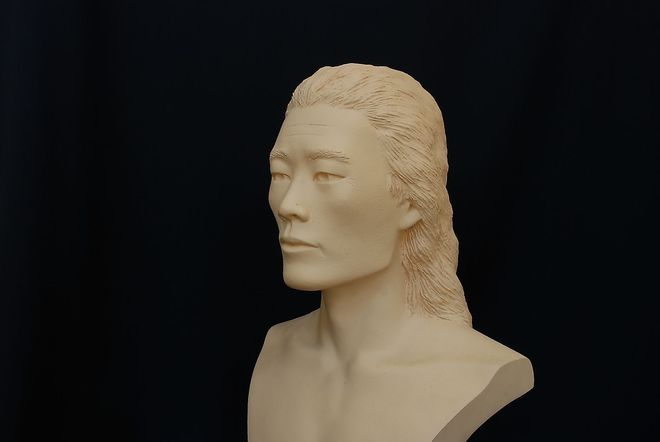
A Yayoi man's face is reconstructed from a skull found in Yamaguchi Prefecture (photo credit: Matsushita Takayuki

A Yayoi man's face is reconstructed from a skull found in Yamaguchi Prefecture (photo credit: Matsushita Takayuki
A team led by Jun Ohashi, a professor of population genomics at the University of Tokyo, examined the entire genome sequence of an adult Yayoi woman whose skeletal remains were unearthed from the Doigahama archaeological site in Yamaguchi Prefecture. An analysis of the woman's remains dating back 2,300 years ago was compared with existing data on Jomon and Kofun populations. Like modern Japanese, the Yayoi woman possessed three genetic components from Jomon, East Eurasian and Northeastern Eurasian peoples. However, her genetic makeup most closely resembled that of the Kofun people, followed by present-day Japanese, ancient Koreans and modern Koreans, Ohashi said. This outcome is consistent with the traditional "dual structure" model. This asserts that the ancestral group of modern Japanese was born when immigrants with genetic attributes originating from East Eurasia and Northeastern Eurasia mixed with the native Jomon population during the Yayoi period. A more recent theory also based on genome analysis postulates that the ancestral group did not appear until the Kofun period, instead of the Yayoi period. The "triple structure" model hypothesizes that immigrants from Northeastern Eurasia and East Eurasia came to Japan separately during the Yayoi and Kofun periods, respectively. Though the theory garnered considerable attention at the time, it has since been overshadowed by new research.
Who Are the Japanese? New DNA Evidence Emerges From 2000-Year-Old Genome
Genetic analysis of an individual from the Yayoi period reveals immigration patterns from the Korean Peninsula. Researchers at the University of Tokyo have revealed that the primary influx of immigrants to the Japanese Archipelago during the Yayoi and Kofun periods primarily originated from the K
scitechdaily.com
History Yayoi Period
The Yayoi period (弥生時代 Yayoi jidai) is a prehistoric period of Japan, usually dated from 300 BCE to ca 300 CE, during which wet-rice agriculture and the use of bronze and iron first appeared in Japan. Yayoi refers to certain characteristic pottery discovered in the Yayoi quarter of Bunkyō Ward...


