


- 14 Mar 2002
- 21,053
- 18,908
Last summer, Yabuki Takeshi was shocked to see patches of bare land on the side of Mount Azumayama (吾妻山), a mountain renowned as one of Japan's 100 most scenic peaks. Upon inquiry, he discovered that trees had been felled for a mega solar project by a Canadian renewable energy company. Yabuki, an 82-year-old retiree with a background in finance, swiftly organized a residents' group to oppose the development. They gathered over 1,700 signatures on petitions, which they submitted to the prefectural and municipal governments in March. The project, provisionally named the Takayu hot spring solar power plant, faces growing public protest.
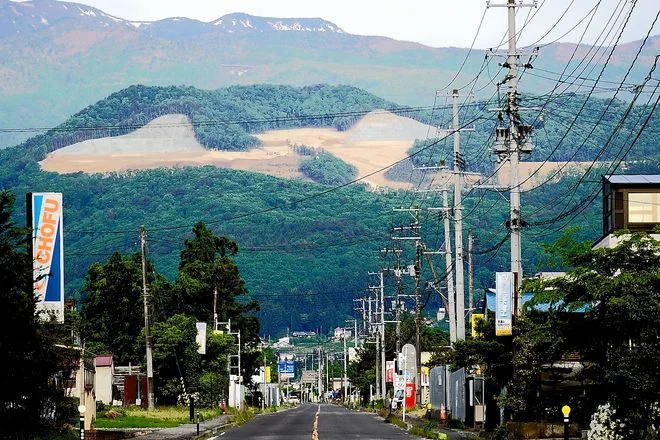
Photo credit: Okamoto Susumu via Asahi
In Fukushima, the prefectural capital, there are 26 solar farms with an output capacity of 1 megawatt or more, including those currently under construction. Among them, a facility in a forest five kilometres from the city centre stands out with an impressive 80-megawatt capacity—the largest within the city limits. Interestingly, despite their significant energy contribution, these solar farms have remained inconspicuous from a distance, avoiding local controversy. However, the ongoing project at Mount Azumayama has sparked debate due to its impact on the scenic vista. City officials emphasized landscape preservation during the environmental impact assessment, recognizing that Mount Azumayama holds tourism value and spiritual significance for local residents.
The Canadian operator is CanadianSolar.
 www.power-technology.com
Photo credit: Okamoto Susumu via Asahi
The city government said it has been flooded with complaints about the project from residents in recent months. After the snow that had covered the mountain melted, the swaths of the bare surface became more conspicuous and infuriated residents. Construction began in November 2021 on the mountainside between 300 to 600 meters in elevation, about 10 kilometres west of JR Fukushima Station. About 105,000 solar panels will be installed on the 60-hectare site, equivalent to 13 Tokyo Domes. The solar farm, with an output capacity of 40 megawatts, is scheduled to be completed in February 2025. The developer plans to generate electricity for five to 10 years after doing so for the first 20 years under the feed-in tariff system, which requires electric power companies to purchase renewable energy at prices set by the central government.
In Fukushima, the prefectural capital, there are 26 solar farms with an output capacity of 1 megawatt or more, including those currently under construction. Among them, a facility in a forest five kilometres from the city centre stands out with an impressive 80-megawatt capacity—the largest within the city limits. Interestingly, despite their significant energy contribution, these solar farms have remained inconspicuous from a distance, avoiding local controversy. However, the ongoing project at Mount Azumayama has sparked debate due to its impact on the scenic vista. City officials emphasized landscape preservation during the environmental impact assessment, recognizing that Mount Azumayama holds tourism value and spiritual significance for local residents.
The Canadian operator is CanadianSolar.
Power plant profile: Azuma Kofuji Solar PV Park, Japan
Azuma Kofuji Solar PV Park is a 100MW solar PV power project. It is located in Fukushima, Japan.
www.power-technology.com


