


- 14 Mar 2002
- 21,051
- 18,903
In the city of Ōta in Gunma Prefecture, a temple founded in 1221 and celebrated as the birthplace of the Tokugawa name has become the focus of a bitter conflict with local officials. The pond that once brought calm and beauty to the temple grounds has long since dried up, leaving behind weeds and shrubs. Visitors now voice their disappointment, and the scene has stirred a quiet but growing argument over who should shoulder the duty of caring for Japan's historic places.
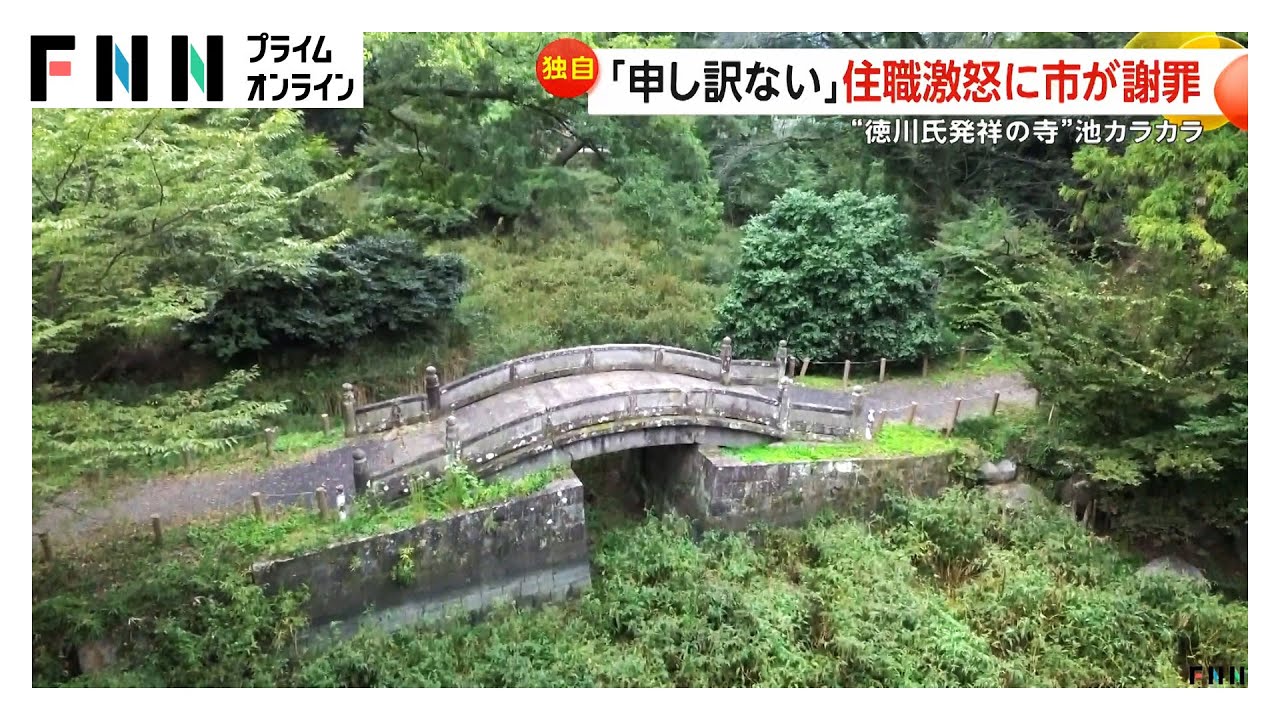
Chōrakuji Temple, known as the place where the ancestors of the Tokugawa clan first assumed their celebrated surname, was recognised as a national historic site a quarter of a century ago. Among its most cherished sights had long been a lotus pond crossed by the Togetsu Bridge, its still surface mirroring the temple buildings and surrounding trees. Head priest Ryōshū Takahashi said that many visitors stop in disbelief, wondering aloud if this barren patch of grass could really have been a pond. He recalled that it still held water until about May, but as summer approached, the last of it disappeared, leaving only cracked earth behind.
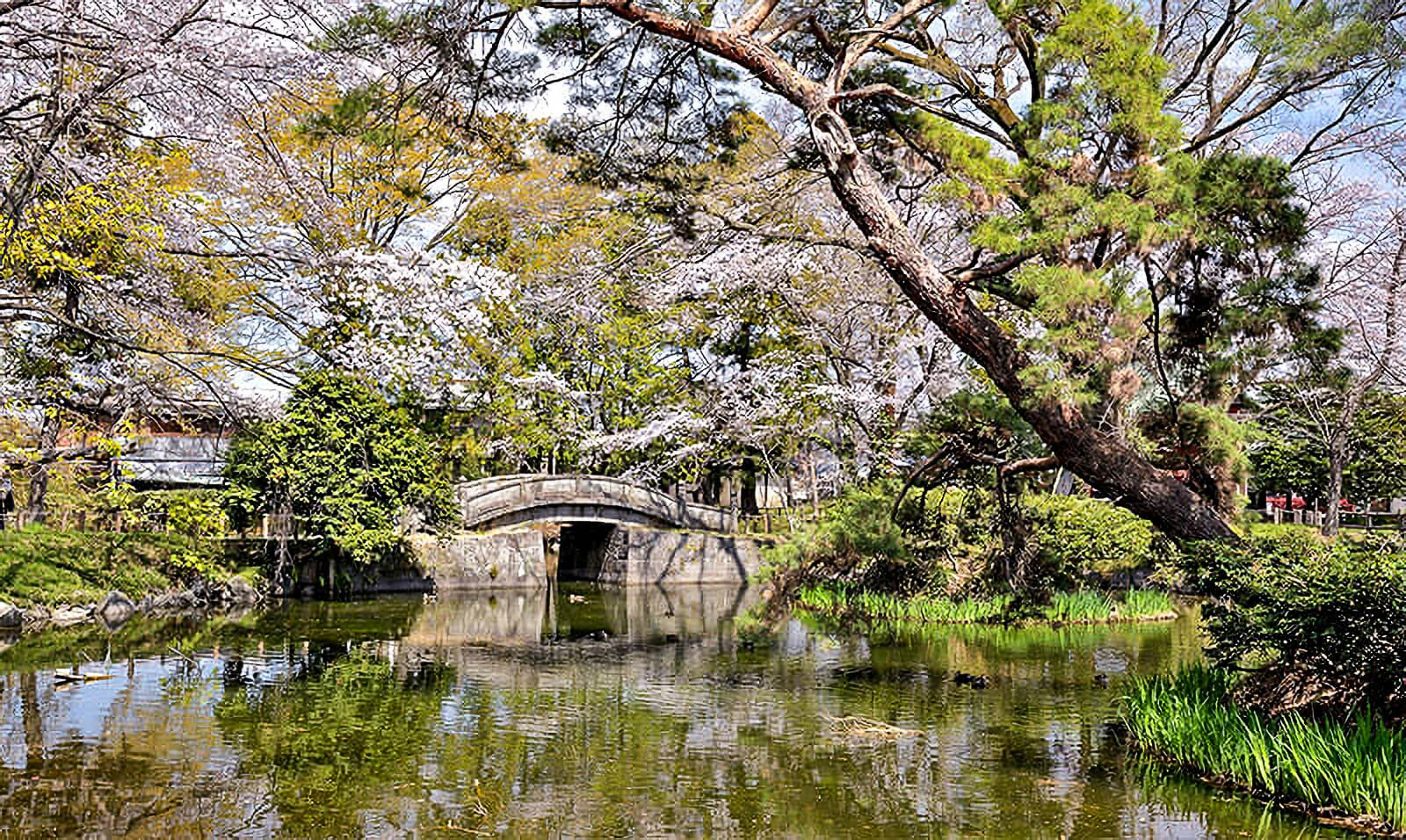
The pond seen in better days.
Takahashi said the decline began after part of a stone embankment gave way during the Great East Japan Earthquake in 2011, allowing water to seep out gradually. A pump used to draw groundwater later became blocked, worsening the problem. By June 2025, the pond had lost all its water. The temple had asked the Ōta city authorities for help time and again, since the municipality manages the grounds as a public park, but nothing came of it. The official inaction has left the monks and local supporters in frustration, and what was once a serene and well-loved historic site now feels more like a forgotten place, left to decay in plain sight.
The temple originally belonged to the Rinzai sect (臨済宗). It was counted among the "Ten Principal Rinzai Temples of the Kantō" (関東十刹), a prestigious group of monasteries patronised by the Ashikaga (足利) shogunate during the Muromachi period (1336–1573).
Chōrakuji was founded in 1221 by Serada Yoshisue (世良田義季), who served as its founder (開山 kaizan). The founding monk was the Rinzai priest Shaku En'ei-chō (釈円栄朝, active early 13th century). The temple was regarded as an official temple (官寺) from an early date, implying that it enjoyed both protection and patronage from the ruling warrior class. During the early Muromachi period, in the age of the Northern and Southern Courts (南北朝時代, 1336–1392), Chōrakuji was formally recognised by the Ashikaga shogunate as one of the ten great Rinzai temples of the Kantō region , thus ranking it among the leading Zen establishments of eastern Japan.
From its foundation in the Kamakura period (1185–1333) until the Edo period (1603–1868), Chōrakuji enjoyed the deep patronage of both the Nitta and the Ashikaga families, including the Kamakura kubō (鎌倉公方), the shogunate's representative in eastern Japan. Within the network of the Rinzai sect's Kantō temples, Chōrakuji stood as a major centre of learning and worship, closely tied to the warrior aristocracy of the region.
Later, the temple underwent a significant religious transformation (宗旨替え). Because its founder, Serada Yoshisue—also known under the name Tokugawa Yoshisue (得川義季)—was traditionally regarded as an ancestor of the Tokugawa (徳川) clan, Chōrakuji received the clan's protection in the Edo period. Under the influence of the eminent monk Tenkai (天海, 1536–1643), who served as an adviser to Tokugawa Ieyasu (徳川家康, 1543–1616) and was instrumental in the religious policies of the early Tokugawa shogunate, the temple was converted from the Rinzai sect to the Tendai sect. This reform aligned Chōrakuji with the state-supported religious framework established by the Edo bakufu , linking it ideologically and spiritually to the Tokugawa family's ancestral cult.
Within its precincts stand several notable structures, including the Sanbutsudō (三佛堂), the Taikomon (太鼓門, Drum Gate), and the Chokushimon (勅使門, Imperial Envoy Gate). Among Chōrakuji's Important Cultural Properties (重要文化財) are:
The Hōtō (宝塔, stupa) was built in the late Kamakura period in 1276. An inscription carved on the underside of the base stone records the exact date as "the twenty-fifth day of the twelfth month, Kenchī 2." This monument was designated an Important Cultural Property on 23 March 1961.
The hanging scroll Shutsuzan Shaka-zu (絹本墨画出山釈迦図), "The Painting of Shakyamuni Descending the Mountain," with an inscription by the monk Tōmyō En'nichi (東明慧日). This monochrome ink painting, executed on silk, dates from the era of the Northern and Southern Courts (14th century) and was designated on 26 May 1964.
The Chōrakuji Monjo (長楽寺文書) is a compilation of 115 medieval documents dating from the Kamakura to Muromachi periods. They are preserved in seven scrolls and designated as an Important Cultural Property on 4 July 1938.
Chōrakuji Temple, known as the place where the ancestors of the Tokugawa clan first assumed their celebrated surname, was recognised as a national historic site a quarter of a century ago. Among its most cherished sights had long been a lotus pond crossed by the Togetsu Bridge, its still surface mirroring the temple buildings and surrounding trees. Head priest Ryōshū Takahashi said that many visitors stop in disbelief, wondering aloud if this barren patch of grass could really have been a pond. He recalled that it still held water until about May, but as summer approached, the last of it disappeared, leaving only cracked earth behind.
The pond seen in better days.
Takahashi said the decline began after part of a stone embankment gave way during the Great East Japan Earthquake in 2011, allowing water to seep out gradually. A pump used to draw groundwater later became blocked, worsening the problem. By June 2025, the pond had lost all its water. The temple had asked the Ōta city authorities for help time and again, since the municipality manages the grounds as a public park, but nothing came of it. The official inaction has left the monks and local supporters in frustration, and what was once a serene and well-loved historic site now feels more like a forgotten place, left to decay in plain sight.
City officials insist that the temple, as the property owner, bears responsibility for dealing with the water leakage under the Cultural Property Protection Act. Takayoshi Takayama, a section chief in Ota's Parks and Greenery Division, apologised for the delay, explaining that "restrictions under cultural property laws required time to navigate." He promised that the city would soon clear the overgrown vegetation, saying, "We believe managing trees and weeds is our responsibility and will move forward as quickly as possible." Takahashi, however, remains unconvinced. "It's unbelievable they need three months just to consider mowing grass," he said, adding that if public pressure from media coverage finally prompts action, it would at least be a welcome result. But the more serious issue — repairing the damaged structure that caused the pond to dry up — remains unresolved. The city maintains that the temple should undertake restoration work as the owner and has not committed to covering any costs.
Tokugawa Birthplace Temple Turns Into Jungle
A historic temple in Ota, Gunma Prefecture, known as the birthplace of the Tokugawa clan name, is at the center of a dispute with local authorities after a once-picturesque pond within its grounds dried up and turned into an overgrown thicket.
newsonjapan.com
Seradazan Chōrakuji (世良田山長楽寺)
Chōrakuji is a temple of the Tendai sect (天台宗) located in Serada-chō, Ōta City, Gunma Prefecture. Its mountain name (山号) is Seradazan (世良田山), and its principal image (本尊) is Shakyamuni Buddha (釈迦如来). The temple stands adjacent to the Serada Tōshōgū Shrine (世良田東照宮), and its precincts form part of the Nitta-shō iseki (新田荘遺跡), which has been designated a National Historic Site. It is closely tied to the Nitta and Ashikaga lineages as well as to the origins and legitimising mythology of the Tokugawa house.The temple originally belonged to the Rinzai sect (臨済宗). It was counted among the "Ten Principal Rinzai Temples of the Kantō" (関東十刹), a prestigious group of monasteries patronised by the Ashikaga (足利) shogunate during the Muromachi period (1336–1573).
Chōrakuji was founded in 1221 by Serada Yoshisue (世良田義季), who served as its founder (開山 kaizan). The founding monk was the Rinzai priest Shaku En'ei-chō (釈円栄朝, active early 13th century). The temple was regarded as an official temple (官寺) from an early date, implying that it enjoyed both protection and patronage from the ruling warrior class. During the early Muromachi period, in the age of the Northern and Southern Courts (南北朝時代, 1336–1392), Chōrakuji was formally recognised by the Ashikaga shogunate as one of the ten great Rinzai temples of the Kantō region , thus ranking it among the leading Zen establishments of eastern Japan.
From its foundation in the Kamakura period (1185–1333) until the Edo period (1603–1868), Chōrakuji enjoyed the deep patronage of both the Nitta and the Ashikaga families, including the Kamakura kubō (鎌倉公方), the shogunate's representative in eastern Japan. Within the network of the Rinzai sect's Kantō temples, Chōrakuji stood as a major centre of learning and worship, closely tied to the warrior aristocracy of the region.
Later, the temple underwent a significant religious transformation (宗旨替え). Because its founder, Serada Yoshisue—also known under the name Tokugawa Yoshisue (得川義季)—was traditionally regarded as an ancestor of the Tokugawa (徳川) clan, Chōrakuji received the clan's protection in the Edo period. Under the influence of the eminent monk Tenkai (天海, 1536–1643), who served as an adviser to Tokugawa Ieyasu (徳川家康, 1543–1616) and was instrumental in the religious policies of the early Tokugawa shogunate, the temple was converted from the Rinzai sect to the Tendai sect. This reform aligned Chōrakuji with the state-supported religious framework established by the Edo bakufu , linking it ideologically and spiritually to the Tokugawa family's ancestral cult.
Within its precincts stand several notable structures, including the Sanbutsudō (三佛堂), the Taikomon (太鼓門, Drum Gate), and the Chokushimon (勅使門, Imperial Envoy Gate). Among Chōrakuji's Important Cultural Properties (重要文化財) are:
The Hōtō (宝塔, stupa) was built in the late Kamakura period in 1276. An inscription carved on the underside of the base stone records the exact date as "the twenty-fifth day of the twelfth month, Kenchī 2." This monument was designated an Important Cultural Property on 23 March 1961.
The hanging scroll Shutsuzan Shaka-zu (絹本墨画出山釈迦図), "The Painting of Shakyamuni Descending the Mountain," with an inscription by the monk Tōmyō En'nichi (東明慧日). This monochrome ink painting, executed on silk, dates from the era of the Northern and Southern Courts (14th century) and was designated on 26 May 1964.
The Chōrakuji Monjo (長楽寺文書) is a compilation of 115 medieval documents dating from the Kamakura to Muromachi periods. They are preserved in seven scrolls and designated as an Important Cultural Property on 4 July 1938.
Link:
Chōrakuji Temple
Seradazan Chōrakuji is a temple of the Tendai sect located in Serada-chō, Ōta City, Gunma Prefecture.

 ). Local hostelries and businesses would benefit from the increased footfall and this would be reflected in their taxable income!
 )
)


