Can anyone help me find this temple?

shingou28

後輩
Joined
19 Mar 2007
Messages
8
Reaction score
0
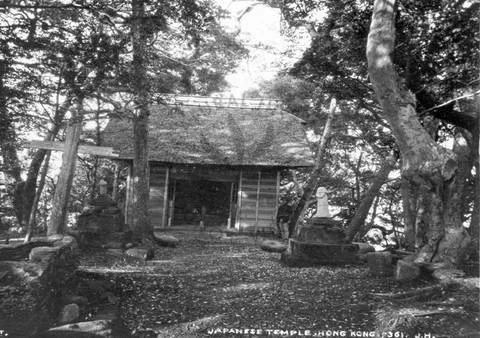
This photograph was taken in Japan in 1875. Despite the caption saying that the temple is in Hong Kong, it was actually taken somewhere in Yokosuka. Basically, I am trying to find it for my MA research and have few clues. It's a long shot but I was wondering if anyone might recognize it or have some suggestions? Any help would be appreciated. What I know about it: it is a Shinto temple and there are many small statues of a penis within the scene. There is also across to the left of the image which made me think it might have something to do with Will Adams, but that lead has been rather fruitless.

Suggestions welcome.
45869_big.webp
 
1875? It is highly unlikely that the image you attached is a Daguerreotype, the kind of photograph that was produced at that time in Japan. In fact, it looks like a an amateur snapshot taken with a digital camera in b&w mode (or later stripped of its color). There's a digital watermark on the image, perhaps the people who placed it there could shed some light on where the "temple is."

The place looks pretty dilapidated; if it's really from the 19th century, it's safe to say that the temple is probably gone (at least the one in the photo). Also, is that a cross and a phallic statue placed out front? Looks like a windup of some sort.
 
Thanks for the reply

Basically, the image came from a museum (hence the watermark) and the only information they can supply is that its possibly in Yokosuka. I've enquired with the yokosuka tourist board, local priests and various other sources but each come with a blank. The photo is by an englishman but sadly victorians weren't as thorough with collecting information as they made themselves out to be.

The phallic symbols would be in praise of fertility. As for the cross, well, William Adams who lived in Yokosuka was a christian and was said to still practice christianity in secret- hence the cross. Maybe.

Other than that, little else to go.
 
1875? It is highly unlikely that the image you attached is a Daguerreotype, the kind of photograph that was produced at that time in Japan.

It is also highly unlikely that anyone, much less a European, was taking daguerrotypes in 1875.


In fact, it looks like a an amateur snapshot taken with a digital camera in b&w mode (or later stripped of its color). There's a digital watermark on the image, perhaps the people who placed it there could shed some light on where the "temple is."

The place looks pretty dilapidated; if it's really from the 19th century, it's safe to say that the temple is probably gone (at least the one in the photo). Also, is that a cross and a phallic statue placed out front? Looks like a windup of some sort.

I agree. If it really is from 1875, that low-rent rickety structure is long gone. I'd hate to think of my academic progress hinging on making a positive ID of this thing.
 
This photograph was taken in Japan in 1875. Despite the caption saying that the temple is in Hong Kong, it was actually taken somewhere in Yokosuka

Just for the hell of it here, why or how do you "know" for a fact that it wasn't taken in Hong Kong? Heck if all your attempts to find out any information have been in vain so far, how can you be certain it wasn't a location in Hong Kong?

Odds are there were a heck of a lot more Europeans there at the supposed time of this photo than here in Japan.
 
Personally I don't think it is a photo taken in Japan - even the smallest, humblest temple or shrine in Japan is built with the special style of architecture, regardless when it was built. There're distinctive difference between Buddhism templs and Shinto shrines, while the one in the photo is neither of it and looks nothing but an ordinary house of some sort...
If the photo was taken in Hong Kong, it is more understandable that the building did not follow the style.
 
The fact that it say "Japan" and "Hong Kong" on it lets us know that the information "chain of custody" was not assiduously adhered to; it has been in the hands of doofuses. It throws the matter of location and time open to rampant speculation.
 
The photos were taken by a photographer on board the HMS challenger which visited japan from april 11th to June 17th 1875. The ship docked at 4 major places: Kobe, Yokohama and Yokosuka (for repairs). Now, the photographer wouldn't have been able to trek for days with camera equipment. The lab was actually on board the ship itself. The diary that encompanies the photos say a 'japanese temple, yokosuka'. This particular image was printed with teh caption a few years later by someone else- apparently mixed up the captions- hence the marking of Hong kong.

The phallic penis statutes that are in the temple, in front of it and around it are part of shinto beliefs are they not? If so, then it would be fair to say that the photo is of Japan.
 
It is also highly unlikely that anyone, much less a European, was taking daguerrotypes in 1875..
What would they have been using? The only information I could find on photography in Japan mentions the daguerrotype's introduction in the late 1850's.

Now that we know it was a photographer on a British ship, there are several other possibilities, including wet and dry plates (the latter being the most recent technology available at the time the photograph was supposedly taken). But I still maintain that the image itself doesn't look that old.
 
The daguerrotype had pretty much run its course in a couple of decades after its introduction.

Not all old images "look" old. I looked around carefully in the photo for any tell-tale physical sign of modernity, but found none. There are no people, so we can't make guesses based on clothing. And we would expect the immediate environs of a temple to look like that, whether in 1875 or 2007. Unfortunately there is very little about this photo that a fellow can hang his hat on.
 
The daguerrotype had pretty much run its course in a couple of decades after its introduction.
Not all old images "look" old. I looked around carefully in the photo for any tell-tale physical sign of modernity, but found none. There are no people, so we can't make guesses based on clothing. And we would expect the immediate environs of a temple to look like that, whether in 1875 or 2007. Unfortunately there is very little about this photo that a fellow can hang his hat on.
Actually I think in front of the building, just to the right, it appears that there is a person standing there, to the left of the white stone statue.

If anyone has the capability to blow the picture up without distorting it you may be able to see the clothes on what I think is a man.
 
The phallic penis statutes that are in the temple, in front of it and around it are part of shinto beliefs are they not? If so, then it would be fair to say that the photo is of Japan.
Aren't stone monuments generally shinto inspired ? Which would make it a shine, although I know there is a lot of "mixing" of ceremonial objects between Shinto and Buddhist sites. There is also what looks as much like a cross in front as anything native to a Japanese religion or sect.

Anyway, for what it is worth, as undrentide explained, this building doesn't look like a temple or shrine I've ever seen or visited either.
 
Probably it was in Japan, but I cannot understand the difference between the basement and the statue. The latter one looks so new.

Where did you get the photo? Do you have the original photo or book?
 
Actually I think in front of the building, just to the right, it appears that there is a person standing there, to the left of the white stone statue.
If anyone has the capability to blow the picture up without distorting it you may be able to see the clothes on what I think is a man.

Camouflage! I doubt the picture can be blown up much without distorting it.
 
There is a man standing to the right of the temple in the image. The photograph itself is a wet plate collodian processed image and is of a high quality. There is no question of its age. I have seen and held the original glass plate.

The white statues themselves are shaped as penises.
 
How come the museum couldn't supply you with a higher-resolution image of this? For all we know, there may be some inscriptions in the photo that aren't visible at this resolution.
 
The white statues themselves are shaped as penises.
And I seriously doubt that or the cross are something you'd find at a Buddhist temple. If it was a shrine, shouldn't there be a torii gate to the entrance ?
 
I do have a hi resolution version of the image but there are no inscriptions.

Does anyone know anything about the style of the roof?
 
Well, why do you have all of us squinting at the lo-res version then? What are those horizontal things on the upper-right side of the photo? They look like power lines.
 
Maybe he's enjoying making us play 20 questions with him.
 
if it is a shrine, there would be Torii, koma-inu(Koma-dog),bell and shite(paper decoration ) infront of shrine.
and it is not a temple, either.
i checked the temple ,shirine and Doso-jin in kanagawa that is releted with some sex symbol or gods....
http://homepage2.nifty.com/japanpi/kanagawa.htm
I could not find it
a big tree of right side looks like symbol of women
 
for copyright reasons, i cannot put the hi resolution image online. There are are no powerlines in this photograph. It is a genuine image. There is no manipulation with in. It comes from the natural history museum london so why on earth would they have manipulated it or faked it? This image was taken in ear where the photographic image was truthful. Are we all so paranoid about digital intervention that we cannot except whether something is genuine or not? I didn't post this image to argue its authenticity. I put it on here in the hope that there are people who would find it equally interesting. Everyone likes a mystery. You have to take a leap of faith with the image though.
 
I wasn't suspicious of digital manipulation. I was dubious about the photo being 130 years old. If they're not power lines, what are the straight horizontal lines in the photo?

I didn't post this image to argue its authenticity. I put it on here in the hope that there are people who would find it equally interesting. Everyone likes a mystery.
So you put it here to share an interesting mystery with us? I thought you were looking for help in identifying it for your MA research. In the second case, if anyone here were capable of identifying it, a high-res photo would make the task considerably lighter.
 
Thanks pipokun, i will have my assistant look into that shrine and get back to you.
 
Back
Top Bottom