Need a word or phrase translated?

Ah, "chi" + "me" is a good idea.:) Although 血眼 is usually read as a compound word "chimanako".;-)

There are so many homonyms in Japanese. "Chi" can mean earth, knowledge, thousand, etc. other than blood. The meaning is determined by kanji.

I see. 'Thousand Moons' would sound pretty amazing, although I'm pretty sure most would read it as Blood Moon, which sounds a bit too dark.

Would.... Chigotsuki (or chigo-tsuki) mean anything then? Go was another usable syllable in my word bank. Since Chime seems to not be valid unless it is used in the compound Chimanako. I know Ichigo is 'Strawberry' if I remember right. But not sure about Chigo.

What I can use is:
Chi
Me
Go
Tsuki
and Sumi (I think like the ink paintings).

Really in a predicament, ya? >:
 
"Chigo" would be usually interpreted as 稚児; a baby, child, a boy who works in a temple/shrine/noble's house, a child who takes part in a festive. "Chigotuki" sounds like "a month of baby/child", "the one who is accompanied by an attendant boy" or "a class/place that is accompanied by an attendant boy" to me.
 
i'm having trouble with the following:
いくら性能のよい超能力技があったとしても
i'm mostly confused by the use of "to suru" after atta.
 
~とする is a structure for hypothesis, and ~としても is a conditional; "even if (you had/I had/there were high-powered supernatural skills)".
 
Hey!
Im new to this forums, I assumed, that a lot of people knows japanese here, so I thought, that this is the best place to find a person who could translate text from image below, I just need essencial meaning from it, nothing more:
japanpng-1.webp

I will be grateful.
 
tThanks for he help. I've just run into ラウンド関始時. I think it has something to do with the opening of the round but my dictionaries don't recognize any combination of these kanji.
 
Think it's probably 開 rather than 関, in which case 開始時 is just "opening/start time" as you already guessed.
 
Is this a typo where the author couldn't decide between 変えられる and 変えられます? If not, it's the first time I've encountered something like this, to me it doesn't make sense. Sorry for a possibly stupid question but I can't archive texts for future reference and study unless I first confirm there's no error. And if there is, I correct it.

しかし、勉強も人生も、長いものです。
最初の一歩の結果は、あとからいくらでも変えられるます
 
"まいります" and "うけてみろ" or something like that.

Seems to be a fave for Ninjas. What are they, and what do they mean? I can't find any information for them online so...
よろしくお願いします!
 
Last edited:
Hey!
Im new to this forums, I assumed, that a lot of people knows japanese here, so I thought, that this is the best place to find a person who could translate text from image below, I just need essencial meaning from it, nothing more:
japanpng-1.webp

I will be grateful.
A coincidence???

Question ( I'm new ) | Japan Forum


Is this a typo where the author couldn't decide between 変えられる and 変えられます? If not, it's the first time I've encountered something like this, to me it doesn't make sense. Sorry for a possibly stupid question but I can't archive texts for future reference and study unless I first confirm there's no error. And if there is, I correct it.
しかし、勉強も人生も、長いものです。
最初の一歩の結果は、あとからいくらでも変えられるます
Yes, you are correct. That's a typo.


"まいります" and "うけてみろ" or something like that.

Seems to be a fave for Ninjas. What are they, and what do they mean? I can't find any information for them online so...
よろしくお願いします!
まいる is a humble verb for 行く.
~てみる means "to try doing".
 
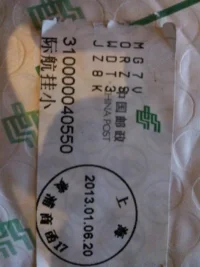
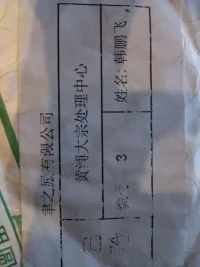
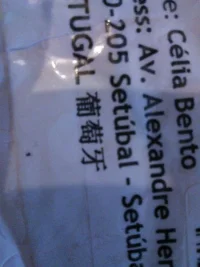
It seems like those are all proper nouns; the names of place(e.g. Shanghai), company or person. The one in the right picture means "Portugal".
 
The ところ here, would it be similar to the one in こんなところでしょう and such, kind of like a "this is where we stand/this is the current situation/here's the deal" etc? Or is it with an "about to do" meaning which can be the case after present form verb? Although 思う is here a present form verb, I still feel a "this is how it is" meaning makes more sense in this case. Are there situations where present form verb + ところ really does not have an "on the verge of" meaning?

今だったら、辞書をコピーするだけでも大変だと思うところですが・・・・・・。
 
The ところ here, would it be similar to the one in こんなところでしょう and such, kind of like a "this is where we stand/this is the current situation/here's the deal" etc? Or is it with an "about to do" meaning which can be the case after present form verb? Although 思う is here a present form verb, I still feel a "this is how it is" meaning makes more sense in this case. Are there situations where present form verb + ところ really does not have an "on the verge of" meaning?

今だったら、辞書をコピーするだけでも大変だと思うところですが・・・・・・。
That's "situation", not "to be about to do". 思う can't be used BEFORE you actually think of/about something, i.e., you can hardly say もうすぐ思う. Thus, 思うところだ CAN'T mean "to be about to think". Although it can be used for a contrary-to-fact in the past "was about to do", for instance, (あやうく/もう少しで)辞書をコピーするだけでも大変だと思うところでした(but actually I didn't think so).


And are there a name of any company?
I would like to know the company....
聿之励有限公司 and 黄浦大宗

These are Chinese, as already pointed out, so I can't transliterate these names to English.
 
Can anyone please tell me what "どおっこいしょっと..." means?

Someone says this in a story I'm reading. The male protagonist says this after running and getting into a train and saying "Somehow, I managed to board train..."
I couldn't find anything helpful about "どおっこいしょっと", but I'm guessing it's supposed to express effort/strain, kinda like よいしょ.

What do you think?
And thanks in advance again. :)
 
I think this is supposed to be sarcasm but I don't get it. It's another case where I have difficulties with potential VS passive verb. "(I) can't be saying" or "It cannot be said to be (such a luxury)" or something. I would be thankful for a rough translation.

今日は、明るい青空に白い雲が浮かんでいます。
風は結構冷たいのですが、そんな贅沢を言っていられません(笑)。

Another thing I don't understand. The final row here, posting the entire text so the context is clear.

ところが、子供もお父さんも、「やってね」と言われたことは抵抗なくできますが、「(やるのが当然だから)やってね」と言われたことは、意地でもやりたくなくなります。

そこで、親子げんかが(笑)。

あるいは夫婦げんかが(爆笑)。

人間って大変ですね。(とひとごとみたいに)
 
Last edited:
Can anyone please tell me what "どおっこいしょっと..." means?
Someone says this in a story I'm reading. The male protagonist says this after running and getting into a train and saying "Somehow, I managed to board train..."
I couldn't find anything helpful about "どおっこいしょっと", but I'm guessing it's supposed to express effort/strain, kinda like よいしょ.
What do you think?
And thanks in advance again. :)
Didn't he say it when he was about to sit on a seat or set down his baggage?


I think this is supposed to be sarcasm but I don't get it. It's another case where I have difficulties with potential VS passive verb. "(I) can't be saying" or "It cannot be said to be (such a luxury)" or something. I would be thankful for a rough translation.

今日は、明るい青空に白い雲が浮かんでいます。
風は結構冷たいのですが、そんな贅沢を言っていられません(笑)。
言っていられる is ALWAYS potential. The passive of 言っている is 言われている.

Another thing I don't understand. The final row here, posting the entire text so the context is clear.

ところが、子供もお父さんも、「やってね」と言われたことは抵抗なくできますが、「(やるのが当然だから)やってね」と言われたことは、意地でもやりたくなくなります。

そこで、親子げんかが(笑)。

あるいは夫婦げんかが(爆笑)。

人間って大変ですね。(とひとごとみたいに)
とひとごとみたいに = と、他人事みたいに(言う/言ってみる)
 
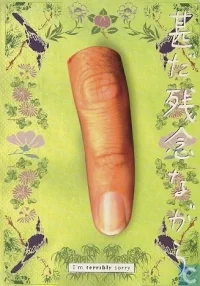
Hello,

I'm first time on this forum, and I have a language question. I have this old postcard, with Japanese caligraphy and was wondering for a long time what it says. Can You please help me with this?

386cffe0-14c5-012d-b455-0050569428b1.webp

all the best to You,

AgaZet
 
Back
Top Bottom