I don't understand the use of とする in this sentence

Vahl

後輩
Joined
28 Oct 2010
Messages
2
Reaction score
0
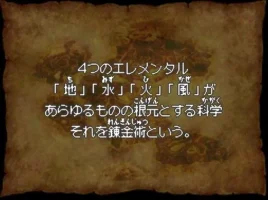
"4つのエレメンタル「地」「水」「火」「風」があらゆ るものの根元とする科学それを錬金術という"

I know it says something like (this translated very literally):
"The four Elemental: Earth, Water, Fire and Wind; The Origin of everything _________(something with science) that, is called Alchemy."

But what exactly the "あらゆるものの根元とする科学" means, i don't know.
If someone could explain to me the use of "とする" as it is employed in this sentence, i would be very grateful.

Thanks in advance.
 
「とする」 is a combination of the quotation particle 「と」 and the verb 「する」.
So, the preceding part of 「と」 is a quotation.
「する」, which is somewhat universal verb but in this case, means "to define".

The sentence can be translated like this:
"The science, which says that the four elemental: Earth, Water, Fire and Wind; is the origin of everything, is called Alchemy."
 
「とする」is a phrase indicating that someone assumes something or regards/defines/thinks of it in a certain way.
 
Last edited:
"4つのエレメンタル「地」「水」「火」「風」があらゆ るものの根元とする科学それを錬金術という"

I know it says something like (this translated very literally):
"The four Elemental: Earth, Water, Fire and Wind; The Origin of everything _________(something with science) that, is called Alchemy."

But what exactly the "あらゆるものの根元とする科学" means, i don't know.
If someone could explain to me the use of "とする" as it is employed in this sentence, i would be very grateful.

Thanks in advance.
Are there any typos, for instance as below?

4つのエレメンタル「地」「水」「火」「風」があらゆ るものの根元だとする科学それを錬金術という
4つのエレメンタル「地」「水」「火」「風」をあらゆるものの根元とする科学それを錬金術という
 
Are there any typos, for instance as below?

4つのエレメンタル「地」「水」「火」「風」があらゆ るものの根元だとする科学それを錬金術という
4つのエレメンタル「地」「水」「火」「風」をあらゆるものの根元とする科学それを錬金術という

Here,this is where i got it from:
renkinjutsu.webp

Thanks for the replies :)
 
I see. So the writer/scripter used 4つのエレメンタル「地」「水」「火」「風」があらゆ るものの根元 as a clause or 根元だ/である, as in in my previous post.
 
Copula omission, it seems, similar to 変と思います, I guess. Hmm... different though, as 根元 is a 名詞 and 変(だ) is a 形容動詞.
 
湖を源泉とするその川=>その川は湖を源泉とする
湖が源泉であるその川=>その川は湖が源泉である
Nothing omitted here.
Obviously the Topic is その川 in either patterns,
but technically the Subjects differ.
 
But above it's ~が~とする, which is a combination of ~を~とする and ~が~である, and Toritoribe said it should be ~が~とする to be grammatical (I believe). That's why I said "copula omission".
 
Ah, ic.
i missed the point.

Isn't it a variation of 体言止め? Like this:
「その川は湖が源泉」とする意見がある。
 
That seems to be the same phenomenon with a different name to me. So I guess whether it's 名詞 or 形容動詞 doesn't matter, in that case. 形容動詞も体言の範囲に入りますね?
 
が could be misinterpreted as the subject marker of とする when the copula is omitted. Probably that brought me a feeling of strangeness, when I first read the example sentence. It might be acceptable, but I don't recommend learners to use it. 😅
 
Back
Top Bottom