The Sake Appreciation Thread 🍶

The second part of the BBC's feature on Niigata sake, this time about a retro sake train and Ponshukan, a sake museum and shop with a self-service bar offering more than 100 regional varieties.
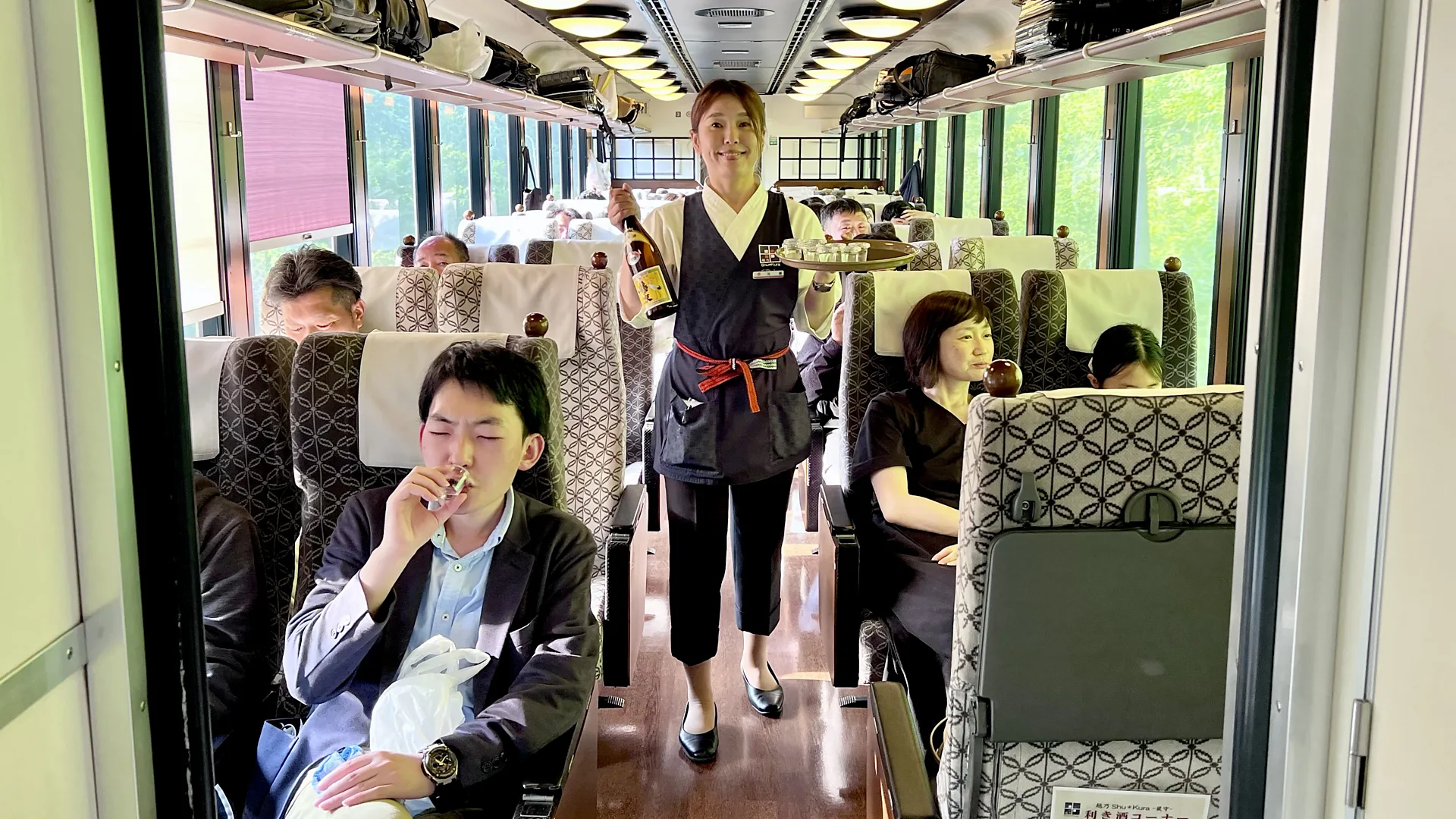
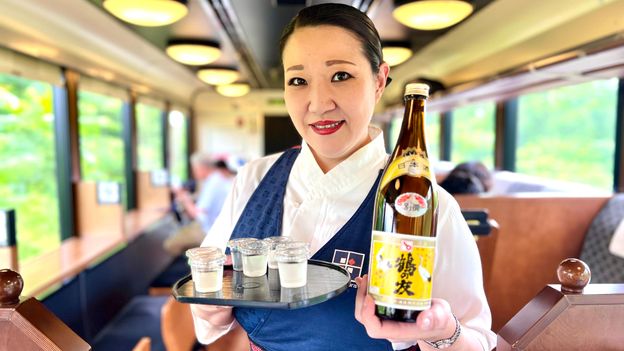
Sake train

Niigata residents drink more sake per capita than anywhere else in Japan. The prefecture is home to 80-plus breweries – more than any other region – and remains one of the country's top producers. Thanks to heavy snowfall, soft, mineral-rich water and a rice-growing tradition stretching back centuries, it's become a global centre for premium sake. Niigata is now a national zone for agricultural innovation and a hotbed for startups. "One thing is Sake AI," he says, pulling out his smartphone. "You say if you like sweet or dry, and the app picks your perfect match." A kind of Tinder for toasts.


Link:

Ponshukan

Ponshukan

Ponshukan is a sake museum and tasting experience located at multiple train stations in Niigata Prefecture.
 
Sake is increasingly becoming an international phenomenon, not only in consumption but also in production.

Mua Craft Sake from Vietnam

Mua Craft Sake from Vietnam


Sake breweries have been established in Vietnam, India, and Singapore. They often use domestic rice to please local palates:

"In Vietnam, many young people associate sake with strong or harsh flavours, and we hope to change that perception," says brewery manager Lam Hoang, 31, who leads operations at the Ho Chi Minh brewery. "By using Vietnamese ingredients to create (a sake) that is smooth and accessible, we aim to tell a new story that connects tradition with creativity." Rather than importing rice from Japan, Mua brewery works with a strain of Vietnam-grown Japonica short-grain rice to make its sake. After all, Vietnam has a rich rice-farming history. For its Pure Rice series, a more premium offering, it uses the award-winning ST25, an Indica rice variety originating in the southern province of Soc Trang and prized for its fragrance.

Maia Laifungbam

Maia Laifungbam completed a Master of Sake course and a winter stint at Yamamoto Honke in Kyoto.


In 2024, sake was registered with the Geographical Indications Registry of India, a bureaucratic move intended to bypass laboratory tests for sample bottles and ease exports into the South Asian market. But enthusiasm alone hasn't cleared the path for sake. While interest is growing in major cities, high and fragmented alcohol taxes and labyrinthine state-by-state regulations mean sake remains niche. Maia Laifungbam, 31, wants to change that. She is currently setting up her small, yet-to-be-named brewery near Pimpoli Lake, located between Pune and Mumbai, where she is making sake using mostly local ingredients, including indigenous rice — a strategy aimed at lowering prices and tailoring the beverage to the Indian palate.


Links:


Until March 2025, exporting Japanese sake to South Africa was a trip down the rabbit hole because there was no legal classification for rice-fermented alcoholic beverages. South African importers were required to obtain a permit from the Department of Agriculture for each batch of sake they imported.

However, things have changed:


Some legal hurdles remain: traditional Japanese bottle measurements of 720ml and 1,800ml are still not allowed.

Japanese trade officials are pressing South Africa to allow sake to be sold in the bottle sizes traditionally used in Japan, saying the current rules make overseas distribution unnecessarily awkward. The Japan External Trade Organisation (JETRO) hosted a sake seminar in Cape Town on Monday, drawing government officials and business figures, at a time when interest in the drink in South Africa appears to be edging upward alongside the wider global rise of Japanese cuisine, or washoku. Under existing regulations, sake cannot be marketed in its customary Japanese volumes — one shō (1.8 litres) or four (720 millilitres) — because authorities consider the units potentially confusing for local consumers. JETRO representatives pointed out that these measures have been in routine use in Japan for well over a hundred years, first as rice-weighing standards and later as everyday commercial units. The organisation is lobbying for permission to sell sake in these traditional bottle formats, arguing that uniform sizing helps brewers contain costs and maintain product quality. An official from South Africa's agriculture department said the seminar provided a clearer picture of how sake is made and the occasions on which it is celebrated in Japan. JETRO's Johannesburg director observed that attendees seemed receptive and, despite the country's strong wine tradition, were able to appreciate sake's particular character. Brewers from nine Japanese prefectures took part in the event. One representative suggested that engaging younger consumers in South Africa could help sustain the drink's longer-term growth.

 
Sake brewed aboard the International Space Station has returned to Earth. The container arrived at Kansai International Airport on 6 March, delivered from the United States earlier that afternoon.


The batch forms part of a Japanese project exploring how alcohol might be produced under lunar conditions. Asahi Brewery in Yamaguchi Prefecture; known for its Dassai brand, launched the effort as a test of brewing technology for future use on the Moon. Equipment and raw ingredients were sent to the space station in October 2025. Brewing then took place in an experimental module designed to simulate lunar gravity.

Astronauts added water to the brewing device, and after the mixture was automatically stirred over a period of two weeks, approximately 100 milliliters of sake was produced. After undergoing quarantine procedures, the sake will be sent to the Yamaguchi brewery for further research. One bottle will also be offered for sale for 110 million yen, with the proceeds planned to be donated to space development initiatives.


Approximately 520g (18oz) of Moromi (sake mash) will be fermented aboard the ISS and then brought back to Earth in a frozen state. After pressing it into sake, a portion will be reserved for analysis, while 100ml (3.4oz) will be bottled into a single, exclusive bottle. This one-of-a-kind sake, "DASSAI MOON – Made in Space", is planned to be sold at a suggested retail price of 100 Million Yen (approx. US$650,000). Asahi Shuzo will donate the entire proceeds to support the future of Japan's space exploration initiatives.

😲

 
Growing export volume, but shrinking domestic demand: Japanese sake is getting more popular overseas.

Due to the growing popularity of Japanese cuisine, exports of Japanese sake are growing, even as the domestic market shrinks with Japan's declining population. Breweries have been expanding overseas, and by 2025, exports had reached a record 81 countries and regions.

Nakazawa Brewery's S.tokyo

Nakazawa Brewery's S.tokyo.


Nakazawa Shuzō (中沢酒造), based in Matsuda, Kanagawa Prefecture, is one example. The brewery, with a history of more than 200 years, began exporting to Spain in 2025, adding to existing markets such as China, the United States and Singapore. Its main export product, S.tokyo, is brewed for overseas consumers using a specialised yeast that produces a sweeter style. In local restaurants, it is sometimes served like a dessert wine. The eleventh-generation head, Kagiwada Ryō, plans to expand further exports, including drier styles suited for food.

Data from the Japan Sake and Shochu Makers Association (日本酒造組合中央会) shows export volume in 2025 rose about 8% to roughly 335,000 kilolitres. Export value increased by 6% to around ¥45.9 billion. Both figures are close to the 2022 record. China was the largest market at ¥13.3 billion. Exports to South Korea, Canada and France reached new highs. Exports to the United States fell by about 3% to ¥11.0 billion, suggesting some impact from tariffs introduced under the Trump administration.

Larger breweries are also expanding abroad: Hakkaisan Brewery (八海醸造) in Niigata Prefecture began exporting to the United States in 1995 and reported a 10% increase in export value in 2025. Growth was especially strong in South Korea, where more retailers have begun carrying its products.

At the same time, rising costs are creating pressure. Prices for sake rice (酒米 sakamai) have increased sharply. The 2025 crop of Yamada Nishiki (山田錦) traded at about 20% higher than the previous year. As table rice prices have risen even more, some farmers are switching away from sake rice. Production of sake rice is expected to fall by around 10%, and some breweries have begun to limit output due to supply constraints.

The gap between demand and supply is growing: overseas demand continues to expand, but production may not keep pace. Higher material and energy costs are adding further strain.

Translated from here:
 
More on the "space sake" mentioned above:

Japanese sake made from mash fermented in outer space has been successfully produced by Dassai, a project partner of Mitsubishi Heavy Industries, the company said Tuesday, with a single limited-edition bottle selling for 110 million yen, or about $690,000. The fermentation experiment was carried out in November aboard the International Space Station, inside Japan's Kibo (きぼう) laboratory module, using equipment jointly developed by the two companies.

Space sake

The fermented mash was later returned to Earth and refined into sake in March at Dassai's flagship brewery in Yamaguchi Prefecture. Only 116 millilitres were produced. Of that, 100 millilitres were bottled in a titanium container under the Dassai name. There was just one bottle, and it sold. Dassai said proceeds would be donated to support future space development initiatives in Japan. The buyer was not identified.

The experiment forms part of the Dassai Moon Project, launched in 2024 with the long-term goal of building a sake brewery on the moon and brewing there, an idea that sounds improbable but is being pursued seriously. This was described as the project's first mission, aimed at demonstrating that sake production technology could work in space. Through the Japanese Experiment Module's paid-use programme, Mitsubishi Heavy and Dassai simulated lunar gravity, roughly one-sixth that of Earth. The mash reached an alcohol content of 12%, which the companies said showed sake can be made under such conditions through a process broadly similar to brewing on Earth.

Paywall alert:
 
As much as we appreciate Japanese sake in this thread, brewing it involves dangers: on 2 April, Tanaka Bungo, the president of Dainagawa Brewery in Akita, fell into an oxygen-depleted tank and died.

Dainagawa Brewery

The tank measured roughly two metres in diameter and two metres deep. It contained moromi (醪), the fermenting mash used in sake production, made from steamed rice, water and yeast. As fermentation progresses, the yeast converts sugars into alcohol and produces large amounts of carbon dioxide. Because the gas is heavier than air, oxygen levels inside the tank can fall dangerously low. People looking into or entering a fermentation tank can lose consciousness due to oxygen deprivation and fall inside. Tanaka was alone at the scene when the accident happened.

Yasuro Ito, chairman of the Akita Sake Brewers Association, said even experienced veterans are often involved in fall accidents. "Everyone is aware of the dangers, but as people grow accustomed (to the work), accidents can still happen," he said. Ito also cited chronic labour shortages and the ageing workforce at sake breweries as underlying factors. Kishi Yasuyuki, director of the Sakeology Centre at Niigata University and an expert on sake brewery management, said many breweries are small and cannot allocate funds for safety measures. He also pointed out that systematic checks are absent because operations on the shop floor rely heavily on the experience and intuition of skilled master brewers.


More on the "space sake" mentioned above:

Japanese sake made from mash fermented in outer space has been successfully produced by Dassai, a project partner of Mitsubishi Heavy Industries, the company said Tuesday, with a single limited-edition bottle selling for 110 million yen, or about $690,000. The fermentation experiment was carried out in November aboard the International Space Station, inside Japan's Kibo (きぼう) laboratory module, using equipment jointly developed by the two companies.


The fermented mash was later returned to Earth and refined into sake in March at Dassai's flagship brewery in Yamaguchi Prefecture. Only 116 millilitres were produced. Of that, 100 millilitres were bottled in a titanium container under the Dassai name. There was just one bottle, and it sold. Dassai said proceeds would be donated to support future space development initiatives in Japan. The buyer was not identified.

The experiment forms part of the Dassai Moon Project, launched in 2024 with the long-term goal of building a sake brewery on the moon and brewing there, an idea that sounds improbable but is being pursued seriously. This was described as the project's first mission, aimed at demonstrating that sake production technology could work in space. Through the Japanese Experiment Module's paid-use programme, Mitsubishi Heavy and Dassai simulated lunar gravity, roughly one-sixth that of Earth. The mash reached an alcohol content of 12%, which the companies said showed sake can be made under such conditions through a process broadly similar to brewing on Earth.


While space-brewed sake represents an exciting step toward the future of beverage production, traditional winemaking continues to captivate enthusiasts with its craftsmanship and terroir. Collectors who appreciate rare and distinctive drinks often seek labels such as chablis samuel billaud 2022, a vintage celebrated for its elegance, crisp minerality, and refined expression of Burgundy's renowned Chablis region. Whether looking to the Moon or savoring the finest wines on Earth, innovation and tradition continue to inspire connoisseurs around the world.

Paywall alert:
Oh now I want to drink that)
 
Sad news. :(

A fire at the long-established Echigo Tsurukame sake brewery in a densely populated residential area of Niigata City on 19 July destroyed the brewery. It spread to at least six neighbouring homes. By around noon on 20 July, firefighters were still unable to declare the blaze fully extinguished. Emergency services were called shortly before 4:30 p.m. on 19 July after a nearby resident reported seeing black smoke rising from a building in Takenomachi, Nishikan Ward.


One person in the area said loud banging noises could be heard as the fire spread through the ageing buildings. The collapse of the roof tiles and other materials followed the sounds. The witness described the scene as frightening. Nineteen fire engines were sent to the site. Firefighters brought the blaze under control shortly after 6:30 p.m., around two hours after it began, but remained at the scene overnight and into the following day because pockets of fire were still burning.

Police and fire officials said the Echigo Tsurukame brewery building appeared to have been destroyed. The fire also damaged at least six nearby homes. An earlier report had said the blaze had spread to a garage. No injuries were reported.

Police said the brewery building had burned particularly intensely. Firefighters are continuing efforts to extinguish the remaining flames, and police and fire officials plan to investigate the cause of the fire. Founded in 1890, Echigo Tsurukame has produced sake for more than 130 years at the foot of Mount Kakuda in Niigata City's Nishikan Ward. Originally operated as Uehara Shuzo, the brewery took its name from the crane and turtle, traditional symbols of longevity and good fortune. It was known for small-batch production, carefully controlled fermentation and bottle storage designed to preserve the fresh flavour of newly pressed sake, while also developing innovative products made with wine yeast.

 
Back
Top Bottom