


- 14 Mar 2002
- 21,053
- 18,908
Sometime between 1906 and 1908, the Japanese military removed a nine-ton Tang dynasty stele from Lushun, then known as Port Arthur. It was transported to Tokyo as a symbol of Japan's victory over Russia in 1905. The exact date of its removal remains unclear.
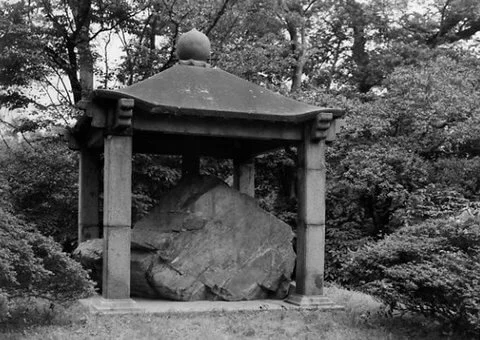
Tang-era Honglujing Stele on the grounds of Tokyo's Imperial Palace (photo credit: Wang Renfu).
Imperial Palace records later uncovered by Japanese researchers show that the 1,300-year-old Honglujing Stele was formally received on 30 April 1908. Since then, it has remained within the Imperial Palace grounds, inaccessible to the public and visible only to the emperor and members of the imperial household. Photographs released by the palace to a Japanese peace group several years ago show a massive stone set within the palace gardens, protected by a pavilion that was taken from the site along with the stele. A Chinese organisation seeking redress from the Japanese government for wartime suffering is now calling for the return of the stele.
Chinese researchers and Japanese activists have renewed calls for Japan to return a Tang dynasty relic looted over 120 years ago. The effort to recover the Tang Honglu Well Stele comes amid rising regional tensions and Beijing's ongoing national campaign to reclaim cultural heritage. Shanghai University's Research Centre for Chinese Relics Overseas and Japanese cultural groups issued a joint declaration on Friday, urging Tokyo to "correct historical errors" and return the stone monument.

 www.scmp.com

Tang-era Honglujing Stele on the grounds of Tokyo's Imperial Palace (photo credit: Wang Renfu).
Imperial Palace records later uncovered by Japanese researchers show that the 1,300-year-old Honglujing Stele was formally received on 30 April 1908. Since then, it has remained within the Imperial Palace grounds, inaccessible to the public and visible only to the emperor and members of the imperial household. Photographs released by the palace to a Japanese peace group several years ago show a massive stone set within the palace gardens, protected by a pavilion that was taken from the site along with the stele. A Chinese organisation seeking redress from the Japanese government for wartime suffering is now calling for the return of the stele.
Chinese researchers and Japanese activists have renewed calls for Japan to return a Tang dynasty relic looted over 120 years ago. The effort to recover the Tang Honglu Well Stele comes amid rising regional tensions and Beijing's ongoing national campaign to reclaim cultural heritage. Shanghai University's Research Centre for Chinese Relics Overseas and Japanese cultural groups issued a joint declaration on Friday, urging Tokyo to "correct historical errors" and return the stone monument.
Last week, the head of the China Federation of Demanding Compensation From Japan, Tong Zeng, told the Chinese state news media that Japan should return the stele. In an interview in Beijing, Mr. Tong insisted that his organization was not affiliated with the Chinese government or acting on its behalf, although it seems clear that if the authorities did not approve his request, it could not proceed. In contrast to some of the other disputes with Japan — including China's claims to Japanese-administered islands in the East China Sea and its declaration of an air defense zone over those waters, or visits by the Japanese prime minister to the Yasukuni Shrine, which includes war criminals among Japan's honored war dead — the federation's request for the stele is polite in tone, though still politically charged. before Mr. Tong's group had made a public issue of the stele, historians from China and Japan had puzzled over its significance. An inscription with 29 Chinese characters mentions a Tang emissary, Cui Xin, who gave instructions for two wells to be dug. A Chinese historian who has devoted 20 years to the study of the stele, Wang Renfu, says the stele is important because it shows that Cui Xin had gone to the region around Lushun, then known as Bohai (and Balhae in Korean), to establish China's sovereignty over the people there.
Japan urged to ‘correct historical errors’, return Tang dynasty stele to China
9.5-tonne stone slab shipped to Japan as ‘war trophy’ in 1908 is described as one of China’s most significant ‘lost national treasures’.
www.scmp.com
Chinese Group Calls on Japan to Hand Over Tang-Era Stele
A Chinese organization seeks the return of a nine-ton Tang dynasty stele that was taken by the Japanese military in the early 1900s. The stone also has historical significance to Koreans.
archive.nytimes.com


