- 14 Mar 2002
- 21,050
- 18,903
Mainichi on the challenges female rikishi (力士) face in sumo .
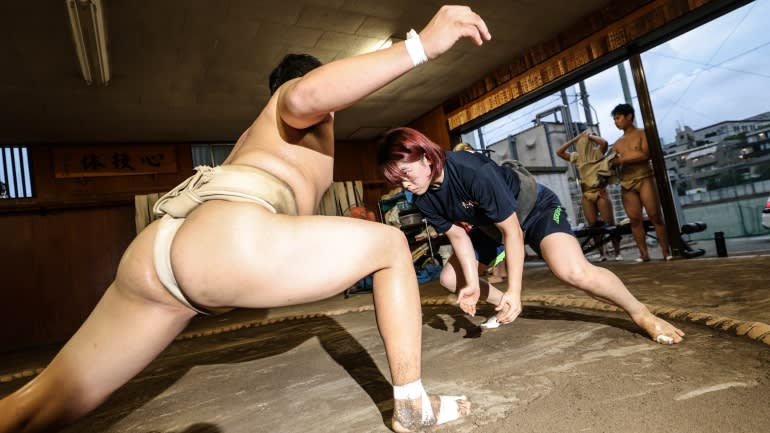
In Japan, sumo is not just a sport but a sacred tradition with roots dating back 1,500 years, tied to Shinto ritual and ceremony. And it faces an enduring taboo: women are still forbidden from entering the dohyo, the sport's sacred ring. That restriction is beginning to face subtle challenges. Although professional sumo — the form most familiar to audiences around the world — remains off limits to women, more than 600 female wrestlers (rikishi) now compete at the amateur level in Japan. Many of them are setting their sights not only on domestic recognition but also on international stages, including the men's and women's amateur Sumo World Championships, which open this weekend in Bangkok.

 mainichi.jp
In Japan, sumo is not just a sport but a sacred tradition with roots dating back 1,500 years, tied to Shinto ritual and ceremony. And it faces an enduring taboo: women are still forbidden from entering the dohyo, the sport's sacred ring. That restriction is beginning to face subtle challenges. Although professional sumo — the form most familiar to audiences around the world — remains off limits to women, more than 600 female wrestlers (rikishi) now compete at the amateur level in Japan. Many of them are setting their sights not only on domestic recognition but also on international stages, including the men's and women's amateur Sumo World Championships, which open this weekend in Bangkok.
Unlike males who compete bare-chested in mawashi, the traditional loincloth, women wear it over spandex shirts and bodysuits. "It's unavoidable -- women have body parts that must be covered," Hasegawa says. "I've never wanted to compete dressed like a man." She adds that clothing also signals body image expectations. "If I quit sumo," Hasegawa says, "I might think about losing weight." Male rikishi often drop weight once they leave sumo, with research showing the large body mass might lead to health problems. "In Japan, slim is often equated with beautiful," says 19-year-old Shiho Suzuki, one of Keio's four female rikishi. "But for performance and health, thin isn't everything. A strong, healthy body with some weight on it is attractive, too."
Japanese women struggle to find a place in the Japanese sumo world - The Mainichi
TOKYO (AP) -- Sumo is more than a sport in Japan. It's a sacred tradition, a 1,500-year-old spectacle steeped in Shinto ritual and ceremony. But at it