


- 14 Mar 2002
- 21,053
- 18,908
A flag carried by a Japanese soldier killed in action during World War II was handed over on 20 July by the USS Lexington Museum in Texas to the OBON Society to return it to the man's family.
Here's what a real good luck flag looks like:
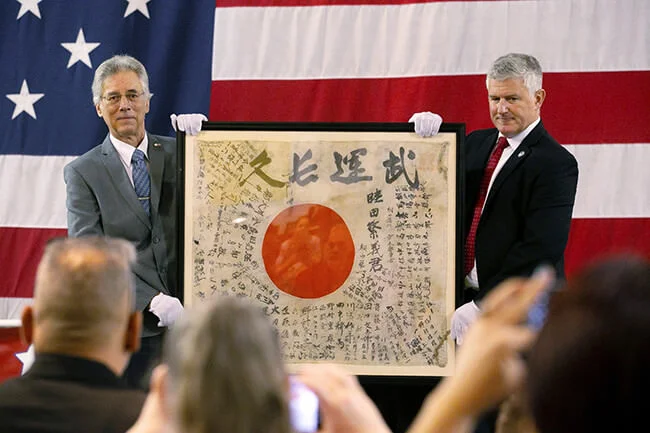
Here's what a real good luck flag looks like:
Known as a Good Luck Flag, it is covered with the signatures of Shigeyoshi Mutsuda, his family and friends. The Corpus Christi museum where it was displayed for 29 years gave the flag to the Obon Society, a nonprofit organization that has returned about 500 similar flags, known as non-biological human remains, to descendants of Japanese service members killed during the war. "This is all that's left of this man" to return to his family, said Obon Society co-founder Rex Ziak. "They feel exactly the same as Americans when they receive the bones or teeth" of relatives who were identified and returned decades after being killed in war, he said.
Hirofumi Murabayashi, consul general of Japan in Houston, expressed appreciation to the museum for willingly handing over the flag and said the transfer symbolizes the friendship between the United States and Japan. "He (Mutsuda) was killed in action and his body was not found ... there's no remains," Murabayashi said. "The only remains will come back to the family" to be reunited with his wife, who died in May at age 102, but whose funeral has been delayed until the flag is returned, Murabayashi said. The flag, known as Yosegaki Hinomaru, has been displayed at the museum aboard a WWII aircraft carrier since it was donated in 1994, according to museum director Steve Banta. He called the donation routine and said the museum has been unable to locate who gave the flag to the museum because of what he called record-keeping issues at the time.


