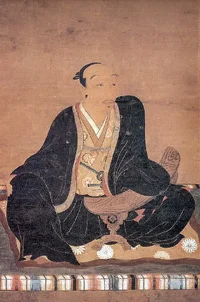
Last Wednesday, I finally managed to find enough time to visit one of the most fascinating special exhibitions of the year at the Tōkyō National Museum in Ueno: "The Maeda: Legacy of a Prosperous Samurai Family." Most of the exhibits are normally displayed in Kanazawa, while museums and institutions across Japan have loaned others. The last time the Maeda treasures were shown to the public on a similar scale was some fifty years ago. So yes, I went there with considerable anticipation.
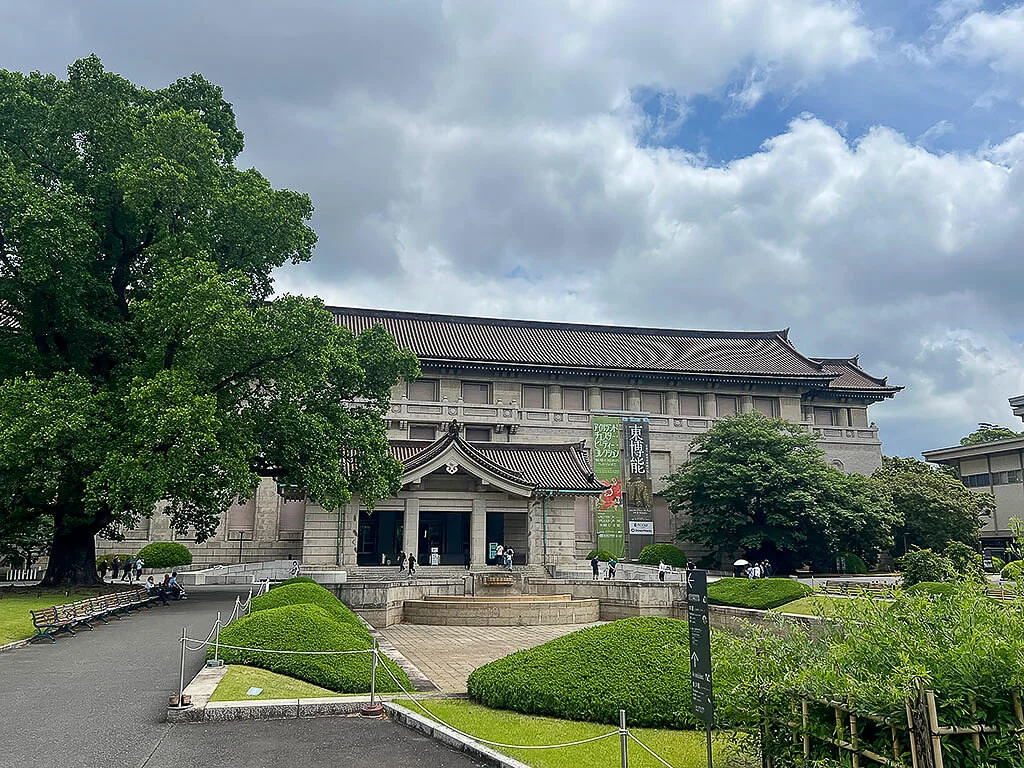
The main building (本館 Honkan) of the Tōkyō National Museum (東京国立博物館) in Ueno.
I had been worried about facing crowds of history buffs and expected long queues at the ticket counters. Most inbound tourists tend to visit the main exhibition halls and skip the special exhibitions altogether. This one was held in the Heiseikan. It was fairly crowded for a weekday morning, though not uncomfortably so.
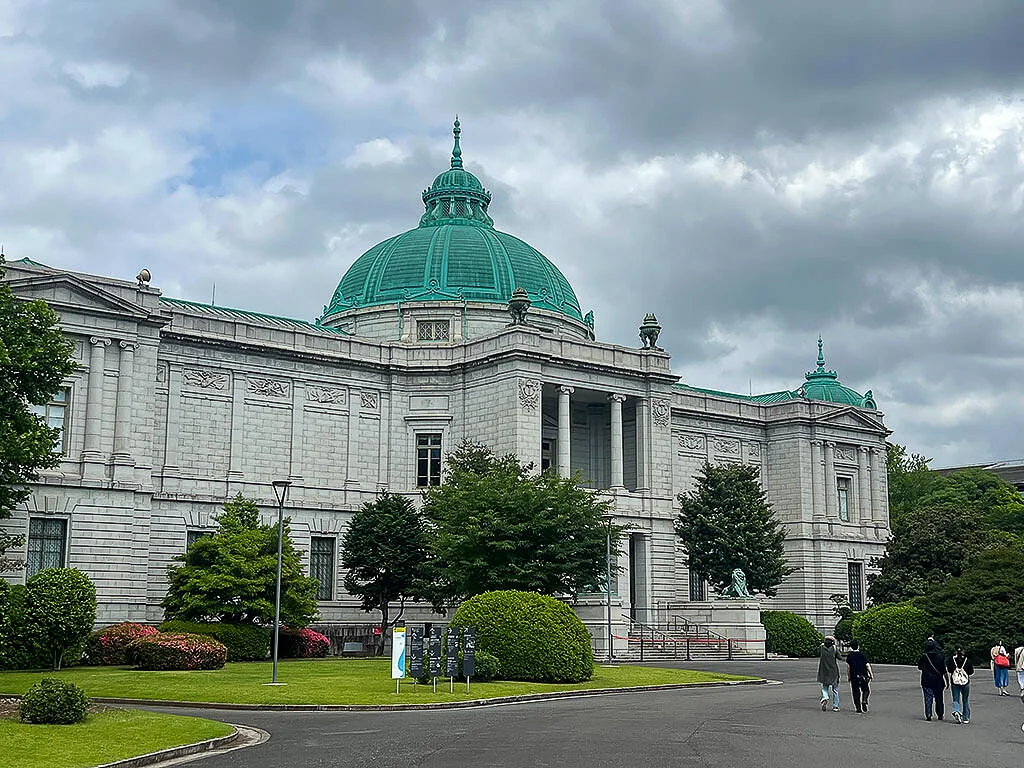
The Hyōkeikan (表慶館) of the Tōkyō National Museum
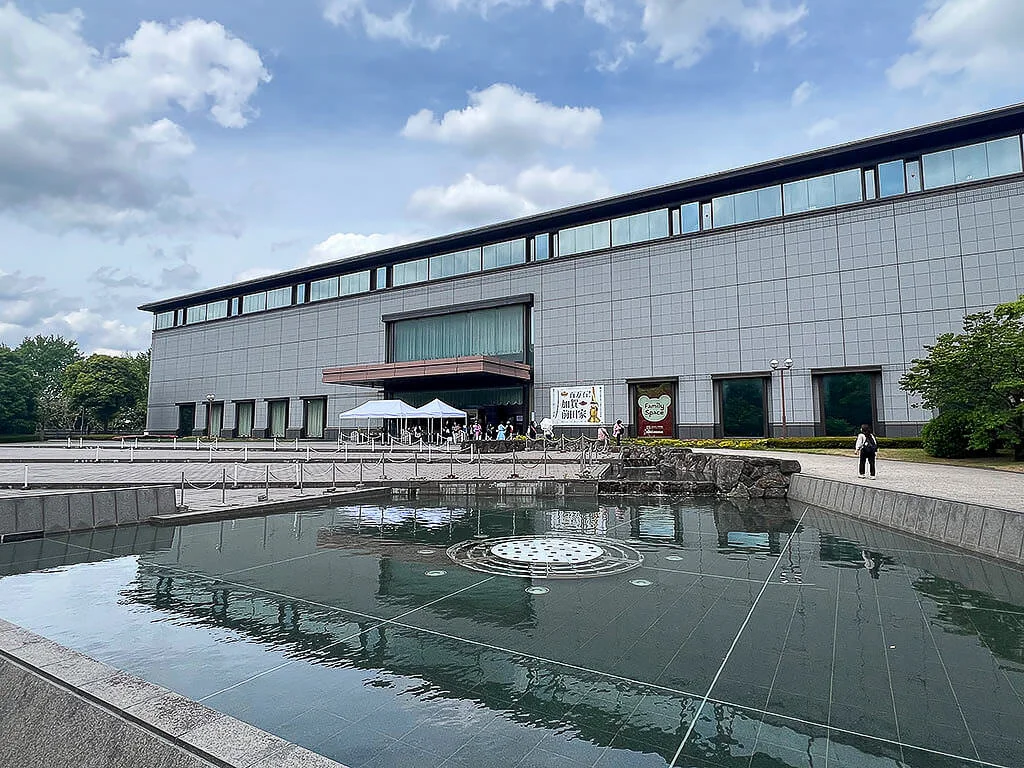
The Heiseikan (平成館) of the Tōkyō National Museum
The Heiseikan (平成館), where the Maeda exhibition is currently being held, is one of the Tōkyō National Museum's main exhibition buildings in Ueno Park. It serves two main purposes: housing the museum's Japanese archaeology collection and hosting the large special exhibitions for which the museum is particularly famous.
Opened in 1999, the building is named after the Heisei era (平成, 1989–2019). It was originally constructed to commemorate the 1993 marriage of Crown Prince Naruhito and Masako Owada, now Emperor Naruhito and Empress Masako.
The first floor is devoted to Japanese archaeology, covering periods from the Jōmon era onward. Pottery, haniwa (埴輪) figures, ritual objects, armour and excavated artefacts from across Japan are displayed there, and one could easily spend hours wandering through the galleries alone.
The second floor is used for major temporary exhibitions, including many of the museum's best-known blockbuster shows. National Treasures, famous paintings, historical documents and objects borrowed from temples, shrines and museums throughout Japan and abroad are regularly displayed in these vast gallery spaces.
Architecturally, the Heiseikan contrasts sharply with nearby museum buildings such as the Hyōkeikan (表慶館), which dates back to 1909. The Hyōkeikan is an ornate Meiji-era structure and an Important Cultural Property. In contrast, the Heiseikan was designed as a modern exhibition facility with expansive galleries, lecture rooms, an auditorium, and the visitor infrastructure needed for large-scale international exhibitions.
Back to the Maeda exhibition itself. It occupies five large galleries on the second floor of the Heiseikan. It feels less like a conventional art exhibition than a journey through the world the Maeda created over several centuries. Political history sits next to tea culture, swords next to lacquerware, official documents beside National Treasures. It almost feels overwhelming in scale.
After heading upstairs, visitors are led through a sequence of halls that gradually broaden the story of Kaga and the Maeda family. The exhibition was organised to mark the centenary of the Maeda Ikutokukai Foundation (公益財団法人前田育徳会), and many of the objects displayed here are rarely shown together.
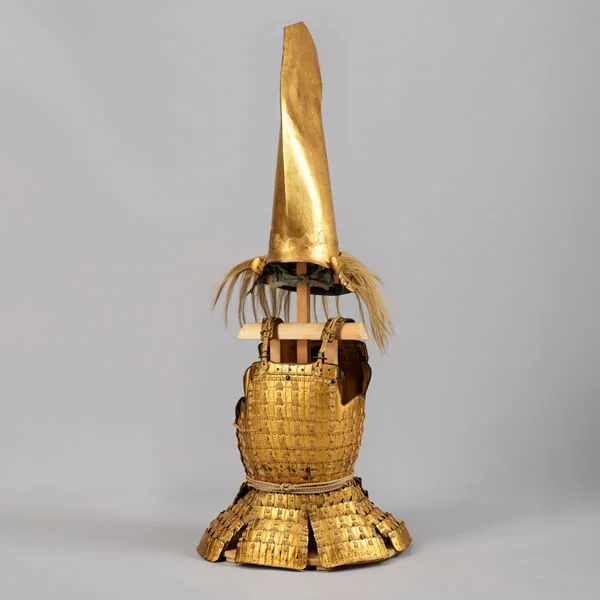 The first hall functions as an introduction to the clan itself. Much of the focus is on Maeda Toshiie (前田利家, 1538–1599), the family's rise during the Sengoku period, and the creation of what would become Japan's wealthiest domain outside Tokugawa control. Portraits, armour, letters, and official documents immediately establish the atmosphere. It dawns on the visitor that the Maeda were not simply regional warlords, but a house operating on an entirely different scale.
The second hall expands on that feeling. Here, the exhibition turns to governance and administration, showing how the Kaga Domain (加賀藩 Kaga-han) was managed and how vast its resources truly were. Maps, records and formal objects from domain administration reveal the apparatus behind Maeda's power. Kanazawa was not merely a castle town. It was effectively the centre of an enormous political and economic sphere.
The third hall shifts strongly toward culture and, for many visitors, may well become the highlight. Tea utensils, paintings, calligraphy and decorative arts fill the galleries, showing the refined cultural world cultivated by successive Maeda daimyō. The family was a major patron of the arts, and much of what later came to be associated with "Kaga culture" developed under their sponsorship.
This section also contains the remarkable Maeda sword collection. Several National Treasure blades dating to the Heian and Kamakura periods are on display here. Even among visitors with little prior interest in swords, many stopped for quite some time. I gather @Ukigumo would have had to be physically removed from this exhibition hall.
The fourth hall focuses more heavily on craftsmanship. Lacquerware, textiles, metalwork and other highly refined objects demonstrate how wealth translated into artistic production. One begins to understand how the artisans of Kaga gained reputations that spread far beyond Hokuriku. The technical precision on display is extraordinary in places, although the exhibition focuses on the objects without overexplaining.
Finally, the fifth hall feels almost like a culmination of everything that came before. Many of the most important heirlooms preserved by the Maeda Ikutokukai Foundation appear here, including objects that survived the difficult transition from feudal domain to modern aristocratic household after the Meiji Restoration. The section also reflects on the foundation itself and the later generations of the Maeda family who worked to preserve these collections into the modern era.
By the end, the strongest impression is the sheer scale of Maeda wealth. The exhibition makes it very easy to understand why the Maeda were regarded as the most powerful daimyō family outside the Tokugawa house, and why their cultural legacy remains so closely tied to Kanazawa even today.
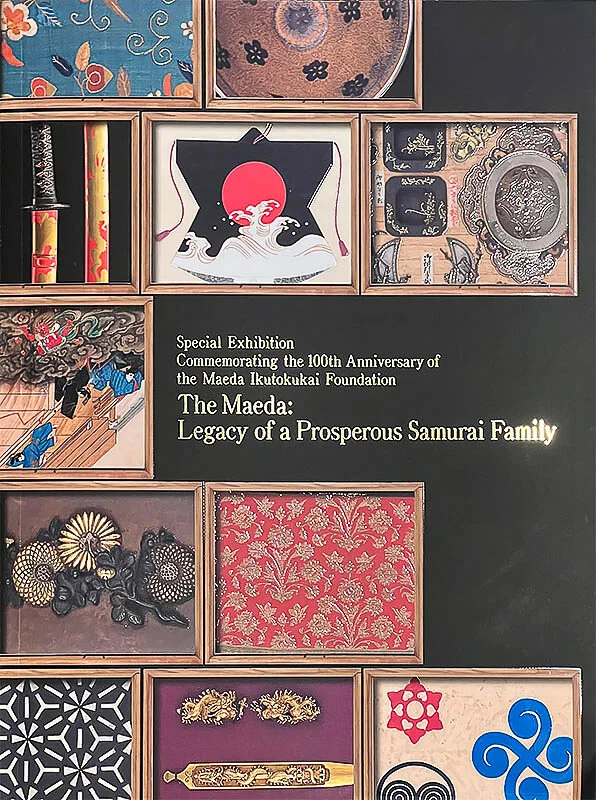
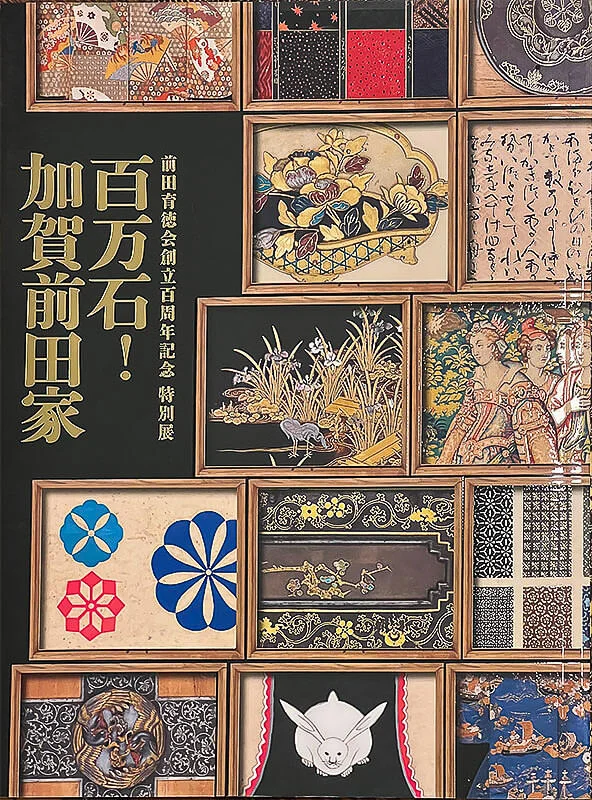
It is well worth acquiring the exhibition catalogue (3,400 JPY, in Japanese and some English):
The family also became known for its patronage of the arts and traditional crafts. Over generations, the Maeda sponsored painters, lacquer artisans, metalworkers, tea practitioners and scholars, helping to shape the distinctive cultural world that developed around Kanazawa. Many objects associated with the family were carefully preserved and handed down through successive generations, even after the collapse of the feudal order in the nineteenth century.
After the Meiji Restoration, the Maeda relocated to Tōkyō and entered the new aristocratic system established by the government. The family received the title of marquess under the kazoku (華族) peerage system, while maintaining close ties to their former domain and its cultural traditions.
Preservation of the family collection became a major concern in the modern era. In 1926, Maeda Toshinari (前田利為, 1885–1942), the sixteenth head of the family, founded the Ikutoku Foundation, now known as the Maeda Ikutokukai Foundation. The organisation was created to protect the vast number of historical documents, artworks, craft objects and heirlooms accumulated by the Maeda over centuries of rule.
The year 2026 marks the centenary of the Maeda Ikutokukai Foundation. To commemorate the occasion, a major retrospective exhibition has been organised to look back on the achievements of successive Maeda lords and to present many of the family's most important cultural treasures. The exhibition brings together masterpieces collected and preserved over generations, offering a broad view of the artistic and technological culture that flourished under Maeda's patronage.
 www.tnm.jp
For more on the Maeda clan and Maeda Toshiie, check these out:
The main building (本館 Honkan) of the Tōkyō National Museum (東京国立博物館) in Ueno.
I had been worried about facing crowds of history buffs and expected long queues at the ticket counters. Most inbound tourists tend to visit the main exhibition halls and skip the special exhibitions altogether. This one was held in the Heiseikan. It was fairly crowded for a weekday morning, though not uncomfortably so.
The Hyōkeikan (表慶館) of the Tōkyō National Museum
The Heiseikan (平成館) of the Tōkyō National Museum
The Heiseikan (平成館), where the Maeda exhibition is currently being held, is one of the Tōkyō National Museum's main exhibition buildings in Ueno Park. It serves two main purposes: housing the museum's Japanese archaeology collection and hosting the large special exhibitions for which the museum is particularly famous.
Opened in 1999, the building is named after the Heisei era (平成, 1989–2019). It was originally constructed to commemorate the 1993 marriage of Crown Prince Naruhito and Masako Owada, now Emperor Naruhito and Empress Masako.
The first floor is devoted to Japanese archaeology, covering periods from the Jōmon era onward. Pottery, haniwa (埴輪) figures, ritual objects, armour and excavated artefacts from across Japan are displayed there, and one could easily spend hours wandering through the galleries alone.
The second floor is used for major temporary exhibitions, including many of the museum's best-known blockbuster shows. National Treasures, famous paintings, historical documents and objects borrowed from temples, shrines and museums throughout Japan and abroad are regularly displayed in these vast gallery spaces.
Architecturally, the Heiseikan contrasts sharply with nearby museum buildings such as the Hyōkeikan (表慶館), which dates back to 1909. The Hyōkeikan is an ornate Meiji-era structure and an Important Cultural Property. In contrast, the Heiseikan was designed as a modern exhibition facility with expansive galleries, lecture rooms, an auditorium, and the visitor infrastructure needed for large-scale international exhibitions.
Back to the Maeda exhibition itself. It occupies five large galleries on the second floor of the Heiseikan. It feels less like a conventional art exhibition than a journey through the world the Maeda created over several centuries. Political history sits next to tea culture, swords next to lacquerware, official documents beside National Treasures. It almost feels overwhelming in scale.
After heading upstairs, visitors are led through a sequence of halls that gradually broaden the story of Kaga and the Maeda family. The exhibition was organised to mark the centenary of the Maeda Ikutokukai Foundation (公益財団法人前田育徳会), and many of the objects displayed here are rarely shown together.
Visitors are greeted by Toshiie's famous gold-plated gusoku (具足) with a dōmaru cuirass (胴丸), gilt scales, and white lacing (白糸威).
The second hall expands on that feeling. Here, the exhibition turns to governance and administration, showing how the Kaga Domain (加賀藩 Kaga-han) was managed and how vast its resources truly were. Maps, records and formal objects from domain administration reveal the apparatus behind Maeda's power. Kanazawa was not merely a castle town. It was effectively the centre of an enormous political and economic sphere.
The third hall shifts strongly toward culture and, for many visitors, may well become the highlight. Tea utensils, paintings, calligraphy and decorative arts fill the galleries, showing the refined cultural world cultivated by successive Maeda daimyō. The family was a major patron of the arts, and much of what later came to be associated with "Kaga culture" developed under their sponsorship.
This section also contains the remarkable Maeda sword collection. Several National Treasure blades dating to the Heian and Kamakura periods are on display here. Even among visitors with little prior interest in swords, many stopped for quite some time. I gather @Ukigumo would have had to be physically removed from this exhibition hall.
The fourth hall focuses more heavily on craftsmanship. Lacquerware, textiles, metalwork and other highly refined objects demonstrate how wealth translated into artistic production. One begins to understand how the artisans of Kaga gained reputations that spread far beyond Hokuriku. The technical precision on display is extraordinary in places, although the exhibition focuses on the objects without overexplaining.
Finally, the fifth hall feels almost like a culmination of everything that came before. Many of the most important heirlooms preserved by the Maeda Ikutokukai Foundation appear here, including objects that survived the difficult transition from feudal domain to modern aristocratic household after the Meiji Restoration. The section also reflects on the foundation itself and the later generations of the Maeda family who worked to preserve these collections into the modern era.
By the end, the strongest impression is the sheer scale of Maeda wealth. The exhibition makes it very easy to understand why the Maeda were regarded as the most powerful daimyō family outside the Tokugawa house, and why their cultural legacy remains so closely tied to Kanazawa even today.
It is well worth acquiring the exhibition catalogue (3,400 JPY, in Japanese and some English):
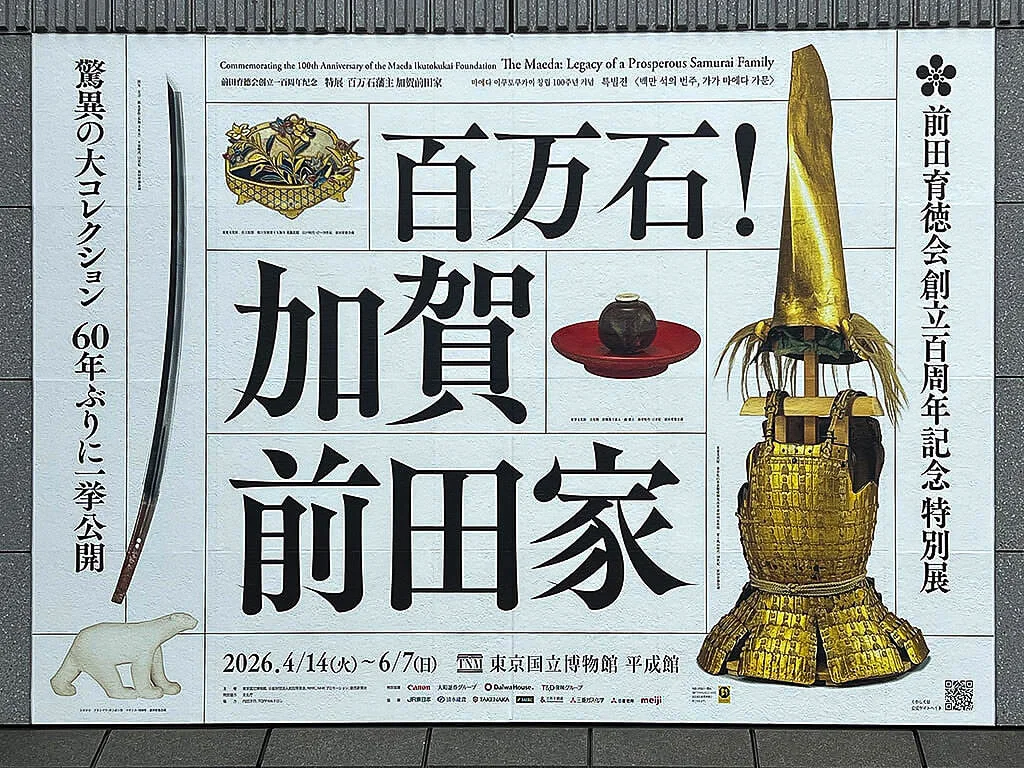
More about the exhibition:
The Maeda family traces its origins to Maeda Toshiie (前田利家, 1538–1599), a Sengoku-period warlord who established the clan's power base after receiving lands in northwestern Japan. From their seat at Kanazawa Castle, the Maeda ruled the provinces of Kaga, Etchū and Noto throughout the Edo period (1603–1868). The Kaga Domain (加賀藩 Kaga-han) became the wealthiest domain in Japan outside the Tokugawa shogunate itself, producing the highest assessed rice yields in the country and giving the Maeda a position of exceptional political and economic influence among the daimyō.The family also became known for its patronage of the arts and traditional crafts. Over generations, the Maeda sponsored painters, lacquer artisans, metalworkers, tea practitioners and scholars, helping to shape the distinctive cultural world that developed around Kanazawa. Many objects associated with the family were carefully preserved and handed down through successive generations, even after the collapse of the feudal order in the nineteenth century.
After the Meiji Restoration, the Maeda relocated to Tōkyō and entered the new aristocratic system established by the government. The family received the title of marquess under the kazoku (華族) peerage system, while maintaining close ties to their former domain and its cultural traditions.
Preservation of the family collection became a major concern in the modern era. In 1926, Maeda Toshinari (前田利為, 1885–1942), the sixteenth head of the family, founded the Ikutoku Foundation, now known as the Maeda Ikutokukai Foundation. The organisation was created to protect the vast number of historical documents, artworks, craft objects and heirlooms accumulated by the Maeda over centuries of rule.
The year 2026 marks the centenary of the Maeda Ikutokukai Foundation. To commemorate the occasion, a major retrospective exhibition has been organised to look back on the achievements of successive Maeda lords and to present many of the family's most important cultural treasures. The exhibition brings together masterpieces collected and preserved over generations, offering a broad view of the artistic and technological culture that flourished under Maeda's patronage.
Official link:
TOKYO NATIONAL MUSEUM
Exhibitions and Events Exhibitions Japanese Archaeology and Special Exhibition (Heiseikan) Commemorating the 100th Anniversary of the Maeda Ikutokukai Foundation The Maeda: Legacy of a Prosperous Samurai Family
www.tnm.jp
For more on the Maeda clan and Maeda Toshiie, check these out: