Is Japan becoming more like the US and Europe?

Joined
18 Nov 2013
Messages
23
Reaction score
3
I know that traditionally, Japanese society was VERY different from ours, and probably has remained so on some levels.

But in a lot of media, I notice that many of the Japanese have modern beds, their own showers or baths, Western-style clothing, and other such things.

Does it seem like Japan's modernization is slowly cultivating an attitude more similar to that of America or Europe? It just seems that while the Japanese are still different from us today, their experiences are a lot more relatable to our own than they were 100 years ago. So, if that trend continues into the future, it's possible that even what differences remain could start to disappear.

Do you feel that this process is going on, or has gone on in the past? Do you see it as a good thing, a bad thing, or both?
 
I think this had more to do with modernization than anything else. Not even western society wear the same traditional clothing of the 19th century.

While there have been changes like the rise of the nuclear family, for major parts, Japanese values and world views are nothing like Anglo Saxons and I don't see any trend of that changing. Japanese are good at picking foreign ideas that appeals to them and adapt then to Japanese sensibilities and leave the rest alone.

They took in many parts of Classic Chinese culture but by the time the Manchurians form the Qing dynasty, they were wise to leave any developments since then alone and embraced foreign concepts.

Also Western is a very generic concept. Parts of Europe certainly have more in common with the Far East than recent British colonies and I wouldn't categorize them together.

Case in point, just because Japanese eat Maccers and use many English words, doesn't mean they want to 'become' like America. An old Chinese proverb, 葉公好竜 perfectly sums this up.
 
Showers, beds, western clothing have all been around for a long time (since way before you were born). Having these things doesn't necessarily change a cultural value. What "attitude" did you mean when you tried to compare it to that in other countries? Attitude(s) toward what? And, what "differences" did you feel might go away?

Food? Nope, by and large, that's not going to change, other than to introduce more western fast foods.
Clothing? I have to wonder if you think Japanese walk around in kimonos and happi a lot even 60 years ago. They are actually a very fashion-conscious society, and with globalization bringing information to people faster and faster, it's no surprise that they dress more like the west. Kimonos and happi will not go out of style, though.
Music? Always on the go, but never say die to enka or karaoke.
Parochial attitudes towards children, or at work, etc.? Nope. Not going to change. It took 40 years just to get the birth control pill accepted here, and even then only in a limited way.
Education? Trust me on this one. No change in the foreseeable future. Unfortunately. There will always be a group mentality in the homeroom, and from graduation from college to landing a job, that link to one's advisor will always be there. Entrance exams are (sadly) a mainstay here, too.
English conversation companies? Nope. Not going to die out.
Work ethic? I don't see employees going home early when the boss stays late...ever.
 
Wasn't Sakamoto Ryoma known for wearing traditional clothing with western footwear? (as well as for a lot of other things, of course).

"pure" cultures are grown in petri dishes. Considering the amount of cultural variation that still exists even between (and within!) English speaking countries, I don't think we have to fear ending up with a single world monoculture any time soon.
 
What "attitude" did you mean when you tried to compare it to that in other countries? Attitude(s) toward what? And, what "differences" did you feel might go away?

That's a difficult question to answer, I don't really know a whole lot about Japanese culture. Some of the changes might be good, like for instance improving the women's rights situation. On the other hand, maybe they'd start letting people wear shoes indoors, or maybe start considering competitive ability over teamwork. I don't really know what the most fundamental differences are in the first place.

Clothing? I have to wonder if you think Japanese walk around in kimonos and happi a lot even 60 years ago. They are actually a very fashion-conscious society, and with globalization bringing information to people faster and faster, it's no surprise that they dress more like the west. Kimonos and happi will not go out of style, though.
When I think of "Japanese" clothing, generally I get some vague image of people carrying paper fans and wearing robes. I know that Japanese people today dress more like us, but I guess I see dressing like us as symbolic of wanting to act more like us. If you say it's unrelated, I believe you.

Parochial attitudes towards children, or at work, etc.? Nope. Not going to change. It took 40 years just to get the birth control pill accepted here, and even then only in a limited way.
So, wait, are they extremely conservative? As in, being intolerant of abortion, homosexuality, etc?

Work ethic? I don't see employees going home early when the boss stays late...ever.
Are Japanese known for having a strong work ethic? I've never heard that, but that's interesting.
 
You really don't know that much, do you?! (No offense.) I'm quite surprised that you could even start a thread challenging huge aspects of a culture that you admit to knowing practically nothing about.
maybe they'd start letting people wear shoes indoors
This is just plain silly wording. "Let them"??? Nobody is outright stopping them; it's their way! Their culture. Their tradition. Besides, something like that particular custom is a very smart one (to avoid tracking in dirt).

Robes!!?!?! Good grief! Those are kimonos! How can you have any interest in the culture yet be so blatantly ignorant of such a basic thing as that? It's practically a troll-like statement.

Japanese are not intolerant of abortion. In fact, it is a big business here (if looked at in the right way). anti-abortion sentiment is usually fueled by Christian values, but Japan has virtually none of that.

Homosexuality is accepted here, but IMO in a curious way. For example, you can see openly gay TV celebrities all the time, yet I don't know how open the society is as a whole to the average gay person on the street.

Come back and ask away, but I strongly suggest you learn more from other sources first, especially when you begin a thread that asks about changing an entire culture yet you "don't really know what the most fundamental differences are in the first place".
 
You really don't know that much, do you?! (No offense.) I'm quite surprised that you could even start a thread challenging huge aspects of a culture that you admit to knowing practically nothing about.

I wasn't really challenging anything, I was just curious as to what people thought. I have heard people saying that this sort of thing is happening all over the world, so I was curious if that trend was affecting Japan as well. I'm not saying there's anything wrong with how anyone does things.

This is just plain silly wording. "Let them"??? Nobody is outright stopping them; it's their way! Their culture. Their tradition. Besides, something like that particular custom is a very smart one (to avoid tracking in dirt).

I meant, in the sense that they would stop observing the tradition due to foreign influence. Not that anyone is making them do anything, of course. I was just wondering if what was acceptable might change over time.

Robes!!?!?! Good grief! Those are kimonos! How can you have any interest in the culture yet be so blatantly ignorant of such a basic thing as that? It's practically a troll-like statement.

Is it that big a deal that I don't know the right term for a traditional piece of clothing worn in a country I've never spent time in? I'm sorry, then.

Come back and ask away, but I strongly suggest you learn more from other sources first, especially when you begin a thread that asks about changing an entire culture yet you "don't really know what the most fundamental differences are in the first place".

I wasn't suggesting that they change their culture, I was asking if their culture was changing already due to modernization and such, and in what ways.

If I had known I was going to offend you, I wouldn't have started the thread. I'm sorry about all this, but I was really just curious, and assumed questions were welcome. I didn't think I was going to cause problems.
 
JA, the best way to learn about this stuff is to experience it. I find a lot of people in the Anglo Saxon hemisphere have very skewed view of this world but they don't know it.

I can understand why Glenn got a little bit upset as the stuff you say is very typical of people who have been living in the Anglo Saxon bubble all their life and don't know better.

One advice, all this BS about woman's rights and abortion and the PC dribbled fluff is only relevant in the Anglo Saxon hemisphere. In the rest of the world, I.e. Non British colonies, it's really no big deal. Stuff like multi-cultralism are a pure artificial construct stemmed from the Anglo Saxon's guilt of centuries of colonization and had no relevance in other nations especially in Japan.

The long and the short of it is, consumption of western culture is only skin deep in Japan. Everything else has not really changed at all and not changing for the foreseeable future.

So if you want to find out more about Japanese culture, go there for a year and experience it but leave your values, stereotypes and world views at home.
 
Glenski has manner issues, so don't mind him too much. Not being Glenski tends to start a problem with him ;)

To discuss your original question, there really is little to worry about. Japan is all about integrating foreign ideas, not becoming slaves to them. The example of traditional clothing, as Morphling stated, Westerners don't wear traditional Western clothing at this point. For Japan, especially in the Meiji era , adopting those styles and haircuts were all about the symbolic gesture of saying you were a modern person. But Japanese haven't forgotten the old, they just address it at different times. Most Japanese homes have "Western rooms" and "Japanese rooms" (sliding doors and tatami floors). When Japanese go to resort hotels (which they often do, more than Westerners at least), they often wear yukatas (light kimonos) and use hot springs. I actually think Japanese have a much better connection to their roots than Americans do.

If you think of America, America integrates a lot of world culture, often forgetting that it isn't America. Think of pizza or cafes. Or sushi. Or Chinese food. American pizza is not Italian, nor is American Chinese food Chinese. America takes what it likes, and forgets the real association to its roots. Japan does that as much as anywhere else.

Anime is a great place to see this from the outside. Japan started by aping Disney movies, and once it had a stable base, branched out in ways Western companies never did. American at root, but totally Japanese.
 
One advice, all this BS about woman's rights and abortion and the PC dribbled fluff is only relevant in the Anglo Saxon hemisphere. In the rest of the world, I.e. Non British colonies, it's really no big deal. Stuff like multi-cultralism are a pure artificial construct stemmed from the Anglo Saxon's guilt of centuries of colonization and had no relevance in other nations especially in Japan.

Strongly disagree with all of this. I know Japanese women and third generation Koreans who would disagree too. And as an Anglo-Saxon, I wouldn't blame any of multiculturalism on guilt, but instead on the fact that English countries tend to be actually multicultural, and people need to get along with one another... But that's another topic.
 
Manner issues?? I did say "no offense", and I didn't call him stupid or curse. It's pretty obvious how naive the OP is, and I think I kept a check on my tongue to make my point.

Was I "offended"? No. You got that all wrong.

Jeremy,
IMO, you just don't seem to get it. Making statements like "Does it seem like Japan's modernization is slowly cultivating an attitude more similar to that of America or Europe?" when you can't even explain/define "attitude" is asking for trouble. Furthermore, asking this question when you admit you haven't much of a clue about the differences begs the question of what you do know, and how you even came to wondering about this. This is the vantage point I'm coming from, not from any sort of anger. I hope you and the others can see that. It's an important point to keep in mind.

So...

In a sense, yes, you were challenging the Japanese POV. You came right out and asked whether they would change certain things, like the tradition of removing shoes. Asking that implies that you feel the Japanese custom is an incorrect or improper thing to do. Whether you meant that or not, let me put the question in reverse to you and see how you feel.
Q: Do you think Americans will ever change their ways of wearing shoes in the house, considering the huge influence of Japanese immigrants (or other Asians who remove shoes)? I mean, lots of Americans like sushi, karaoke, Pokemon, Hello Kitty, and manga/anime, so why don't they also adopt Japanese traditions like the shoe thing?

See my point? To "stop observing the tradition due to foreign influence" is just silly.

Is it that big a deal that I don't know the right term for a traditional piece of clothing worn in a country I've never spent time in? I'm sorry, then.
In my opinion, yes, it's that big a deal. I'm sorry if that offends you.

I wasn't suggesting that they change their culture, I was asking if their culture was changing already due to modernization and such, and in what ways.
Nowhere in the world is culture a static thing. It constantly changes. The more influences are introduced from outside, the more it is susceptible to change. Japan is not a place where change takes place quickly, though.

I was really just curious, and assumed questions were welcome. I didn't think I was going to cause problems.
For your sake and those who have criticized my responses, please note carefully that in my previous post I openly stated "Come back and ask away".

As for "problems", if you can be more specific about the differences or attitudes, then I'm willing to give you my POV about them. Until then, I'm just the sort of person who will instead ask you to provide a clearer picture and know a little more about the subject before asking too general questions.

Are Japanese known for having a strong work ethic? I've never heard that, but that's interesting.
Here are some snippets from various news stories (not all 100% accurate, but close enough) to help you learn more.
Japan's deadly work ethic - San Francisco Expatriate Travel | Examiner.com
Tradition Sets Japan Work Ethic - Chicago Tribune
Why do the Japanese Work Such Long?Hours? | RocketNews24
Toyota undone by Japan's work ethic? | Jenny Holt | Comment is free | theguardian.com
 
Strongly disagree with all of this. I know Japanese women and third generation Koreans who would disagree too. And as an Anglo-Saxon, I wouldn't blame any of multiculturalism on guilt, but instead on the fact that English countries tend to be actually multicultural, and people need to get along with one another... But that's another topic.

Ummm the so called English countries you refer to are British colonies I assume who killed off the natives and now sharing the spoils with the rest of the world with open door immigration policy? Let's call spade a spade.

Unfortunately that crap doesn't work for the rest of the world that isn't a British colony as Angela Merkel can tell you but its too PC to even talk about it. Japan is wise not to follow.
 
Ummm the so called English countries you refer to are British colonies I assume who killed off the natives and now sharing the spoils with the rest of the world with open door immigration policy? Let's call spade a spade.

Unfortunately that crap doesn't work for the rest of the world that isn't a British colony as Angela Merkel can tell you but its too PC to even talk about it. Japan is wise not to follow.

You know who likes to complain about PC stuff? White guys.
 
Manner issues?? I did say "no offense", and I didn't call him stupid or curse. It's pretty obvious how naive the OP is, and I think I kept a check on my tongue to make my point.
You get into arguments/offend half the new members who show up here. Either they all have problems, or you do. The common denominator is Glenski, so odds are.... This is not to say you shouldn't interact with new members or pull a Mike Cash and run away, just to say that you could be a lot more sympathetic to those who don't have near to the same experience in Japan that you do, including not being shocked that they don't know the word kimono.

Good grief! (no offence)
 
nahadef,
Read things carefully, please.

I am not arguing anything with Jeremy.
I don't think I have offended him. He thinks he has offended me.

I don't know what you mean by your statement about Mike Cash, and it doesn't matter.

But let's not get off topic here. I'm eager to hear what Jeremy has to say, believe it or not.
 
Do Americans really wear their shoes in the house? Bizarre. Then again, you haven't figured out how to make a proper cup of tea yet, so I don't know why I'm surprised.
 
Do Americans really wear their shoes in the house? Bizarre. Then again, you haven't figured out how to make a proper cup of tea yet, so I don't know why I'm surprised.

I've been asked this a lot, being Canadian, and that being virtually the same as being American, in terms of international perception...

No, shoes aren't worn in the house, but it's not a super-firm rule. If the weather is clear, and you need to pop into the house for a piss, that's not a big deal, shoes are okay (this is definitely not okay in my house, according to the missus.). When the weather is poor, of course you take the shoes off, especially on carpet. In Japan though, it's a major thing to wear shoes past the genkan. I don't even consider it now.
 
nahadef,
Read things carefully, please.

I am not arguing anything with Jeremy.
I don't think I have offended him. He thinks he has offended me.

I don't know what you mean by your statement about Mike Cash, and it doesn't matter.

But let's not get off topic here. I'm eager to hear what Jeremy has to say, believe it or not.

You read things carefully, please.
If I had known I was going to offend you, I wouldn't have started the thread. I'm sorry about all this, but I was really just curious, and assumed questions were welcome. I didn't think I was going to cause problems.
If this was the first time someone wrote something like this, I'd come to your defence. It's not. Whatsoever. This site needs more people being nice to new members, and helping them out, than it does stuck-up know-it-alls. You know about Japan, and if you were nice in how you shared information, a) people would like you more, and b) the site would be healthier. Just don't make new members feel dumb. Everyone has their own level of experience. Is that so much to ask?
 
No, shoes aren't worn in the house, but it's not a super-firm rule. If the weather is clear, and you need to pop into the house for a piss, that's not a big deal, shoes are okay.
My life experience has been totally different, and I've lived in small, medium, and large cities. So, let's not generalize too much.

Just don't make new members feel dumb. Everyone has their own level of experience. Is that so much to ask?
Look at Jeremy's profile to see what appears to be a fairly extensive interest in Japanese culture and explain to me why he didn't know a simple fact such as kimonos. No, I'm not trying to make him or anyone else feel dumb. Naivete shows, however, and I'm very surprised at it considering what he lists as cultural interests. Surprise is not bad manners, nor is it a sign of being a know-it-all.

By the way, how do you answer his questions about "differences" and "attitudes" without knowing (or him knowing) what he is even talking about? Me, I ask for clearer definitions and direct people to links so that they learn more.
 
I feel like I may have started a fight here. I'm sorry about the trouble.

Jeremy,
IMO, you just don't seem to get it. Making statements like "Does it seem like Japan's modernization is slowly cultivating an attitude more similar to that of America or Europe?" when you can't even explain/define "attitude" is asking for trouble.

I can be rather socially inept. It really didn't occur to me that this question was asking for trouble, but it does seem clear from how everyone is reacting that I've caused trouble here. I guess I should be more careful in the future.

Furthermore, asking this question when you admit you haven't much of a clue about the differences begs the question of what you do know, and how you even came to wondering about this. This is the vantage point I'm coming from, not from any sort of anger.
Well, actually I came to ask this question as part of a general curiosity about the impact of globalization. Japan isn't the only nation about which I've asked this question. I'm asking the question about Japan to be relevant to this forum's content, but the broader question I want to ask is whether the world in general is becoming more similar due to these influences.
In a sense, yes, you were challenging the Japanese POV. You came right out and asked whether they would change certain things, like the tradition of removing shoes. Asking that implies that you feel the Japanese custom is an incorrect or improper thing to do. Whether you meant that or not, let me put the question in reverse to you and see how you feel.
Q: Do you think Americans will ever change their ways of wearing shoes in the house, considering the huge influence of Japanese immigrants (or other Asians who remove shoes)? I mean, lots of Americans like sushi, karaoke, Pokemon, Hello Kitty, and manga/anime, so why don't they also adopt Japanese traditions like the shoe thing?
It didn't occur to me that asking a question could be interpreted as a criticism. And honestly, your question here doesn't offend me at all. I do actually think it's possible that Americans would start removing shoes indoors. In fact, I do know of a few that already expect that. Sometimes they're Asian-Americans who just continued the tradition, but I have seen African-Americans, Caucasians, and Hispanics who have adopted such a rule as well. Usually it's either because they have hardwood floors, they're obsessed with hygiene, or they picked it up from an Asian friend. Older and more traditional people here still see taking your shoes off in their home as "too casual" and don't care for it, but there are other people who don't like dirt on their carpets and expect you to remove shoes. At this point, I have to look at people's feet when I come in and glance around for a pile of shoes to figure out what's expected of me. Everyone seems to have a different standard, but I have no problem going along with either way.

See my point? To "stop observing the tradition due to foreign influence" is just silly.
I've seen examples of foreign influence affecting local traditions and replacing indigenous beliefs, though. It's not really a far-fetched concept in Sociology. Again, I'm not suggesting they "should" do anything, although I know it sounded that way. I was just trying to find out what IS happening, without regard to whether it "should" be happening or not. It's really a matter of collecting data so that I can categorize groups of people.

Japan is not a place where change takes place quickly, though.
Yeah, that is actually one of the things I was wondering. How quickly their culture assimilates outside influences, how adaptable it is, etc. So, thanks.
Wow. No wonder their cars tend to be high-quality. They really devote themselves to their work. And it's pretty noble how they focus on the needs of their family or company over their own.

Do Americans really wear their shoes in the house? Bizarre. Then again, you haven't figured out how to make a proper cup of tea yet, so I don't know why I'm surprised.
Eh, some of us do, and some of us don't, these days. I do whatever my host expects. Attitudes range from expecting the shoes to come off, to being offended if you do take them off. I'm perfectly comfortable with going barefoot, and with keeping shoes on, so it doesn't matter to me.

People do question my patriotism if I drink hot tea, and say that it seems really British to them. It's one of those old Colonial things like holding the fork in the right hand and the knife on the left... there was a time when you could be executed as a British spy if you did it the other way, from what I hear.
 
I feel like I may have started a fight here. I'm sorry about the trouble.
Not at all. I think the problem comes from a veteran member making a new member feel like a nuisance. It happens way too often, so I stepped in.
 
On the contrary I kind of wish Japanese were more open to adapting things from other cultures, but like mentioned earlier on they are very good at taking things they like and "japanify" them, which btw have made some pretty awesome new cultures, so that's good.
But I'm really starting to feel that if Japan don't start to loosen up a little bit on the hierarchic structure of society and accept that times and people are changing, they are going to end up in a time bubble. I notice this especially in school, where there are so many situations where the teaching methods are just not adapted to the students anymore and a lot of it is completely lost on them.
I don't necessarily want them to "westernize", just adapt to the times and the world, without losing the good parts of their culture ofcourse!
 
You're going to see some social things change more overtly and quickly than things like business practices or customs. That is true almost anywhere, but especially so in Japan.

Look up the 30-minute programs called Begin Japanology if you can, and you can see many examples of historical changes leading to modern things, many influenced by the west in some way. But Japan still remains Japan in so many others.

if Japan don't start to loosen up a little bit on the hierarchic structure of society and accept that times and people are changing, they are going to end up in a time bubble.
They are already. Look at the backwards policy that just became law (thanks in part to interference/influence from the U.S.):
Japan's Parliament Approves a Secrecy Law Amid Protests (Published 2013)
Japan's secrecy bill condemned by Nobel academics
 
Y

They are already. Look at the backwards policy that just became law (thanks in part to interference/influence from the U.S.):
Japan's Parliament Approves a Secrecy Law Amid Protests (Published 2013)
Japan's secrecy bill condemned by Nobel academics

Saved by the words "in part". For the larger part, I think its worth remembering that Japan is completely capable of fascist modes of thought all on her own.

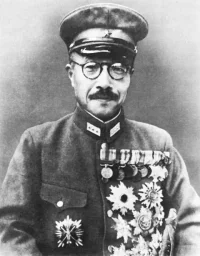
Hideki_Tojo.webp
 
Zorro, I don't think my statement saved anything! In fact, help from the U.S. only exacerbates the problem, don't you think?
 
Back
Top Bottom