Need a Kanji Translated? Just ask!

Those words are commonly used except 尋常に. 尋常 is mostly used only in negative form, such like 尋常じゃない (meaning "extraordinary") nowadays.
 
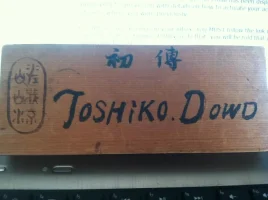
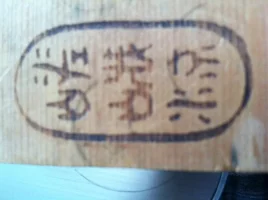
Hi all. I'm new to this forum so please bare with me. My grandmother was 100% Japanese, she married my grandad after the war and unfortunately never told her son (my father) anything about her family or where she came from. I have had this old wooden block with what appears to be her name and some kanji on the top and on the left side of the English. I have not been able to find anyone who could tell me what this block is and what the kanji stands for. Any help would be greatly appreciated. Help me find out some things about my history please 🙂:

photo2.webp

photo.webp
 
Hi all. I'm new to this forum so please bare with me. My grandmother was 100% japanese, she married my grandad after the war and unfortunetly never told her son (my father) anything about her family or where she came from. I have had this old wooden block with what appears to be her name and some kanji on the top and on the left side of the english. I have not been able to find anyone who could tell me what this block is and what the kanji stands for. Any help would be greatly appreciated. Help me find out some things about my history please :)View attachment 12127View attachment 12128

I think for some reason the Kanji on the left side that are also in the bottom picture are mirrored, is it a stamp?
 
I think for some reason the Kanji on the left side that are also in the bottom picture are mirrored, is it a stamp?


Yeah it looks like a brand of some sort. There is definetly and indentation in the wood and what appears to be a burn (as if branded).

The top kanji (above english) is not branded/stamped it is written by hand with ink
 
The kanji on the top is 初傳[shoden]. The second kanji is the traditional form of 伝.
The left one seems to be written in 篆書体[tenshotai]. The first two kanji are 嵯峨[saga], the name of a place in Kyoto or a surname, and the last one would be 涼[ryō], I think.
 
I always have seen this kind of script in Chinese movies with ancient theme and didn't know how to call it. Now I do. Thanks, Toritoribe, even if indirectly...

---------- Post added at 11:45 ---------- Previous post was at 11:30 ----------

I was watching some Japanese gaming videos on Youtube and in the comments some user used the word 天晴れ, and by the context, it seemed to mean "keep up the good work", "well done" or something like that. However, I thought the possibilities to pronouncing it should be てんはれ/あまはれ/てんぱれ/あまぱれ, covering all the bases with that rendaku thing. But doing some research, I found out that the word is pronounced "あっぱれ". Is that correct? Is it a irregular reading/meaning of 天? And the translation, would it be OK too?
 
あっぱれ is from a classical word あはれ, which is also the etymology of 哀れ. 天晴れ is just an 当て字. And yes, it means "Excellent!" "Atta boy/girl!" or like that.
 
Oh, Tori-san... More concepts and rules?! Whoa! Ateji... Seems a little complicated thing, huh?

I'm enjoying learning Japanese, but there's so much details... Hmmmm... Even looks like my native language... LOL...

Well, ありがとう again, Toritoribe-san. Much appreciated.
 
こんにちはみんな!

As you can see I am also new to this forum, however I have been studying Japanese for a couple years now, but Kanji always gets the best of me. Currently, I am in search of someone who can properly translate this for me. If so, please do and thank you in advance for your assistance.

diapo4a300144bbe44fb3471dd18e0088aedejpg-1.webp


k6243x300-1.webp


k8300x240-1.webp
 
登録商標肥後守定駒
Tōrokushōhyō Higo no Kami Sada Kanekoma
Registered Trademark Higo no Kami Sada Kanekoma
(This name is commonly read "Sadakoma", but the maker states that the correct reading is "Sada Kanekoma".)

登録商標剣聖宮本武蔵
Tōrokushōhyō Kensei Miyamoto Musashi
Registered Trademark Sword Master Miyamoto Musashi

割込
Warikomi
Insert Steel (Knife Blade)
 
登録商標肥後守定駒
Tōrokushōhyō Higo no Kami Sada Kanekoma
Registered Trademark Higo no Kami Sada Kanekoma
(This name is commonly read "Sadakoma", but the maker states that the correct reading is "Sada Kanekoma".)

登録商標剣聖宮本武蔵
Tōrokushōhyō Kensei Miyamoto Musashi
Registered Trademark Sword Master Miyamoto Musashi

割込
Warikomi
Insert Steel (Knife Blade)

how can you see all those kanji from the picture above?
 
how can you see all those kanji from the picture above?
Just because I know both knives. Those are quite common, especially the first one 肥後守定駒. All of this type of jackknife are called "Higo no Kami" from this well-known trade name.
 
........
 

Attachments

  • 1.webp
    1.webp
    14.1 KB · Views: 226
  • 2.webp
    2.webp
    12.1 KB · Views: 204
  • 3.webp
    3.webp
    12.7 KB · Views: 190
  • 4.webp
    4.webp
    10.6 KB · Views: 208
  • 5.webp
    5.webp
    9.7 KB · Views: 194
Last edited:
part 1
handsome guy
Hitoshi
Ben
Mami and Rie
and


part 3
wine

You need to re-upload the two pictures in part two.
 
Last edited:
a meaningless sequence of poorly-written kanji

Probably the writer, who was definitely not familiar with kanji, wanted to write 本右正念.
 
Back
Top Bottom