~だもん?

jellyjello

後輩
Joined
27 Jun 2012
Messages
19
Reaction score
0
Hi, I often hear people say だもん at the end of the sentence in different situations.

For example,

だって、彼は先生だもん


When should I use だもん at the end of a sentense:?

Thank you for your help👍
 
Hi, I often hear people say だもん at the end of the sentence in different situations.

For example,

だって、彼は先生だもん


When should I use だもん at the end of a sentense:?
In order for you to use it naturally, you need to be already fairly fluent in colloquial Japanese, not textbook Japanese. You cannot use だって or だもん if the rest of what you say (or write) sounds bookish and/or formal.

Both だって and だもん mean a light, non-serious kind of "because" and those are very often used in pairs. There are cases where you can use just one of them, though.

Examples:
A: 「なんでテレビ消したの?」
B: 「だっておもしろくないんだもん。」

A: 「日本語の勉強、やめたんだって?」
B: 「うん、もう日本に興味ないんだもん。」

A: 「B子、どうしたの?なんで泣いてんの?」
B: 「だってマサエグさんが今日C子ちゃんとデートしてるの見ちゃったんだもん。」

A: 「なんか嬉しそうね?」
B: 「うん、明日から夏休みだもん。」
 
Hi, I often hear people say だもん at the end of the sentence in different situations.

For example,

だって、彼は先生だもん


When should I use だもん at the end of a sentense:?

Thank you for your help👍
もん is a sentence final particle to express explanation or excuse.
 
Thank you very much for the explanation.
I am actually trying to become fluent in colloquial Japanese:-)

---------- Post added at 02:53 ---------- Previous post was at 02:48 ----------

In order for you to use it naturally, you need to be already fairly fluent in colloquial Japanese, not textbook Japanese. You cannot use だって or だもん if the rest of what you say (or write) sounds bookish and/or formal.

Both だって and だもん mean a light, non-serious kind of "because" and those are very often used in pairs. There are cases where you can use just one of them, though.

Examples:
A: 「なんでテレビ消したの?」
B: 「だっておもしろくないんだもん。」

A: 「日本語の勉強、やめたんだって?」
B: 「うん、もう日本に興味ないんだもん。」

A: 「B子、どうしたの?なんで泣いてんの?」
B: 「だってマサエグさんが今日C子ちゃんとデートしてるの見ちゃったんだもん。」

A: 「なんか嬉しそうね?」
B: 「うん、明日から夏休みだもん。」

Question

何をしてんの = 何をしてる
宿題をしてんだ = 宿題をしてるん


Is てん the colloquial version of either てる or てるん:?
 
Is てん the colloquial version of either てる or てるん:?

Yes.

Also: もん is a shortening of もの, which when used at the sentence is basically the same meaning as から (because).

~だもん almost always comes off sounding childish/feminine, by the way.
 
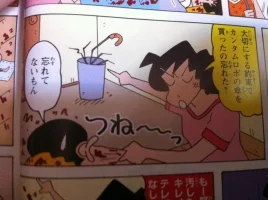
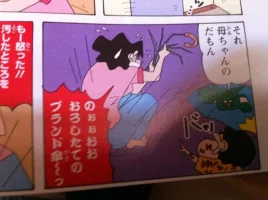
Is that another usage of もん in the picture? It doesn't seem like it means "because" in that scenario :?
 

Attachments

  • IMG_0887.webp
    IMG_0887.webp
    71.4 KB · Views: 458
  • IMG_0888.webp
    IMG_0888.webp
    83.9 KB · Views: 352
Those both mean "because". Shin-chan's logics behind his words are like the below, and therefore the former one performs as an excuse.


(I have no reason to be scolded, because) I don't forget my promise!
(I'm still keeping my promise, because) that's mom's (umbrella).
 
Last edited:
Back
Top Bottom