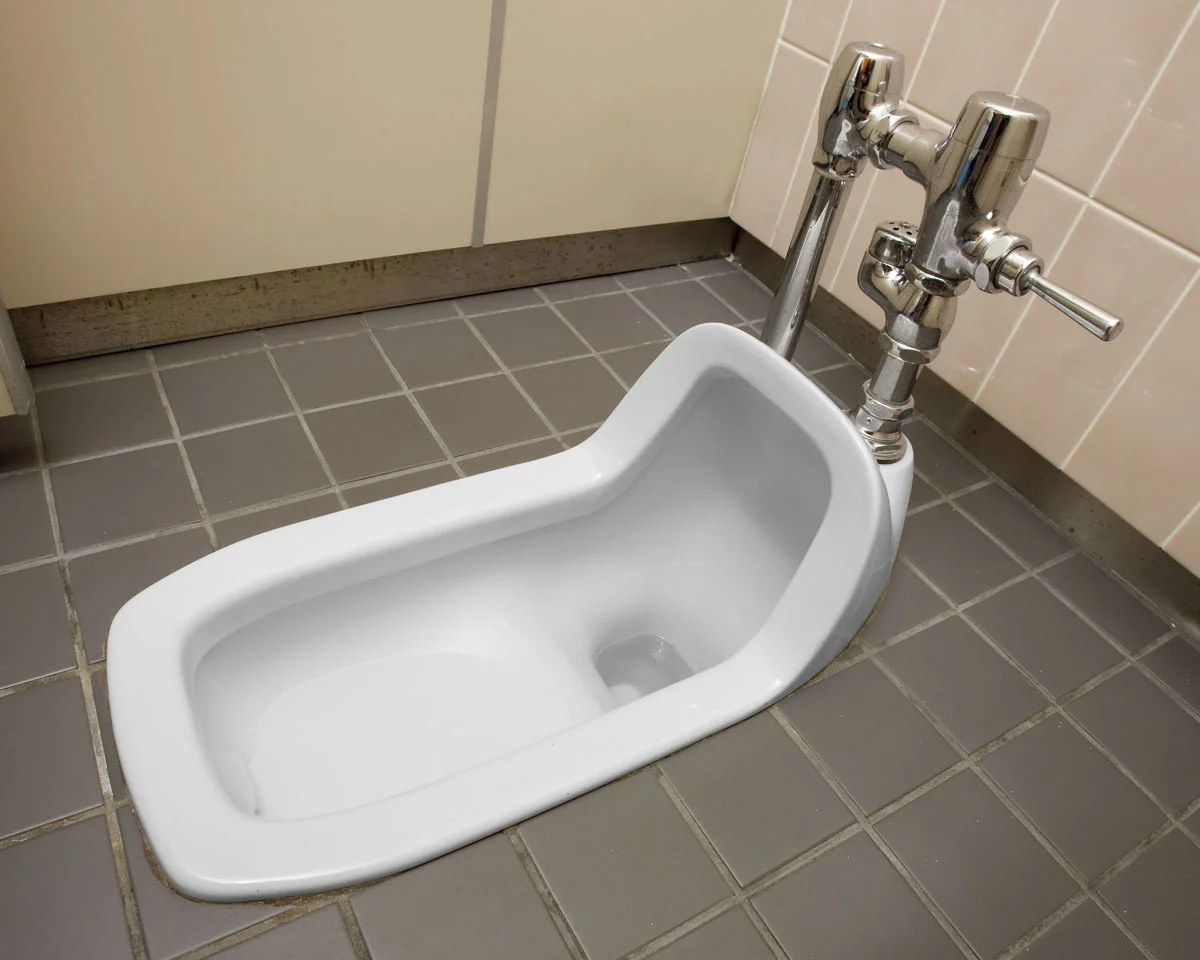
Japan Has Way Too Many Words for "Toilet"
In Japan, there are many different words for a toilet, ranging from modern everyday expressions to old-fashioned and historical terms. Some of these words are still used today, while others are mainly found in historical texts, literature, or period dramas.
Setchin (せっちん / 雪隠) is an old Japanese word for a toilet or lavatory. It is particularly associated with the Edo period and traditional Japanese culture.
The word is believed to have originated in Buddhist terminology, especially in Zen Buddhist temples. Over time, it came to be used more generally to refer to a toilet.
The term
setchin has an old-fashioned and somewhat rustic feeling today. It may appear in historical fiction, traditional architecture, or descriptions of life in premodern Japan.
A related expression is
setchin-zume (雪隠詰め), which literally means being cornered in a toilet. It is now used figuratively to describe a situation in which someone is completely cornered with no way to escape.
Kawaya (かわや / 厠) is one of the oldest and most well-known traditional Japanese words for a toilet.
It is frequently found in historical literature and is particularly suitable for describing toilets in ancient or medieval Japan. The word is often associated with traditional toilets located near or over water, although the exact historical origin of the term is debated.
For historical fiction,
kawaya gives a distinctly ancient or medieval Japanese atmosphere.
Habakari (はばかり) is an old euphemistic term for a toilet.
It comes from the idea of a place where one should
"hesitate" or "hold back" because of modesty or privacy. The expression is now archaic, but it can be found in older Japanese literature and historical settings.
It has a softer and more indirect meaning than simply saying "toilet."
Toosu (とうす / 東司) is a Buddhist and particularly Zen Buddhist term for a toilet.
In traditional Zen temples, the toilet was considered an important place that required strict cleanliness and proper etiquette. The word is therefore strongly associated with Buddhist temple culture.
Another term used in Zen Buddhism is
Seijo (西浄).
Seijo (せいじょう / 西浄) is another traditional Buddhist term for a toilet, particularly in Zen temples.
The terms
Toosu and
Seijo reflect the traditional Buddhist practice of assigning specific names to different facilities within a temple.
These words are rarely used in ordinary modern conversation.
Otearai (おてあらい / お手洗い) literally means
"hand-washing place."
It is one of the most common polite and indirect ways to refer to a toilet in modern Japanese.
For example:
The word is polite and can be used in restaurants, hotels, homes, and public places.
Benjo (べんじょ / 便所) is a straightforward Japanese word meaning "toilet" or "lavatory."
It is an old and established term, but in modern Japanese it can sound somewhat plain, rough, or old-fashioned depending on the context.
The word is more direct than
otearai.
Gofujō (ごふじょう / 御不浄) is an old euphemistic expression for a toilet.
The word literally relates to something
"impure" or "unclean." Historically, bodily waste was associated with impurity, so this expression was used as a polite or indirect reference to the toilet.
It has a distinctly old-fashioned tone and may be encountered in historical texts or period dramas.
Toire (トイレ) is the most common modern Japanese word for "toilet."
It comes from the English word
"toilet" and is widely used in everyday conversation.
For example:
Depending on the situation, Japanese speakers may also use more polite or indirect expressions such as:
- お手洗い (otearai) — restroom / washroom
- 化粧室 (keshōshitsu) — powder room / ladies' room
- WC (daburyū shī) — WC, commonly seen on signs
- 洗面所 (senmenjo) — washroom / washing area, sometimes referring to an area containing a toilet
The exact meaning depends on the building and context.
| Japanese | Romanization | Meaning / Impression |
|---|
| 雪隠 | Setchin | Old-fashioned, traditional toilet |
| 厠 | Kawaya | Ancient / medieval toilet |
| 憚り | Habakari | Archaic euphemism |
| 東司 | Toosu | Zen Buddhist temple toilet |
| 西浄 | Seijo | Zen Buddhist temple toilet |
| 御不浄 | Gofujō | Old-fashioned euphemism |
| 便所 | Benjo | Direct, plain, somewhat old-fashioned |
| お手洗い | Otearai | Polite modern expression |
| 化粧室 | Keshōshitsu | Powder room / restroom |
| トイレ | Toire | Standard modern everyday term |
| WC | Daburyū Shī | Signage / written abbreviation |
For a
medieval Japanese setting,
kawaya (厠) is probably the most appropriate choice.
For an
Edo-period setting,
setchin (雪隠) or
habakari (憚り) can give the dialogue a more period-appropriate flavor.
For a
Zen Buddhist temple,
toosu (東司) or
seijo (西浄) would be especially appropriate.
In modern Japan,
toire (トイレ) is the standard everyday word, while
otearai (お手洗い) is a more polite and indirect alternative.