News U.S. military returns Negishi Housing Annex in Yokohama to Japan after 79 Years

thomas

Unswerving cyclist
Admin
Joined
14 Mar 2002
Messages
21,053
Reaction score
18,906
The entire Negishi Housing Area in Yokohama, Kanagawa Prefecture, has been returned to Japan for the first time in 79 years, ending its use as a residential district for US military personnel and their families. The site was requisitioned by the US military in 1947, after the Second World War. For decades, it was used to house US forces stationed in Japan and their families.


Japan and the United States agreed in 2004 to return the area, and the handover of the entire district was completed on June 30. Yokohama City has outlined plans for the former site, including attracting university research facilities and developing park space.


U.S. Naval Housing Annex Negishi (根岸住宅地区):


A total of about 1,200 hectares of land in Yokohama, including central areas, had been confiscated by the GHQ, which the local government has blamed for hindering the port city's development. Among areas already returned is the Kamiseya communications site spanning about 242 hectares that came back in 2015. Defense Minister Shinichiro Koizumi hailed the "historic significance" of the move, telling a press conference that he hopes the Negishi site will be used efficiently by the local community. Yokohama is considering using the land for a university medical school, research facilities and housing. The site is a mixture of state- and privately owned land, and the land development project is expected to take at least a decade to finish. Calling the land return the city's "long-held wish," the Yokohama mayor said his government hopes to meet residents' expectations and accelerate efforts to utilize the area.

 
You're welcome. Your friend. Donald J Trump
trump-dance-trump-2024.gif
 
Good thing Trump didn't get wind of that. He'd have tried to stop it and make plans for Trump branded towers and golf courses.
Honestly. Its quite the opposite. Trump think USA spend more on defending other countries, than they get money in return, when it comes to US military. So the idea of countries needing to be less dependant on US military. Or at best pay USA? Is likely a good outcome for him
 
Honestly. Its quite the opposite. Trump think USA spend more on defending other countries, than they get money in return, when it comes to US military. So the idea of countries needing to be less dependant on US military. Or at best pay USA? Is likely a good outcome for him
Giving up anything of value -- even if he has no rights to it -- is not something Trump would normally do. That's why I suggested he would normally prefer to keep it or somehow get Japan to pay him for it. Look at what he tried to do with the new Detroit-Windsor Bridge by demanding that the U.S. should own half of it despite it being entirely funded by Canada and all ownership/operational agreements having been made years ago. Or look at the Greenland fiasco.
 
Giving up anything of value -- even if he has no rights to it -- is not something Trump would normally do. That's why I suggested he would normally prefer to keep it or somehow get Japan to pay him for it. Look at what he tried to do with the new Detroit-Windsor Bridge by demanding that the U.S. should own half of it despite it being entirely funded by Canada and all ownership/operational agreements having been made years ago. Or look at the Greenland fiasco.
I can see your point.
 
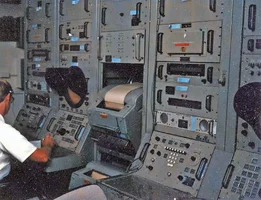
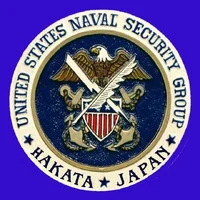
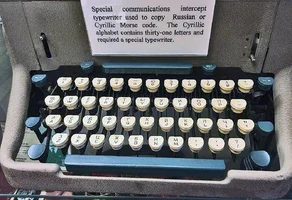
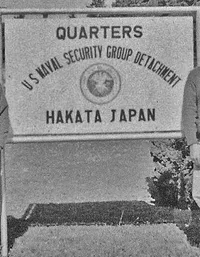
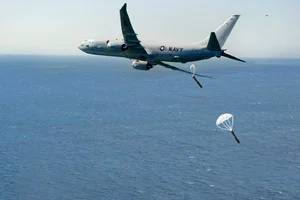
Pretty much all branches of the US military have a spy division since the time of George Washington. During our military boot camp and training they give a ton of different tests. If you score high enough , you get to play 007 , LOL. I had learned Morse code in Boy Scouts and I think that is why they grabbed me. Hakata base was a good location to listen in on Russian , Chinese , North Korean and North Vietnam radio traffic. With special antennas and electronic equipment , you could tell what direction a signal was coming from. We had 8 stations in the Hakata network. When all 8 stations got a good signal , they said we could pinpoint the location of the sender within 100 yards of their location. During the Cold War , we wanted to know the location of Russian nuke subs and nuke bombers so HFDF was developed. Hakata base had about 12 ops who would type out all coded messages 24/7 and send them on to the NSA headquarters in the US to be broken. Knowing what your enemies were up to and their plans and locations was a helpful advantage. Most of our spy bases are now closed because powerful spy satellites now do the job. I worked in the HFDF site down the road a few miles from the main base to avoid their interference from their signals. Our base cover story was we built wooden tables & chairs for the rest of the military bases , LOL. I'll put a picture in of what the inside of a HFDF station looked like.468204954_10160755477908133_8857871301063933988_n.webp42799943_10155808990303133_6925711515865579520_n.webp48429190_10155995850898133_212284578285486080_n.webp51708321_10156084475143133_6246833905429643264_n.webp56749341_10156199513088133_1095982027947114496_n.webp654219435_10162719289723133_469517358789479736_n.webp656674446_10162717712903133_4211549931870963728_n.webpsonobuoy.webp
 
Last edited:
Newsflash! Archived footage found of resident Grandpa Frank pretending to be a carpenter in his spy base xD

1783097535069.webp


As that one weird kid who was torn between wanting to be part of her Majesty's Service or becoming a PI like Philip Marlowe, it sounds like incredibly exciting work. It's probably less glamorous when you're in it - I can imagine it might have been a little tedious listening for long periods at a time.

Still! Way more exciting than anything I've ever done - and I once ran an unchecked DELETE SQL query on a production database while working at the Danish Government 😁

EDIT: yes yes before anyone comments on it, I know Danish citizens can't work at MI5 or MI6. 9-year-old me didn't think that far ahead, though 😅
 
I think it was "The Japan Times" newspaper that was printed in English back then. They shocked our security system with a 4 page article on Hakata Base's spy works. It named officers names. It gave exact info on what equipment we used. It gave our shift schedules and explained the different buildings and what they did. The article was like the NSA published it , it was so detailed with true info.
Another interesting story is the great idea of destroying all our secret equipment and material if our DF site was attacked. One day we were given a demonstration on thermite bombs. They placed it on the hood of an old jeep and set it off. In just a few minutes , it burned through and dropped on the ground. SO....shortly after , a crew placed large thermite bombs on top of all our equipment and filing cabinets. In case of an attack we were supposed to set them all off. Now this is in a building with no windows and 1 small door. Thermite uses a ton of oxygen to burn. We would have died of suffocation in about 5 minutes. I worried one might go off by mistake , LOL.
200.gif
 
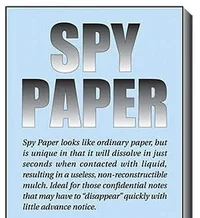
Another bad idea by the US Navy after the spy ship USS Pueblo was captured by the North Koreans in 1968. Because so many top secret codes and papers were captured was water soluble paper. They devised document holders with a big lead binder. The idea being the secret codes and info would be dropped into the ocean and the paper would turn to mush. What they forgot was a Navy sailor always had a coffee cup , soda or bowl of hot soup next to them. SO.....here they are way out to sea or way under the sea and liquid get knocked over on to the much needed info and dissolves it. Oh well , back to the drawing board for that idea , LOL.

gonezo.webp
 
Last edited:
I think it was "The Japan Times" newspaper that was printed in English back then. They shocked our security system with a 4 page article on Hakata Base's spy works. It named officers names. It gave exact info on what equipment we used. It gave our shift schedules and explained the different buildings and what they did. The article was like the NSA published it , it was so detailed with true info.
How did they find out all that?? Isn't that stuff super classified and limited to very few people? Also, why would they do that in the first place, were they really that clueless? Or was it done on purpose by someone with a grudge against US bases on Japanese soil?

And termite? Man, they weren't messing around. I've seen experiments where the melting process would eject molten metal like projectiles from the reaction. And isn't there something about looking at it that's really bad for your eyes, too?

Good you're still here with us, Frank, even if it does seem like your surroundings have been latently lethal over the years 😁
 
How did they find out all that?? Isn't that stuff super classified and limited to very few people?

That story somehow reminds me of one of my favourite movies starring Peter Sellers, Dr Strangelove or: How I Learned to Stop Worrying and Love the Bomb. For the B-52 cockpit scenes, Kubrick's production team relied on unclassified aviation magazines and enlarged B-29 schematics. The resulting set was so convincing that the US Air Force reportedly suspected Kubrick had obtained classified information and even launched an internal investigation.

drstrangelove-b52-scene.webp


I suppose JT worked in much the same way, combining known facts with educated guesswork and getting most of it right. :)
 
I found footage of Nakasu, Kawabata, and Gannosu Air Base from around 1951.

Today, the former Hakata Air Base has been transformed into peaceful public spaces. Much of the former base is now Uminonakamichi Seaside Park, which features gardens, open lawns, cycling paths, and recreational facilities. Other parts of the site have become sports complexes, residential neighborhoods, and public parks. Little remains of the old military base, and the area is now a popular destination for families, outdoor activities, and tourism.

Although most of the former Hakata Air Base in Saitozaki, Fukuoka has been redeveloped, a few traces of the base can still be found. Some old roads, concrete foundations, and other structures from the military era remain. The former base area is now mostly occupied by Uminonakamichi Seaside Park, sports facilities, and residential neighborhoods, but these small remnants provide a glimpse of its history.


The former Negishi U.S. military base, which is being returned to Japan, is one of Yokohama's most valuable green spaces. I hope it will be preserved for future generations.
 
Back
Top Bottom