

Navigation
Install the app
How to install the app on iOS
Follow along with the video below to see how to install our site as a web app on your home screen.
Note: This feature may not be available in some browsers.
More options
Style variation
System
Light
Dark
You are using an out of date browser. It may not display this or other websites correctly.
You should upgrade or use an alternative browser.
You should upgrade or use an alternative browser.
Post Japanese-related YouTube links here
- Thread starter Buntaro
- Start date

- 27 Dec 2003
- 2,853
- 2,102
- Thread starter
- #852
For cars and trucks that drive the highways of Japan, there is a rest area -- in the middle of Tokyo Bay! Umihotaru Rest Area is on the Aqua Line Highway (from Kanagawa to Chiba).
"[4K/Binaural] Built on the Sea: Umihotaru Walking Tour - Tokyo Japan"
It seems there are also bus tours that will take you from Tokyo to Umihotaru. The next video is a video taken by a man who went to Umihotaru via a bus tour.
"Umihotaru PA Aqualine Day Trip Guide From Tokyo"
"[4K/Binaural] Built on the Sea: Umihotaru Walking Tour - Tokyo Japan"
It seems there are also bus tours that will take you from Tokyo to Umihotaru. The next video is a video taken by a man who went to Umihotaru via a bus tour.
"Umihotaru PA Aqualine Day Trip Guide From Tokyo"
Last edited:
- 27 Dec 2003
- 2,853
- 2,102
- Thread starter
- #854
There is a string of islands between Kagoshima and Okinawa . Traveling from Kagoshima southward, one of the first islands we encounter is Yakushima. (The video says Yakushima Island gets the most rain of any place in Japan!) Watch a great hike (in the rain!) that begins from 13:31.
"I took Japan's WORST Overnight Ferry to the Country's Most Fabled Island"
"I took Japan's WORST Overnight Ferry to the Country's Most Fabled Island"

- 21 May 2003
- 14,310
- 4,404
We are very lucky to have JapaneseLily here to help our viewers learn Japanese !
- 27 Dec 2003
- 2,853
- 2,102
- Thread starter
- #857
Here is something I didn't expect to see. A Japanese amateur radio operator is broadcasting in Morse Code! Did you know that Morse Code is still being used? (Although, in this video, it seems to be more of a hobby than anything else.) Look at how fast he is keying in dots and dashes, it is amazing. And he is using some kind of contraption to key in words in Morse Code, instead of tapping out each dot and dash individually.
"モールス信号で海外交信 #254 呼び出し編 パドル操作 #アマチュア無線 #モールス信号 #はいよろこんで"
"モールス信号で海外交信 #254 呼び出し編 パドル操作 #アマチュア無線 #モールス信号 #はいよろこんで"
- 21 May 2003
- 14,310
- 4,404
In the early 70's , Morse code was used by all countries' military for communication over long distances. Almost all spying was done by copying and decoding of transmissions. Using direction finding stations in Japan and Okinawa , we could tell the location of Russian nuke subs and nuke bombers location within 100 yards. To get out of Navy spy school , you needed to copy Russian code up to 60 words per minute. I enclosed a typewriter picture like the ones we used and a picture of a direction finding room like the one I used in Fukuoka Japan.



- 14 Mar 2002
- 21,050
- 18,903
The new version of Windows will be coming out soon. For the time being, it is called Windows K2. (I wonder how this will affect the JREF Forum software.)
Wow, I still use W10 on my main laptop. Despite announcements to the contrary, W10 is still being updated. XenForo runs on PHP + MySQL on a web server, so it is not directly affected by what Windows does.
- 27 Dec 2003
- 2,853
- 2,102
- Thread starter
- #865
You may have heard the story of the dog Hachiko, who faithfully waited for his master at Shibuya Station everyday for nine years after his master died. But I didn't know the stuffed body of Hachiko is still on display in a museum in Ueno Park in Tokyo.
"Hachiko The Full Story of a Loyal Dog: AI Colorization & Real Bark."
"Hachiko The Full Story of a Loyal Dog: AI Colorization & Real Bark."
- 14 Mar 2002
- 21,050
- 18,903
Peace is a 26-year-old female polar bear, and Japan's oldest polar bear raised in captivity. This is a very touching video about zookeeper Takaichi Atsuhiro, who has cared for Peace since she was a cub, including through her battle with epilepsy. The documentary looks at the ups and downs of their 25 years together.
There's also a YouTube video of her 25th birthday last December:
There's also a YouTube video of her 25th birthday last December:
- 14 Mar 2002
- 21,050
- 18,903
A (very professional and scenic) video of a village in Kochi Prefecture inhabited by only one person:
And an abandoned village in Nara Prefecture, Higashinokawa, deep in the mountains of Totsukawa Village:
English subtitles available.
And an abandoned village in Nara Prefecture, Higashinokawa, deep in the mountains of Totsukawa Village:
English subtitles available.

- 17 Sep 2005
- 6,017
- 1,970
Here's an interesting video if you're concerned about Japan's fiscal position.
- 14 Mar 2002
- 21,050
- 18,903
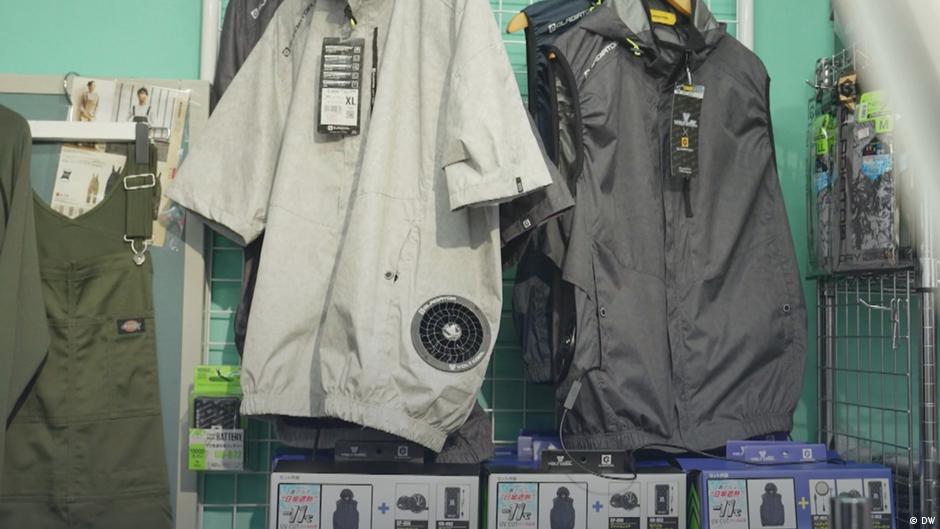
A Deutsche Welle video on Japan's booming market for cooling products, from fan-powered clothing to ice sprays.
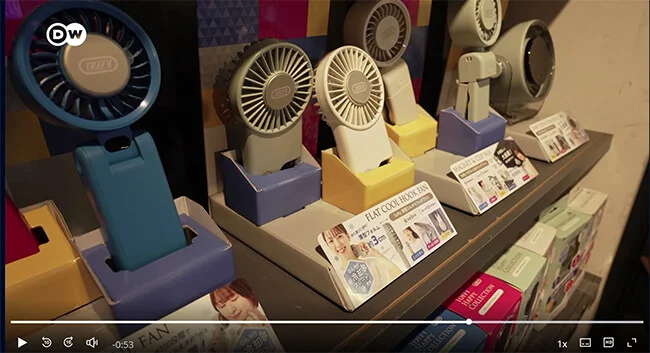
Japan's battery‑powered Kuchofuku cooling vests are surging in popularity as record heat waves drive demand for wearable cooling technology. Originally made for construction workers, these fan‑powered garments now dominate sales in Tokyo workwear shops and have expanded into collaborations with global fashion brands, sports gear and everyday casual wear.
As Japan faces increasingly frequent "kokushobi" (cruel heat) days, consumers are turning to a wider range of cooling innovations — from portable fans to neck coolers and ice‑making sprays. With the global fan‑powered clothing market projected to reach $8 billion by 2034, retailers say staying cool has shifted from comfort to necessity.
 www.dw.com
Japan's battery‑powered Kuchofuku cooling vests are surging in popularity as record heat waves drive demand for wearable cooling technology. Originally made for construction workers, these fan‑powered garments now dominate sales in Tokyo workwear shops and have expanded into collaborations with global fashion brands, sports gear and everyday casual wear.
As Japan faces increasingly frequent "kokushobi" (cruel heat) days, consumers are turning to a wider range of cooling innovations — from portable fans to neck coolers and ice‑making sprays. With the global fan‑powered clothing market projected to reach $8 billion by 2034, retailers say staying cool has shifted from comfort to necessity.
Japan's extreme heat fuels fashion, gadgets to keep cool
From fan-powered clothing to ice sprays, Japan's battle with extreme heat is creating a booming market for cooling products.
www.dw.com
Similar threads


- Replies
- 421
- Views
- 142K

