Science Japanese immunologist Sakaguchi among three Nobel Medicine Prize winners

thomas

Unswerving cyclist
Admin
Joined
14 Mar 2002
Messages
21,050
Reaction score
18,904
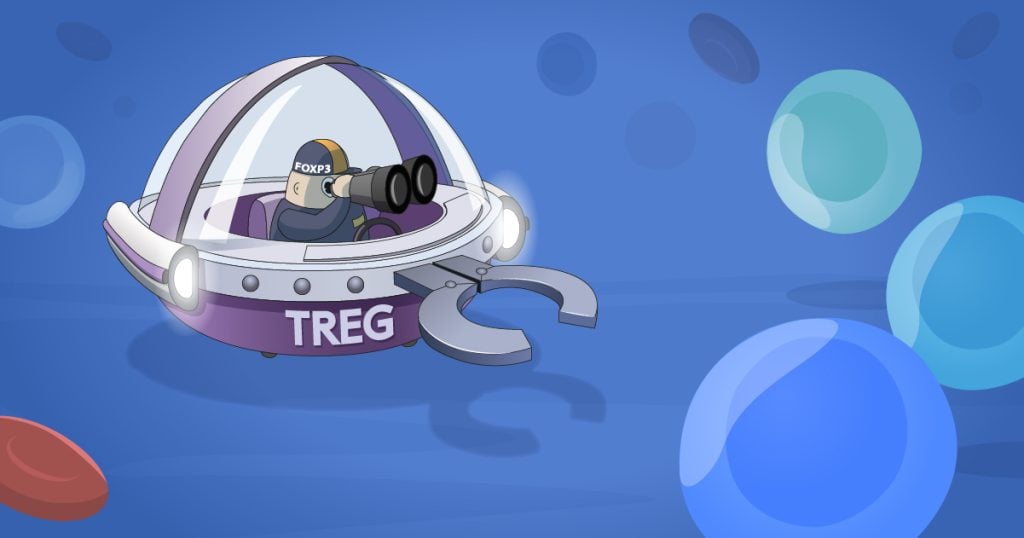
Japanese immunologist Shimon Sakaguchi (坂口志文), a professor at Osaka University, was named co-recipient of the Nobel Prize in Physiology or Medicine for his work on peripheral immune tolerance. The award, announced on Monday, recognised his discovery of a new class of T cells known as regulatory T cells, which help prevent the immune system from attacking the body's own tissues.

The Nobel Committee noted that when Sakaguchi made his breakthrough in 1995, his research went against prevailing scientific opinion. At the time, most scientists believed that immune tolerance arose solely from the elimination of harmful immune cells in the thymus—a process known as central tolerance. The committee explained that Sakaguchi's findings revealed the immune system to be more intricate than previously thought, identifying previously unknown cells that play a crucial role in protecting the body from autoimmune diseases.

The Nobel Assembly at the Karolinska Institute said the trio, which also included Americans Mary Brunkow, with the Institute for Systems Biology in Seattle, and Frederick Ramsdell, at Sonoma Biotherapeutics, identified the regulatory T cells — the immune system's security guards — laying the foundation for a new field of research. The discoveries have also led to the development of potential medical treatments, raising hopes that we will be able to treat or cure autoimmune diseases, provide more effective cancer treatments and prevent serious complications after stem cell transplants, the Nobel Assembly said.


'among three Nobel Medicine Prize winners' – not that you'd know that from the coverage of the news here!
 
'A Japanese person has won ...'

As usual, the contributions of the gaijin colleagues are airbrushed out of the story.
"I asked an AI if the three Nobel laureates had conducted joint research."

Q)
Were Sakaguchi, Brunkow, and Ramsdell conducting a joint research project?

A)
No — their Nobel Prize–winning work was not a direct collaboration.
Rather, it represents independent but complementary discoveries within the same scientific field — the regulation of the immune system through regulatory T cells (Tregs).

🔹 Overview of their respective discoveries
Scientist Major Contribution Relationship to the others
Shimon Sakaguchi (Japan, Osaka University) In 1995, discovered regulatory T cells (Tregs) — a specialized subset of T cells that suppress excessive immune reactions and maintain immune tolerance. The pioneer who established the concept and experimental foundation of immune self-regulation.
Mary E. Brunkow (USA, NIH) Around 2001, discovered that mutations in the Foxp3 gene disrupt immune regulation, leading to autoimmune disease. Provided the genetic and molecular mechanism behind Sakaguchi's cellular discovery.
Fred Ramsdell (USA, Celltech / biotech sector) Independently identified the same Foxp3 gene as the master regulator of Treg function at almost the same time. Confirmed and expanded Brunkow's findings, independently validating the role of Foxp3.
🔹 Why it was not a joint project

Different institutions and funding
Sakaguchi worked in Japan (Kyoto and Osaka University).
Brunkow worked at the NIH in the U.S.
Ramsdell was affiliated with a private biotech company.
Their laboratories, grants, and research teams were entirely separate.

Different time frames
Sakaguchi's key Treg discovery: 1995
Brunkow & Ramsdell's Foxp3 gene discoveries: 2001
The latter findings built upon Sakaguchi's earlier work, clarifying the molecular basis of the phenomenon he had described.

No shared publications
They did not coauthor any papers.

Their major works were published independently (International Immunology, 1995; Nature Immunology, 2001).

🔹 Why they received the Nobel Prize together
The Nobel Committee explained that the prize honors:
"Discoveries of the mechanisms that maintain immune self-tolerance — the identification of regulatory T cells and the gene that controls their function."

In essence:
Sakaguchi discovered what regulates immune balance (the Treg cells).
Brunkow and Ramsdell discovered how it happens (the Foxp3 gene).
Together, their independent breakthroughs completed the scientific picture of immune regulation — warranting a shared Nobel Prize, though not a joint research project.

🔹 Sakaguchi's own statement
In his press conference at Osaka University, Sakaguchi said:
"I did not work directly with Dr. Brunkow or Dr. Ramsdell, but we were all pursuing the same goal in our own ways. I am honored to be recognized alongside them."

This confirms that the three scientists were intellectual collaborators in spirit, but not laboratory partners in practice.

Summary:
The 2025 Nobel Prize in Physiology or Medicine recognized complementary discoveries, not a single collaborative project.
Sakaguchi identified the existence of regulatory T cells; Brunkow and Ramsdell revealed the genetic key controlling them.
Their work, though independent, collectively transformed our understanding of immune tolerance.
 
News of Nobel Prize winners in Physiology or Medicine in Japan

Japan's Nobel Prize in Physiology or Medicine: Osaka University's Professor Shimon Sakaguchi – "Regulatory T Cells Could Lead to Cancer Therapies That Reduce Metastasis Risk Within Ten Years"
Broadcast on October 7, 2025 (FNN Prime Online)

On October 6, it was announced that Professor Shimon Sakaguchi, a Specially Appointed Professor at Osaka University, had been awarded the 2025 Nobel Prize in Physiology or Medicine. Professor Sakaguchi appeared live on the television program "It!" to discuss his research and the future of immunology.

■ On perseverance and decision-making in research
Anchor Mayu Yamaguchi:
I was deeply impressed by your persistence and decisiveness. You have continued your work for forty years, and you once made the bold decision to leave your university position and move to the Aichi Cancer Center after publishing a key paper. What qualities do you think are essential for researchers?

Prof. Shimon Sakaguchi:
This may sound like a simple answer, but research begins with your own curiosity. As you continue, that curiosity becomes stronger and takes on new, more realistic, and richer forms. Along the way, you meet people and encounter others' discoveries. Together, these experiences shape your interests and lead to new outcomes. That's the general path most researchers follow.

■ The motivation behind decades of research
Anchor Minoru Aoi:
Where did your drive to continue researching come from?

Prof. Sakaguchi:
When I began, I was fascinated by how the immune system not only protects the body but can also attack it — that duality intrigued me. I wanted to understand the mechanisms of control behind it. I was fortunate to have been involved with regulatory T cells (Tregs) from their earliest study stages, and that continued focus brought me to where I am today.

■ Potential cancer therapies using regulatory T cells
Anchor Manami Miyaji:
Your discovery of regulatory T cells has raised hopes for new treatments and preventive approaches for cancer and allergies. Regarding cancer in particular, what kinds of therapies might become possible?

Prof. Sakaguchi:
Clinical trials are already underway. Regulatory T cells accumulate within tumor tissues and suppress immune reactions. If we can reduce their numbers using antibody drugs, current cancer immunotherapies could become much more effective.
Another approach is to enhance immune responses from the early stages — right after a cancer diagnosis. Most cancer deaths, about 90%, are due to metastasis. If we can cut that risk in half by boosting immunity, we could save half of those patients. As long as cancer stays localized, it's not such a frightening disease. So the next frontier will be early-stage cancer immunotherapy, which I believe will continue to develop from here.

■ When will these treatments be realized?
Anchor Aoi:
How soon could we expect such treatments to become available?

Prof. Sakaguchi:
I believe these therapies can be realized within ten years. Progress is moving that quickly. Treatments to control allergies and immune disorders could become routine options in clinics within twenty years.

■ From basic science to clinical application
Prof. Takeshi Terashima (Tokyo Dental College):
Your discovery has expanded greatly and now reaches into cancer immunotherapy. Was there a specific moment when you felt it could connect directly to clinical medicine?

Prof. Sakaguchi:
Our work started as basic research using mice, but immunology always links closely to human diseases — vaccines, cancer immunotherapy, and more. As I neared retirement, I began thinking more seriously about how our findings could be applied to people and contribute to treatment.

■ On research funding in Japan
Anchor Miyaji:
In your press conference yesterday, you mentioned research funding. You said Japan's research budget is about one-fourth that of the U.S. Do you have any recommendations?

Prof. Sakaguchi:
A car can't run without fuel — it's the same for science. If Japan aims to be a science-driven nation, the current situation feels a bit discouraging. Across many fields, people say research budgets are too low. When Japan's economy was strong, the smaller percentage still produced sufficient funding, but today the total is simply too small.

■ The significance of his Nobel Prize for Japan
Anchor Aoi:
Many Japanese researchers are working hard every day. What do you think this award means for Japan?

Prof. Sakaguchi:
As we just discussed, funding and support are crucial. When interesting results emerge, support should be strengthened. We should also rethink making all research positions term-limited and purely competitive. We need to consider what truly benefits science.

■ Reflections from other experts
Prof. Takeshi Terashima:
This award is uplifting news at a time when financial conditions for researchers are harsh. I think it will motivate young scientists and physicians.

Anchor Yamaguchi:
Even if research doesn't yield quick results, it's important not to criticize it as useless. We must keep inspiring young people who dream of contributing through science.

Anchor Miyaji:
Professor Yamaguchi, what kind of support do you think the government can provide?

Anchor Yamaguchi:
Professor Sakaguchi mentioned that in the U.S., private foundations and corporations play a major role in funding research. Japan should also build a stronger ecosystem between academia and private industry.

Prof. Terashima:
Immunology has many layers and subtleties. I hope this recognition will inspire more students to explore the human body and pursue medical science. Even through hardships, research can ultimately shine light on society.

(Source: FNN Prime Online, October 7, 2025)
 
'among three Nobel Medicine Prize winners' – not that you'd know that from the coverage of the news here!

Watching the news on the telly, I had the same impression. Most newspapers, though, reported on a trio of scientists.
 
Well, Japan has very little going for itself, other than four seasons. Let them enjoy this bit of success. 😉
 
Back
Top Bottom