Tokyo restaurant caters to rising demand for vegan sushi

thomas

Unswerving cyclist
Admin
Joined
14 Mar 2002
Messages
21,050
Reaction score
18,904
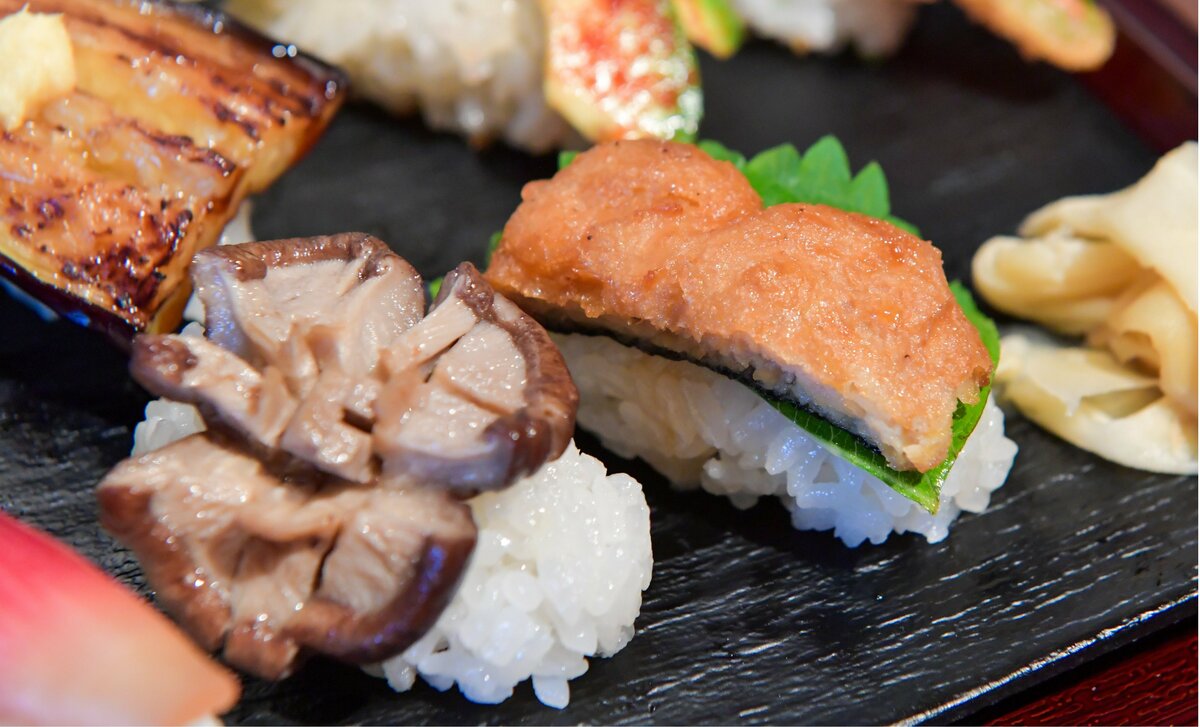
Vegan Sushi Tokyo is a speciality restaurant in Tokyo's Shibuya Ward that opened in June 2024, claiming to be the first establishment in Tokyo dedicated entirely to vegan sushi. Founded by Shu Kudo, a 26-year-old vegan entrepreneur, the restaurant serves a 10-piece vegan sushi set featuring items such as shiitake mushrooms and plant-based alternatives prepared in traditional nigiri and gunkan styles. The menu includes creative dishes, such as carrot-tail shrimp tempura, and offers desserts like vegan, gluten-free dorayaki. Operating only during lunch hours in a rented bar space, the restaurant primarily attracts foreign tourists seeking plant-based dining options whilst visiting Japan. The establishment has developed its own map of recommended vegan restaurants across Japan and has collaborated with Toyama Prefecture to create vegetable sushi recipes featuring local ingredients.
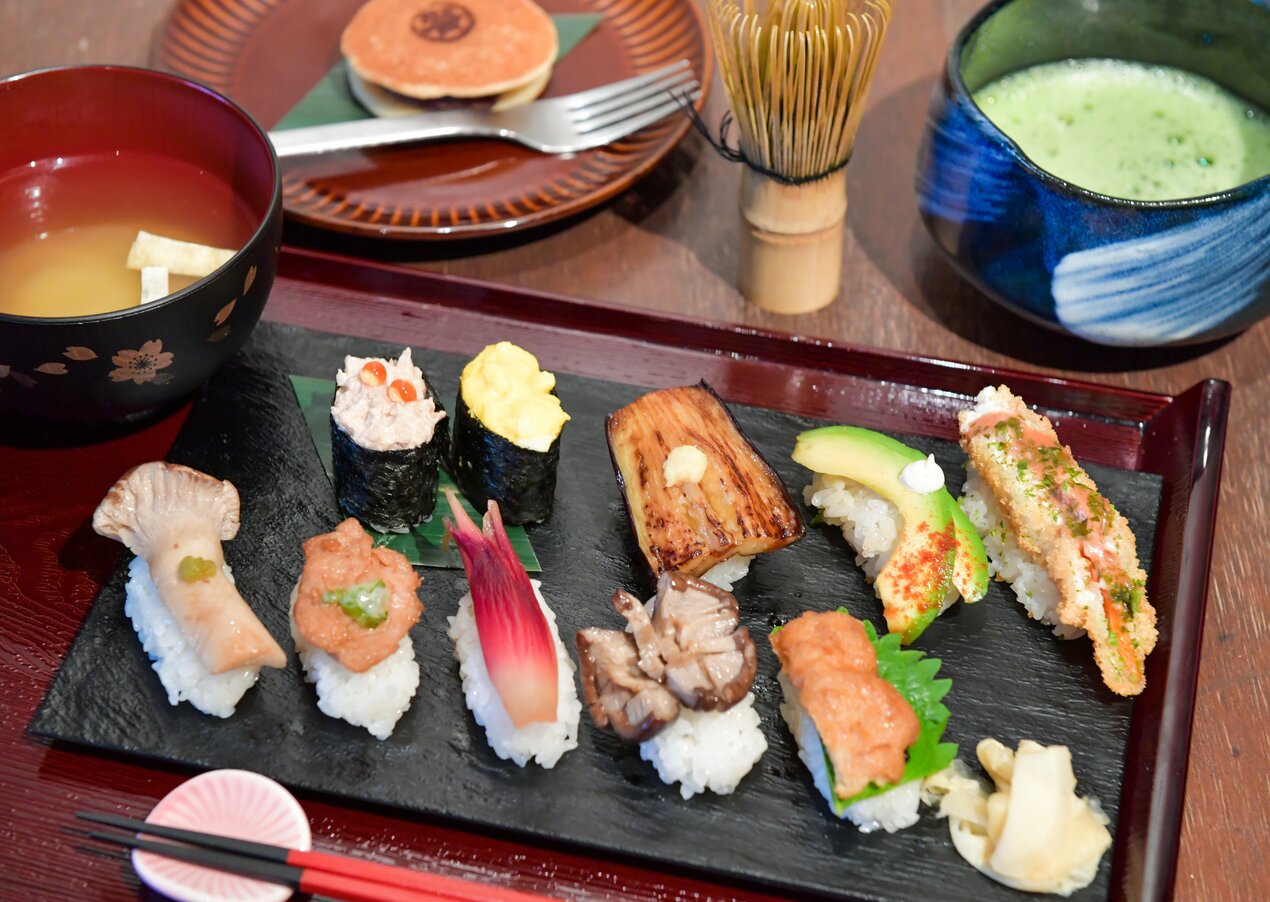
Vegan sushi set served at Vegan Sushi Tokyo

Vegan sushi set served at Vegan Sushi Tokyo


Kudo, 26, became a vegan nine years ago over concerns about animal rights and environmental issues. In 2020, he founded Vcook Inc., a startup offering a recipe-sharing platform, among other services aimed at supporting vegans in Japan. When foreign visitors began returning after the COVD-19 pandemic, Kudo was conscious of the challenges that the vegans and vegetarians among them faced. Before opening Vegan Sushi Tokyo in June 2024, Kudo said he talked with around 100 vegans and vegetarians who had come to Japan. "They encountered a lot of problems. One was that they wanted to eat sushi but were limited to things like 'kappamaki,' or cucumber sushi roll," he said.

In its list of vegan-friendly cities for 2025, HappyCow placed Tokyo at number 12 with London taking top spot. Vegan Sushi Tokyo has produced its own map of recommended restaurants across Japan. With the increase in foreign visitors, the appetite for vegan and vegetarian options is growing, as is the number of pins on the map.

Link:

Vegan Sushi Tokyo

Vegan Sushi Tokyo

Vegan Sushi Tokyo is a vegan restaurant in Shibuya.
 
Ridiculous, it'll never catch on. If veggies and vegans want to live their lives like that, then the perverts should go away and eat kale and turnips out of cattle troughs 🥬🧄😑 Bloody nutters 🤪🤪🤪

(😉)
 
I'm not vegan, but I'd love to try their "sushi." It does look like the real thing. :)
 
Yes, me too, but I have a bit of thing about eat things made to look like dead animal parts. Imagine benevolent aliens coming to earth, befriending us, but eating plant-based food made to look like human arms, legs, heads or genitalia 😐

I've eaten shōjin ryōri on Koyasan and it's the best tasting food I've ever eaten, not least because one 'eats with the eyes'; it's beautiful!
 
I'd definitely try it. I think vegan sushi is one thing that could be done well. As opposed to something like vegan burgers which typically uses an ingredient named after Satan himself. Seitan.

It's 1.5km from our office so unfortunately it's a bit out of range for an hour lunch especially in this weather. So I probably won't get a chance to try it any time soon.
 
I'd definitely try it. I think vegan sushi is one thing that could be done well. As opposed to something like vegan burgers which typically uses an ingredient named after Satan himself. Seitan.
It's just gluten…virtually pure protein consisting mainly gluten in and gliadin.,
It's 1.5km from our office so unfortunately it's a bit out of range for an hour lunch especially in this weather. So I probably won't get a chance to try it any time soon.
Perhaps they deliver!
 
That's like saying natto is just protein.

It is much more than just protein.

Nattō (納豆) is often called a Japanese superfood because its fermentation by Bacillus subtilis makes it exceptionally rich in nutrients and bioactive compounds. It provides easily digestible protein, fibre, and soy isoflavones, but its real uniqueness lies in being the world's best natural source of vitamin K2, essential for bone and cardiovascular health, and in producing nattokinase, an enzyme shown to improve blood circulation and reduce clot risks. Combined with probiotics that support gut health and immunity, nattō offers a rare synergy of benefits—strengthening bones, protecting the heart, aiding digestion, and balancing hormones—making it one of the most nutritionally powerful traditional foods in Japan.
 
Nattō (納豆) is often called a Japanese superfood because its fermentation by Bacillus subtilis makes it exceptionally rich in nutrients and bioactive compounds. It provides easily digestible protein, fibre, and soy isoflavones, but its real uniqueness lies in being the world's best natural source of vitamin K2, essential for bone and cardiovascular health, and in producing nattokinase, an enzyme shown to improve blood circulation and reduce clot risks. Combined with probiotics that support gut health and immunity, nattō offers a rare synergy of benefits—strengthening bones, protecting the heart, aiding digestion, and balancing hormones—making it one of the most nutritionally powerful traditional foods in Japan.

That description has my mouth watering 🤤😋
 
Nattō (納豆) is often called a Japanese superfood because its fermentation by Bacillus subtilis makes it exceptionally rich in nutrients and bioactive compounds. It provides easily digestible protein, fibre, and soy isoflavones, but its real uniqueness lies in being the world's best natural source of vitamin K2, essential for bone and cardiovascular health, and in producing nattokinase, an enzyme shown to improve blood circulation and reduce clot risks. Combined with probiotics that support gut health and immunity, nattō offers a rare synergy of benefits—strengthening bones, protecting the heart, aiding digestion, and balancing hormones—making it one of the most nutritionally powerful traditional foods in Japan.

That description has my mouth watering 🤤😋
Yes it's wonderful and I fully support my wife and kids eating it but somehow I've never enjoyed eating food that smells like stinky old gym socks so I never partake.
 
Yes it's wonderful and I fully support my wife and kids eating it but somehow I've never enjoyed eating food that smells like stinky old gym socks so I never partake.
I wonder if the reportedly unpleasant odour of natto is like the genetic ability to find the taste of coriander distasteful (which I do 🤢) ? I'm on the hypernosmic side and I don't detect that 'blue cheesy' note in the smell to natto. I get a vague hint of coffee grounds but not blue cheese (and I love blue cheese).
 
I don't find the smell that unpleasant. Right out of the fridge, it doesn't exude any odour at all. If anything, it's slightly nutty. I have eaten a lot of French cheese (or British Stilton) that would raise biohazard alerts in comparison.

And my gym socks are a totally different story. 😇
 
I don't find the smell that unpleasant. Right out of the fridge, it doesn't exude any odour at all. If anything, it's slightly nutty. I have eaten a lot of French cheese (or British Stilton) that would raise biohazard alerts in comparison.
Yes that's the type of odour I get from natto.

There was a discussion about durian fruit on the radio the other day. The British presenters and guests were using 'false diplomatic speech' to suggest they smelled…well like a pile of dog faeces, left out in a bucket, in the hot sunshine. They are pungent and all pervasive in enclosed spaces but not repugnant. It struck me how the only acceptable odours to British people are roast beef and stale beer and anything 'exotic' are deemed 'vile'.
 
Oddly my wife hates bleu cheese while I quite like it. Though I think it may have less to do with the smell and more to do with the thought of eating mold.
I've only had Durian once -- at my friend's house in Hong Kong. It tasted ok and didn't smell particularly terrible that I recall. It was certainly a much better experience than the chicken feet he gave me.
 
Oddly my wife hates bleu cheese while I quite like it. Though I think it may have less to do with the smell and more to do with the thought of eating mold.
But natto is a fungus too…Aspergillus oryzae!
I've only had Durian once -- at my friend's house in Hong Kong. It tasted ok and didn't smell particularly terrible that I recall. It was certainly a much better experience than the chicken feet he gave me.
It is illegal to transport durian on public transport etc in SE Asia, because of their strong smell.
Public Transport: Many countries, especially in Southeast Asia, ban durian on buses, trains, and even taxis due to its smell.

Hotels: The fruit is often prohibited in hotel rooms and public areas.

Airports: Durian is commonly restricted in airports.

Public Buildings & Attractions: Bans can extend to other public places like shopping malls and government buildings.
 
Back
Top Bottom