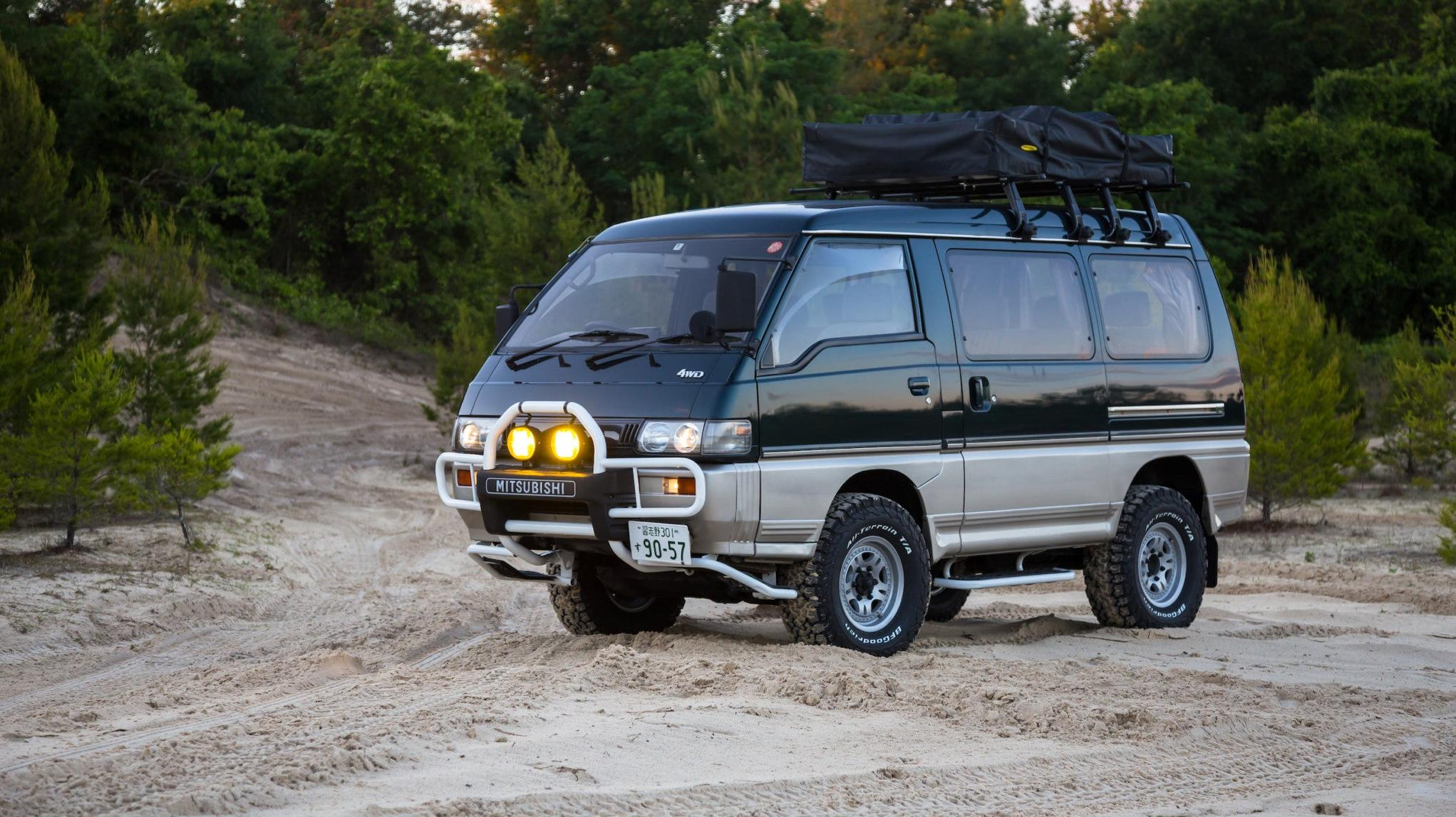
Lately, there has been a rise in the number of kei truck thefts in Japan.
近年、日本国内における自動車盗難の認知件数は大幅に減少している。2003(平成15)年には年間6万4223件に上っていたが、2024年には6080件にまで減った。 しかし、軽トラックに限っては

news.yahoo.co.jp
Even the Land Cruiser Is Shocked!? The Real Reason Behind the Surge in Mini Truck Thefts — Cargo Assets Under Constant Threat
Mini truck (Image: Photo AC)
In recent years, the number of reported car thefts in Japan has significantly decreased. Back in 2003, there were 64,223 cases, but by 2024, that number had dropped to just 6,080. However, mini trucks seem to be following a different trend. According to the "Vehicle-Specific Theft Statistics" published by the National Police Agency in March 2024, theft numbers for the Suzuki Carry and Daihatsu Hijet remain consistently high. Here's a breakdown of thefts involving the Suzuki Carry:
2021: 75 units
2022: 122 units
2023: 115 units
2024: 96 units
For the Daihatsu Hijet:
2021: 117 units
2022: 95 units
2023: 107 units
2024: 103 units
Both models have ranked in the top 10 for vehicle thefts for three consecutive years. While the 2024 top spots are occupied by the Land Cruiser (1,064 units) and the Prius (539 units), the combined 200+ thefts of these two mini truck models are no longer "exceptions." Mini trucks have become part of the mainstream in vehicle thefts.
Why are mini trucks being targeted? Who is valuing them, and why? To understand this phenomenon, we must examine the connection between mini trucks and organized crime.
Security Blind Spots Fueling Theft Increases
Mini truck (Image: Photo AC)
Mini trucks are valued not only for agricultural use in Japan but also in overseas markets. With minimal electronic controls and a simple structure, they are easy to repair and maintain locally. Their maintenance costs are low. Additionally, Japanese vehicles in general are known for their durability in harsh conditions, such as unpaved roads and extreme climates common in places like Africa. Mini trucks share these traits and meet practical needs in developing regions.
As a result, overseas prices for mini trucks are trending upward. In the U.S., for example, the Honda Acty has been sold for over 1.5 million yen (approx. $10,000). In developing and emerging economies, high prices have become the norm due to rising demand. These conditions have made mini trucks prime targets for criminal organizations.
But what exactly makes them such easy targets? The root cause lies in both their physical design and the environment in which they are owned.
Structural Vulnerabilities:
Many models lack anti-theft devices (e.g., immobilizers were only added to Daihatsu models in December 2021)
Simple design makes unauthorized engine starts easy
No standard security alarm systems
Owner-Side Lapses:
Farmers often treat them as tools, not recognizing their asset value
Leaving keys in the ignition or vehicles unlocked is commonplace
A false belief that "no one would steal a mini truck"
Mini truck theft persists due to a combination of weak vehicle security, lax anti-theft practices, and insufficient surveillance infrastructure. Criminal organizations are exploiting these gaps with strategic, premeditated theft.
Disappearing Stolen Trucks Through Parts Smuggling
Behind the surge in mini truck thefts is a sophisticated criminal infrastructure that exploits Japan's legal used car export system. This isn't just theft—it's a coordinated system that mimics a local industry with division of labor: identifying targets, executing thefts, dismantling, shipping, and selling—all handled by different personnel and facilities.
The critical point is that each stage appears outwardly legal. As a whole, this system functions as a predatory mechanism masked as legitimate logistics.
Mini trucks have recently become part of this criminal pipeline. Their commercial viability doesn't depend on buyers alone but on the existence of a well-established distribution network. Stolen vehicles are sent to "yards" — dismantling and storage facilities — where they are taken apart down to the frame.
While many yards operate legally as part of the used car export industry, some function exclusively for smuggling. Vehicles are disassembled into parts, reassembled for export, and rendered nearly untraceable. The parts-based export method erases traceability, making legal investigation extremely difficult.
This scheme exploits legal gray zones and the invisibility of shipping logistics. Though container transport relies on customs procedures and port labor, actual inspections are minimal due to the priority placed on volume and speed. In small or rural ports, inspection is often abandoned entirely.
Multinational shell companies target these weak spots. They hide stolen parts among legal agricultural machinery, motorcycles, and used mini trucks. Each process is shrouded in a veneer of legality.
Mini trucks don't have to be new or recent models; what matters is their reliability and ease of repair. In other words, mini trucks are now redefined as multipurpose utility vehicles in Africa and Southeast Asia — used for farming, logistics, and sometimes even military purposes. Ironically, the distribution infrastructure was established before the market fully recognized this value.
Cross-Border Theft Rings Targeting Rural Japan
Mini truck (Image: Photo AC)
Rural areas are selected as prime theft targets due to strategic considerations. Urban areas have higher risk and better surveillance infrastructure, while rural communities suffer from weaker oversight. Moreover, traditional community bonds and mutual watchfulness are weakening, leaving villages as poorly guarded stockpiles of valuable equipment.
The low level of security awareness among farmers isn't a personal flaw—it's the result of societal neglect, assuming rural areas are immune to crime. That negligence created vulnerabilities now exploited by international criminal networks.
There is a fundamental asymmetry between local countermeasures and the structure of organized crime. Mini truck thefts are not opportunistic — they are systemic. This is no longer a matter of isolated incidents, but of institutionalized plunder.
In such an environment, measures like locking doors, routine patrols, or installing GPS trackers barely scratch the surface. The core issue is that rural regions have become supply bases for global black markets. International crime networks have recognized and are systematically exploiting this function.
Mini trucks are being stolen because a theft-enabling social structure is already in place.
The Reality of Mini Truck Thefts and Export Routes
The theft of mini trucks is a symbol of how remote rural Japan has been absorbed into the global criminal economy. As of 2025, organized crime networks connected to the global economy have reached deep into Japan's countryside.
The assumption that "rural areas are crime-free" is already obsolete. For crime syndicates responding to international demand, poorly monitored rural regions are perfect hunting grounds.
Solving this issue requires more than just individual awareness. The thefts are carried out by multinational organizations with export infrastructure already in place.
Mini truck theft exposes the vulnerabilities of rural security in an era of globalization. Traditional frameworks are no longer sufficient. What's needed is a comprehensive cross-border strategy to combat international organized crime.


 autos.yahoo.com