


- 14 Mar 2002
- 21,050
- 18,904
A group of Japanese researchers has developed the world's first transparent paper that is not only thick and strong enough to be used as a beverage container but also biodegradable, offering a potential solution to marine plastic pollution. According to the team, the clarity of the material allows the contents, such as juice or other liquids, to be visible from the outside when used in cartons.
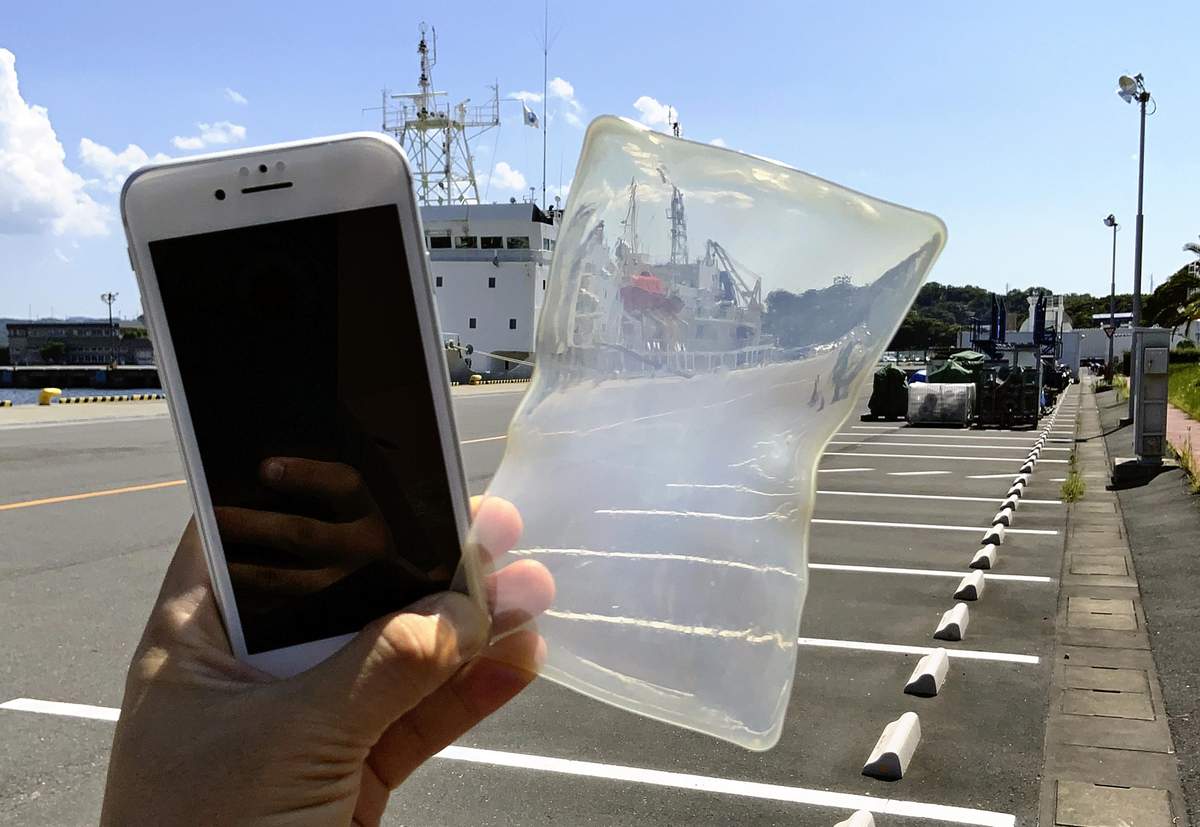
Photo credit: JAMSTEC
Made from plant-based sources, the new paper is designed to be broken down by microorganisms and is an environmentally friendly alternative to conventional plastic containers. It is highly flexible and can be bent with ease. Yet, it remains durable even when exposed to moisture, enabling it to be formed into a variety of shapes, including cups and straws. The researchers behind the innovation are affiliated with institutions such as the Japan Agency for Marine-Earth Science and Technology (JAMSTEC), based in Yokosuka, Kanagawa Prefecture.

 japannews.yomiuri.co.jp

Photo credit: JAMSTEC
Made from plant-based sources, the new paper is designed to be broken down by microorganisms and is an environmentally friendly alternative to conventional plastic containers. It is highly flexible and can be bent with ease. Yet, it remains durable even when exposed to moisture, enabling it to be formed into a variety of shapes, including cups and straws. The researchers behind the innovation are affiliated with institutions such as the Japan Agency for Marine-Earth Science and Technology (JAMSTEC), based in Yokosuka, Kanagawa Prefecture.
But the material had a severe weakness. Since paper is manufactured with wood-mashed pulp, the gaps between its thick fibres diffuse light and make the finished sheets opaque. This is especially problematic given that transparency is highly valued in the food industry. Packages that allow consumers to check the contents beforehand are thought to motivate shoppers to select specific products. In France, a food manufacturer once introduced paper cartons for a juice beverage but later reportedly reverted to plastic containers in at least one instance. Derived from cellulose-like paper, the material known as cellophane was already recognised for its transparent appearance. A challenge is that cellophane is as thin as 0.03 millimetres under current production methods. It has long been considered technically impossible to produce cellophane between 0.3 mm and 0.7 mm thick — thick enough for use in paper cartons and other commercial packaging.
Japanese Researchers Develop ‘Transparent Paper’ as Alternative to Plastics; New Material Is Biodegradable, Can Be Produced with Low Carbon Emissions
<p>A team of researchers with the Japan Agency for Marine-Earth Science and Technology (JAMSTEC) and other entities have developed thick sheets of transparent paper using cellulose, a material made from plant biomass.</p>
japannews.yomiuri.co.jp
Link:
Japan Marine Science and Technology Center (JAMSTEC)
Deep Sea Research, Marine Technology, Ocean Observation and Research, Marine Ecosystems Research Departments.
- JREF
- Views: 1K
- Category: Institutions


