News Rising foreign interest in Japan's abandoned buildings

thomas

Unswerving cyclist
Admin
Joined
14 Mar 2002
Messages
21,050
Reaction score
18,904
Akiya (abandoned buildings) are increasingly becoming the objects of foreign interest. Nomura Research Institute Ltd. predicts that if vacant houses are not demolished, they could account for 31.5 per cent of all housing in 2038.

There are various reasons why vacant houses are left untouched in Japan. Some owners are reluctant to demolish or part with homes that are filled with memories. Others don't want the properties of deceased relatives because of the expenses and hassles of renovations and maintenance. And vacant homes that are put on the market are often ignored by Japanese, who generally seek newer homes to buy. However, Akiya and Inaka, a Tokyo-based company that introduces vacant houses to overseas buyers, says it receives several hundred inquires every month. Many of the interested parties have never set foot in Japan and have no family members nor acquaintances here, the company said.

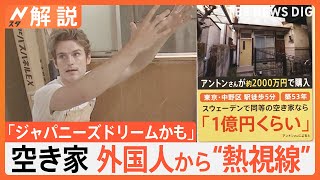
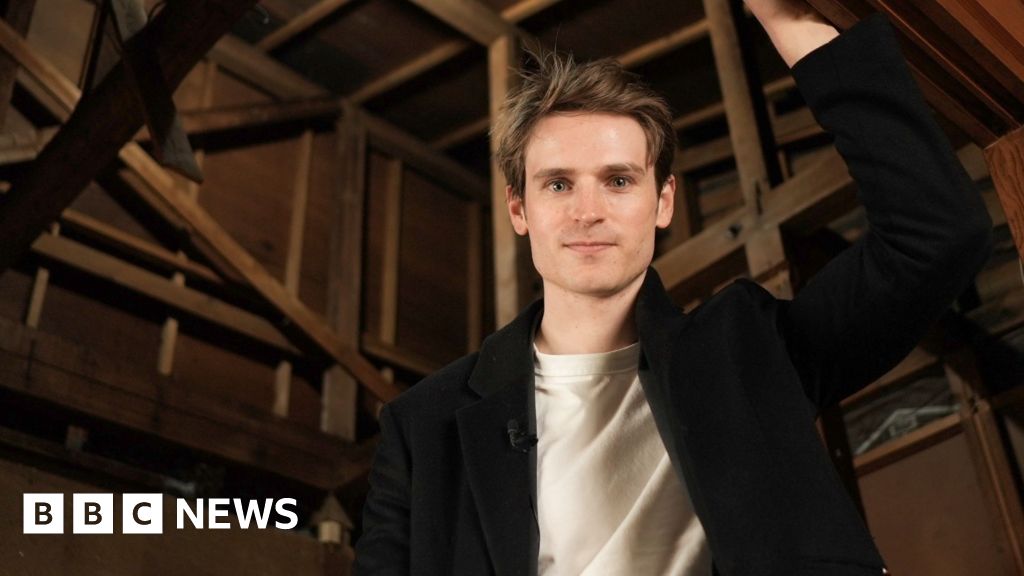
Foreign buyers may hold the key to resolving Japan's growing problem of vacant homes: Asahi describes the case of Swedish model Anton Wormann, who acquired an 86-year-old, 90-square-meter house in a prime location of Setagaya.


Wormann said vacant houses should not be viewed as a problem but as a possibility. "I think Japan lacks the positivity, the willingness to view things in a positive light," he said. The Swede made the most out of the "possibility" he was given. Wormann, a model who has traveled across Europe, the United States and Asia, naturally believed that buying a home in a major foreign city would be expensive. But after coming to Japan and learning about akiya, he purchased the home in one of the most desirable locations in Tokyo for about 10 million yen ($69,000).

 
At the price that Wormann paid, I would seriously consider buying, too. However, then what? I don't have a visa to be in Japan any more, and I would probably only ever be able to visit for short periods. At least for the foreseeable future.
 
At the price that Wormann paid, I would seriously consider buying, too. However, then what? I don't have a visa to be in Japan any more, and I would probably only ever be able to visit for short periods. At least for the foreseeable future.

I'm unsure if special visas exist for those who own property in Japan. However, as an EU citizen, even on a tourist visa, Wormann could stay three months in Japan (six months in the case of some privileged countries). And 10m JPY for a property in Setagaya is a veritable bargain.
 
Akiya (abandoned buildings) are increasingly becoming the objects of foreign interest. Nomura Research Institute Ltd. predicts that if vacant houses are not demolished, they could account for 31.5 per cent of all housing in 2038.


Foreign buyers may hold the key to resolving Japan's growing problem of vacant homes: Asahi describes the case of Swedish model Anton Wormann, who acquired an 86-year-old, 90-square-meter house in a prime location of Setagaya.


Wow. For a Tokyo location like this my wife would probably consider this. And my brother-in-law is a home refurbisher/builder so we could easily get it fixed up at an honest price. But I'm sure these kinds of opportunities are rare in Tokyo.
 
I wonder what the 建蔽率 and 容積率 are for the property--perhaps other 'unique' characteristics--i.e., is the property on a slope, or is there a retaining wall that would need to be redone to adhere to present-day building codes? So if the present structure was taken down, just how 'buildable' is the property? My guess is there are some big quirks along these lines that made any normal real estate person pass this property over.

Is it on a public road, and how big/wide is it? If not, at least locally that can really lower the price--ownership of the road, the effect on which utilities go to the property (water, sewerage, city gas, internet), or maybe it's too narrow for most vehicles (likely no parking space). Is this a row house, that shares common walls with properties on both sides?

Also, the property was ¥10m, plus a year of his time/energy, and then how much did he say it cost to fully reform it?
 
Here's a link to Akiya and Inaka's website. I haven't looked at it yet. Should be interesting.
EDIT: There weren't nearly as many properties listed as I was expecting. The one in Hachioji doesn't look too bad.
 
Last edited:
Wow. For a Tokyo location like this my wife would probably consider this. And my brother-in-law is a home refurbisher/builder so we could easily get it fixed up at an honest price. But I'm sure these kinds of opportunities are rare in Tokyo.
Indeed, you would think developers would be all over that land. Ripping down the old house and putting up a brand new one while making a huge profit of course.

That is actually a problem here, any "affordable" houses/properties are bought up by developers as soon as they come on the market then remodeled and sold as luxury homes for insane prices.
 
If you're thinking of buying an akiya and you can navigate the Japanese language, this is probably a better place to start looking. There are a lot more listings throughout Japan. That other site was very much Kanto-centric.

Looking around these sites, most of these properties are in rather rural areas. Some aren't too bad, but none that I've seen are in any of the major cities.
 
Business opportunity of the empty house.
Is charmed by house "of" Japan; and the activity of the empty house hunter.

There is an American duo pleased to find a kotatsu set in the floor in an old private house. A Japanese old house causes a favorite person; "an empty house hunter." It works I find an attractive empty house, and to introduce to a foreign visitor. Now that the corona evil calmed down, it is said that the foreign visitors who want to buy an empty house increase. Two people run around the whole country looking for unknown good old Japan where the Japanese does not notice.

The mat that the one, mustache are impressive visits Japan as a teacher of the English conversation 14 years ago. An encounter was impressed deeply with a Japanese old house. And I have begun to look around the empty houses of the whole country. Mat makes the empty house which I looked at the list, and, as for the number, 1,000 cases are as above. It is revealed it is what kind of price, and what kind of empty house is in several prefectures, several cities at first sight.

It is always Allen dressed in the suit that intended to conduct a business in a list of empty houses. It is an entrepreneur having some companies. Because Allen met mat, "a space shop hunter" was born. In fact, Japanese families love Allen, too. I purchased a Japanese-style single house, and the knowledge of the Japanese culture is abundant, too. Allen talks about an aim of "the space shop business" saying "a visitor has many people wanting a Japanese typical house".

On such one day, a French visitor resident in Tokyo did it for private view. She works for the foreign-affiliated company, and a wife is a Japanese. In fact, two people just got married and were looking for a suburban Japanese-style house. Allen handles luxury model Bentley of the 1950s when oneself owns it of the U.K. and shows around the article.

At first it is the article of 50 years in the suburbs of Saitama old. The empty house where there is the garage with a roof. It is said that an old man lived alone until half a year ago. The French of the visitor said when I entered the Japanese-style room. "A shoji to see snow!" . Allen returns it saying "I love a snow-see viewing shoji as for this". Half of the bottoms of the shoji become fitted with glass, and they see the outside like a window. I sit down on the tatami mat and can look at a garden.

Besides, a visitor is interesting for the small decoration work of "an earth wall" and the ceiling; "is a house near hope. The state that I liked saying I seem to be able to live tomorrow even if I did not repair it. In the empty house in Shizuoka where I went to successively, I was impressed by scenery to show from the second-floor window. What is the scenery that "this made such him say it to Japan?"

Furthermore, two people of the empty house hunter begin the new approach from this spring. I have begun to change the household effects left in a house when I visited the empty house of 35 years old. I was looking for the treasure for two from a thing left in the empty house. There was the thought that I wanted to leave "the unknown good point of two people of Japan" for there. What do you do for one many household effects which I obtained? I was able to see the new challenge of two people when I followed it.
(from May 23, 2023 broadcast "news every.")
 
Paul Christie's acquisition of a dilapidated house in rural Japan surprised the locals. The property had been neglected for nearly 20 years and had only a mortgage record from the 1920s. The British expatriate saw potential in the traditional three-bedroom house, which he purchased for just over £15,600. This allowed him ample budget for significant renovations to create a comfortable home for his family, featuring modern amenities like double glazing, underfloor heating, a wood-burning stove, and a shower room. His efforts have drawn positive attention from visitors. Christie, who has lived in Japan since the late 1980s, notes that most of his elderly neighbours have steadily declined, with younger generations moving to urban areas. Farming and care homes for the elderly primarily support the local economy.

However, the trend is shifting as more foreigners in Japan are purchasing and renovating akiya for use as holiday homes or permanent residences. This movement has gained popularity online, with social media platforms like TikTok and YouTube featuring successful akiya renovation stories, attracting millions of viewers and highlighting the appeal of affordable homes against Japan's stunning landscapes.


Younger generations who inherit the properties in the countryside from relatives can sometimes find them to be of little use. Faced with paying an agent to find a buyer, or renovating the houses themselves, some choose to practically give properties away instead. "I've been offered properties for free," says Christie. "There was one, but I didn't want it because it was very inconvenient. [For] another property nearby, a friend basically halved the price and we turned it into a guest house," he adds. He warned that it's common to "spend a lot on a property and it [does] not hold its value, so you have to look at other returns like renting it out". There's also the issue that foreigners are limited in how long they may stay in Japan. Tourist visas currently expire after 90 days, while the longer "sightseeing and recreation" visa lasts six months to a year. The number of foreigners living in Japan has been steadily increasing for years and today sits at about over 3.2 million. After years of decline following the pandemic, British nationals in the country now number just under 20,000.


I wonder if the increasing foreign interest in akiya might trigger more Japanese interest in preserving and renovating older structures.


The BBC on foreigners investing in/taking over and renovating akiyas. This time, it's about foreign influencers:

Content creators in Japan are going viral for buying and renovating cheap, abandoned homes known as akiyas. In Tokyo, akiyas can be purchased for a fraction of the price of what a home would cost in other major cities around the world. Outside major cities it's even cheaper. In some remote locations, akiyas are even being given away for free. It may seem like an unbelievable opportunity to those struggling to get on the property ladder, but the BBC's Japan correspondent Shaimaa Khalil investigates the reality behind the social media trend.
Video by Isabelle Rodd

 
Here's another story of a successful akiya takeover: a couple from New Orleans moved to Ōmishima and renovated a home and former inn built in 1953 that had been abandoned for ten years. They purchased the property for $9,292 — $7,500 for the house itself, $1,500 in transaction fees, a $212 one-time real estate acquisition tax and an $80 annual property tax.

Akiya

Dani Benton is an award-winning photographer and the owner of Dani Benton Photography. She lives with her husband Evan, cat Ponkan and dog Bosco on Ōmishima Island in rural Japan. Together, Dani and Evan run Benton Guesthouse and their growing honey business. Follow them on YouTube and Instagram to learn more about their homestead and home renovation experience.

Source:
 
I am pretty sure I have mentioned it before, but if I had and were the type to have a fully remote job I would be vary tempted by the prospect of getting an akiya and bringing it back to life. Housing around here is just insane expensive and Japan just feels so much safer anyway. I really would like to get away from the "solve all problems with guns" and "you need a gun because everyone else has a gun" mentalities.
 
The municipal government of Uozu in Toyama Prefecture gives away abandoned houses for 100 yen.

Uozu akiya

The municipality has been asking residents to register information on vacant homes under the "Akiya Bank" system and publicizing the list. It introduced the 100-yen program as a further step to reduce the number of empty houses and reinvigorate the community by getting more people to move in. Akiya are considered worthless if they fall into disrepair or suffer from other severe damage. The program puts akiya homes on the market when they are in reasonably good shape. Vacant homes eligible for the program can be made habitable after renovation and sold in a month or so. Buyers must move into the house with at least another occupant, intend to live for a long time and meet other conditions. Akiya owners receive the city's help to unload unused properties that still require maintenance costs and other expenses.


I'm unsure if special visas exist for those who own property in Japan. However, as an EU citizen, even on a tourist visa, Wormann could stay three months in Japan (six months in the case of some privileged countries). And 10m JPY for a property in Setagaya is a veritable bargain.
Yea I wonder how many of these people get visas. Digital nomad is only good for like 6 months so remote work does not do it either. The old eikaiwa route? I am with Mikawa Ossan they buy the house, then what? A vacation home? I doubt there is a special visa for property owners, there is for business owners and investors if they have that kind of money.
 
I am pretty sure I have mentioned it before, but if I had and were the type to have a fully remote job I would be vary tempted by the prospect of getting an akiya and bringing it back to life. Housing around here is just insane expensive and Japan just feels so much safer anyway. I really would like to get away from the "solve all problems with guns" and "you need a gun because everyone else has a gun" mentalities.
You could retire there? Depending on your industry some may hire, tech does but at a huge pay cut vs the US I suspect it is similar for other jobs but that may require you to go to a more urban area like Tokyo so the akiya may cost a bit more.
 
You could retire there? Depending on your industry some may hire, tech does but at a huge pay cut vs the US I suspect it is similar for other jobs but that may require you to go to a more urban area like Tokyo so the akiya may cost a bit more.
Yeah, retirement there is something I have considered. I'm in IT so there are remote jobs available, but many have requirements around where you can live and remote work isn't really my cup of tea anyway. I am one of the, apparently rare, people who prefers to work in the office. I like the separation between home and work and use the commute to let myself transition mentally.
If it was just me I would probably look toward Hokkaido or Northern Honshu anyway, but because we have family in the Kansai area we would probably end up somewhere around there, though I despise heat and humidity.
 
Back
Top Bottom