- 14 Mar 2002
- 21,050
- 18,904
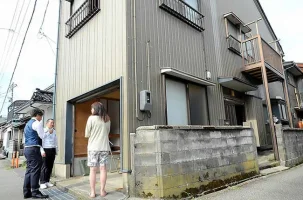
Akiya (abandoned buildings) are increasingly becoming the objects of foreign interest. Nomura Research Institute Ltd. predicts that if vacant houses are not demolished, they could account for 31.5 per cent of all housing in 2038.
Foreign buyers may hold the key to resolving Japan's growing problem of vacant homes: Asahi describes the case of Swedish model Anton Wormann, who acquired an 86-year-old, 90-square-meter house in a prime location of Setagaya.
There are various reasons why vacant houses are left untouched in Japan. Some owners are reluctant to demolish or part with homes that are filled with memories. Others don't want the properties of deceased relatives because of the expenses and hassles of renovations and maintenance. And vacant homes that are put on the market are often ignored by Japanese, who generally seek newer homes to buy. However, Akiya and Inaka, a Tokyo-based company that introduces vacant houses to overseas buyers, says it receives several hundred inquires every month. Many of the interested parties have never set foot in Japan and have no family members nor acquaintances here, the company said.
Foreign buyers may hold the key to resolving Japan's growing problem of vacant homes: Asahi describes the case of Swedish model Anton Wormann, who acquired an 86-year-old, 90-square-meter house in a prime location of Setagaya.
Wormann said vacant houses should not be viewed as a problem but as a possibility. "I think Japan lacks the positivity, the willingness to view things in a positive light," he said. The Swede made the most out of the "possibility" he was given. Wormann, a model who has traveled across Europe, the United States and Asia, naturally believed that buying a home in a major foreign city would be expensive. But after coming to Japan and learning about akiya, he purchased the home in one of the most desirable locations in Tokyo for about 10 million yen ($69,000).