News No dual surnames for married couples in Japan

I'm sure it happens from time to time but how common is it that men take their wives' surnames when they marry? Isn't it mostly the other way around? I can imagine it happening with foreign permanent residents as it could perhaps make life a lot simpler but is it normal among native Japanese?
 
It's pretty common. I wish I had a number to quantify that statement. The most common reason is men marrying women who are the only child of their family, and that family wishes to carry on the family name and/or the family business. So the man "enters" into that family and takes the wife's surname. Its usually awkwardly translated into English as "getting adopted into the wife's family".

Another reason might be if the wife has a particularly nice, aristocratic name, and the husband has a name associated with lower classes in a certain area.

Found a number: according to this article/post, it says of all the couples who got married in 2019, 95.9% of them took the husband's surname, and 4.1% took the wife's surname, but that this trend of taking the wife's surname was on the rise.

 
Last edited:
Family history story. Back in the 1920's my father's mother married a foreigner with a long hard to say & spell name. They decided to use her maiden name on the marriage certificate. She had 7 children with him and then divorced him and moved to Maine and remarried a man named Jenkins and took his name but left all the kid's name in her maiden name. Then over the years , she told the kids they were all "bastard" children. It wasn't until she died , my dad found out about the "taking the woman's name" issue.
 
Then over the years , she told the kids they were all "bastard" children. It wasn't until she died , my dad found out about the "taking the woman's name" issue.
Why did she say that, that's so cruel. Was her being a divorcee worse than having children out of wedlock? Or did she not want them to seek out their father? I understand times were different back then but I just don't understand the reasoning behind it.
Did your dad ever get to meet is biological father again? I found out a few years back that I apparently have a big brother on my fathers' side that he sired while 'sharing a flat' with a girl he knew (good grief, dad >_>). But she moved out and married a guy who then adopted the boy and that was that. When I asked him "why didn't you tell us?!?!" he just shrugged and said he'd never really thought about it.
Clueless! xD
 
Both of my parents had big secrets that I didn't find out until they died. My father's mother always claimed she had 17 kids and her bible & records showed it was only 7. No clue why that became family history , LOL. At my father's funeral , his best friend sat next to me. He commented to me "I wonder if his first wife will be here". I then found out he had been married before my mother and I had a half brother living in California. Just before my mom died(I was around 65) , I learned "her parents" were an aunt and uncle , not her mom & dad or my grandparents. Turns out her parents were poor farmers and only kept the boy children. All the girls were farmed off to relatives to raise because they couldn't work the farm as good as the boys. Over the years , I learned many other family secrets that amazed me. Now days with Facebook and the internet , I have no secrets , LOL.
 
Once again, this week, the Keidanren, Japan's major business federation, has called on the government to revise the current surname law. This is remarkable as Keidanren usually supports the agenda of the ruling LDP and vice versa.

It argues that the existing requirement for married women to use their husband's surname in certain situations is becoming a business risk. This is particularly relevant as more women take on active roles and director positions. The Keidanren's chairman, Masakazu Tokura, emphasized the urgency of the matter, advocating for immediate legislative action to allow surname choice and prompt parliamentary discussions.

Tokura mentioned the challenges women encounter when their passports and credit cards display different names than those they use for professional purposes. They also face issues when signing legal documents. Recently, there has been increased advocacy for government action following the initiation of new lawsuits challenging the mandatory single-surname system, often seen as contributing to gender disparity. While men can adopt their wife's surname, it is mainly women who change their names after marriage, with 95% of couples in 2022 adhering to this tradition. Previous attempts to legally contest this practice have been unsuccessful.

The issue contributes to the nation lagging its peers in gender equality. Japan ranked 125th out of 146 countries in the World Economic Forum's Global Gender Gap report in 2023, the only Group of Seven country failing to make the top 100. Yet data shows that society is broadly accepting of surname choice. A poll carried out by national broadcaster NHK in April found that 62% of respondents favored allowing the change and just 27% opposed it. Even among those age 70 or over, those in favor outnumbered those against. "A person's family name, regardless of gender, is an expression of their character," Keidanren said in the report. "For professionals, it means their career itself, the achievements, credibility, and personal connections they have built."


It's fascinating to see how the Japanese business community (and not only Keidanren) are pushing the issue of dual surnames.


Japan ranked 118 out of 146 countries in the World Economic Forum's Global Gender Gap 2024 report, by far the lowest among Group of Seven members. Women made up just 12.9% of managers in Japanese companies in 2022, compared to 40.3% in Singapore, 41% in the U.S., and 14.6% in South Korea, according to the Japan Institute for Labour Policy and Training. This gender disparity has become a pressing economic concern, Yoshihisa Aono, president and CEO of software company Cybozu, told Nikkei Asia. "A diverse range of new ideas" is essential for Japanese companies to "keep pace with global innovation," he said.


Nikkei Asia interviewed Abe Masumi, an executive director at Aida Sekkei, a real estate company, who explained why she believes the current system is a burden on citizens and companies alike:

Abe, whose legal surname is Okada, remarried six years ago after divorcing her first husband but still uses her former surname at work. Upon marrying her second husband, she was legally required to change her name on all official documents, including her passport, bank cards, health insurance card, and all paperwork pertaining to the two properties she owns. "It was a total nightmare. I felt like a burden on my company," Abe told Nikkei Asia. Given she is a board member, Abe's employer was forced to update her name on many corporate documents, a process she described as "exhausting" and a drain on company productivity.


Paywall alert:
 
LDP politicians, listen to your young people!

According to an online survey conducted by You Can Pass Co., a Tokyo-based firm that handles ads targeting university students, in September, more than 80% of students in Japan were in favour of a selective surname system for married couples:

When asked whether they were in favour of or opposed to the selective surname system, 83.5% of all respondents were in favour, while 16.5% were against it. By gender, 74.1% of male students were in favour, while 25.9% opposed. For female students, this was 89.8% in favour versus 10.2% against, showing that a greater ratio of women was in favour.


You Can Pass analyzed that "the respondents may have been motivated by a desire to protect their careers and identities" by keeping their own surnames after marriage. The reasons cited by male respondents in favor of a selective surname system included, "It's important to give people the right to choose," and, "I don't really see the need to have the same surname for married couples." Opinions among female students in favor of the system included, "I'm proud of my family name, and the procedure (to switch surnames) is a hassle," and, "It's a personal freedom." In contrast, the reasons given by men who were against the selective surname system included, "Having the same surname is proof that they're a family," and, "It'd be difficult for children to decide which family name to take." Opinions among women opposed to the system included, "It will weaken the bond between husband and wife," and, "Some people will likely create loopholes, such as in taxes."


Ya, I'm not reading everything you guys said.

On topic… I think it's great that japan is pushing women's rights! (I interpreted 'Gender rights' as 'women's rights, since the OP largely concerned women) Just as long as it doesn't turn into feminism, (which I'm very against) I'm all for it!
 
Both of my parents had big secrets that I didn't find out until they died. My father's mother always claimed she had 17 kids and her bible & records showed it was only 7. No clue why that became family history , LOL. At my father's funeral , his best friend sat next to me. He commented to me "I wonder if his first wife will be here". I then found out he had been married before my mother and I had a half brother living in California. Just before my mom died(I was around 65) , I learned "her parents" were an aunt and uncle , not her mom & dad or my grandparents. Turns out her parents were poor farmers and only kept the boy children. All the girls were farmed off to relatives to raise because they couldn't work the farm as good as the boys. Over the years , I learned many other family secrets that amazed me. Now days with Facebook and the internet , I have no secrets , LOL.
Wow, wish my family was that interesting.
 
Ya, I'm not reading everything you guys said.

On topic… I think it's great that japan is pushing women's rights! (I interpreted 'Gender rights' as 'women's rights, since the OP largely concerned women) Just as long as it doesn't turn into feminism, (which I'm very against) I'm all for it!
Like communism, feminism is a word that almost nobody has been using for at least the last generation and, believe me, I am very well read on social issues - three publishing companies send me books on contemporary social issues to copyedit and proofread.

Like the way 'communism' is used as a dirty word by the far right (which they are by historical political standards) to smear any idea that there's something wrong with America's obscenely unequal income distribution, it's all too easy to imagine how 'feminism' is used to associate measures that ensure the safety, wellbeing and equality of women with bra burning and men hating, when the number of such women is vanishingly small.

I sincerely hope that you are able to escape from the mindset in which you are growing up as soon as possible. You're a bright lad but you've got a lot to unlearn.
 
Last edited:
Unseen Japan posted a new survey on the issue of dual surnames, broken down by party affiliation. Surprisingly, 63.7% of LDP party members support the change (CDP 72.6%, Japan Innovation Party 71%, Komeito 74.3%, JCP 85.9%, DPP 69%, unaffiliated 70.7%). It's only the LDP right-wing faction that keeps resisting.

 
Like communism, feminism is a word that almost nobody has been using for at least the last generation and, believe me, I am very well read on social issues - three publishing companies send me books on contemporary social issues to copyedit and proofread.

Like the way 'communism' is used as a dirty word by the far right (which they are by historical political standards) to smear any idea that there's something wrong with America's obscenely unequal income distribution, it's all too easy to imagine how 'feminism' is used to associate measures that ensure the safety, wellbeing and equality of women with bra burning and men hating, when the number of such women is vanishingly small.

I sincerely hope that you are able to escape from the mindset in which you are growing up as soon as possible. You're a bright lad but you've got a lot to unlearn.
HA! Nobody has been using? Maybe I should introduce you to the pastor of my church, or even my grandpa. (No, not you, @Grandpa Frank)
 
HA! Nobody has been using? Maybe I should introduce you to the pastor of my church, or even my grandpa. (No, not you, @Grandpa Frank)
That pretty much proves my point. As an American from a religious and Republican background (it's Texas you're from, isn't it?), you're getting a highly distorted view of the world.
 
That pretty much proves my point. As an American from a religious and Republican background (it's Texas you're from, isn't it?), you're getting a highly distorted view of the world.
Nay, I'm from the not-so-great state of California. My view is distorted because I have to listen to idiots like Gavin Newsom, and David Valadeo, LOL.
 
Before this thread goes further OT, a friendly reminder: the topic here is dual surnames in Japan, not US politics. :)
 
I'm sure it happens from time to time but how common is it that men take their wives' surnames when they marry? Isn't it mostly the other way around? I can imagine it happening with foreign permanent residents as it could perhaps make life a lot simpler but is it normal among native Japanese?
As noted elsewhere, I did this. Her family only had girls, so her family name will die with her. (Her sister already married and took her husband's family name.) I was thinking in terms of any possible future children, though. I agree with @Majestic that it's not really all that uncommon.

My wife and I now have different last names, and I fully support the introduction of that into Japan as well. I understand that it's not quite as cut and dry, especially under the koseki system. However, before my name was changed, my ex-wife's koseki was updated to note the marriage, so it can't be that much of a burden to the system in place.

On the other hand, I'm not a fan of hyphenated names. I wouldn't support that as a change to the law, but I wouldn't actively oppose it, either. If I had the opportunity to vote on the matter, I would abstain.
 
Before this thread goes further OT, a friendly reminder: the topic here is dual surnames in Japan, not US politics. :)
Fantastic point, @thomas. Shall I start a thread in which we can all discuss and compare US politics to Japans?
 
200.gif


PLEASE don't !!!!!!!!!! American politics is a mine field of danger. It "may" lead to hurt feeling and anger. If you want to discuss US politics, join Facebook where it's a knock down dragged out fight everyday and as Thomas always says , try to keep on topic , preferably about Japan.
 
View attachment 120275PLEASE don't !!!!!!!!!! American politics is a mine field of danger. It "may" lead to hurt feeling and anger. If you want to discuss US politics , join Facebook where it's a knock down dragged out fight everyday and as Thomas always says , try to keep on topic , preferably about Japan.
I know I'm just kidding. XD. I did, however make a thread where people can post random things that are on their minds.
 
Unseen Japan posted a new survey on the issue of dual surnames, broken down by party affiliation. Surprisingly, 63.7% of LDP party members support the change (CDP 72.6%, Japan Innovation Party 71%, Komeito 74.3%, JCP 85.9%, DPP 69%, unaffiliated 70.7%). It's only the LDP right-wing faction that keeps resisting.


Seems like it's just a matter of time. The question then becomes, what name do the children take? That of which parent? Would that be up to the parents, or would it be codified in law one way or the other?
 
Or at least some rules to avoid ever growing family names. Would get tiresome to write and enter on forms after a while and one's inkan would become unwieldy.
 
A UN committee has scrutinized Japan's efforts to achieve gender equality, focusing on the country's controversial requirement for married couples to share a surname. The Committee on the Elimination of Discrimination against Women convened in Geneva on Thursday to review Japan's report for the first time in eight years. In 2016, the Committee deemed the relevant article in the Japanese Civil Code "discriminatory," stating that it often forces women to adopt their husbands' surnames. The Committee has consistently urged Japan to amend this article to allow women to retain their maiden names, issuing its third such recommendation in 2016.

During Thursday's session, a Japanese delegation said the government regards the introduction of a system allowing married couples to use separate surnames as an important issue connected to how the family is generally perceived in the country's society. The delegation also said the government believes that it is necessary to gain broad-based public understanding about the system. It added that the government has also been committed to expanding the use of former surnames so that people who change their surnames for marriage are not inconvenienced or placed at a disadvantage. In addition, a committee member inquired about Japan's lack of an independent institution designed to save victims of human rights violations.


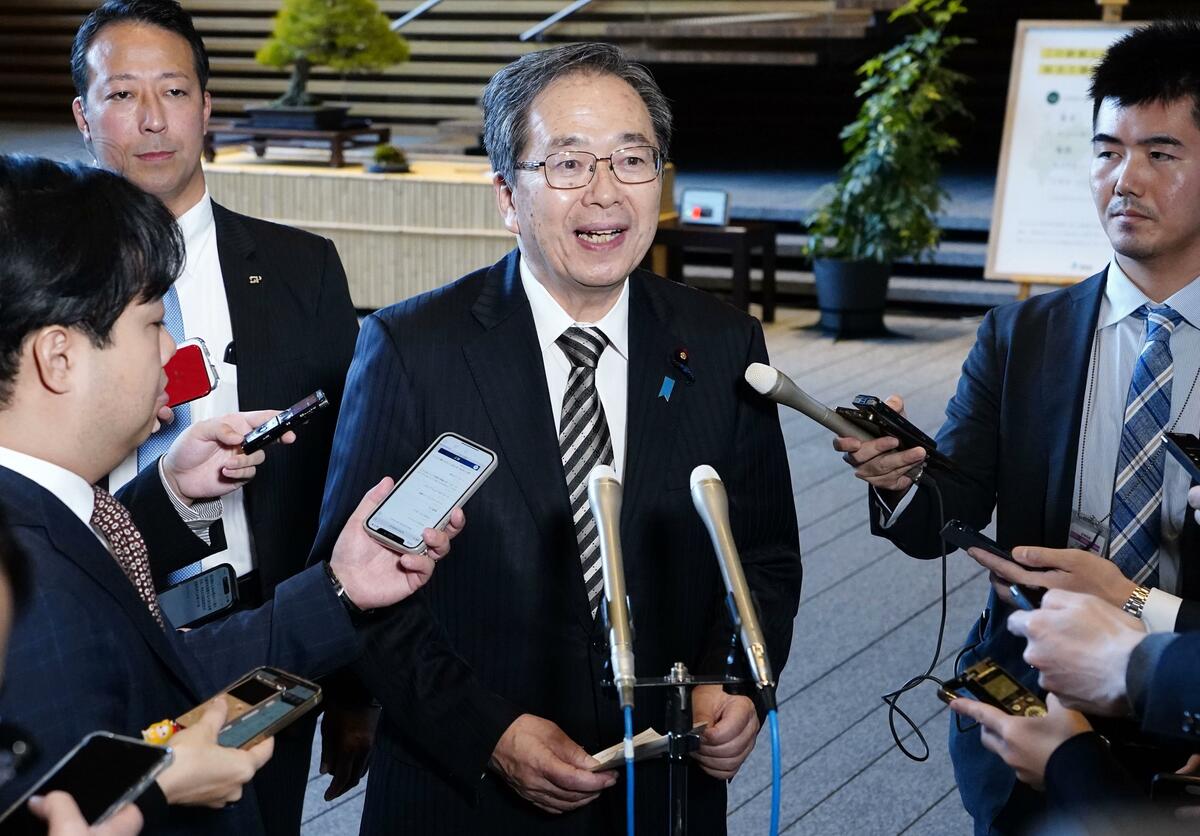
On Wednesday, Saito Tetsuo, the leader of Japan's junior coalition partner Komeito, expressed his intention to convince PM Ishiba to support allowing married couples to use different surnames, a proposal opposed by conservatives within the ruling party. He stated in a radio interview that the traditional requirement for married couples to share the same family name causes difficulties for both men and women. "It's time to make a decision," he emphasized. Komeito is advocating for a revision to the current single-family-name system, a move also backed by the CDP and other opposition parties, to give couples the choice of maintaining separate surnames after marriage.

Ishiba took a positive stance on changing the current requirement before becoming prime minister in October. As head of the Liberal Democratic Party, however, he has toned down his language, apparently taking heed of conservative members in the ruling party who worry that such a change would affect traditional family values. While acknowledging the "sadness and struggles" experienced by those, mostly women, who change their family names after marriage, Ishiba has said broader public support is necessary for the system to be revamped.

200.gif


CDP leader Yoshihiko Noda said that on Tuesday, the main opposition party will focus on the different surname issues as one of its top priorities during the regular Diet session, which is expected to begin in January.

 
Back
Top Bottom