Kokeshi Poetry?

Clcmasterworks

Registered
Joined
28 Dec 2021
Messages
19
Reaction score
14
Hello, Friends!

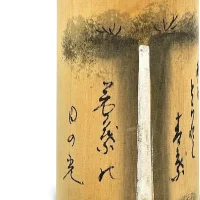
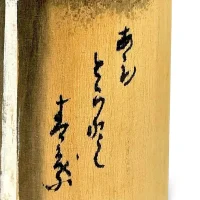
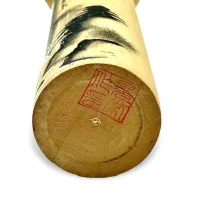
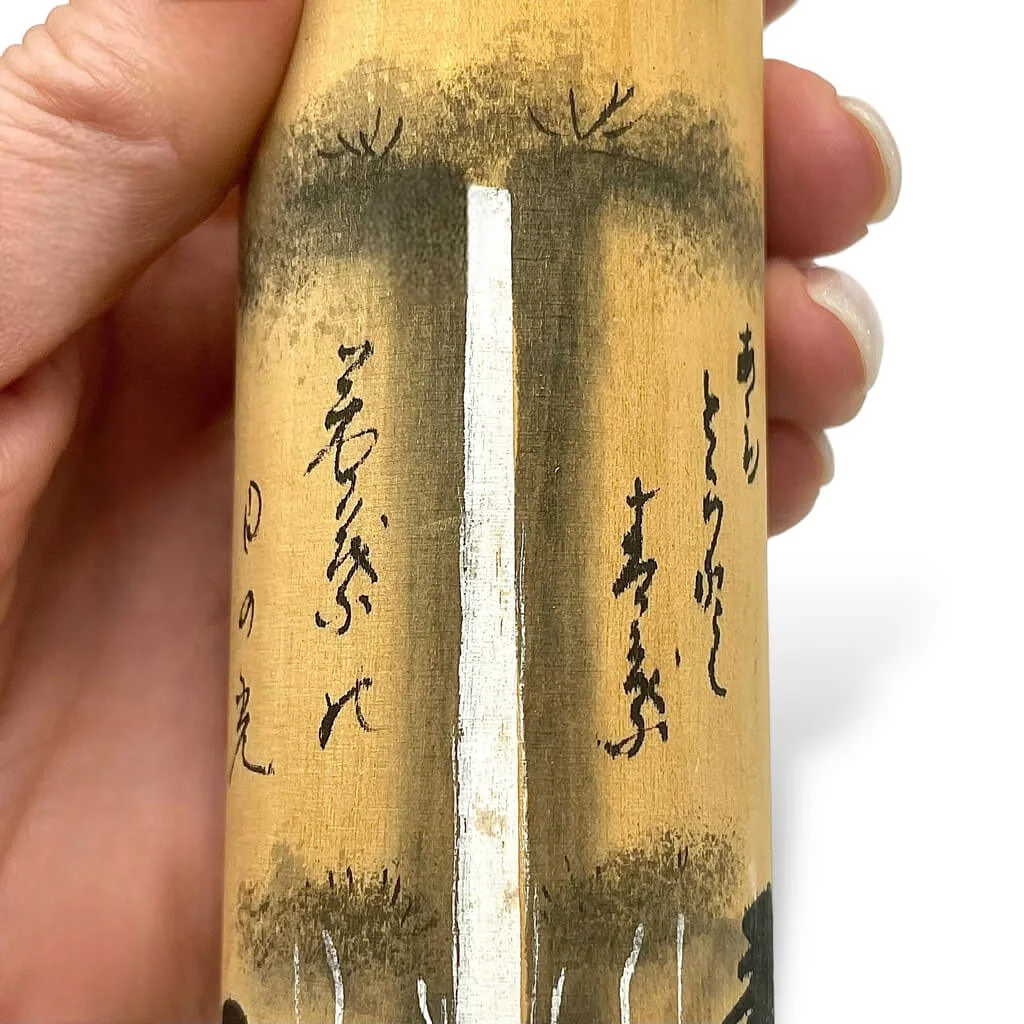
I have a tall Kokeshi doll with a waterfall decoration with writing on both sides. I think it's poetry based on other items I've researched, but I'd love to know what it actually celebrates. Also, there is a red chop underneath. I'm interested to know the identity. I very much appreciate your time with such a trivial request. I find it so fascinating.

Thank you, Cynthia
kokeshi01.webp
 

Attachments

  • kokeshi02.webp
    kokeshi02.webp
    155.6 KB · Views: 74
  • kokeshi03.webp
    kokeshi03.webp
    170.9 KB · Views: 73
  • kokeshi04.webp
    kokeshi04.webp
    133 KB · Views: 75
Red chop is the maker's chop, and says 晃常作印 (Made by Kōjō). Other readings for the name are also possible, but I think Kōjō is the most likely reading.

Edit: the artist would be TANAKA Kōjō, if that's any help. I see his name appear on other kokeshi dolls

The poem, is beyond my ability.
 
Last edited:
Red chop is the maker's chop, and says 晃常作印 (Made by Kōjō). Other readings for the name are also possible, but I think Kōjō is the most likely reading.

Edit: the artist would be TANAKA Kōjō, if that's any help. I see his name appear on other kokeshi dolls

The poem, is beyond my ability.
Thank you, Majestic. Do you happen to know if this artist is modern? 🌻
 
I just know that his works show up in a lot of items put up for sale on online auctions. My impression is that he is modern-ish. Post war, for sure, but I don't know if he is still alive.
 
あらたふと青葉若葉の日の光
How glorious! The green leaves, young leaves, the sun sparkling season
(Translated by Center for International Research on the Japanese Economy, The University of Tokyo)

It's a haiku by 松尾芭蕉 Matsuo Bashō. 日の光 "hi no hikari" means "sunshine", and also refers to 日光 Nikkō, where he composed this haiku.
 
あらたふと青葉若葉の日の光
How glorious! The green leaves, young leaves, the sun sparkling season
(Translated by Center for International Research on the Japanese Economy, The University of Tokyo)

It's a haiku by 松尾芭蕉 Matsuo Bashō. 日の光 "hi no hikari" means "sunshine", and also refers to 日光 Nikkō, where he composed this haiku.
How beautiful! Thank you so much. It is charming as are all things Japanese. 🌻
 
Back
Top Bottom