

Navigation
Install the app
How to install the app on iOS
Follow along with the video below to see how to install our site as a web app on your home screen.
Note: This feature may not be available in some browsers.
More options
Style variation
System
Light
Dark
You are using an out of date browser. It may not display this or other websites correctly.
You should upgrade or use an alternative browser.
You should upgrade or use an alternative browser.
Politics The role of the Unification Church in Japanese politics
- Thread starter thomas
- Start date
-
- Tags
- unification church

- 6 Mar 2003
- 9,317
- 9,444
Yes I agree. There seems to be a lot of sympathy for him and the desperation he must have felt. I wonder if they will put him on death row.Feels kind of surreal really, like this terrible political assassination has been "effective" according to the killer's motives.

- 14 Mar 2002
- 21,053
- 18,907
- Thread starter
- #29
There's been a lot of speculation in the media on whether he'd receive the death penalty.
The question is whether the court will qualify the killing of a high-profile politician as "aggravated murder".
Honestly, delving into Yamagami's family history from the moment his father committed suicide, one cannot help but feel sympathy. His little brother committed suicide, as their mother's actions plunged the family into destitution. It is absolutely mind-boggling to know that after the attack on Abe, she apologised to the Unification Church for the trouble her son had caused the cult!
Death sentences are usually passed in cases of multiple murders, although there have been some cases where individuals who committed a single murder have been sentenced to death and executed, such as those involving torture, or kidnapping with a demand for ransom. (Source)
The question is whether the court will qualify the killing of a high-profile politician as "aggravated murder".
Honestly, delving into Yamagami's family history from the moment his father committed suicide, one cannot help but feel sympathy. His little brother committed suicide, as their mother's actions plunged the family into destitution. It is absolutely mind-boggling to know that after the attack on Abe, she apologised to the Unification Church for the trouble her son had caused the cult!

- 26 Sep 2015
- 2,612
- 3,543
I wonder if, now that the strong links between the Unification church and the LDP have been exposed, the LDP politicians will stop opposing more socially liberal trends, such as same-sex marriage. I suspect that most of them never cared about such issues but have spoken against them to return the favour to the church.
- 14 Mar 2002
- 21,053
- 18,907
- Thread starter
- #31
I suspect that most of them never cared about such issues but have spoken against them to return the favour to the church.
Good point. It also depends on the electorate: if they show their support - or at least their non-opposition - those in power can no longer ignore more liberal and progressive trends.
I have great hopes in the likes of Kono Taro et al. who are presumedly not tainted by the cult or right-wing escapades à la Yasukuni.
With Abe's group marginalised and Kishida too much indebted to them I see no other option for the LDP than to open up.
- 14 Mar 2002
- 21,053
- 18,907
- Thread starter
- #32
According to a survey published today, 150 MPs and a total of 447 politicians, most with the LDP, have links to the Unification Church. Meanwhile, PM Kishida's approval rating is hitting rock bottom.

 www.japantimes.co.jp
This week, Nikkei Asia has a special edition on the Unification Church and Politics:

 asia.nikkei.com
Disapproval rate for Kishida rises amid mounting problems
A Yomiuri Shimbun poll found that the Cabinet disapproval rating had topped 40% for the first time and now stood at 41%, up 7 percentage points from the previous poll in early August.
This week, Nikkei Asia has a special edition on the Unification Church and Politics:
Unification Church and politics
We bring you the Asian business, politics, economy and tech stories others miss.
asia.nikkei.com
- 14 Mar 2002
- 21,053
- 18,907
- Thread starter
- #33
Jack Adelstein on the growing "cult" surrounding Tetsuya Yamagami, the man who shot former PM Abe: from killer to folk hero.

The Unification Church, on the contrary, has been subjected to ever-increasing vilification. According to SNA, the momentum of public outrage now threatens to carry matters too far.

 shingetsunewsagency.com
This month, the cover of the weekly Japanese magazine SPA! was a large feature on the cult of hero worship for Tetsuya Yamagami, the 42-year-old man who shot Abe on July 8. There are now swooning internet fans known as "Yamagami Girls" and a surprising outpouring of sympathy for him. Cash, gifts, and food have been sent to him in jail from supporters across the nation. There's even an online petition calling for a reduced sentence for Yamagami that has garnered thousands of signatures. The eight-page article in SPA! about the worship of Yamagami is a magnum opus on the complicated factors that have played into the elevation of the assassin from "terrorist" to "noble vigilante" by some Japanese nationals.
Shinzo Abe Killer Gets Worshipped as a ‘God’ by Diehard Fans
In a twisted turn of events, the man who killed the former Japanese prime minister is being fawned over as a folk hero by scores of supporters across the country.
www.thedailybeast.com
The Unification Church, on the contrary, has been subjected to ever-increasing vilification. According to SNA, the momentum of public outrage now threatens to carry matters too far.
Clearly the time has come to tap on the brakes–public outrage now threatens to reach the level of inviting discrimination and hate crimes directed at Church members. The fundamental problem with the Unification Church in Japan is not that it has been allowed to exist, but rather that it maintained a cozy relationship with the ruling party that protected it from proper scrutiny and regulation. In other words, the Church was able to become a quiet monster within Japanese society only because it was used as a source of financing and election-time manpower by rightwing politicians. The police and the mainstream media compounded the problem by failing to fulfill their roles as guardians of public welfare. This remained the case for decades, until Tetsuya Yamagami and his little homemade shotgun blew the lid off of the long-suppressed story.
Unification Church and Freedom of Religion - SNA Japan
Concerns about the Unification Church's fundraising activities in Japan have spiraled in the weeks following the assassination of Shinzo Abe; the momentum of public outrage now threatens to carry matters too far.
shingetsunewsagency.com

- 3 Aug 2007
- 1,290
- 1,611
I think calling him a terrorist in the first place is ridiculous. A terrorists goal is creating terror, Yamagami's goal seems to have been limited to just killing Abe, not terrorizing the public on whole. I also don't think he should be elevated to being a vigilante for public good as it does not seem that his goal in killing Abe was to make the public aware of the Unification Churches nefarious deeds but just to seek revenge for his circumstances. The public awareness just seems to be a silver lining that happened by accident.
I have no issue with the Unification Church being under massive scrutiny now though. The only thing people need to remember is that there are likely a lot of members who have been essentially brainwashed by it and, while they should be held responsible for any specific actions they took that were nefarious, should likely be considered victims as well.
I have no issue with the Unification Church being under massive scrutiny now though. The only thing people need to remember is that there are likely a lot of members who have been essentially brainwashed by it and, while they should be held responsible for any specific actions they took that were nefarious, should likely be considered victims as well.
- 14 Mar 2002
- 21,053
- 18,907
- Thread starter
- #35
Last week, TBS' Hōdō Tokushū (報道特集) programme aired a feature on the connection between the Unification Church and the Kishi-Abe clan, also expanding on the role Abe Yoko, Shinzo's mother, played. According to some tabloids, she had warned her son not to get too close to the UC.
Excerpts available on Youtube:
Excerpts available on Youtube:
Same with my mom. Sometimes I am grateful for the stain of religion in society. It is much like a psychological crutch that keeps people hooked on delusions of grandeur when they are divorced from reality. You can not talk sense into them anymore when they become bible-beaters.Being 72 , I have a lot of friends over 65. I'm always amazed how some become super religious later in life , who had no real interest in religion when they were younger. I get the feeling some of it has to do with death just around the corner , they plan to get right with the Lord. I had it shoved down my throat by my mom , with Sunday school , youth fellowship , regular church until I turned 18 and left home. I tried joining the church during my 40's mid-life crisis , but it went super political so I left. I once was kicked out of my rental apartment because the landlord decided that God & Jesus would pay his mortgage. I often wonder if I'm on my death bed , I will change my mind about religion. My sister seems to be mentally hanging by a thread and it seems religion allows her to handle lifes problems , so I guess in some cases it does good.
The sad truth is that many Japanese share the same values as the Unification Church, which are not new or unique in anyway. You are attacking this organization because of how it takes advantage of its naivete parishioners. Fundamentally, the message of this Unification group is widely held, even outside of Japan.

- 8 Aug 2005
- 7,316
- 3,727
"You're attacking this cult because of its cult-like behavior, but you must understand that cults have been around a long time, and there are a lot of people in cults throughout the world!"
- 14 Mar 2002
- 21,053
- 18,907
- Thread starter
- #39
In an extraordinary Diet session last Monday, PM Kishida vowed to restore trust after the Unification Church scandal. However, that won't be an easy task, as the opposition will use the Diet session until December to demand an investigation into the ties between (LDP) politicians and the Unification Church. A preliminary LDP report on those ties was criticised for being incomplete. On 30 September, four more LDP members admitted to having an exceptional closeness to the church:

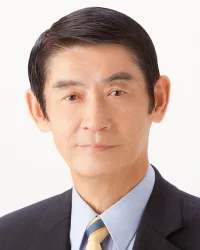
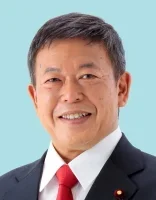
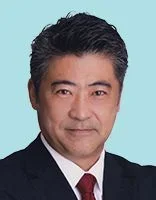
L-r: Higa Natsumi - Imamura Masahiro - Ishii Taku - Kihara Seiji
On Wednesday, the Japanese opposition parties directly attacked the PM and, in an unusual move, the speaker of the Lower House, Hosoda Hiroyuki, in session.

 japantoday.com
During the same session on Wednesday, Izumi Kenta, leader of the main opposition Constitutional Democratic Party of Japan, demanded that Hosoda explain further his ties with the religious group.
japantoday.com
More to come. Finally, the opposition parties seem to grow some teeth.
Meanwhile, the Unification Church pledged to reform its system of accepting donations to ensure followers do not give away "excessive" sums...
L-r: Higa Natsumi - Imamura Masahiro - Ishii Taku - Kihara Seiji
On Wednesday, the Japanese opposition parties directly attacked the PM and, in an unusual move, the speaker of the Lower House, Hosoda Hiroyuki, in session.
Japanese opposition parties on Wednesday stepped up their offensive against Prime Minister Fumio Kishida, who has been involved in several controversies, including his ruling party's suspicious ties with the dubious Unification Church and apparent favoritism toward his son. During the first full-fledged parliamentary debate since Kishida reshuffled his cabinet in August, the premier refused a call by the opposition bloc to replace a cabinet member with questionable ties to the religious group. Kishida claimed that the recent appointment of his eldest son, a former employee of Japan's Mitsui & Co in his 30s, as an executive secretary to the prime minister was decided based on the idea of "putting the right person in the right place."
Opposition steps up offensive against beleaguered PM Kishida
Japanese opposition parties on Wednesday stepped up their offensive against Prime Minister Fumio Kishida, who has been involved in several controversies, including his ruling party's suspicious ties with the dubious Unification Church and apparent favoritism toward his son. During the first...
japantoday.com
During the same session on Wednesday, Izumi Kenta, leader of the main opposition Constitutional Democratic Party of Japan, demanded that Hosoda explain further his ties with the religious group.
It is unusual for a lawmaker to direct a question to a lower house speaker, who plays a neutral role in the chamber. Before he became speaker, Hosoda was head of the ruling Liberal Democratic Party's largest faction, later led by former Prime Minister Shinzo Abe. On Wednesday, Izumi claimed the faction had forged deep relations with the Unification Church. "Can you answer my question, speaker? If you cannot do that, please answer by a gesture," Izumi said, leading to heckling in the chamber. Hosoda did not respond, while LDP lawmaker Shunichi Yamaguchi, chair of the lower house's Committee on Rules and Administration, cautioned Izumi on Thursday through an opposition party member against "disrespecting" the speaker.
Japan's lower house chief says he will explain links to Unification Church
Japan's lower house chief Hiroyuki Hosoda expressed readiness Thursday to clarify his dubious links with the controversial Unification Church after opposition parties called for an explanation in the Diet. During an extraordinary parliamentary session on Wednesday, Kenta Izumi, leader of the...
japantoday.com
More to come. Finally, the opposition parties seem to grow some teeth.
Meanwhile, the Unification Church pledged to reform its system of accepting donations to ensure followers do not give away "excessive" sums...
- 14 Mar 2002
- 21,053
- 18,907
- Thread starter
- #40
Yesterday, Friday, the Unification Church tried to halt the press conference of a former believer held at the Foreign Correspondents' Club of Japan in Tokyo: Ogawa Sayuri's parents, both members of the UC, attempted to derail the press conference by sending a fax in which they called for the event to be halted immediately, saying their daughter has a "tendency to lie," and the psychiatric issues she said she suffers had worsened since a gunman killed former Japanese Prime Minister Shinzo Abe.

 mainichi.jp
At the Foreign Correspondents' Club of Japan in Tokyo, which hosted the event, Ogawa, who uses a pseudonym to protect her real identity, relayed her traumatic experiences as a so-called second-generation church believer. Born and raised in the church, founded in South Korea in 1954 by Sun Myung Moon and often labeled by critics as a cult, Ogawa said that after graduating from high school, she was sexually harassed by a public minister during a retreat. The woman said that at the retreat, she was also told she was "possessed by an evil spirit" and subsequently sent to a facility in South Korea for a supposed exorcism. Ogawa said the contradictory practices of the church and her witnessing other believers suffer mental breakdowns impacted her own stability, leading to her being hospitalized in a psychiatric ward. An emotional Ogawa also said she grew up in financial difficulty, with her parents making frequent donations to the church. She said her family confiscated 2 million yen ($14,000) that she had saved by working a part-time job, adding the money has not been returned.
Unification Church tries to derail ex-believer's Tokyo press conference - The Mainichi
TOKYO (Kyodo) -- The controversial Unification Church on Friday attempted to stop a former believer's press conference by sending a message purportedl
- 8 Aug 2005
- 7,316
- 3,727
So sad to have her parents try to throw her under the bus like that. One of the biggest red flags of a cult is forbidding contact with former members and trying to silence dissenting voices.
- 14 Mar 2002
- 21,053
- 18,907
- Thread starter
- #42
I do not believe this will meet with success, but here's hoping for the best: the National Network of Lawyers Against Spiritual Sales (全国霊感商法対策弁護士連絡会) asked the justice minister to dissolve the Unification Church for violating the property rights of its followers and keeping its identity a secret while engaging in fund-raising and missionary outreach. Such orders were issued twice in the past against other religious corporations following legal violations.
Hiroshi Yamaguchi, who heads the lawyers' network, said at a news conference that a dissolution order against the Unification Church would be significant because it will "show publicly and clearly that the church has committed antisocial activities." Under such an order, a religious corporation can continue to work as a religious organization but is ineligible for tax benefits, Yamaguchi said. The network said the church, while soliciting large donations from its followers and conducting missionary outreach while keeping its identity a secret, committed "many and serious" violations of property and other rights. However, the central government has maintained a cautious stance on a dissolution order, citing religious freedom. Prime Minister Fumio Kishida said at an extraordinary Diet session that such an order "takes away a status of religious corporation and is an extremely severe measure."
- 3 Aug 2007
- 1,290
- 1,611
I do not believe this will meet with success, but here's hoping for the best: the National Network of Lawyers Against Spiritual Sales (全国霊感商法対策弁護士連絡会) asked the justice minister to dissolve the Unification Church for violating the property rights of its followers and keeping its identity a secret while engaging in fund-raising and missionary outreach. Such orders were issued twice in the past against other religious corporations following legal violations
The problem I see with that is that it will just go underground, maybe be reformed under another name, and just continue what its doing. At least with it out in the open now it will have some eyes on it.
- 14 Mar 2002
- 21,053
- 18,907
- Thread starter
- #44
The problem I see with that is that it will just go underground, maybe be reformed under another name, and just continue what its doing. At least with it out in the open now it will have some eyes on it.
I'm afraid that the media will sooner or later focus on other issues, and the ruling party will be back to business as usual. Outlawing them would send a clear signal and allow law enforcement to react to any transgression. Should freedom of religion be used as a pretext to commit "anti-social activities", a term commonly used to describe underworld dealings?
- 3 Aug 2007
- 1,290
- 1,611
I'm afraid that the media will sooner or later focus on other issues, and the ruling party will be back to business as usual. Outlawing them would send a clear signal and allow law enforcement to react to any transgression. Should freedom of religion be used as a pretext to commit "anti-social activities", a term commonly used to describe underworld dealings?
But would that even work? If you outlaw the UC and they just reform as DNUC (Definitely Not the Unification Church) they can continue anyway. Sure, the whole thing could be done again but to what end? You would need to really make sure the organization is dismantled for good and that, I think, would be very difficult to do being as it is spread across different countries and even within Japan could probably easily go to ground. Its not a company or Yakuza family where you can cut off the head and pretty much be assured that it will die off. We are dealing with a religion/cult that has followers that really believe in it, that will be hard to squash.
What I was trying to imply, perhaps poorly, was not that they should not be held responsible, but that they should be held responsible and continue to be. They did illegal things, its not like new laws are needed to go after them for those things and make sure there is appropriate oversight and safeguards in place to prevent future abuses.
But would that even work? If you outlaw the UC and they just reform as DNUC (Definitely Not the Unification Church) they can continue anyway. Sure, the whole thing could be done again but to what end? You would need to really make sure the organization is dismantled for good and that, I think, would be very difficult to do being as it is spread across different countries and even within Japan could probably easily go to ground. Its not a company or Yakuza family where you can cut off the head and pretty much be assured that it will die off. We are dealing with a religion/cult that has followers that really believe in it, that will be hard to squash.
What I was trying to imply, perhaps poorly, was not that they should not be held responsible, but that they should be held responsible and continue to be. They did illegal things, its not like new laws are needed to go after them for those things and make sure there is appropriate oversight and safeguards in place to prevent future abuses.
They would just go underground like they did in Nagasaki.
- 26 Sep 2015
- 2,612
- 3,543
They probably would, but they'd be a lot more circumspect about their behaviour - we don't get much trouble from Aum there days. It would also send a strong message to other dodgy religions in Japan.They would just go underground like they did in Nagasaki.
- 6 Mar 2003
- 9,317
- 9,444
Is Aum still a thing? Even if it is, I imagine it's completely different without Asahara.They probably would, but they'd be a lot more circumspect about their behaviour - we don't get much trouble from Aum there days. It would also send a strong message to other dodgy religions in Japan.
- 14 Mar 2002
- 21,053
- 18,907
- Thread starter
- #49
Aum Shinrikyo
Aum Shinrikyō (オウム真理教, now known as Aleph アレフ) is a new religious movement. Shoko Asahara founded the group in 1984. The group gained international notoriety in 1995 when it launched the Sarin gas attack on the Tokyo subway. The name "Aum...
 jref.com
Aleph has been in the news lately for not complying with their obligation to report to the police and for other issues.

Aleph raided over alleged lease fraud
Police on Monday raided facilities of the main successor group to doomsday cult Aum Shinrikyo in connection with an alleged case of fraud involving a condominium lease, investigators said.
- 14 Mar 2002
- 21,053
- 18,907
- Thread starter
- #50
Prime Minister Fumio Kishida on Monday instructed his culture minister to launch an investigation into the Unification Church, a religious group that has come under the spotlight in Japan for its links with the ruling party and the huge donations it has encouraged followers to make.
There's a German saying: "Den Bock zum Gärtner machen", in English probably "to set a fox to keep the geese".

Are there no independent panels for such investigations? Kishida will probably soon face single-digit approval ratings.

Kishida instructs minister to launch probe into Unification Church
Prime Minister Fumio Kishida on Oct. 17 instructed his culture minister to launch an investigation into the Unification Church, a religious group that has come under the spotlight in Japan for its links with the ruling party and the huge donations it has encouraged followers to make.
Similar threads

- Replies
- 43
- Views
- 176K

- Replies
- 43
- Views
- 166K

- Replies
- 66
- Views
- 112K


