Post Japanese-related YouTube links here

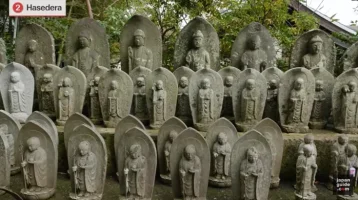
There was one thing that always puzzled me about Japanese Buddhist temples when I was in Japan. It is common at many Buddhist temples to see small Jizo statues (地蔵). In my previous video, at 5:26, you can see a number of small stones statues lined up at a Buddhist temple. (I have included a screenshot below.) One time I visited a temple in Kyoto and I saw over a thousand Jizo statues at that temple.) You can often see Jizo states that are wearing small articles of children's clothing.

Why are they there? Why so many? The explanation has always been they are monuments to small children who have died, which didn't make any sense to me. Then I finally figured it out:

Abortion statues

Many couples in Japan have abortions. They feel a great deal of guilt about it. One way to help with the guilt is to buy a Jizo statue. It is said the soul of the aborted child ensouls the Jizo state, which seems to make couples feel better.
 

Attachments
  • jizo.webp
    jizo.webp
    66.3 KB · Views: 162
Last edited:
When having a discussion about Buddhist temples or Shinto shrines, I would be remiss if I didn't bring up one of the most colorful and popular forms of Shinto shrine — the Omikoshi or portable shrine. (Mikoshi means shrine and Omikoshi means honorable shrine.)


The following is a seemingly American (or maybe half-Japanese half-American?) woman participating at an Omikoshi event. Even if you are 'Gaijin', don't be shy about jumping right in and participating.


Omikoshi festrivals don't happen only in Japan. The following two videos were shot in North America, the first in Little Tokyo (Los Angeles, California) and the second in Vancouver, Canada. If you want to participate but you are not able to make it all the way to Japan, please consider attending one of these events.


Here is a fascinating festival held in Kyoto every year. This festival ("matsuri") commemorates various periods ("jidai") in Japanese history. It is held on October 20th, which is just around the corner.

 
秋祭り(Aki Matsuri)Autumn festival
Autumn festival is a general term for festivals held in autumn.
It is a festival to appreciate the harvest, mainly in rural areas.
In some cases, the prayer festival in February is the spring festival,
and the Niiname festival in November is the autumn festival.

ANA
8 Autumn Festivals in Japan

The big autumn festival in Kyushu is Karatsu Kunchi in Saga.
Date : November 2-4


Otabisho Shinko in front of the city hall
 
Last edited:
One of the best-known items in Japanese culture is the kimono. But many people don't know how complicated it is to put one on. Take a look.


A big (and meticulous) part of putting on a kimono is tying the obi ('waist sash" or "belt"). Take a look. (The following obi is called a Nagoya obi. I wonder if obi use different material/design and are tied differently in different parts of Japan...)

 
Last edited:
旅館浴衣(Ryokan Yukata)
Ryokan yukata is basically sleepwear and pajamas.
It is a wear that you wear in your room.
Wear a haori coat when you go out.

How to wear the yukata of the Ryokan beautifully.~ Man knot ~


How to wear the yukata of the Ryokan beautifully. ~ Woman knot ~
(How to wear a hot Onsen yukata cutely)


【How to wear Yukata at Onsen Ryokan】


街浴衣(Machi Yukata)
A town yukata is a yukata that allows you to go out and go out.
It is worn at summer festivals and fireworks displays.

How to wear a men's "yukata"


How to wear a yukata // Billy Matsunaga style


作務衣(Samue)
A samue is a garment that a zen (Buddhist) monk wears when he performs samu,
or duties such as daily sutra chanting,
and the cleaning of the precincts of the temple
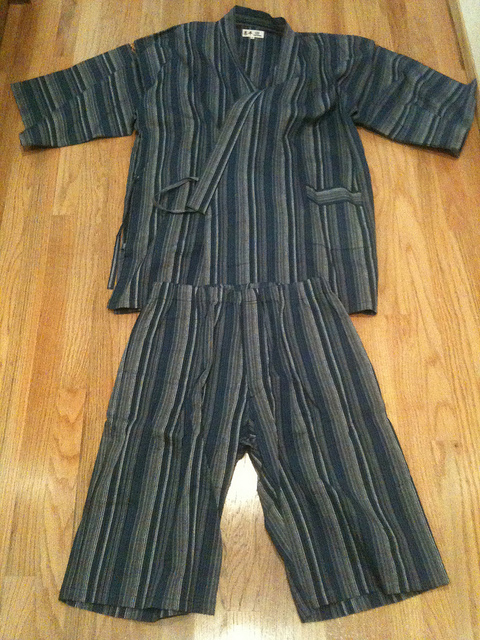
甚平(Jinbei)
A jinbei (甚平) (alternately jinbē (甚兵衛) or hippari (ひっぱり)) is a traditional set of Japanese clothing worn by men,
women and children during summer. Consisting of a side-tying,
tube-sleeved kimono-style top and a pair of trousers, jinbei were originally menswear only, though in recent years, women's jinbei have become popular.
二部式着物(Two-part kimono)
"Two-part kimono" is a separate type kimono with separate upper and lower garments.

How to wear a two-part kimono

Introducing simple and easy-to-wear KIMONO for both men and women! Jinbe, samue, two-piece kimono
 
Kimono can be rented and worn in Tokyo. Here is a kimono rental place in Asakusa, Tokyo.(I also remember seeing a kimono rental place on the famous Takeshita Street, Harajuku, Tokyo.)

(I wonder if anyone thinks this is Cultural Appropriation.)

 
Watch as a woman puts on geisha makeup, wig, and kimono

 
Men's kimono


Hiroyuki posted a great video by Shogo about a man's kimono, but I would like to post an additional video that highlights the three parts of a man's kimono; the juban ("underwear"), the kimono itself, and the Haori ("jacket").

 
Man's Kimono and hakama (袴)

For years I didn't know there is an optional lower part to a man's kimono called a hakama. (When I finally heard about it, I was surprised.) Here is a video showing how to put on a hakama. (In Japanese, no subtitles.)

One thing to note is the side 'slashes' pointing down on both sides of the hakama. You can see these 'slashes' at 11:45.

 
I wanted to post a video that shows formal kimono. I also wanted to show a video of a traditional Japanese wedding. Here is one video that does both. This is a video of the wedding of a popular YouTuber "Nihongo Girl" (日本語ガール) (にほんご ガール).

 
Hey guys, some new videos for you!

The first is haitenshon in English:


The next is a mix of English and Japanese and talks about some Japanese onomatopoeia:


Thanks as always :)
 
On a black formal kimono you will see a family crest (mon or kamon) (もん or かもん) (紋 or 家紋). There is a lot of history and artwork regarding kamon.

Here is the Wikipedia page on Mon.


Here is a video on the history of kamon (and some nice historical paintings). (Feel free to skip the first 27 seconds of the video, which are not much more than an ad for this YouTuber's friend.)


Here is a video on Samurai clans, with some nice graphics of kamon.


Here is a video from a TV variety show of a kamon presentation in Kyoto. (In Japanese only, no English subtitles)

 
Last edited:
Hello everyone! Started this new youtube adventure as we really like travelling in Japan. Hope you enjoy seeing Japan through our eyes! ✌️

[ Invalid links removed ]

The Tottori video is our latest update and in the next few weeks, we will update regularly with videos from our summer holiday 2-week road trip to Kyushu.
We really hope you enjoy it!
 
Last edited by a moderator:
Shogo is the name of a Japanese man who has posted a number of videos on YouTube. He lived in America and speaks English well. His videos are quite good, but more importantly, they show intriguing sides of Japanese culture and society not usually talked about. Shogo practices Japanese style sword-fighting and here are three of his videos on Japanese sword-fighting..


~~~~~~~~~~~

One of the best things about Shogo's videos is he is willing to discuss controversial topics regarding Japanese culture and society. Take a look


Kendo

If I want to be good at Japanese sword-fighting I have to practice. But practicing with real swords for a beginner like me is out of the question. As a result, Japan has created a martial art where people practice sword-fighting techniques using bamboo swords. This martial art is called Kendo.


In a previous video which I posted, two young ladies rented kimono-for-a-day in the Tokyo neighborhood called Asakusa. This neighborhood is the home of Sensoji Temple. This temple is huge, is said to be the number one tourist attraction in Tokyo, and receives a large number of visitors everyday. Sensoji Temple is so important, it deserves its own video here in this thread.

Hozomon (Niomon, Nio Gate), the main gate to Sensoji Temple, is one the of the most photographed spots in all of Japan. (The video calls it the most iconic temple in all Japan) Take a look at 4:34. (Yes, even I have a photo of me standing in front of the huge red paper lantern, taken when a group of my students and I visited Sensoji.)

 
My previous post was about the large temple in Asaka, Tokyo, which shows a small picture into old, ancient Japan. This time I would show something quite the opposite, something about young people in Japan; Takeshita Street in Harajuku, Tokyo.

Harajuku is quite famous for being a place that attracts and caters to young people. Nothing ancient here, it is all about the 'youth culture'. This video is a guided tour through Takeshita Street and nearby Kiddyland Toy Store (the most amazing toy store I have ever visited).

This video also shows purikura, a fad in Japan of taking photos in a small photo booth.

The video also shows the Visitor Center near Harajuku Station, with posters for renting a kimono or yukata for a day.

 
Back
Top Bottom