Yosegaki flag translation request

Mikemike88

後輩
Joined
4 Oct 2022
Messages
42
Reaction score
27
Hi

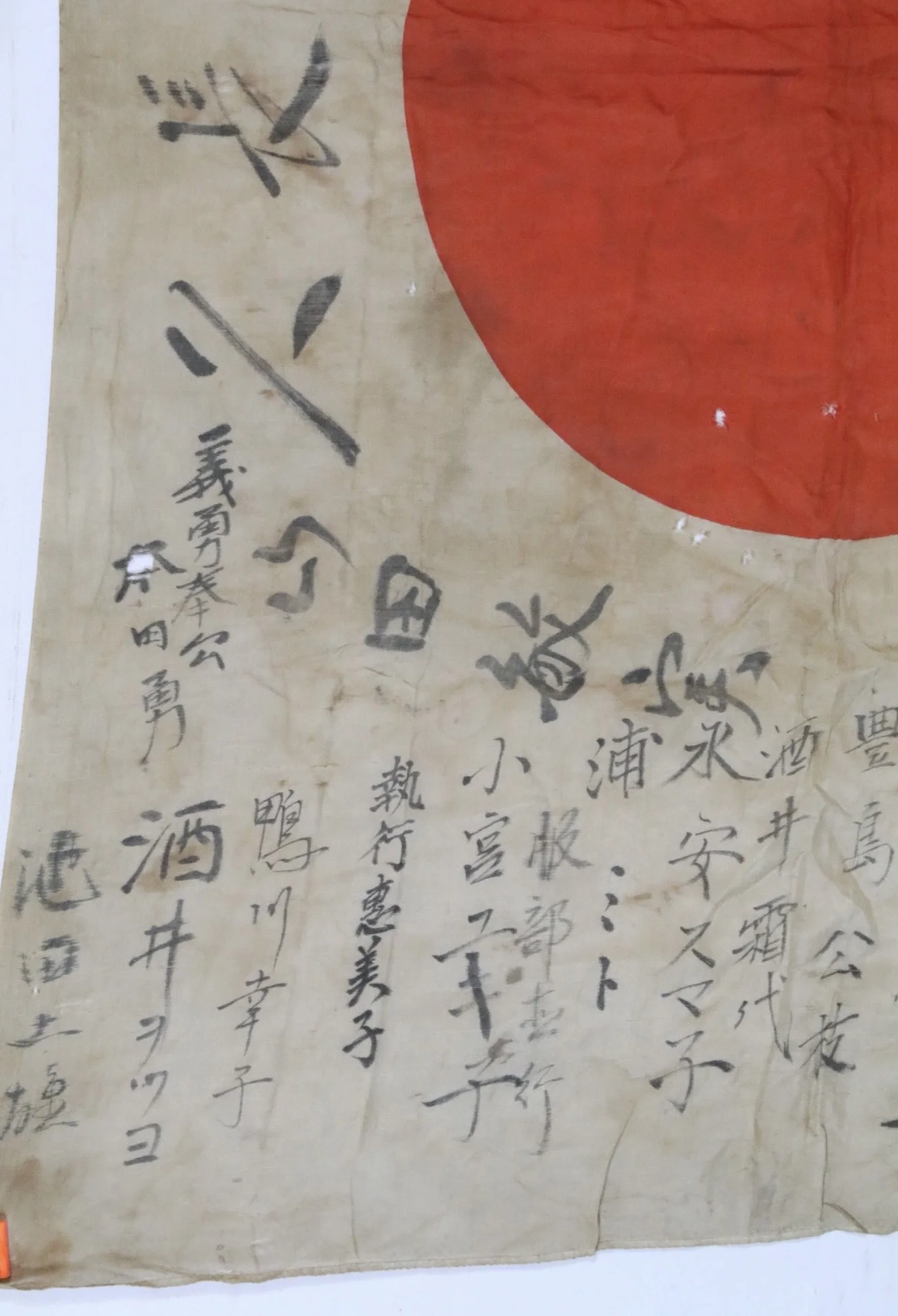
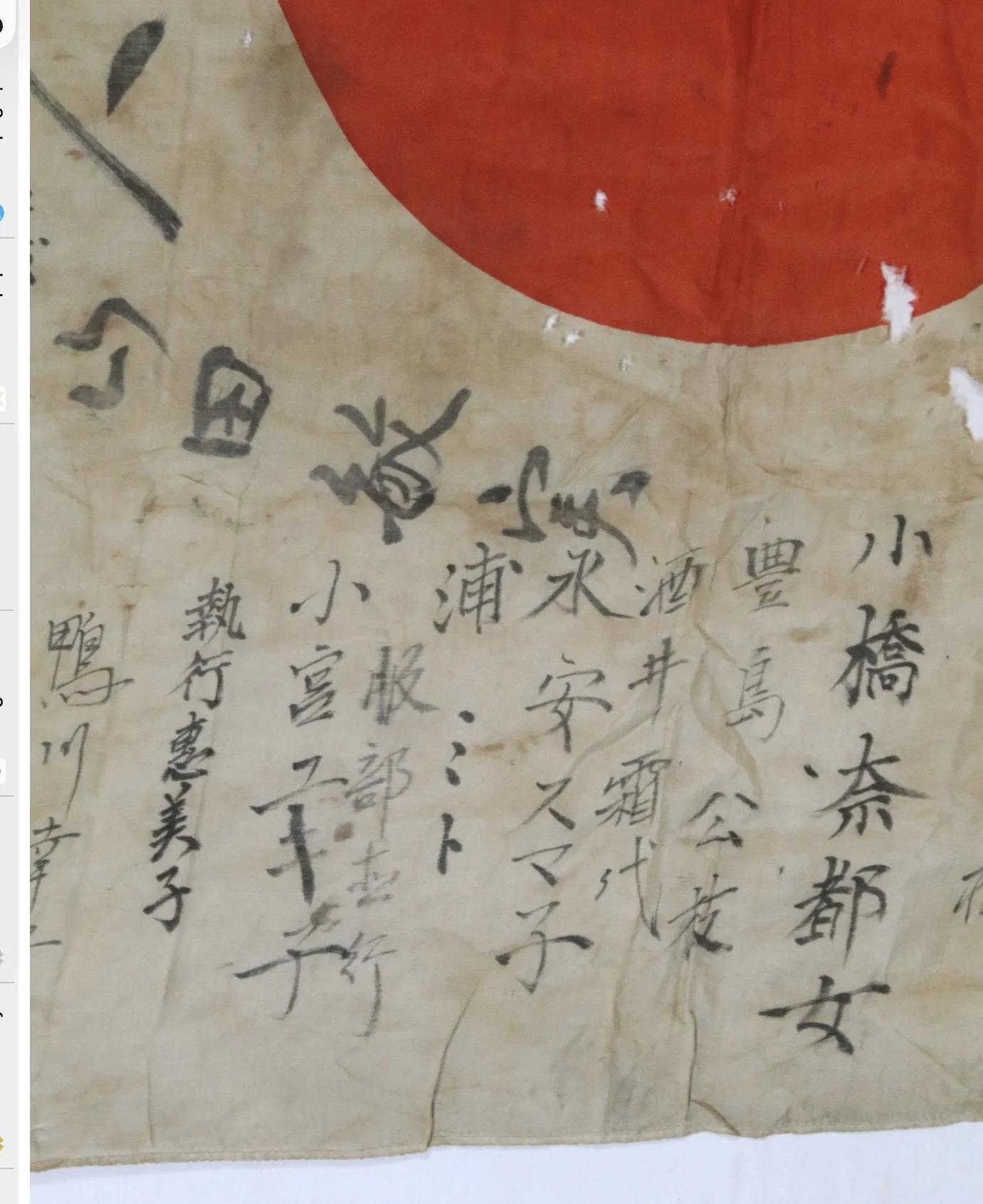
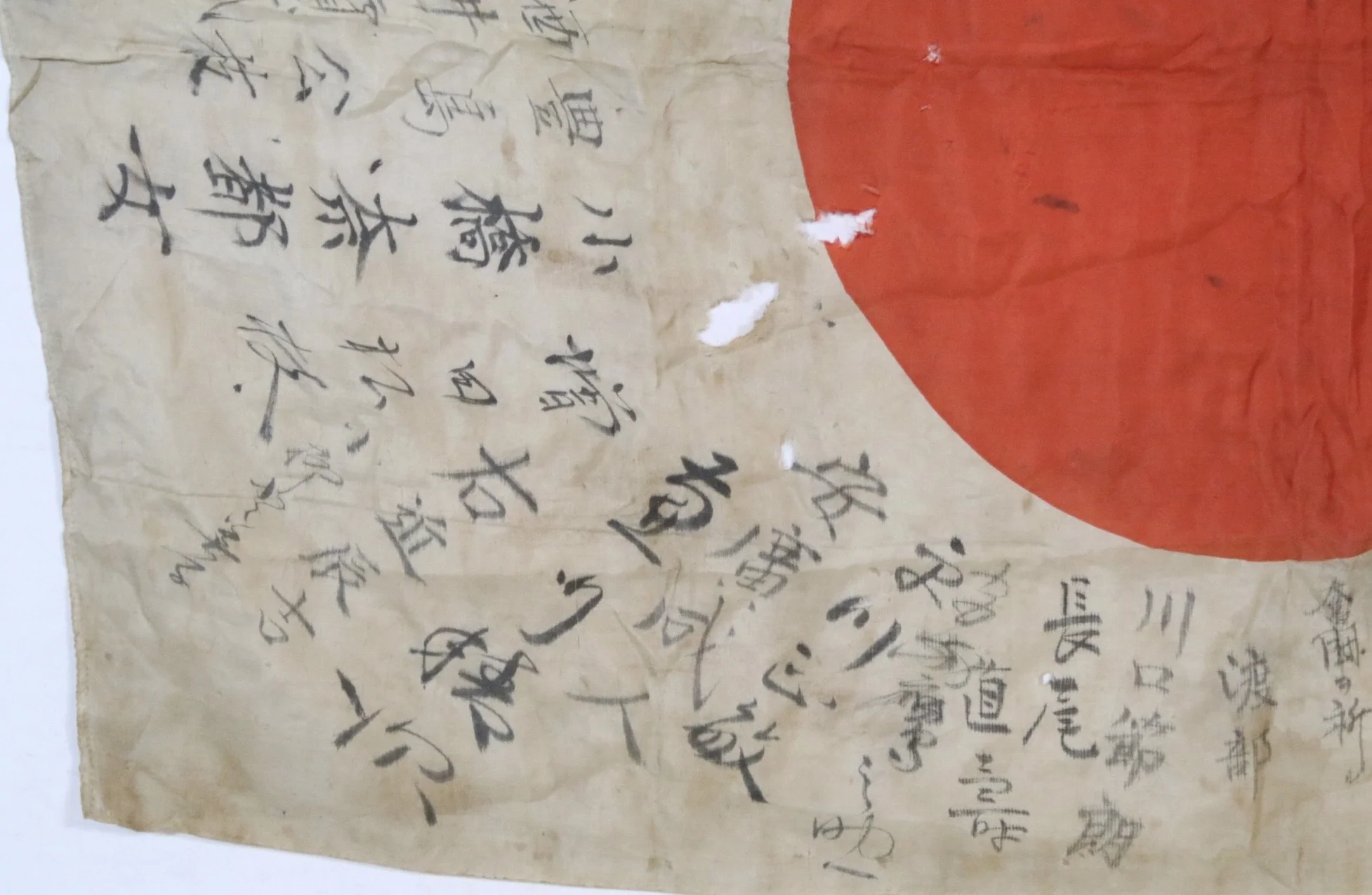
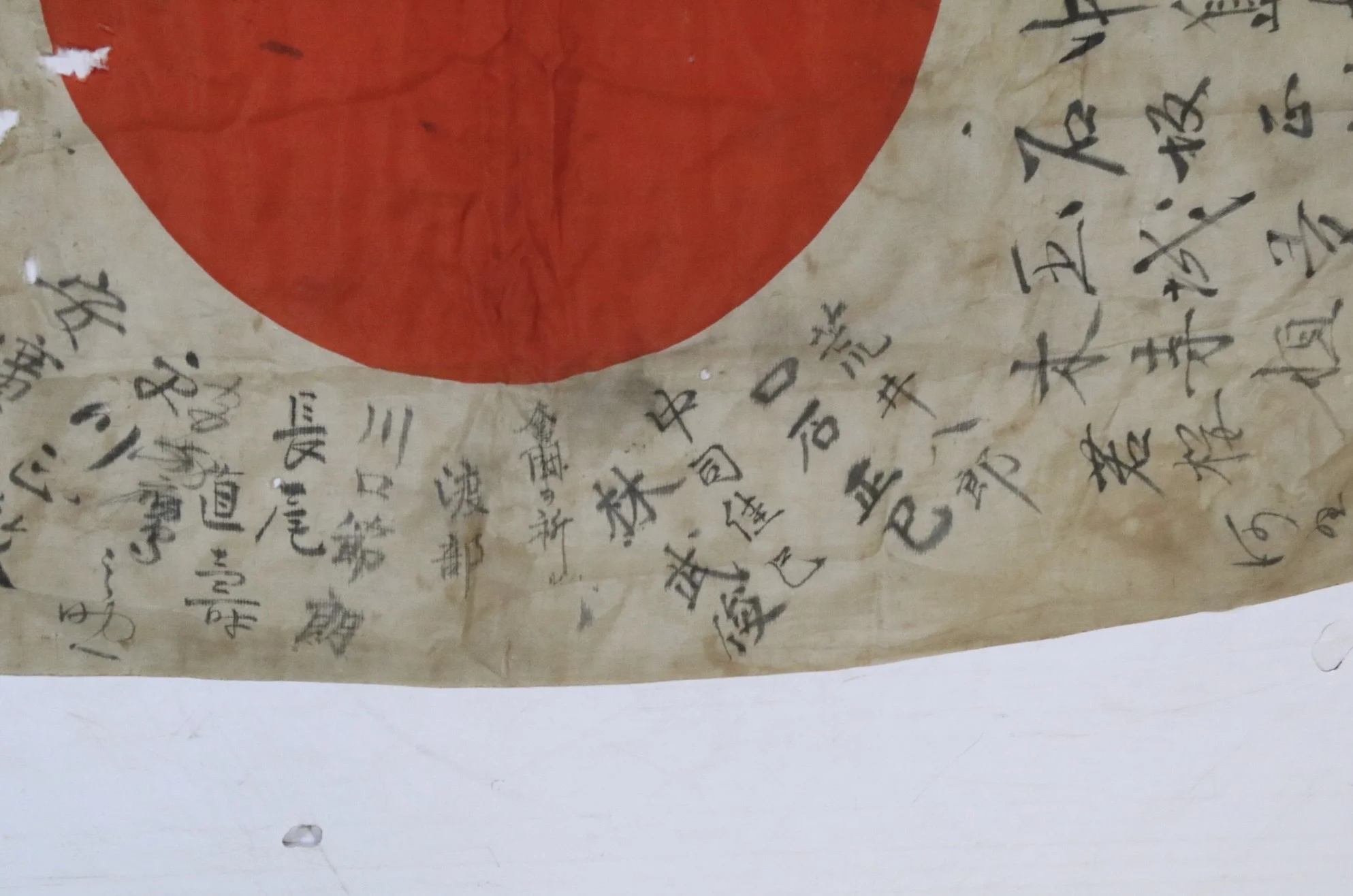
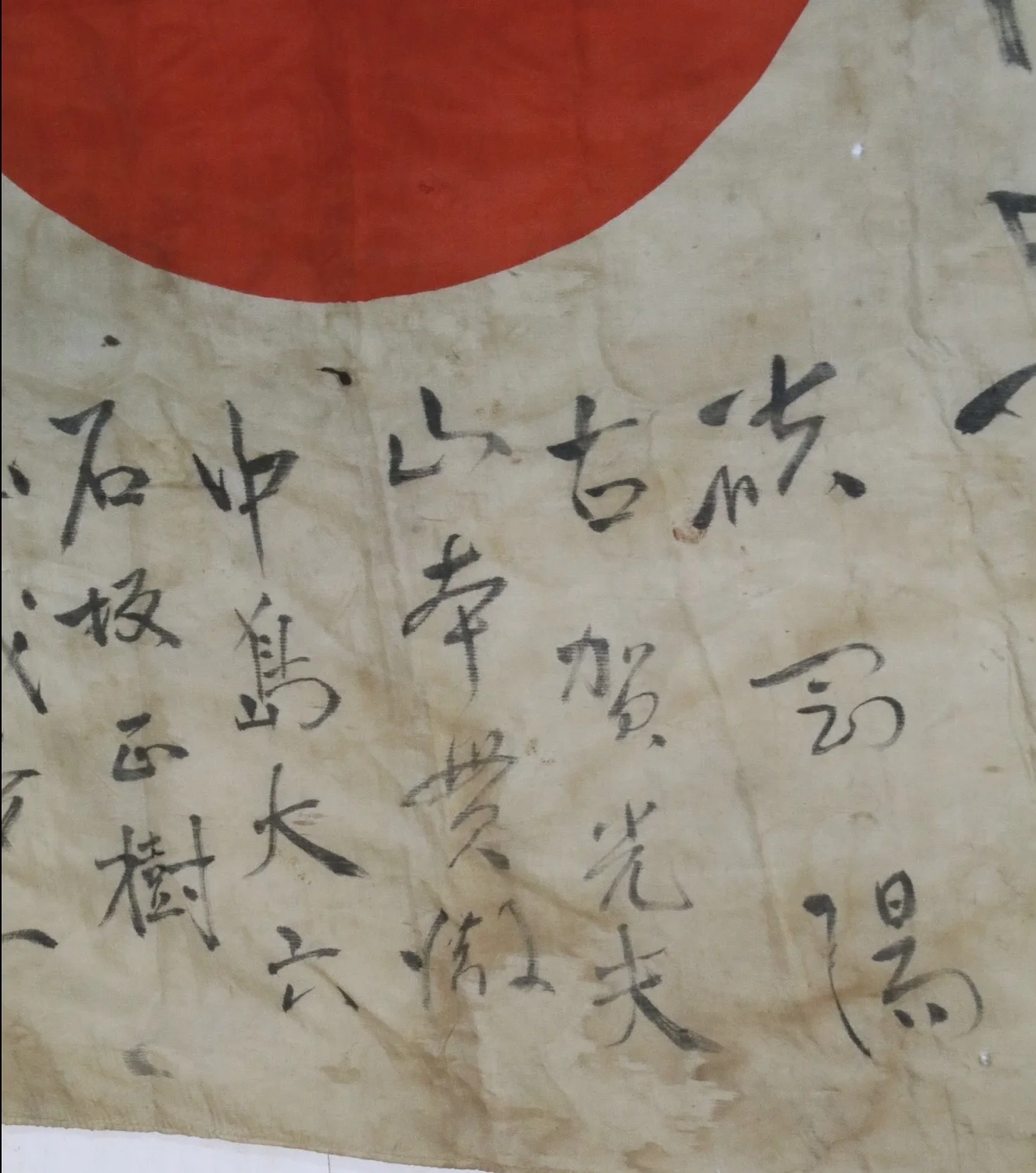
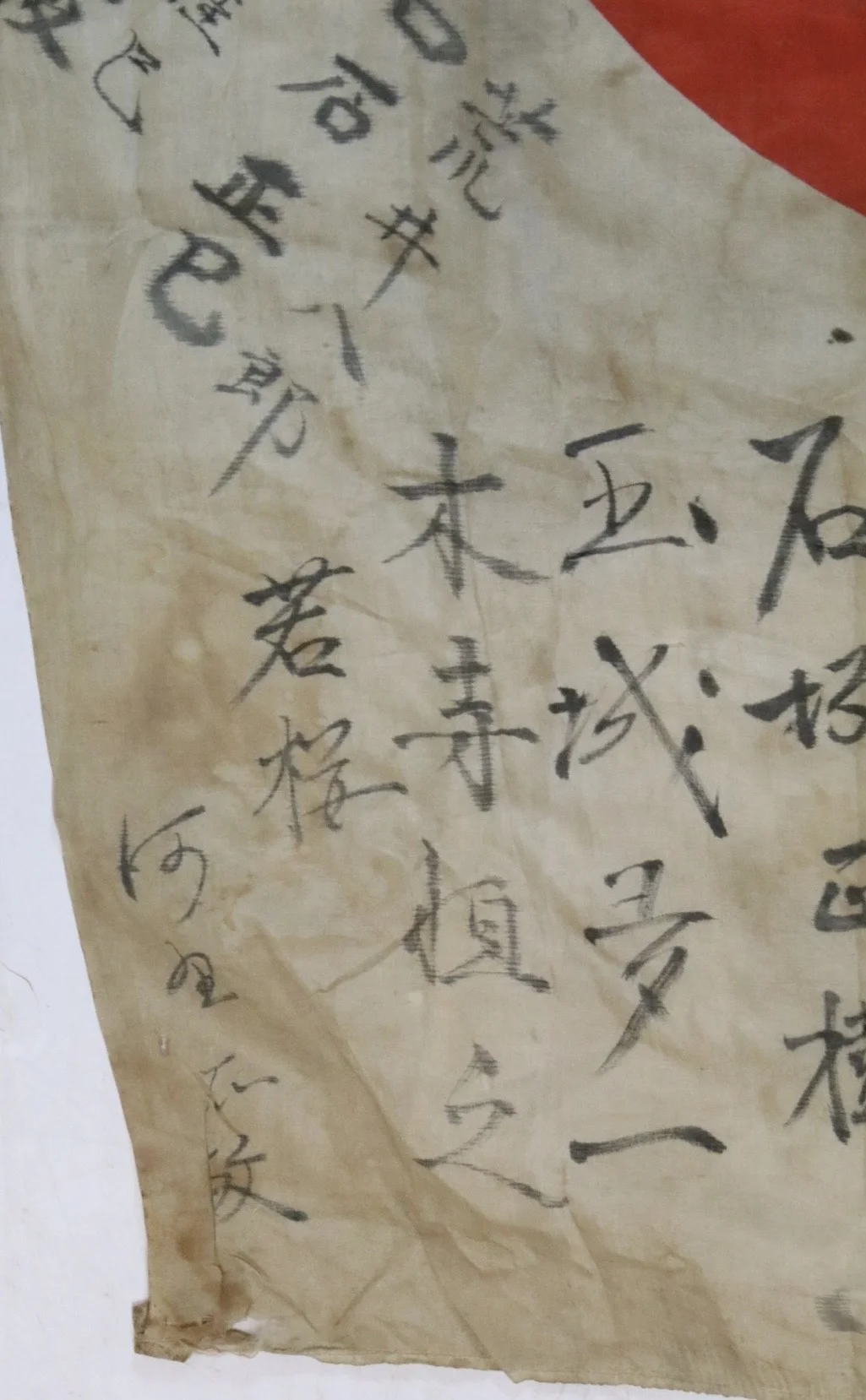
I was successful in bidding for this flag at auction earlier today in the UK. These are photos of the flag taken off the auction house website as I was remote bidding so I've yet to have the flag in hand.

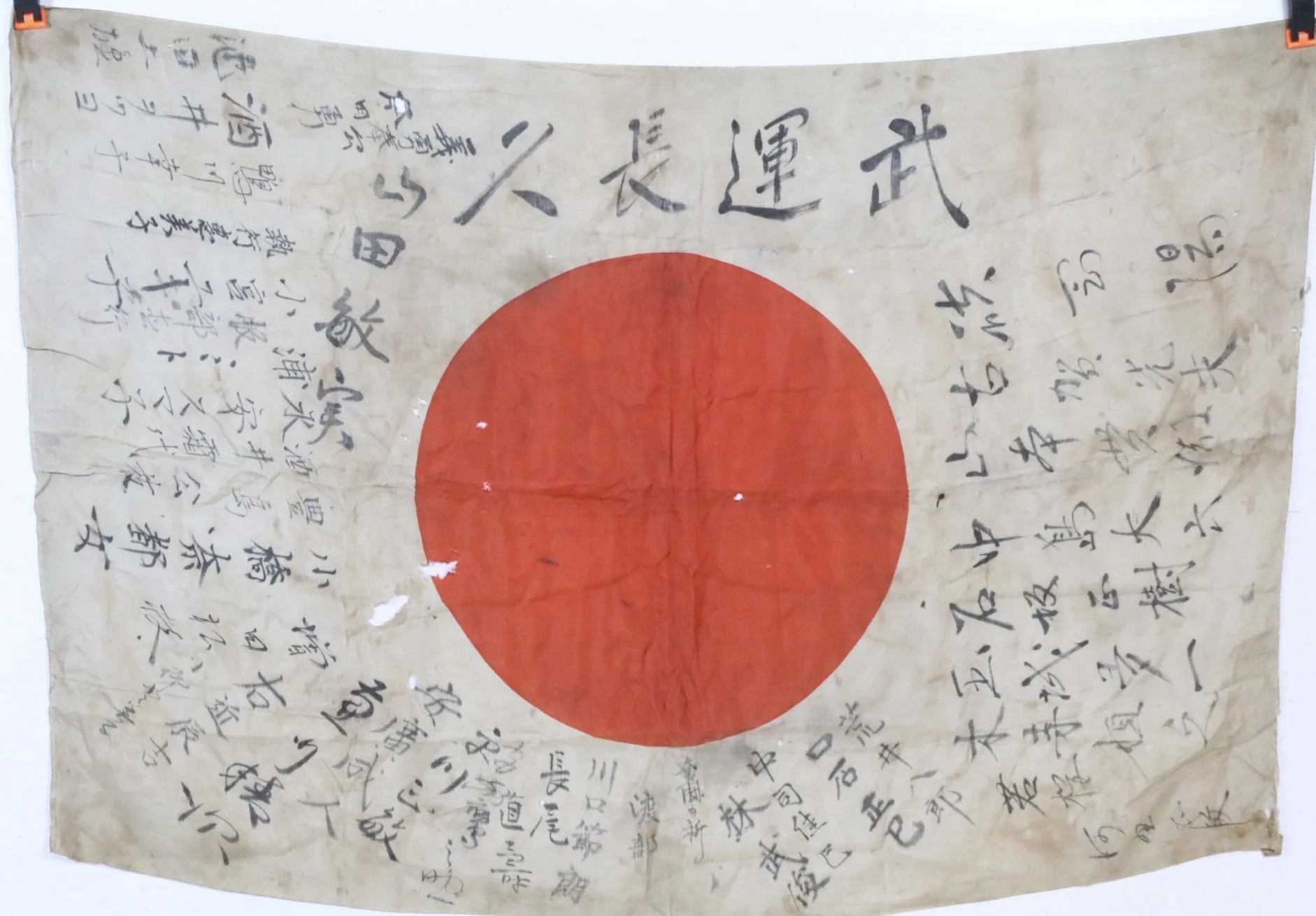
What I'm seeking is just some initial impressions of the flag re does it look like the real deal and if there is any information of interest in the kanji beyond signatures and the usual good fortune in battle header.

Many thanks for your assistance. Greatly appreciated.
IMG_2930.webp
IMG_2931.webp
IMG_2932.webp
IMG_2933.webp
IMG_2934.webp
IMG_2935.webp
IMG_2936.webp
 
The large letters next to the "good luck" phrase is the name YAMADA Toshimi. Normally I would think that is the recipient because of its prominent placement and size, but there is no honorific attached to it, so I think it is just a well-wisher (albeit maybe a significant one). There is also the phrase "Volunteer Army" (義勇奉公) next to that, but its hard to make a determination on whether that applies to the intended recipient, or if it has some other meaning in the context of this flag.

The rest are mostly names. The writing of one or two names seems a bit unusual. For instance the "Yama" (山) in the name above is written in a distinctive cursive style. But elsewhere on the flag this same kanji appears, written in the same slightly idiosyncratic style - which I find a bit weird. There are a couple of other names which I find similarly weird. I wouldn't write it off just yet as a fake, but I also wouldn't endorse it as a genuine WW2 flag either. In general the names look good and genuine, but I have a suspicious mind when it comes to antiques and militaria, so anything out of the ordinary sets off alarms.
 
The large letters next to the "good luck" phrase is the name YAMADA Toshimi. Normally I would think that is the recipient because of its prominent placement and size, but there is no honorific attached to it, so I think it is just a well-wisher (albeit maybe a significant one). There is also the phrase "Volunteer Army" (義勇奉公) next to that, but its hard to make a determination on whether that applies to the intended recipient, or if it has some other meaning in the context of this flag.

The rest are mostly names. The writing of one or two names seems a bit unusual. For instance the "Yama" (山) in the name above is written in a distinctive cursive style. But elsewhere on the flag this same kanji appears, written in the same slightly idiosyncratic style - which I find a bit weird. There are a couple of other names which I find similarly weird. I wouldn't write it off just yet as a fake, but I also wouldn't endorse it as a genuine WW2 flag either. In general the names look good and genuine, but I have a suspicious mind when it comes to antiques and militaria, so anything out of the ordinary sets off alarms.
Thanks (as always) for taking the time to consider this flag. I will be making further enquires with the auction house to see if the vendor is able to provide any further information regarding provenance. I'm reasonably happy that this is the genuine article and that it is most likely a bring back from a veteran of the Burma campaign but I will endeavour to corroborate that and also ensure, as much as possible, that any available history of this artefact is maintained.
 
@Majestic Now that I have received the flag I'm confident that this is an original example. There is evidence of battle damage, possibly shrapnel/and or bullet holes. This damage does not align which suggests to me that the flag was 'in the open' when this occurred rather than folded up (I have other flags that are damaged and you can tell how they were folded as the holes align when folded a certain way). Also both ties are missing indicating it's possibly been ripped off of something, a rifle perhaps. There is some staining in parts. It's more evident if held up to the light. I'm awaiting to hear back from the vendor who I understand is the daughter of the veteran.

IMG_2946.webp


IMG_2950.webp


IMG_2951.webp


IMG_2952.webp
 
Konnichiwa Mikemike88-san! Majestic-sam!

I can't tell whether this flag is real or not. The only thing that bothers me is that there is no dot in the upper right corner of the large character "武".

The name "林武俊" is written in the lower center of the flag. This name also uses the same character "武", but with a dot in the upper right corner.

This is a kanji character that no Japanese person would mistake. There is a person who use the same kanji "武", then it's all the more strange that large character is wrong.

There is a misunderstanding regarding the term "義勇奉公", so I will explain. "義勇" means justice and courage, and "奉公" means "dedication". In this context, "義勇奉公" means dedicating oneself to the nation and fighting bravely. This is a word that was commonly used before the war, but is no longer used today.

Incidentally, adding "兵:soldier" to the word "義勇" does not mean "soldier who fight bravely." "義勇兵" means "volunteer soldier". "volunteer Army" is "義勇軍" and is not mean "bravely Army". Despite the word "義勇" being included... Japanese is very complicated...

There is another message hidden within this flag. It's written "奮闘ヲ祈" where is next to the name "林武俊," It means "Good luck!"

NANGI
 
Konnichiwa Mikemike88-san! Majestic-sam!

I can't tell whether this flag is real or not. The only thing that bothers me is that there is no dot in the upper right corner of the large character "武".

The name "林武俊" is written in the lower center of the flag. This name also uses the same character "武", but with a dot in the upper right corner.

This is a kanji character that no Japanese person would mistake. There is a person who use the same kanji "武", then it's all the more strange that large character is wrong.

There is a misunderstanding regarding the term "義勇奉公", so I will explain. "義勇" means justice and courage, and "奉公" means "dedication". In this context, "義勇奉公" means dedicating oneself to the nation and fighting bravely. This is a word that was commonly used before the war, but is no longer used today.

Incidentally, adding "兵:soldier" to the word "義勇" does not mean "soldier who fight bravely." "義勇兵" means "volunteer soldier". "volunteer Army" is "義勇軍" and is not mean "bravely Army". Despite the word "義勇" being included... Japanese is very complicated...

There is another message hidden within this flag. It's written "奮闘ヲ祈" where is next to the name "林武俊," It means "Good luck!"

NANGI
Fantastic insight as always. Heartfelt thanks for taking the time to consider my flag. You and Majestic are both very generous with your time and knowledge 🙏🏻.
 
Back
Top Bottom