Konnichiwa Mikemike88-san!
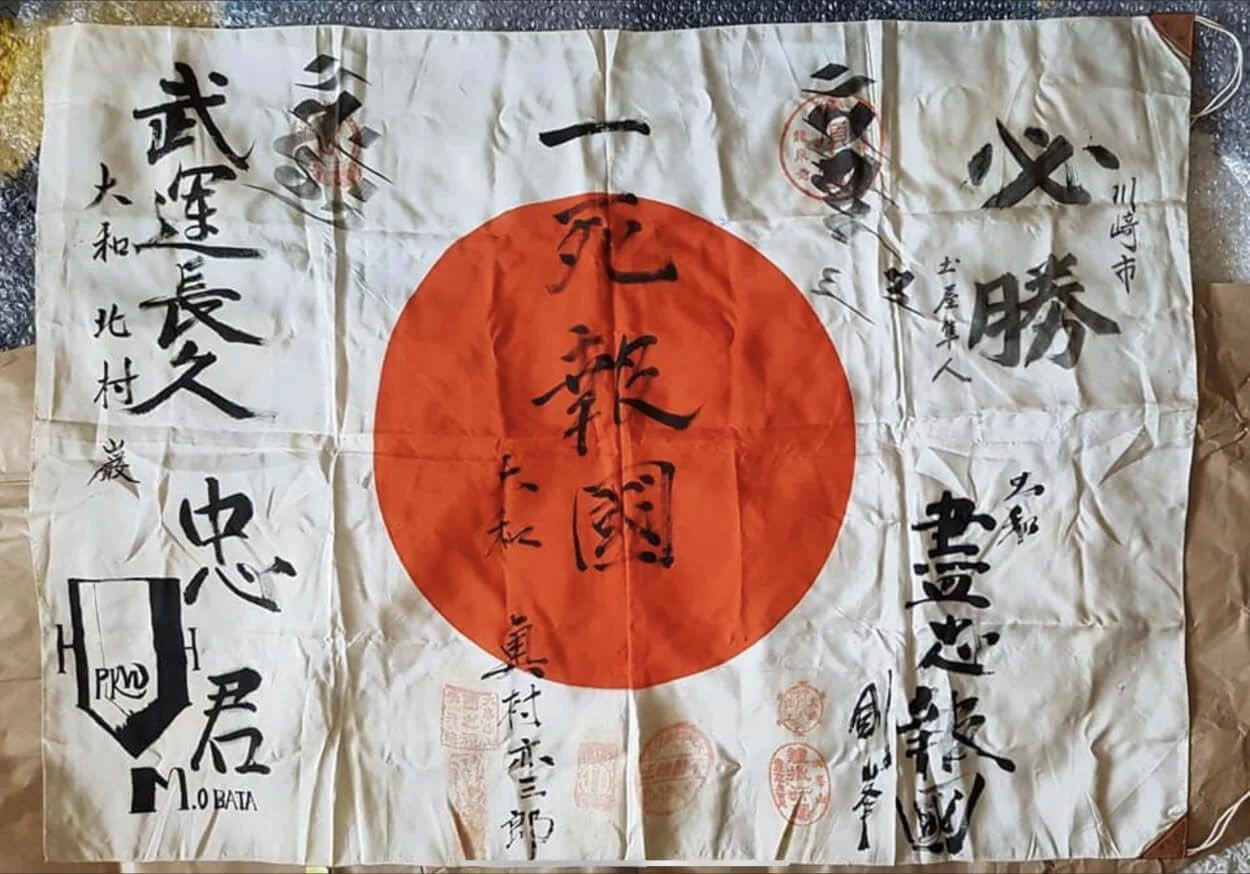
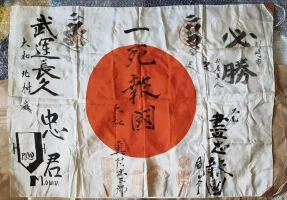
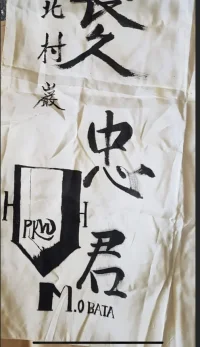
There are three puzzling things about this flag. One is an alphabetical signature. The name Obata is a common name in Japan. Why did Obata sign his name in the alphabet instead of kanji?
The second point is the emblem with the letters PKW on it. It is unclear what these letters or emblem mean.
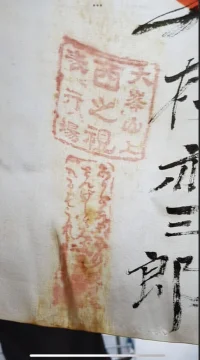
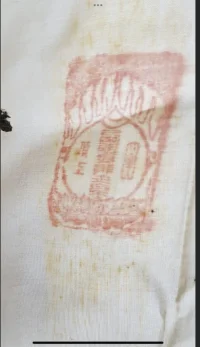
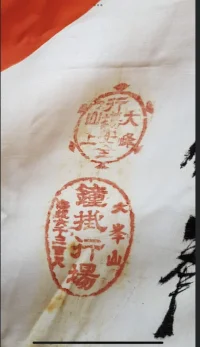
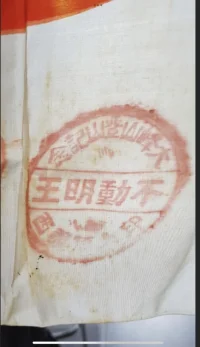
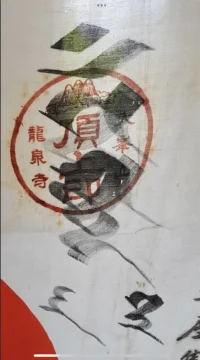
The third point is the red seal stamp. Many of these are free stamps for tourists, not paid stamps for special prayers.
Considering all of the above, it's possible this flag was originally made as a souvenir for the Travel.
When they went on a trip, and they stamped the national flag with a commemorative stamp. Every time they see this flag, they can relive their travel memories.
Perhaps the only writing on this flag initially consisted of the name "Obata" and the emblem in the lower left corner.
The emblem likely represents some kind of organization, and those who participated in the trip were probably its members. And Obata may have been one of them, and perhaps the owner of this flag.
The members were later conscripted and sent off to war. Perhaps they may have added a signature or message at that time.
What was a mysterious emblem to us may have been a symbol of unity for their members.
These are merely my speculations, and I'm probably wrong. However, the more mysteries there are, the more room for imagination.
In addition, I will explain the other mysteries that are clear.
"
Yamato" represents a place name. This is because the signature in the upper right corner combines a place name and a message. Therefore, it is natural to assume that the other signatures are also combinations of place names and messages.
However, the signature in the upper right corner contains the city's name, while the other signatures contain the old provincial name. What is the reason for this difference? This is probably because it's not possible to correctly write Kawasaki City using its old provincial name.
Nara Prefecture was formerly known as
Yamato Province. Its territory is almost identical. However, the old
Musashi Province, to which
Kawasaki City belonged, was divided into three parts. The region was largely divided between
Saitama Prefecture and
Tokyo, with the remaining small portion incorporated into
Kanagawa Prefecture. This remaining small portion is
Kawasaki City.
When people hear "Yamato," they immediately think of Nara Prefecture. However, while some might think of Saitama and Tokyo when they hear "Musashi," no one would think of Kanagawa. That's probably why they've specifically written the name of the city(The old name of Kanagawa Prefecture is largely
Sagami Province.)
The large kanji characters "忠君 - Chūkun" written next to the emblem are not an address, but a message. It means to be loyal to one's lord.
The stamps concentrated on the lower part of the flag are all related to
temples on Mount Ōmine, and are free stamps for tourists; they have no special meaning.
However, Mount Ōmine is famous as a training ground for
修験道:Shugendō practitioners, and it may have been highly valued for its miraculous powers.
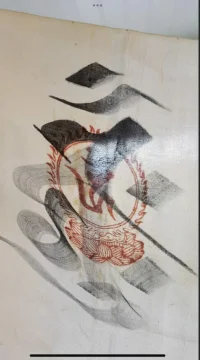
The mysterious symbols at the top of the flag are
梵字:Sanskrit characters, with the one on the right representing
不動明王:Fudo Myoo and the one on the left representing
大日如来 : Dainichi Nyorai,, maybe...
Finally, the name in the center is Okumura Matasaburo:奥村亦三郎, not Okumura Akasaburo:奥村赤三郎.
NANGI






 . To carry that though forward a stage further, I have a book of WW2 German map symbols (who doesn't
  ) that I referenced to see if perhaps there was some sort of German/Japanese crossover going on. Unfortunately nothing really came of it. Interesting suggestion though.
 Indeed, but you mentioned a German connection for the other flag. The arrow-like symbol looked like a (German) unit insignia.


 .
. 


