This weeks new lesson #5

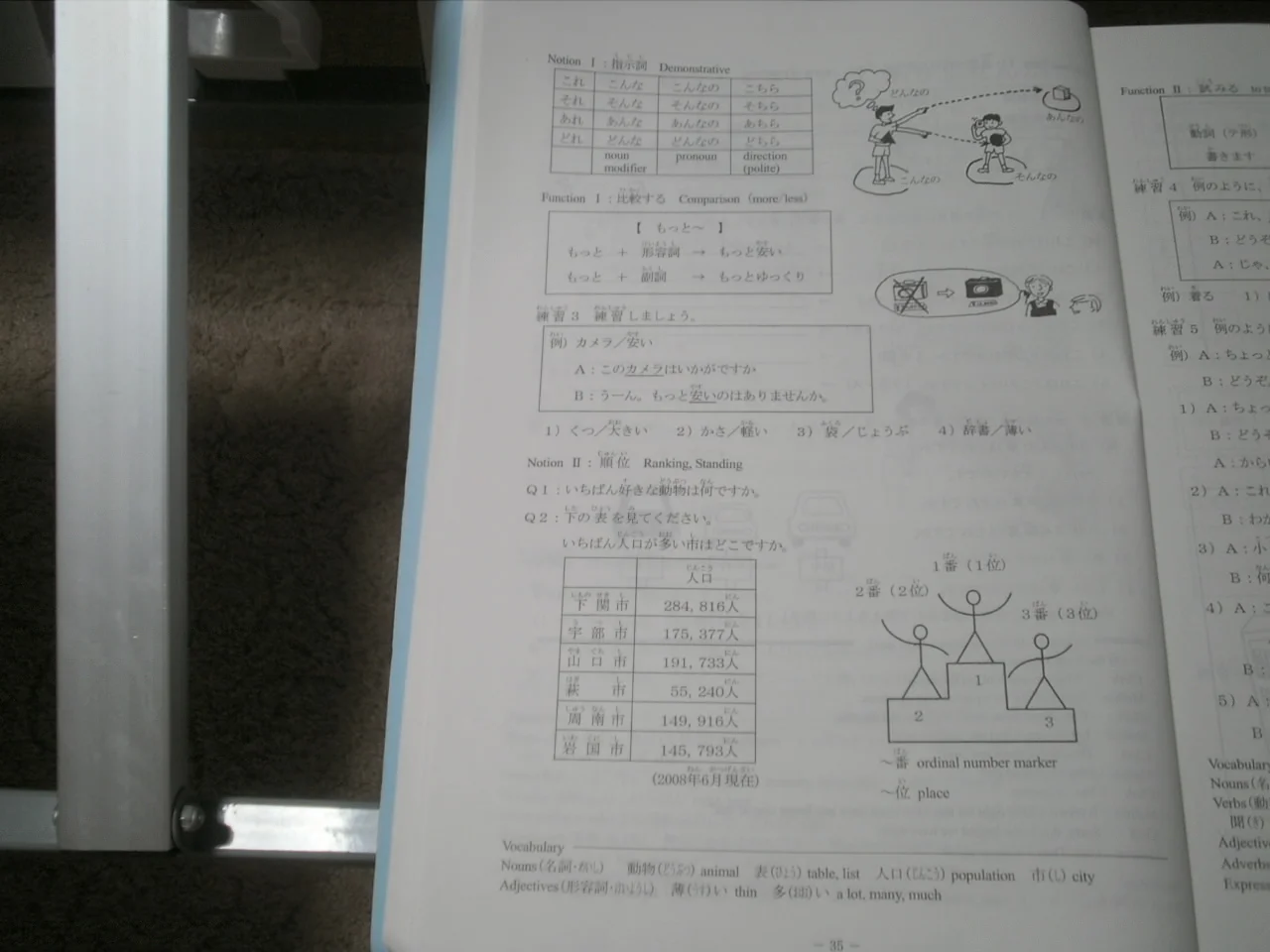
I got to continue with this lesson. This is page 35, practice number 3. Please look at the picture given here.
I don't understand the "motto yasui no wa arimasen" part. the "no wa" part, not sure what that means.


A.このくつしゃいかがですか

B.うーん。もっとおおきいのはありませんか。


A.このかさはいかがですか。

B.うーん。もっとかるいのはありませんか。


A.このふくろはいかがですか。

B.うーん。もっとじょうぶのはありませんか。


A.このじしょはいかがですか。

B.うーん。もっとうすいのはありませんか。

PA260003.webp
 
Tae Kim 3.11.4
Looks like this is what I need to understand.

However, the 「の」particle is very useful in that you don't have to specify a particular noun. In the next
examples, the 「の」particle is not replacing any particular noun, it just allows us to modify verb and
adjective clauses like noun clauses. The relative clauses are highlighted.
1. 毎⽇勉強するのは⼤変。
The thing of studying every day is tough.
2. 毎⽇同じ物を⾷べるのは、⾯⽩くない。
It's not interesting to eat same thing every day.

A.このくつしゃいかがですか

おおきいのはありませんか So the "no" here is actually the noun for shoes.
 
A.このくつしゃいかがですか

おおきいのはありませんか So the "no" here is actually the noun for shoes.

Correct. It is serving as a pronoun taking the place of "shoes".

Watch your typos. Can you spot the typo you made?
 
Correct. It is serving as a pronoun taking the place of "shoes".

Watch your typos. Can you spot the typo you made?

OK, I'll check this in the morning. Should be up early. Thanks, Mike.
 
PA260004.webp
This is the last page of lesson 5, page 36. (I can't find the key on the Japanese keyboard to do what is in front of てみる it's at the top of the page in the box.

This part of the lesson I'm using the verb form て + みる

Does te mi ru mean something like: to try something ?


In practice 4 (in the box) Are they asking to try to wear/try on something. If so then I think I understand the te mi masu which is like to try something.

Next is the volcabulary.
kiru wear something like jeans
taberu eat
nomu drink
tsukau use
yaru do

Next is lesson part 5

Here I'll just fill in the blank with the answers.

1. tabete meaning try to eat a little spicey but delicious
2. namete salt or sugar don't know try to lick it

3. akete parcel coming/came? what is it let's open it
4. mite if you like it want to see it
5. kite city hall where don't know ask that person where it is

I tried to give the above some translation to what the examples are, not too sure if I'm correct, but I think I understand most of it now. Please correct me if mistakes.

My goal this week really was to use the new volcabulary in an A B short dialogue, hmm I guess not yet. Hope to soon.

That's it for this weeks lesson 5 , tomorrow is class. Yikes
 
Does te mi ru mean something like: to try something ?

Yes.

In practice 4 (in the box) Are they asking to try to wear/try on something. If so then I think I understand the te mi masu which is like to try something.

Miru and mimasu are exactly the same thing with exactly the same meaning. The politeness level is different. Miru is the plain form abs mimasu is the polite form. It "-te mimasu" does not mean "like to try". That idea of "like to" or "want to" is created differently.

Next is the volcabulary.
kiru wear something like jeans
taberu eat
nomu drink
tsukau use
yaru do

"Vocabulary", not "Volcabulary". If you ever let anybody in charge of hiring for an English teaching job see you spell it that way you can kiss that job goodbye.

Those aren't vocabulary. Those are the words you're supposed to substitute into the exercise and change according to the target being taught..."-te miru".

"kiru" refers to things you wear as as shirts, coats, jackets. For anything below the waist... jeans, shoes, socks, boots...the verb is "haku", which is the very first item in the list but which you left out.
 
Yes.


Miru and mimasu are exactly the same thing with exactly the same meaning. The politeness level is different. Miru is the plain form abs mimasu is the polite form. It "-te mimasu" does not mean "like to try". That idea of "like to" or "want to" is created differently.


"Vocabulary", not "Volcabulary". If you ever let anybody in charge of hiring for an English teaching job see you spell it that way you can kiss that job goodbye.

Those aren't vocabulary. Those are the words you're supposed to substitute into the exercise and change according to the target being taught..."-te miru".

"kiru" refers to things you wear as as shirts, coats, jackets. For anything below the waist... jeans, shoes, socks, boots...the verb is "haku", which is the very first item in the list but which you left out.

Ah ! Vocabulary, just got fired.
I see I left haku out.

So for: 書いてみます is to try to write?

also was the answers right on fill in the blanks using the て form on 5 1thru 5?
 
Ah ! Vocabulary, just got fired.
I see I left haku out.

So for: 書いてみます is to try to write?

also was the answers right on fill in the blanks using the て form on 5 1thru 5?

Wrong on 5. Try that one again. Notice that かく and きく both end the same so should change the same.
 
A.このふくろはいかがですか。

B.うーん。もっとじょうぶのはありませんか。
じょうぶ is a na-adjective.

3. akete parcel coming/came? what is it let's open it
What is the tense of 来ました? That's the answer.

4. mite if you like it want to see it
As Mike-san pointed out, you misunderstood 見てみてください.
よかったら means "if you like", i.e., "if you want to try to watch the video", not "if you like the video".
So, what is the correct translation?
 
Wrong on 5. Try that one again. Notice that かく and きく both end the same so should change the same.
A. しやくしょはどこですか。
B.わかりません。あの人に (聞く) きいてみましょう。
Not sure if that is right, if so, wow!
 
じょうぶ is a na-adjective.


What is the tense of 来ました? That's the answer.


As Mike-san pointed out, you misunderstood 見てみてください.
よかったら means "if you like", i.e., "if you want to try to watch the video", not "if you like the video".
So, what is the correct translation?
OK thanks
I'll get back on this tonight. Wont have internet till this evening hopefully. Again thanks
 
Thanks guys for all the help on this lesson. Got class today. I'll be back later after class and hopefully the mistakes I made are corrected. I'll post again on this thread after class. I made some changes to my errors.
 
じょうぶ is a na-adjective.


What is the tense of 来ました? That's the answer.


As Mike-san pointed out, you misunderstood 見てみてください.
よかったら means "if you like", i.e., "if you want to try to watch the video", not "if you like the video".
So, what is the correct translation?

Is it "if you like to watch the video"?

I'm still puzzled about the above. I'll find out in class today. Thanks Toritoribe
 
Yes, but the nuance is rather humble, soft, not-pushy.
 
PA260001.webp
PA260002.webp
PA260003.webp
PA260004.webp
This is my update after attending Saturday's class. Page 33, 34, 35 and page 36. I want to thank everyone on the forum that really helped me out on this lesson. As Mike has suggested, I need to go back to Book one and relearn what was taught. And I'm doing that this week. I made a lot of mistakes mainly because I didn't use what was taught in the previous lessons and this is what really got me down. But I'm posting now with all your corrections and the sensei correction. On page 36, seems I got everything right according to the sensei.


Lesson 5 page 33


1. マリリさんは、何を買いに来ましたか。

ジョギグンシューズを買いに来ました.

2. マリリさんは、どん色のくつをはいてましたか。

あかいくつをはきました。


3. マリリさんは、なぜジョギングシューズをかいませんでしたか。

ちょうとちいさかった。


Page 34

Practice 1


Please look at the picture given for these 2 lessons. Here are the answers. My mistake on this was that I didn't have to put in the noun. の what was all that was needed and I believe Mike explained it, but I missed what he was trying to explain to me, sorry Mike, yet the example in the book was clearly there on practice 1.


1. 先生のです

2. マリさんのです

3. パクさんのです

4. 中国のです

5. フランスのです


Practice 2

Again, please look at the picture on page 34.

Actually I got all these right!


1. しろくてちさいのです。

2. くろくておおきのです。

3. こばやしさんのです。

4. たかむらさんのです。


Page 35. Practice 3, number one thru 4. According to the sensei, I did fine on this one.


A.このくつはいかがですか。

B.うーん、もっとおおきいのはありませんか。


A.このかさはいかがですか。

B.うーん、もっとかるいのはありませんか。


A.このふくろはいかがですか。

B.うーん。もっとじょうぶのはありませんか。


A.このじしょはいかがですか。

B.うーん。もっとうすいのはありませんか。


Page 36 I just filled in the blanks using the example on the top of the page.

1. たべてみてもいいですか。
2.なのてみます。
3.あきてみましょう。
4.みてみてください。
5.きいてみましょう。


Number 5 I did mess up on that one. Left out the i on kiite.

Again guys, thanks for all your help.

Sorry about the red, couldn't figure out how to change it back to black.
 
Last edited by a moderator:
On the above thread, I now noticed that I should have included the questions to the answers. Would have been easier to follow then going back and forth looking at the pictures of the pages. Next time in the next lesson.
 
こんばんは。皆さんは元気ですか。

This thread has grown a lot since I last saw it. Awesome.

For he first one everything looks fine. I assume you are aware of the meaning and how to form に行く に来る with other verbs.

For practice one I am a bit confused. From what I can tell you need the noun. The noun shows the owner of the object and the の is going to show what is owned, but the other noun after it is left out since it is understood form context.

だれの靴ですか。Whos shoes are these? 私のです Mine. The second sentence does not need 靴 since it is understood from context.

For practice two everything looks good, but there is a typo.

For practice three I assume you understand that the の is acting as a pronoun. Instead of saying the noun again you just use の instead。There is also a missing な for a な adjective.

For the last one there are some typos. I am unsure for last few as I have not covered this grammar structure.

Keep up the great work.

頑張ってください。じゃ、また。
 
For he first one everything looks fine. I assume you are aware of the meaning and how to form に行く に来る with other verbs.
Actually I'm still learning this, but slowly catching on.

For practice one I am a bit confused. From what I can tell you need the noun. The noun shows the owner of the object and the の is going to show what is owned, but the other noun after it is left out since it is understood form context.

For practice one on page 34, I originally put the noun in it, but all that was required according to the teacher was the の in the answer. I think if I had put the question in front of the answers there, that might of helped. Which I will do in further lessons. But my answers were correct.

だれの靴ですか。Whos shoes are these? 私のです Mine. The second sentence does not need 靴 since it is understood from context.

That part I understood. Thanks, Zuba.

1. しろくてちさいのです。

Ah! I see it. しろくてちいさいのです。 The い was missing on chiisai.

For practice three I assume you understand that the の is acting as a pronoun. Instead of saying the noun again you just use の instead。There is also a missing な for a な adjective.

Dang it! Mike even told me about that one I believe.

B.うーん。もっとじょうぶのはありませんか。


B.うーん。もっとじょうぶのはありませんか。
うーん。もっとじょうぶなのはありませんか。
Got it, the joubu (na) was missing. Dang!

For the last one there are some typos. I am unsure for last few as I have not covered this grammar structure.

Hmm. I looked for the typos, but.. maybe someone can point them out.

頑張ってください。じゃ、また。
Thanks Zuba, I'm doing my best because I want and have too.
 
Last edited by a moderator:
Hmm. I looked for the typos, but.. maybe someone can point them out.
Lesson 5 page 33
1. マリリさんは、何を買いに来ましたか。(You missed a katakana)
ジョギグンシューズを買いに来ました.

2. マリリさんは、どん色のくつをはいてましたか。
あかいくつをはきました
(The question is not はきましたか.)

3. マリリさんは、なぜジョギングシューズをかいませんでしたか。
ちょとちいさかった。

Page 34 Practice 2
2. くろくておおきのです。

Page 36
2.なてみます。
3.あてみましょう。
 
おはようございます。皆さんは元気ですか。

For the structure verb stem+ に行く you are saying you are GOING to do that action. There is a focus on the movement toward that action.

私は教科書を読みます。I will read the text book.
私は教科書を読みに行くます。I will go and read the text book.

The second one shows that there will be movement toward the goal of reading the text book. You can think for example that the context is that you are at home and are going to the library to study the text book. When you tell someone you want to express that you have to actually go the library. Thus the に行く show this movement toward doing a action.

Hope this is helpful.

じゃ、また。
 
Back
Top Bottom