There Is Always Something to Read

Mike Cash

骨も命も皆此の土地に埋めよう
Twenty-year veteran
Joined
15 Mar 2002
Messages
16,758
Reaction score
2,298
There is always something to read...and sometimes it is mildly alarming.

I thought some learners might enjoy figuring out what this is, where I saw it, and why I took a picture of it. The photo was taken today.
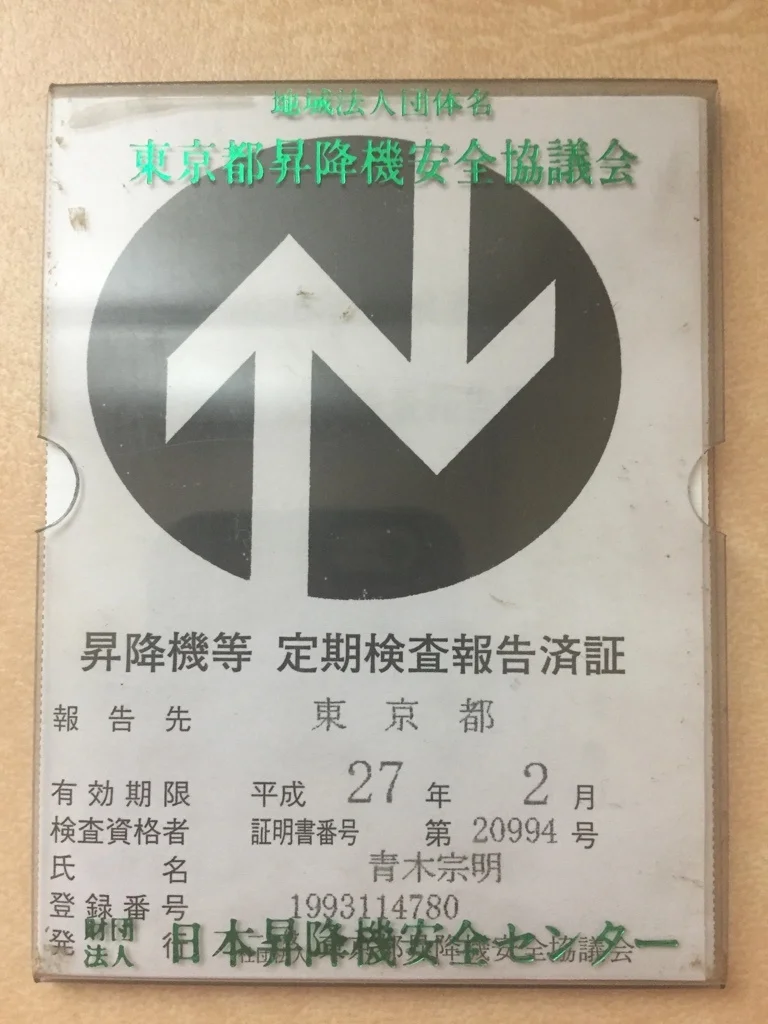
ImageUploadedByTapatalk1425691290.470376.webp


See why I encourage foreigners in Japan to not just learn to read but to actually read stuff?
 
Oh dear.

Side question, how should 済証 be read? すみあかし? Maybe even ざいしょう? (It doesn't seem to be in the dictionary)
 
Oh dear.

Side question, how should 済証 be read? すみあかし? Maybe even ざいしょう? (It doesn't seem to be in the dictionary)

ほうこくずみしょう, I think. Sort of a double suffix.

ImageUploadedByTapatalk1425733621.628626.webp
 
There is always something to read...and sometimes it is mildly alarming.

I thought some learners might enjoy figuring out what this is, where I saw it, and why I took a picture of it. The photo was taken today.


View attachment 20351

See why I encourage foreigners in Japan to not just learn to read but to actually read stuff?
If my calculations are correct it's only 8 days so... should be alright?
 
Last edited:
If my calculations are correct it's only 8 days so... should be alright?

Mechanically...nothing to worry about.

Administratively...a black eye for someone

Legally...a world of sh*t if an accident occurs
 
Mechanically...nothing to worry about.

Administratively...a black eye for someone

Legally...a world of sh*t if an accident occurs
Very true.
Buy the time I worked out what the sign said, I don't think I would have been safe Mechanically.
It was a very good exercise for me as a lot of the kanji were well above my level(thank god for search by radical)
Thanks mikesan
 
a lot of the kanji were well above my level(thank god for search by radical)
Take a look at KanjiTomo: lets you hover over a word in the image and instantly get copy-pastable kanji + translation. Just don't fall in the trap of constantly using it, especially for words that you do know but don't remember right away.
 
Take a look at KanjiTomo: lets you hover over a word in the image and instantly get copy-pastable kanji + translation. Just don't fall in the trap of constantly using it, especially for words that you do know but don't remember right away.
Thank you lanthas I will.
 
What year and date are we right now regarding the emperor? 平成 ...

EDIT: ok, just checked the above question.

有効期限が過ぎたっていうことですか。
 
Last edited:
I thought I may as well continue this thread, posting a few examples of stuff to read encountered in daily life.

Here's a nice little exercise in reading handwritten Japanese and what to many might appear an almost farcical use of polite speech.

ImageUploadedByTapatalk1428100042.472735.webp
 
警察までいらっしゃいますか。随分厳しい対策をお定めになりましたね。:hilarious:
 
警察までいらっしゃいますか。随分厳しい対策をお定めになりましたね。:hilarious:

"What are you in for?"
"I stole half a roll of toilet paper"

It would make for an awkward jailhouse conversation....
 
Here's a very polite letter I received from the Tokyo Metro Police. The vocabulary and grammar aren't hard, but if you're not accustomed to handwritten Japanese you may find it a good challenge.

ImageUploadedByTapatalk1429179101.683390.webp
 
It took me a couple of goes to realise that was 又. Admittedly I saw your other thread and knew the context which helped.

For those who are enjoying this thread and would like more of this sort of reading practice, there's also a huge stash of images of Japanese signs available here.
 
Wow I was surprised I was able to read that, considering I have pretty much zero exposure to handwritten Japanese these days. Although, what's the character after 事故当日, is it ら?
 
Wow I was surprised I was able to read that, considering I have pretty much zero exposure to handwritten Japanese these days. Although, what's the character after 事故当日, is it ら?

Yes. I've never seen it written that way before.
 
It took quite some time but I managed to grasp most of it as well. Truly context is everything here; there's no way I would've recognized the 様 and 映 on their own. That へ-like か is also quite something.

The katakana word ?ロ?ード is a mystery to me however...

For those who are enjoying this thread and would like more of this sort of reading practice, there's also a huge stash of images of Japanese signs available here.
Nice! Found some fun ones already like "雨の日は歩道がすべりやすいので注意して下さい". Obvious, but caring at the same time; you'd never see this kind of sign around here.
 
Last edited:
The SD preceding it is a big clue...
 
Indeed this is a good example of how crucial the context is to recognize kanji or kana. I would read the second 御 (in 御返送) as 衛 if that's a stand-alone kanji.

EDIT:
Sorry, I've just noticed that this 御 is actually the third one.
 
Last edited:
Indeed this is a good example of how crucial the context is to recognize kanji or kana. I would read the second 御 (in 御返送) as 衛 if that's a stand-alone kanji.
Wow, I had the same thought briefly when I first saw it!
 
It shows that you have an extensive knowledge of kanji enough to read my poor handwriting correctly!
 
A couple more handwritten examples, taken from that most democratic of all free speech venues, the public toilet stall.

ImageUploadedByTapatalk1429523518.343966.webp


ImageUploadedByTapatalk1429523531.820897.webp


You will need to know the term マグロ女 to understand the second one. If you already know it, you have my sympathy.
 
Last week I stopped by the local Hotto Motto to get a couple of bentos for supper and was surprised to find the both the sign by the street and the signs on the building were off. It almost looked like they were closed.

Another fairly easy handwritten example:

ImageUploadedByTapatalk1431310135.938087.webp
 
Back
Top Bottom