News The Senkaku issue

According to Japanese diplomatic documents declassified on Wednesday, Tokyo secretly asked Beijing not to make territorial claims to the Japan-controlled Senkaku Islands in the East China Sea to avoid friction ahead of the Japanese emperor's visit to China in 1992. Then Japanese Ambassador to China Hiroshi Hashimoto asked influential Chinese officials to refrain from publicly speaking about the issue of the uninhabited islets and historical disputes, in line with a secret order from then Prime Minister Kiichi Miyazawa in April 1992, the Foreign Ministry's records showed. The visit, which Beijing had repeatedly requested, was made by then-Emperor Akihito in October of that year, marking the 20th anniversary of the normalization of diplomatic ties in 1972.
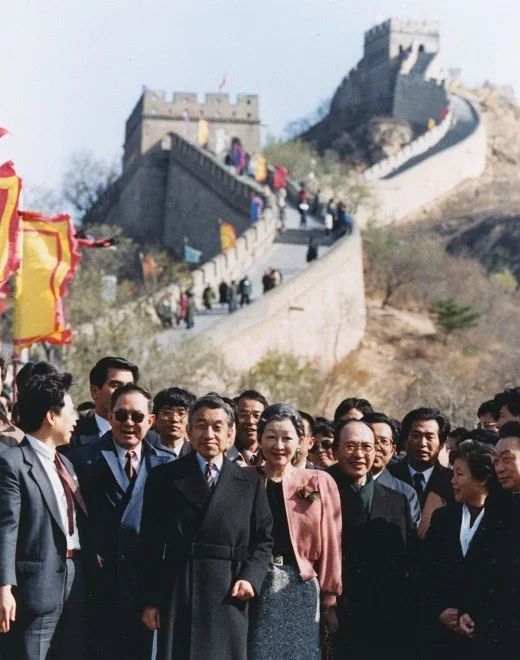
98eadf489497008ecd4b605c5dc7612f.jpg


The enactment of a new Chinese law on territorial waters and adjacent waters in February 1992, which first declared the Senkaku Islands as China's territory, reignited war-related disputes with Tokyo and further worsened public sentiment in Japan toward China. Still, Japan was keen to respond to China's request for an imperial visit as it supported Beijing's "reform and opening-up" policy, which Tokyo hoped would lead to the democratization of the Communist-led country. According to the documents, Hashimoto, on a visit back to Japan, proposed that he urge Beijing not to take up issues that could provoke negative sentiment among the Japanese public.

Some Chinese leaders, such as then-Premier Wen Jiabao and then-Communist Party chief Jiang Zemin, agreed to work with Japan and tone down their rhetoric. They also repeatedly requested an imperial visit, which they saw as a gesture of goodwill and respect from Japan. China began to restrain itself from making confrontational remarks or moves regarding the islands.

Sakutaro Tanino, then-head of the Japanese Foreign Ministry's Asian affairs bureau, said in an interview with Kyodo News that "every time Chinese VIPs came, they made a request" for an imperial visit. "So, we thought that someday we had to realize it," Tanino said, adding that he felt relieved that the trip was generally viewed as a success.

However, not everyone was happy with the emperor's visit and its consequences. According to Yusuke Anami, a professor at Tohoku University and an expert on modern Chinese history, it might have been better for Japan to cancel the emperor's visit, as it resulted in Japanese diplomats "trivializing" the Senkaku issue at a time when China was trying to change the status quo by enacting the territorial waters law, which claimed sovereignty over the islands.

Anami also pointed out that Western nations' tough stance on China after a 1989 military crackdown on a pro-democracy movement in Beijing's Tiananmen Square softened following the emperor's trip, smoothing the way for China's economic growth and military buildup. He argued that the emperor's visit did not serve Japan's national interest, as it weakened the international pressure on China and allowed it to expand its power and influence.


Paywall alert:
 
The heat is up: it might soon be too late if Japan doesn't set up a permanent JSDF presence on (and not just around) the Senkakus.

China plans to keep its ships near the Japan-controlled Senkaku Islands in the East China Sea for 365 days in 2024 as leader Xi Jinping has called for bolstering Beijing's sovereignty claim over the islets, sources familiar with the matter said Saturday. During a rare visit by Xi on Nov. 29 to the command office for the East China Sea area of the China Coast Guard in Shanghai, the president pointed out the need for Beijing to "constantly strengthen" its efforts to safeguard the sovereignty of the islands, which China calls Diaoyu, the sources said.

 
And while china would complain and complain if japan set up a presence there--any military--that's the first things they'd do after they got done swarming them with 'fishermen' (with warships standing back a ways).
 
A few days ago, Japanese media reported that the China Coast Guard had been loitering around the waters of the Sekaku islands for a record 158 consecutive days. Yesterday, the Japanese government protested against Beijing after four armed Chinese coast guard vessels entered waters that Tokyo considers its territory. The Japanese government said it was the first time that four Chinese ships carrying what appeared to be cannons had entered its territorial waters in the East China Sea surrounding the disputed islands, which Tokyo calls the Senkaku and Beijing calls the Diaoyu.


I wonder why the Japanese government doesn't take bolder steps to reassure their claims, as what will happen next is quite obvious. My prediction: one of the Chinese "military trawlers" will "capsize," and the China Coast Guard will save the hero fisherman and establish a permanent presence. Or, they might turn water cannons on Japanese boats, just like they do in the Philippines.

Bloody hell, Japan, wake up! :mad:

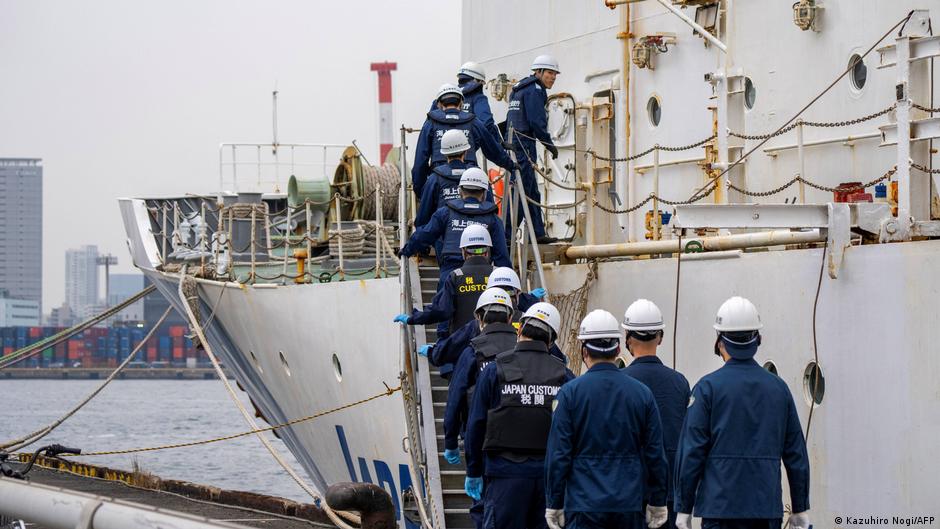
Stand-ff Japan Coast Guard and China Coast Guard

Photo credit: Reuters/Kyodo

Source: Chinese armed vessels patrol waters around disputed islands, angering Japan
 
Look at what's going on with the Philippines right now with the disputed islets/reefs.

That could be looked at as a dress rehearsal or preview for what China will do with the Senkaku islands. If China gets its way there, then gee, what could be next?

The best way for Japan to 'help' with issues in the south china sea would be to definitively occupy the Senkaku islands, and certainly not just patrol around them and play bumper cars with ships.

Japan needs to put significant assets on the islands--it needs to "stake" them, with its coast guard and maritime self-defense forces, or with some civilians which would then be under its security umbrella . And not just one of the islets--ID and work on the best two if not three, so that there cannot be a competing outpost established on another islet.
 
I couldn't agree more! Japan should have gotten its act together years ago. However, the repercussions would be substantial: nationalist uproar, anti-Japanese protests, attacks on Japanese interests throughout China, social media frenzy, tourist boycotts, economic boycotts, and probably a naval blockade à la Taiwan.

Would the U.S. fully support Japan?
 
Just when things seemed to improve...

Japan and China have traded accusations over airspace violations near the disputed East China Sea islands administered by Japan but claimed by Beijing. The renewed territorial dispute emerged despite improved relations between the two countries, as both seek to limit the fallout from ongoing trade tensions with the United States. According to Japan's Foreign Ministry, a formal protest was issued to China after a Chinese helicopter, launched from one of four Chinese coast guard vessels that had entered waters near the Senkaku Islands, reportedly breached Japanese airspace for approximately 15 minutes on Saturday.

China Coast Guard helicopter enters Japanese airspace near Senkakus

Photo credit: Japanese Ministry of Defence via JT

The Japanese Foreign Ministry said it lodged a "very severe protest" through the Chinese embassy in Japan, claiming that China Coast Guard actions infringed Japan's sovereignty and urging the Chinese government to ensure preventive measures. China also said in a statement that it took a similar step and protested to Japan over a Japanese civilian aircraft violating its airspace around the islands, saying it was "strongly dissatisfied" about Japanese violation of China's sovereignty. Japanese officials are investigating a possible connection between the Chinese coast guard helicopter's airspace intrusion and the small Japanese civilian aircraft flying in the area around the same time. Saturday's intrusion was the first by China since a Chinese reconnaissance aircraft violated the Japanese airspace off the southern prefecture of Nagasaki. Chinese aircraft have also violated the Japanese airspace around the Senkaku twice in the past.


China scares the crap out of me now. For years they have been raking in tons of money from the world buying their cheap goods. Now they are using it to increase their navy size and also their aircraft are being updated. At some point they will decide to take back Taiwan which could possibly start WWIII. I'm interested to see if they will also start putting more satellites up with attack capabilities to knock out their enemy's sats. I hope I'm not around if a war does take place.
 
China scares the crap out of me now. For years they have been raking in tons of money from the world buying their cheap goods. Now they are using it to increase their navy size and also their aircraft are being updated. At some point they will decide to take back Taiwan which could possibly start WWIII. I'm interested to see if they will also start putting more satellites up with attack capabilities to knock out their enemy's sats. I hope I'm not around if a war does take place.
It depends on the U.S. Probably nobody else would consider defending Taiwan. And we don't have any treaty obligation to do so. Honestly I wouldn't be surprised if they made a move on Taiwan. Trump's isolationist attitude means he's unlikely to take action. But hard to predict.
 
China scares the crap out of me now. For years they have been raking in tons of money from the world buying their cheap goods. Now they are using it to increase their navy size and also their aircraft are being updated. At some point they will decide to take back Taiwan which could possibly start WWIII. I'm interested to see if they will also start putting more satellites up with attack capabilities to knock out their enemy's sats. I hope I'm not around if a war does take place.
China has been responding to demand for cheap products from America and other places, and these days at an acceptable quality. People were happy to fill their houses with Chinese products for years, so it's a bit rich to complain that China has done well out of it.

And having a belligerent and unhinged American president who is planning to increase defence spending (already about twice that of China's) while talking about annexing Canada and Greenland scares the crap out of me.
 
After last week's helicopter incident, the Japanese government urged caution after a small Japanese civilian plane was spotted near uninhabited islets in the East China Sea, around the same time a Chinese helicopter violated Japanese airspace.

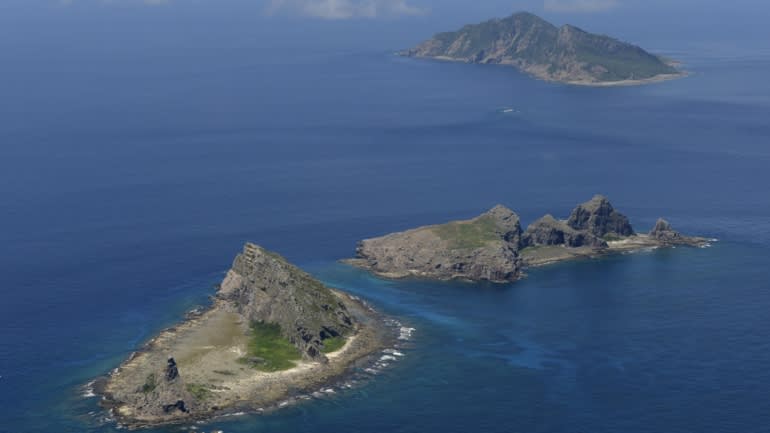
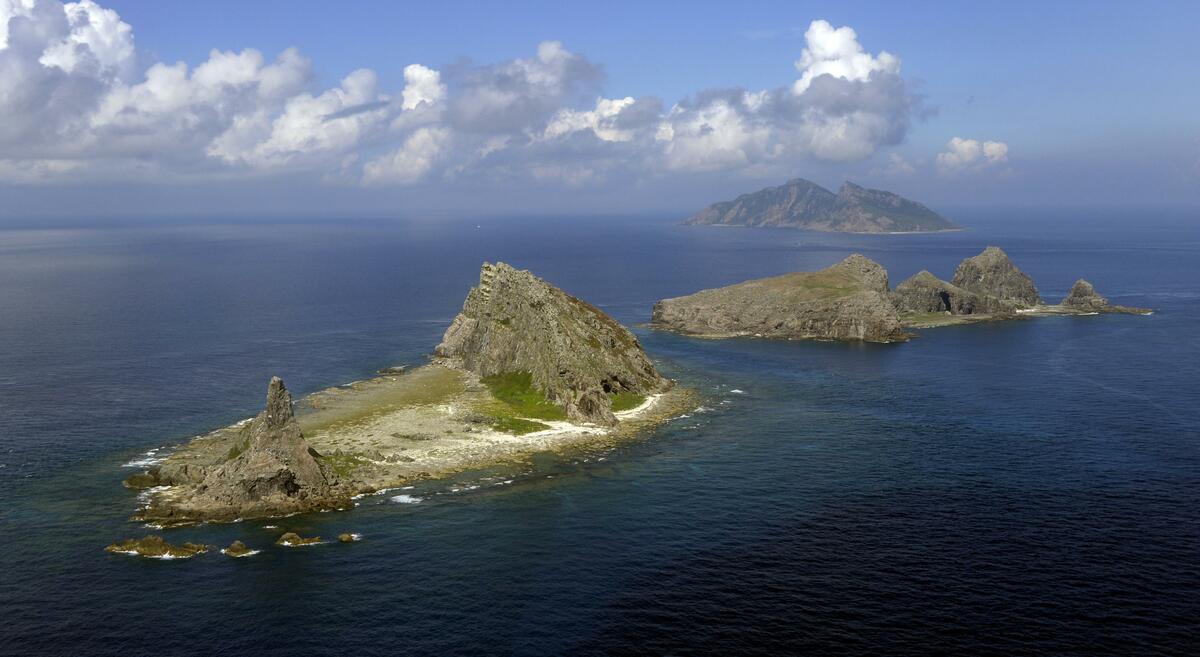
The Senkaku Islands

The Senkaku Islands (photo credit: Kyodo)


While Japanese aircraft operating in the country's airspace pose no legal issue, Chief Cabinet Secretary Yoshimasa Hayashi said contingencies stemming from such flights should be avoided amid tensions with China over the Senkaku Islands. The Senkaku Islands are administered by Japan but claimed by China. Tokyo has already lodged a protest with Beijing over Saturday's airspace intrusion by a helicopter that took off from one of four Chinese coast guard vessels sailing in Japanese territorial waters around the islets. China has rejected Japan's claim.


[Defence Minister Gen] Nakatani reiterated the Japanese government's longstanding position that the Senkaku Islands are an inherent part of Japan's territory, historically and under international law. Japan currently exercises effective control over them. "Therefore, there is no territorial dispute over the Senkaku Islands that needs to be resolved," Nakatani said. But while the Japanese side effectively controls the islands, which are also covered under Article 5 of the U.S.-Japan security treaty, China has simultaneously worked to establish a track record of "law enforcement" activities around the Senkakus as part of a concerted effort to press its claim to the area, which is rich in fish stocks and is also believed to be home to oil and gas deposits. Japan nationalised the Senkaku Islands in 2012.


Paywall alert:

How about installing a lighthouse, raising the Japanese flag, and stationing a "research team" on the islands?
 
While China establishes facts just north of the Senkakus, how long will Japan resort to lodging diplomatic protests?


The South China Morning Post (of all newspapers) on China's "incremental moves."

Japan has lodged a protest with Beijing over the suspected construction of a new offshore platform in disputed waters of the East China Sea – a development that analysts say could signal China's latest attempt to extend administrative control through incremental moves. The protest came after satellite imagery showed two large Chinese ships positioned roughly 345km northwest of Kume Island in Okinawa prefecture – an area where the countries' exclusive economic zones (EEZs) overlap and remain subject to a long-running maritime dispute. The images, released by the European Space Agency and analysed alongside data from the international Automatic Identification System, identified the vessels as the 297-metre crane ship Zhenhua 30 and the 160-metre heavy-lift ship Debo 3. Both ships have remained in the same location since May 11, according to Japanese newspaper Sankei Shimbun, supported by a flotilla of supply ships and tugboats. Japan's coastguard has reported that the activity appears linked to the construction of an "offshore platform".


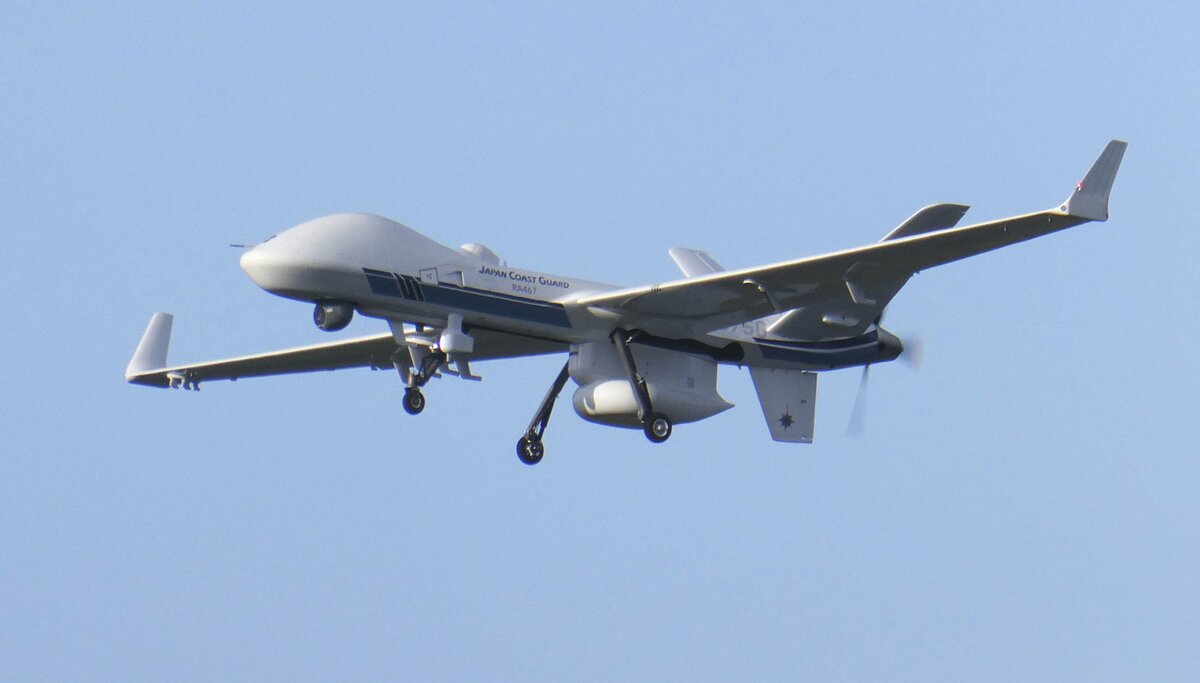
Japan has deployed the SeaGuardian, a large coast guard drone, to monitor the Senkaku Islands in the East China Sea. This move comes amid frequent incursions by Chinese vessels into nearby waters. The MQ-9B SeaGuardian, a U.S.-made remotely piloted aircraft equipped with advanced radar, is expected to strengthen security across Japan's territorial waters surrounding the uninhabited islets, covering roughly 4,740 square kilometres.

MQ-9B SeaGuardian

MQ-9B SeaGuardian


Chinese coast guard ships routinely operate near the Senkaku Islands—administered by Japan but claimed by China, which refers to them as Diaoyu—and were observed on 355 days in 2024, the highest number since Japan placed the islands under state control in 2012. Sources noted that the SeaGuardian has flown over the islands multiple times since April, monitoring Chinese vessels and capturing imagery.

The SeaGuardian, measuring around 12 metres in length with a wingspan of 24 metres, is controlled by pilots stationed at a ground operations centre. Coast guard officers review the images and other data gathered by the drone and provide operational instructions. At present, the Japan Coast Guard operates three SeaGuardian drones, with two additional units expected to join the fleet during the current fiscal year, ending in March 2026. The drone has been deployed for surveillance missions across the East China Sea, the Pacific Ocean, and the Sea of Japan, as well as for maritime distress operations and disaster response. Built by General Atomics Aeronautical Systems Inc., the aircraft is capable of flying continuously for more than 24 hours, allowing it to complete a full circuit around the outer boundaries of Japan's exclusive economic zone in a single mission.

 
Japanese officials have quietly asked fishermen to stay away from disputed islands in the East China Sea, marking a change from years of allowing such trips to underline Japan's territorial claims.

The move reflects concern about escalating tensions with Beijing, which have worsened since comments last November by PM Takaichi on how Japan might respond to a Chinese attack on Taiwan. The government has not clarified who authorised the requests, declined to comment directly, and reiterated that the islands are an inherent part of Japanese territory and that diplomatic protests have been lodged over Chinese activity.

The warnings issued to fishermen illustrate a catch-22 for Tokyo: Fishing underlines Japan's control of the islands but risks triggering a more serious confrontation with Chinese coast guard vessels that could escalate rapidly, according to more than a dozen people interviewed by Reuters, including fishermen, Japanese officials and security analysts. Yet a pullback may prompt China to press its claims more assertively, some of these people said. China's foreign ministry told Reuters some right-wing Japanese had repeatedly entered the waters of the islands "in the name of 'fishing' to provoke and cause trouble", adding that maritime issues should be addressed through dialogue and consultation. A Trump administration official declined to address questions about the president's November call with Takaichi but said the U.S. opposed unilateral attempts to change the status quo in the East China Sea.

chart.png

As tensions rose in November, Japanese officials asked fishermen to stay away from the disputed islands, fearing that even a minor incident could escalate into a diplomatic or security crisis. The concern is that fishermen could be detained or challenged by Chinese authorities, as in past clashes that badly damaged relations.


China is increasingly using its armada of fishing boats to create a "wall of vessels," blocking access to the East China Sea.

As many as 2,000 Chinese fishing vessels have assembled near the Sino-Japanese median line in the East China Sea on at least two occasions since late last year, creating what one geospatial data analysis firm describes as a floating wall extending for more than 400 kilometres. Experts studying vessel movements suggest that ordinary fishing crews may have been organised as a maritime militia, thereby creating a barrier that limits access for other ships in the area. They expect similar deployments to continue and become routine rather than isolated events.

2000 Chinese fishing vessels

The Tokyo-administered Senkaku Islands, which China also claims, are located in the same sea. Chinese government vessels are frequently dispatched to the vicinity of the islets in support of Beijing's territorial position, where they are referred to as the Diaoyu.

According to data collected by ingeniSPACE using an automatic identification system to track vessels, about 2,000 Chinese fishing boats formed a U-shape measuring around 470 km in length and 80 km in width between Dec. 24 and 26 on the Chinese side of the median line between the two countries' shorelines. On Jan. 11, about 1,500 Chinese fishing boats lined up across more than 400 km in waters straddling the median line. Chisako Masuo, a professor at Kyushu University who conducts joint research with ingeniSPACE, said the fishers were believed to have joined Chinese military drills, possibly led by veterans. Their activities were monitored before mainland forces staged large-scale exercises surrounding Taiwan at the end of the year.


The NYT reported about it three weeks ago:

The operations appeared to mark a bold step in China's efforts to train fishing boats to gather en masse, to impede or monitor other countries' ships, or to help Beijing assert its territorial claims by establishing a perimeter, said Mr Wang of ingeniSPACE. "They're scaling up, and that scaling indicates their ability to do better command and control of civilian ships," he said. The Chinese government has made no public statements regarding the activities of the fishing boats. The ship-signals data appeared to be reliable and not "spoofed" — that is, manipulated to create false impressions of the boats' locations — Mr Wang and Mr Douglas both said.

Paywall alert:
 
Nikkei also reported on the Chinese Wall of fishing vessels:

As many as 2,000 Chinese fishing vessels assembled twice in recent months near Japan's exclusive economic zone in the East China Sea, adding to pressure on Tokyo amid heightened Chinese maritime and coast guard activity. The boats gathered close to the median line Japan uses to mark its EEZ boundary. The first episode, around 25 December, involved roughly 2,000 vessels arranged in a reverse L-shaped formation. The grouping spanned about 470 kilometres from north to south and 230 kilometres from east to west.

chinese-fishing-boats.webp

A second formation appeared around 11 January. It included about 1,300 boats, aligned along a roughly 370-kilometre stretch north to south. Automatic identification system data and satellite imagery indicate that both groups were positioned near 125 degrees east longitude and remained in place for more than 24 hours.

Some fishing boat crews are known to cooperate with Chinese government and military activities as maritime militias, conducting "gray zone" operations that fall short of outright use of military force. These have been involved in maintaining effective Chinese control over the South China Sea. Many of the boats in the recent formations had set out from Zhejiang province, one of China's largest fishing industry hubs. A December meeting in the province's city of Zhoushan discussed advancing military-civil fusion and national defense mobilization under the central government's new five-year plan, which starts this year. "This mobilization seems to be training for the next stage of [China] building itself up as a maritime power," Kyushu University's Masuo said. "Maritime militia activity in the East China Sea has become normalized over the past few years, but it could expand further in the future."

The Chinese coast guard and military have been active around the East China Sea. On 1 February, the coast guard released, for the first time, video footage of patrols in Japanese territorial waters around the Senkaku Islands. This move, on the fifth anniversary of legislation granting the coast guard quasi-military status, may have been intended to reassert Beijing's claim over the islands. Coast guard vessels sailed within the Senkaku's contiguous waters on 357 days in 2025, an annual record.

Paywall alert:
 
The Chinese government must have deep pockets to compensate all those fishermen who are being asked to form a blockade instead of going fishing.
 
China and Japan gave sharply different accounts on Tuesday of an encounter near the disputed Senkaku Islands in the East China Sea.
China's Coast Guard said it had driven away a Japanese fishing boat that had "illegally entered" what Beijing calls the Diaoyu Islands. Japan's Coast Guard, however, said it had intercepted and forced two Chinese coast guard vessels to leave after they approached a Japanese fishing boat with two crew members on board.

Tokyo said the Chinese vessels' actions violated international law and vowed to continue responding "calmly and resolutely" under both international and domestic law. Both countries claim the islands, and patrol vessels from each side regularly confront one another in the surrounding waters.


Back
Top Bottom