


- 14 Mar 2002
- 21,053
- 18,908
As Japan's population continues to shrink, with only one working-age adult for every person over 65 by 2050, the Japanese government has heavily invested in the research and development of care robots: some 300 billion USD by 2018. And despite Japan's decade-long love affair with robotics, it's becoming increasingly clear that robots are not the natural solution to the needs of an ageing society.
MIT Technology Review on Japan's experiences with robots in elderly care:
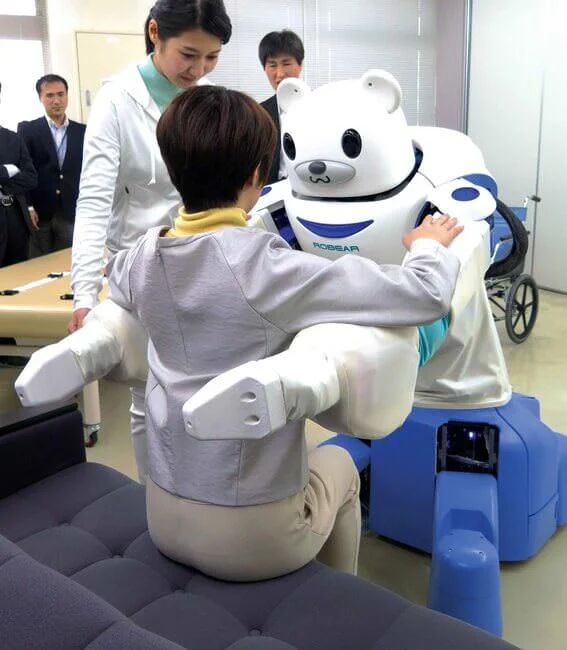
The author of the study spent one-and-a-half years in Japan and focused on three different types of robots: Hug, a lifting robot; Paro, a robotic seal; and Pepper, a humanoid robot. Hug was meant to prevent care workers from having to lift residents manually, Paro to offer a robotic form of animal therapy (while also acting as a distraction aid for some people with dementia who made repeated demands of staff throughout the day), and Pepper to run recreational exercise sessions so that staff would be freed for other duties.
Not only care homes but also hospitals and other public facilities employ Pepper in their lobbies. My wife and I interacted with a Pepper model last week. While it was truly cute, its limitations soon became apparent. We are not there yet.

 www.technologyreview.com
MIT Technology Review on Japan's experiences with robots in elderly care:
A national survey of over 9,000 elder-care institutions in Japan showed that in 2019, only about 10% reported having introduced any care robot. A 2021 study found that out of 444 people who provided home care, only 2% had experience with a care robot. Some evidence suggests that when robots are purchased, they often end up being used for only a short time before being locked away in a cupboard.
The author of the study spent one-and-a-half years in Japan and focused on three different types of robots: Hug, a lifting robot; Paro, a robotic seal; and Pepper, a humanoid robot. Hug was meant to prevent care workers from having to lift residents manually, Paro to offer a robotic form of animal therapy (while also acting as a distraction aid for some people with dementia who made repeated demands of staff throughout the day), and Pepper to run recreational exercise sessions so that staff would be freed for other duties.
Pepper was used to run recreation sessions that were held every afternoon. Instead of leading an activity like karaoke or having a conversation with residents, a care worker would spend some time booting up Pepper and wheeling it to the front of the room. It would then come to life, playing upbeat music and a prerecorded presentation in its chirpy voice. It would launch into a series of upper-body exercises so the residents could follow along. But care workers quickly realized that to get residents to participate in the exercise routine, they had to stand next to the robot, copying its movements and echoing its instructions. Since there was a relatively small set of songs and exercise routines, boredom started to set in after a few weeks, and they ended up using Pepper less often.
Not only care homes but also hospitals and other public facilities employ Pepper in their lobbies. My wife and I interacted with a Pepper model last week. While it was truly cute, its limitations soon became apparent. We are not there yet.
In short, the machines failed to save labor. The care robots themselves required care: they had to be moved around, maintained, cleaned, booted up, operated, repeatedly explained to residents, constantly monitored during use, and stored away afterwards. Indeed, a growing body of evidence from other studies is finding that robots create more work for caregivers.
Inside Japan’s long experiment in automating elder care
The country wanted robots to help care for the elderly. What happened?


