


- 14 Mar 2002
- 21,050
- 18,903
A Japanese weather expert has debunked the myth of "earthquake clouds," urging people to avoid spreading misinformation. Following the August 8th earthquake off the coast of Miyazaki Prefecture, social media platforms were flooded with claims about unusual cloud formations that supposedly predicted the tremor. These claims, such as "I heard that earthquake clouds appear before temblors" and "There were three lines of earthquake clouds," have no scientific basis. The expert emphasizes that there is no correlation between cloud patterns and seismic activity, and it's important to rely on official sources like the Japan Meteorological Agency for accurate information about earthquakes.
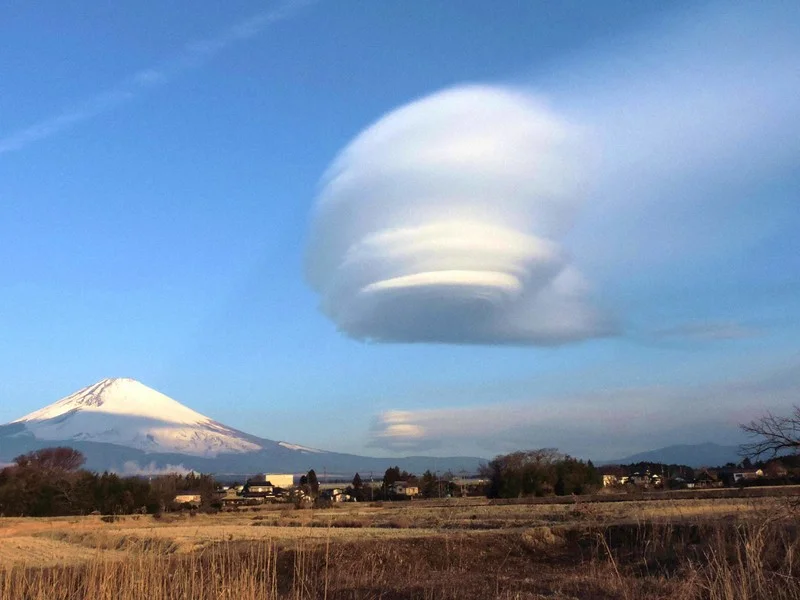
Photo credit: Araki Kentaro
The myth of "earthquake clouds" has persisted for decades, resurfacing after every major seismic event. As early as 1983, following the Sea of Japan earthquake, rumours about these purported harbingers of quakes began to circulate. The JMA and the Seismological Society of Japan have repeatedly refuted these claims, asserting that no scientific evidence supports a connection between cloud formations and earthquakes. Despite these official statements, the belief in earthquake clouds continues to persist, highlighting the enduring fascination with natural phenomena and the human desire for predictability in the face of unpredictable events.

 mainichi.jp
Photo credit: Araki Kentaro
"It's impossible to determine the effects of an earthquake by looking at clouds," says Kentaro Araki, a 39-year-old cloud expert and senior researcher at the JMA's Meteorological Research Institute. He was the meteorological supervisor for the 2019 anime film "Weathering With You." [...] Araki also posted on his X (formerly Twitter) account on 8 August, saying, "Clouds can't be a precursor to earthquakes." He continued, "If you are worried about quakes, ensure you are prepared regularly. Let's admire clouds. Immediately after a major tremor, 'earthquake cloud' claims plus conspiracy theories such as that earthquakes are artificially induced tend to spread," Araki said. "I hope that people will take a breath, calm down and avoid spreading these 'disaster hoaxes.'"
The myth of "earthquake clouds" has persisted for decades, resurfacing after every major seismic event. As early as 1983, following the Sea of Japan earthquake, rumours about these purported harbingers of quakes began to circulate. The JMA and the Seismological Society of Japan have repeatedly refuted these claims, asserting that no scientific evidence supports a connection between cloud formations and earthquakes. Despite these official statements, the belief in earthquake clouds continues to persist, highlighting the enduring fascination with natural phenomena and the human desire for predictability in the face of unpredictable events.
No scientific basis for so-called 'quake clouds': Japan weather researcher - The Mainichi
TOKYO -- A weather expert in Japan emphasizes that there is no scientific basis for so-called


