


- 14 Mar 2002
- 21,050
- 18,903
Pretty impressive! As a cyclist, I expect future jerseys to have integrated HRMs connected to smartphone apps.
Murata Manufacturing is one of several Japanese firms pushing innovation in wearable medical technology, targeting a market projected to double within the next decade. The company plans to begin mass production of its stretchable printed circuits in fiscal 2025. These circuits are embedded between layers of elastomer, allowing them to function even when stretched up to 60% beyond their original size.
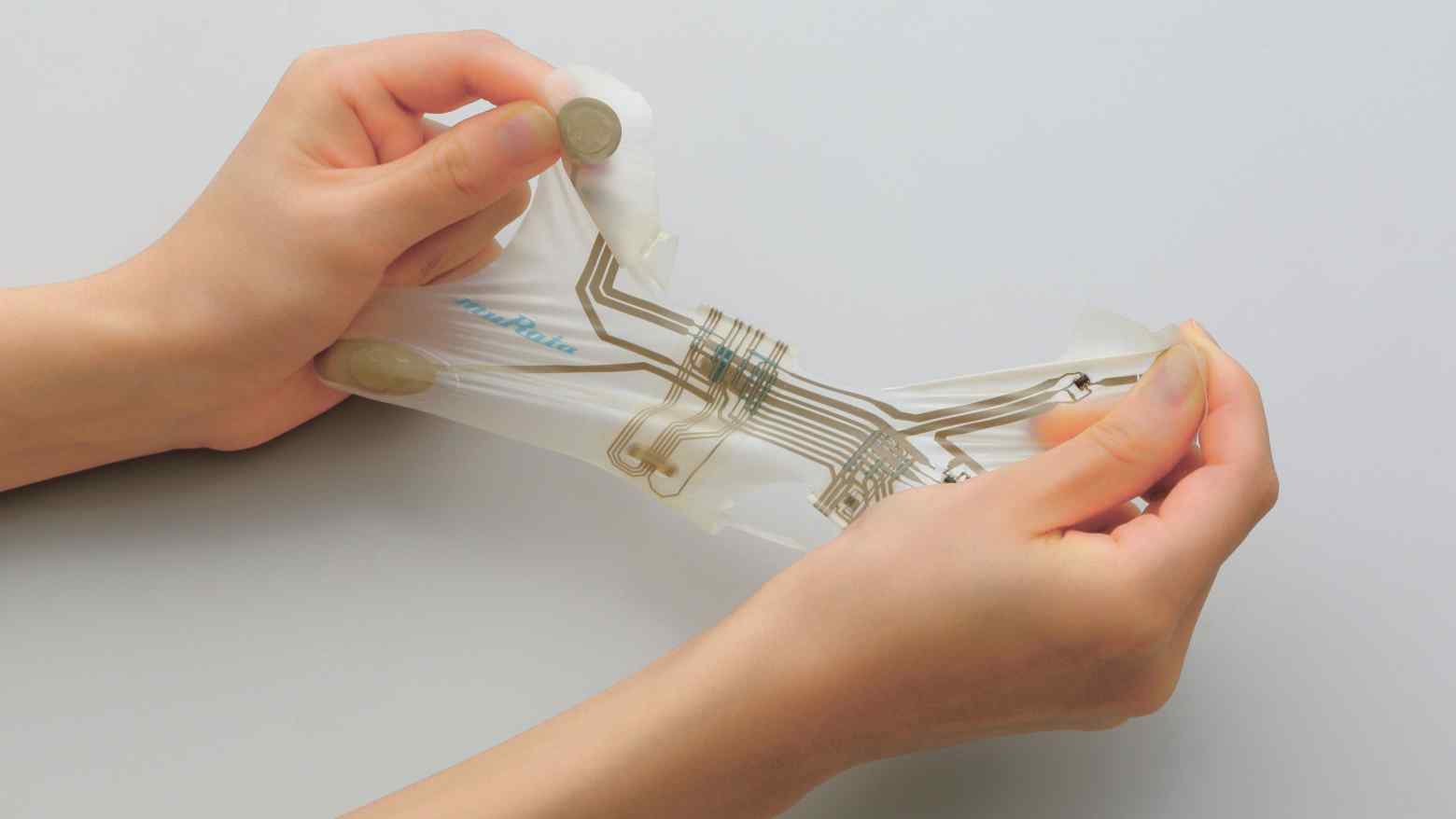
A medical device maker supplied by Murata is currently seeking Japanese certification for its wearable products. Once approved, Murata will set up a dedicated production line for the stretchable circuits. The technology is expected to be used in devices for monitoring heart activity and brain waves, with the added benefit of reducing skin irritation for infants and young children.
Other new high-tech devices include earphones developed by Kyocera that measure sleep quality and sensors from Sanyo Chemical Industries that use tiny needles to analyse bodily fluids for stress and fatigue.
Paywall alert:

 asia.nikkei.com
Murata Manufacturing is one of several Japanese firms pushing innovation in wearable medical technology, targeting a market projected to double within the next decade. The company plans to begin mass production of its stretchable printed circuits in fiscal 2025. These circuits are embedded between layers of elastomer, allowing them to function even when stretched up to 60% beyond their original size.
Murata's stretchable printed circuit will be found in wearable devices that measure cardiac and brain activity (photo credit: Murata Manufacturing via Nikkei Asia).
A medical device maker supplied by Murata is currently seeking Japanese certification for its wearable products. Once approved, Murata will set up a dedicated production line for the stretchable circuits. The technology is expected to be used in devices for monitoring heart activity and brain waves, with the added benefit of reducing skin irritation for infants and young children.
Wearable printed circuits contain electrodes, sensors and batteries. Stretch-resistant plastic is typically used around electrodes to measure cardiac and brain activity. Such flexible materials as thermoplastic polyurethane had been considered. But the poor insulation could lead to short circuits under increased voltages -- a risk that precluded the formation of complex circuits. The elastomer substrate integrates sensors with a complex circuit to improve the accuracy of measuring brain waves and other signals. The material is also durable enough to be worn for days. "Around 2040, demand for new electronic devices that augment human function will increase," Murata President Norio Nakajima has said. "This will require flexible electronic devices and components." Murata plans to first commercialize the technology for medical equipment and then explore other fields, such as automobiles. The global flexible-electronics market will more than double from 2024 to $83.8 billion in 2034, according to a forecast by Indian-Canadian firm Precedence Research.
Other new high-tech devices include earphones developed by Kyocera that measure sleep quality and sensors from Sanyo Chemical Industries that use tiny needles to analyse bodily fluids for stress and fatigue.
Paywall alert:
Japan's Murata develops stretchable sensors for wearable medical devices
Kyocera, Sanyo Chemical also jumping into market expected to be worth $85bn in 2034
asia.nikkei.com


