- 14 Mar 2002
- 21,050
- 18,903
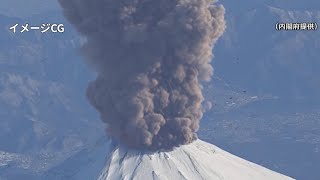
Last month, internal government data on eruption countermeasures obtained by the Mainichi Shimbun revealed what would happen in case of a Mount Fuji eruption comparable to that of 1707 when volcanic ash fell for two weeks onto the city of Edo. It was estimated that two weeks after such an eruption, 60% of the roughly 44.33 million residents of the Tokyo metropolitan area may be cut off from supplies.
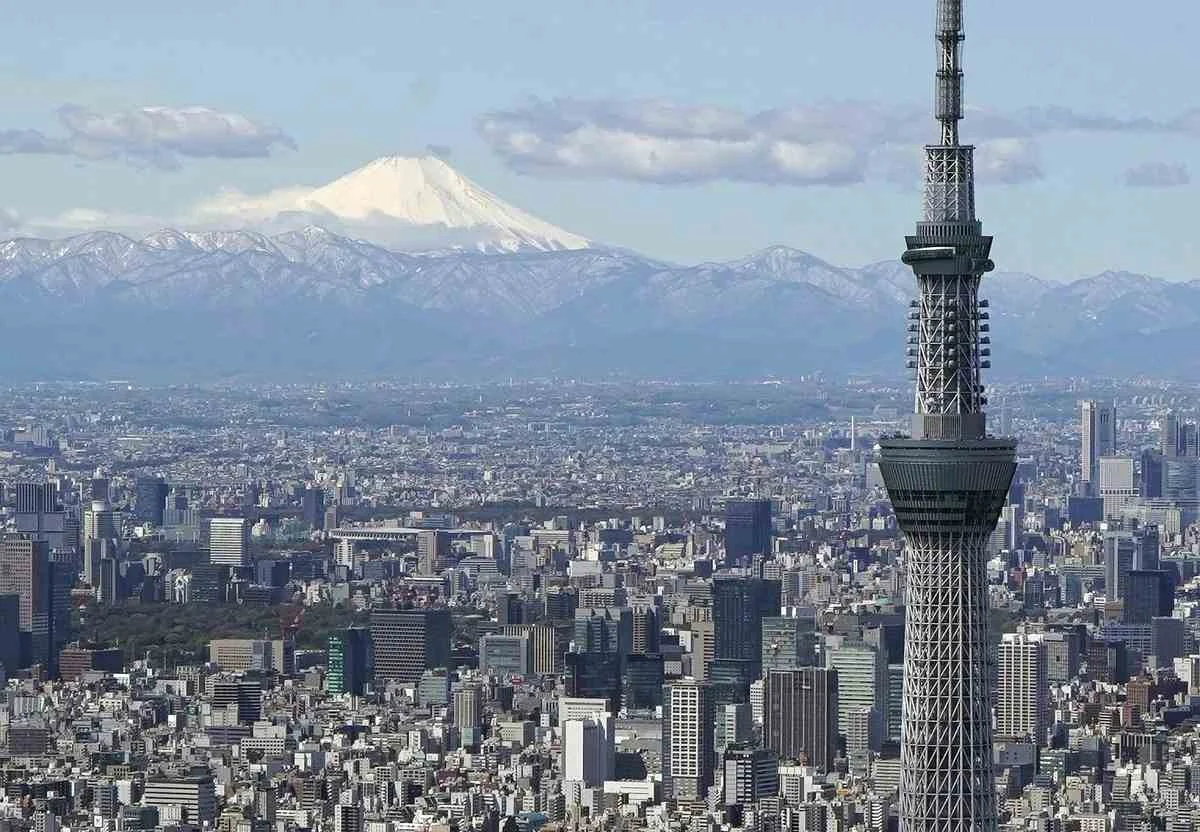
Photo credit: Yomiuri Shimbun
Up to 26.7 million people would be required to evacuate due to such disruptions and the large amounts of falling ash -- enough to cause wooden houses to collapse.

 mainichi.jp
The biggest issue will be how to remove volcanic ash from roads. It would take about three days to open one lane of main national roads where emergency vehicles travel and about five days for two lanes to open, assuming that the number of workers that can be secured is small. If roads are not restored, supplies will not be delivered, and evacuations may not go as smoothly as expected.
The Japanese government now plans to allow the ocean disposal of volcanic ash if a massive ashfall hits the Tokyo metropolitan area.

 japannews.yomiuri.co.jp
Photo credit: Yomiuri Shimbun
For the estimation, the government assumed that multiple major eruptions would occur, similar to the Hoei eruption in 1707, and that volcanic ash would fall in stages for about two weeks in Tokyo, Kanagawa, Yamanashi, Chiba and other prefectures. At a closed-door study session involving relevant ministries and agencies as well as experts, documents showing the results of the calculations were distributed, and specific countermeasures were discussed. According to the documents, by about two weeks after the eruption, it was estimated that about 27 million residents would be unable to receive supplies because vehicles would be unable to pass due to ash that had accumulated on roads, and some 36 million people would suffer electricity outages caused by the ash that had fallen on power lines.
Up to 26.7 million people would be required to evacuate due to such disruptions and the large amounts of falling ash -- enough to cause wooden houses to collapse.
Ash from Mt. Fuji eruption could block supplies to 60% of Tokyo metropolitan area residents - The Mainichi
TOKYO -- When Mount Fuji erupted in 1707, volcanic ash fell for two weeks on the city of Edo, which is part of present-day Tokyo. What would be the wo
The biggest issue will be how to remove volcanic ash from roads. It would take about three days to open one lane of main national roads where emergency vehicles travel and about five days for two lanes to open, assuming that the number of workers that can be secured is small. If roads are not restored, supplies will not be delivered, and evacuations may not go as smoothly as expected.
The Japanese government now plans to allow the ocean disposal of volcanic ash if a massive ashfall hits the Tokyo metropolitan area.
Mt. Fuji has not erupted for over 300 years since the Hoei eruption and is believed to be in its longest dormant period in the past 5,000 years. When the Hoei eruption started on Dec. 16, 1707, the ash from Mt. Fuji fell for 16 days and reached what is now central Tokyo. The eruption is estimated to have spewed out about 1.7 billion cubic meters of ash and other substances.
Govt to Allow Ocean Disposal of Volcanic Ash in Event of Mt. Fuji’s Eruption
The government plans to allow ocean disposal of volcanic ash if the Tokyo metropolitan area is hit by a massive ashfall following an eruption of Mt. Fuji, according to government sources.
japannews.yomiuri.co.jp