Society JICA 'Hometown' program sparking protests

thomas

Unswerving cyclist
Admin
Joined
14 Mar 2002
Messages
21,050
Reaction score
18,904
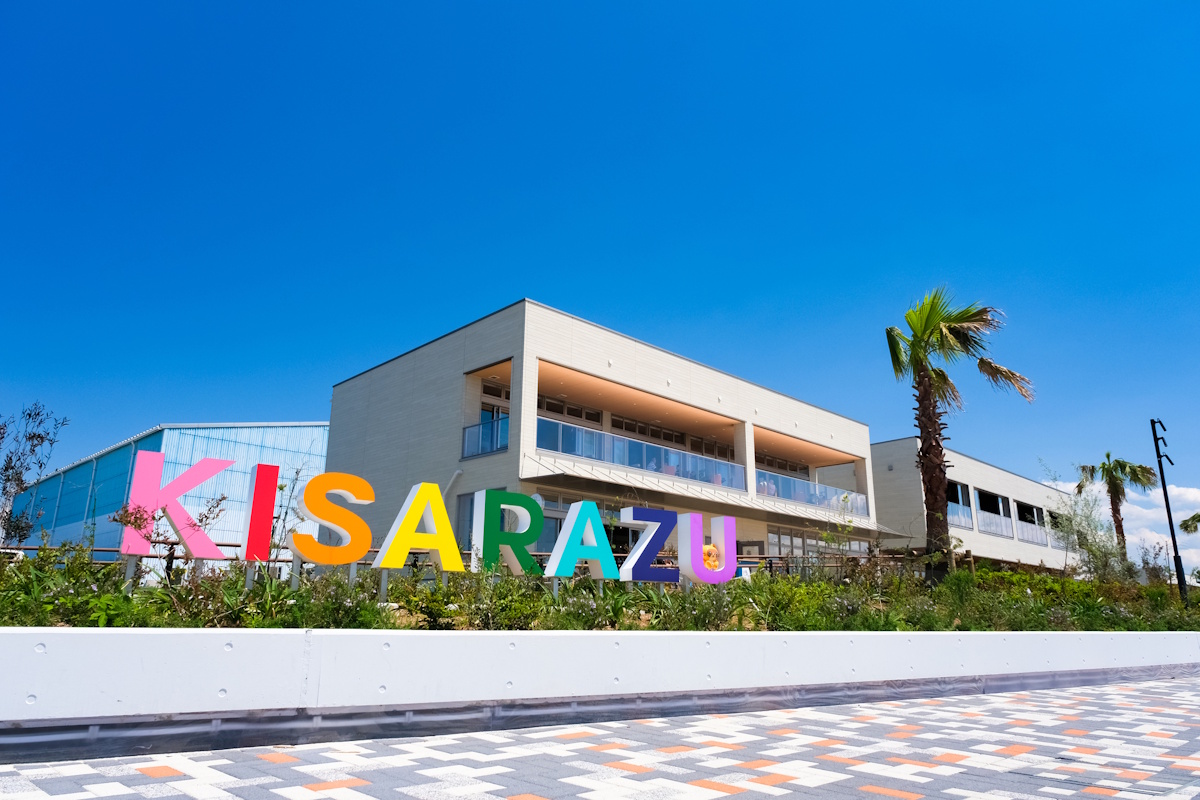
On 21 August, the Japanese government designated the city of Kisarazu in Chiba as the official hometown for Nigerians who wish to live and work in Japan. The initiative was unveiled alongside the 9th Tokyo International Conference on African Development. As part of the scheme, Japan will introduce a special visa category tailored for highly skilled, innovative, and talented young Nigerians who plan to settle in Kisarazu. Nigerian artisans and other blue-collar workers willing to upgrade their skills will also be eligible under this special visa framework.

In the same ceremony, the Japan International Cooperation Agency announced additional hometown pairings: Nagai in Yamagata Prefecture was named the hometown for Tanzania, Sanjō in Niigata Prefecture for Ghana, and Imabari in Ehime Prefecture for Mozambique. By formalising these partnerships, Japan aims to deepen exchanges with the four African nations, reinforcing ties at the municipal level where links already exist, and thereby anchoring international cooperation in local communities.


The BBC had an article in Pidgin:

Japanese govment don designate Kisarazu city as di hometown for Nigerians wey wan live and work for Japan. Nigeria Ministry of Information and National Orientation wey give di informate on dia X handle on Friday 22 August say dis na efforts to deepen cultural diplomacy, promote economic growth and enhance workforce productivity. According to di ministry, na for di sidelines of di 9th Tokyo International Conference for African Development, dem announce dis initiative. Dem say di Japanese govment go create special visa category for highly skilled, innovative, and talented young Nigerians wey wan go Kisarazu to live and work.

 
Is that really the language of Nigeria? And this article gives them greater access to the news? If not, just seems like a racist thing to do. Especially given the BBC's audience.
 
West African Pidgin English remained in use in West Africa after the abolition of the slave trade by Western nations and the decolonization of Africa. Many distinct regional variants of the language emerged. Looked down upon during the colonial era as a bastardization of proper English – a stigma still attached to it by some – Pidgin nonetheless remains in widespread use. In 2016, there were an estimated five million individuals who use Pidgin as a primary language for everyday use in Nigeria. As of 2017, about 75 million people in Nigeria, Cameroon, Ghana and Equatorial Guinea speak the language. During the rise of African nationalism, it became a "language of resistance and anti-colonialism", and political activists still use it to criticize their post-colonial political leaders. [...] Because West African Pidgin English is a primarily spoken language, there is no standardized written form, and many local varieties exist. In August 2017, the BBC launched a Pidgin news service, aimed at audiences in West and Central Africa, as part of its World Service branch. As part of that effort, the BBC developed a guide for a standardized written form of pidgin.

 
Anyhow, the news that four Japanese towns have been designated "hometowns" of African nations has stirred a lot of confusion and concern in the cities concerned: Nagai in Yamagata Prefecture, as the hometown of Tanzania; Kisarazu, Chiba, as that of Nigeria; Sanjo in Niigata as Ghana's hometown; and Imabari in Ehime as Mozambique's.


JICA even released a correction:

 
Anyhow, the news that four Japanese towns have been designated "hometowns" of African nations has stirred a lot of confusion and concern in the cities concerned: Nagai in Yamagata Prefecture, as the hometown of Tanzania; Kisarazu, Chiba, as that of Nigeria; Sanjo in Niigata as Ghana's hometown; and Imabari in Ehime as Mozambique's.


JICA even released a correction:

I sense the hand of Sanseito behind this confusion.

mdchachi - Pidgins used to be seen as 'inferior' languages but haven't been for a while, and Nigerian pidgin should not be regarded as a dumbed-down version of English.
 
JICA's 'hometown' project sparked racist protests against a "Black Japan," with several rallies ("JICA Disbandment Demo") held in Osaka last weekend. Chants included "JICA, get out of Japan," "We'll get raped by African immigrants," and "Ebola first?"


Political hysteria has reached Japan.


On Monday, Mad Musk proved again that his political views haven't changed despite his break-up with the MAGA crowd.

Elon Musk has voiced support for an anti-immigration demonstration in Japan, where numbers of foreign-born residents are low and a "Japanese First" party did well in recent elections. The Tesla and SpaceX chief and former adviser to U.S. President Donald Trump has backed far-right parties in other countries, such as Alternative for Germany (AfD). Commenting on Monday on a video of the modest rally in Japan posted on X by an account called The British Patriot, South African-born Musk said, "Good." The account, which describes itself as a "Proud white British man with indigenous roots," said the clip showed Japanese protesters "demanding the deportation of all illegal immigrants. From Australia to Europe to Japan, citizens are uniting for remigration," it said.

 
Despite clarifications, JICA's "hometown" project still causes uproar:

Japan International Cooperation Agency (JICA)

On 28 August, at the Japan International Cooperation Agency (JICA) headquarters in Tokyo's Chiyoda Ward, a demonstrator held up a placard calling for the cancellation of the African Hometown Program (photo credit: Chika Yamamoto).


The JICA initiative aimed to foster ties and exchanges by connecting Japanese municipalities with African nations as "hometowns." Yet, it was widely misinterpreted online as a government plan to invite large numbers of immigrants through special visas. Three weeks later, the controversy has shown little sign of fading. At a press conference on 16 September, Chief Cabinet Secretary Yoshimasa Hayashi stressed once again that the project involved the temporary acceptance of African interns for training, with the expectation that they would return to their home countries afterwards. He underlined that it should not be seen as an immigration programme.

 
Misinformation spread online by nationalists and racists, and people willingly believing it because it chimes with their prejudices. What a sh1tty world it is at the moment.
 
The pendulum will swing back. We just need to sit it out. What's sad is that so much precious time is lost (thinking about climate change and the environment).
 
The pendulum will swing back. We just need to sit it out. What's sad is that so much precious time is lost (thinking about climate change and the environment).
I've read a few articles recently on what it actually takes for fascism to be defeated. The conclusion tended to be that once fascism takes hold, the pendulum is essentially broken – power almost never gets relinquished through a democratic process. It takes a revolution or a disastrous war.
 
JICA will withdraw its "JICA Africa Hometown" initiative amid an unceasing wave of protests primarily fueled by misinformation spread on social media.

The Japanese cities and their respective partner nations were: Kisarazu in Chiba Prefecture with Nigeria; Nagai in Yamagata Prefecture with Tanzania; Sanjo in Niigata Prefecture with Ghana; and Imabari in Ehime Prefecture with Mozambique. The brouhaha over the program escalated when the Nigerian president's office issued a mistaken statement claiming the Japanese government had named Kisarazu as "the hometown for Nigerians willing to live and work," and that Japan "will create a special visa category." Protest phone calls and emails inundated the Japanese municipalities. Demonstrations even called for the dismantling of JICA. Despite repeated denials from the central and local governments that the program was related to immigration, the protests and criticism continued. Some of the cities ended up asking the central government for a complete cancellation of the project.

 
Back
Top Bottom