


- 14 Mar 2002
- 21,057
- 18,913
Japanese researchers have successfully used natural bacteria to target and shrink cancer cells in a mouse experiment, raising hopes for new treatment methods. The project, led by scientists from the Japan Advanced Institute of Science and Technology (JAIST) and the University of Tsukuba, published its results in a British journal in August. Professor Eijirō Miyako of JAIST, who specialises in bioengineering, said the aim is to develop the method into a clinical treatment for cancers that do not respond to existing therapies.
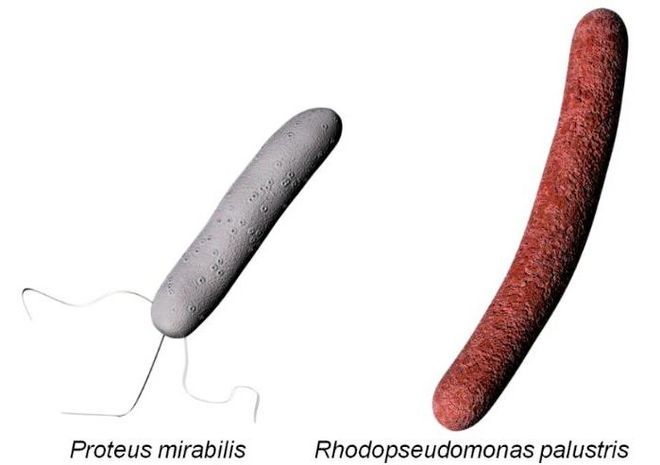
The team focused on the natural ability of certain bacteria to seek out animal cells. For their study, they employed Rhodopseudomonas palustris, a bacterium commonly found in rice paddies, and Proteus mirabilis, which has previously been detected in mouse carcinoma cells. This experimental therapy represents a potential alternative to established treatments such as chemotherapy and surgery.
And yes, those bacteria do look like sausages.
Two types of bacteria administered into the bodies of mice (Japan Advanced Institute of Science and Technology)
The team focused on the natural ability of certain bacteria to seek out animal cells. For their study, they employed Rhodopseudomonas palustris, a bacterium commonly found in rice paddies, and Proteus mirabilis, which has previously been detected in mouse carcinoma cells. This experimental therapy represents a potential alternative to established treatments such as chemotherapy and surgery.
The study utilised Rhodopseudomonas palustris, a bacterium found in rice paddies, and Proteus mirabilis, which had previously been identified in mouse carcinoma cells. They are both drawn to the hypoxic environment characteristic of malignant tumours. To assess their efficacy, the research team introduced both types of bacteria into a group of 25 mice with tumours from colorectal, ovarian and pancreatic cancers that had been transplanted from human patients. It showed that Rhodopseudomonas palustris attracts Proteus mirabilis to cancer cells through the bloodstream, which in turn allows Proteus mirabilis to proliferate at a surprisingly rapid clip around tumours. Proteus mirabilis released a large quantity of protein to dissolve nearby cancer cells and blood vessels, cutting off nutrient supply to the cells. The team said the bacterium also extends like a spear to pierce and destroy cancer cells. Tumours of all types, several hundred cubic millimetres in size at the beginning, started to shrink within days of the bacteria being administered and became undetectable within a week or so. While research into bacterium-based cancer treatments is relatively rare in Japan, a clinical trial utilising a genetically modified bacillus is already underway in Europe and the United States.
And yes, those bacteria do look like sausages.


