


- 14 Mar 2002
- 21,139
- 19,087
Scientists reported that a young Japanese spiny lobster was recently caught off the coast of Hokkaido , an area far north of the species' usual range. They said the find is most likely linked to warmer seas brought about by climate change. The lobster—known in Japan as ise-ebi (伊勢えび) and typically found in southern waters—measured roughly five centimetres and was taken near Hakodate in November 2023.
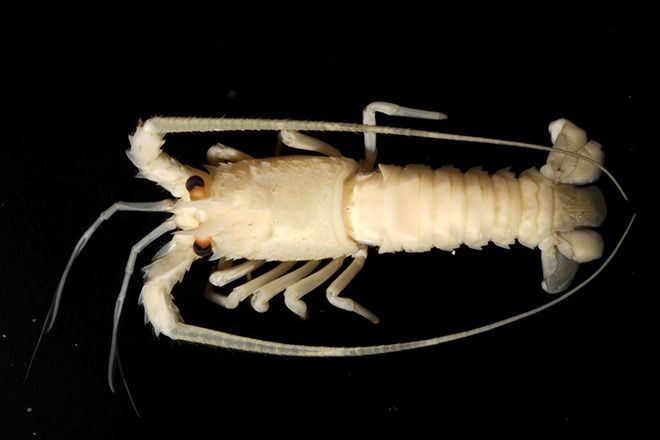
Photo credit: Tokyo University of Marine Science and Technology
Researchers from several institutions, including Tokyo University of Marine Science and Technology and the Hokkaido Research Organisation, examined the specimen. It is only the second juvenile recorded in Hokkaido in academic studies, the first being a slightly larger one found off Shikabe the previous month. The species was once thought not to venture north of Ibaraki Prefecture. Still, its range has been steadily shifting, with increasing numbers now reported from Fukushima, Iwate and other parts of northeastern Tohoku.
No adult Japanese spiny lobsters have been reported in Hokkaido to date. Current winter water temperatures are considered too low for them to survive.
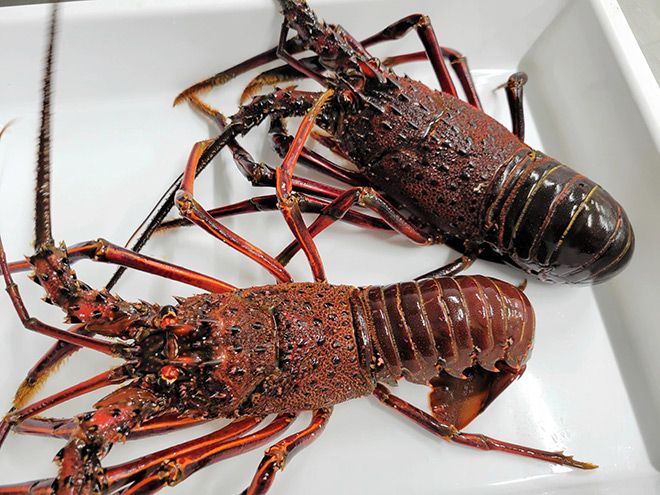
Adult specimen of spiny lobsters (photo credit: Fukushima Prefectural Fisheries and Marine Science Research Centre)
Photo credit: Tokyo University of Marine Science and Technology
Researchers from several institutions, including Tokyo University of Marine Science and Technology and the Hokkaido Research Organisation, examined the specimen. It is only the second juvenile recorded in Hokkaido in academic studies, the first being a slightly larger one found off Shikabe the previous month. The species was once thought not to venture north of Ibaraki Prefecture. Still, its range has been steadily shifting, with increasing numbers now reported from Fukushima, Iwate and other parts of northeastern Tohoku.
The crustacean, which also inhabits waters around the Korean Peninsula and Taiwan, has many closely related species with similar appearances. The research team not only examined the specimen's morphology but also analysed its mitochondrial DNA base sequence to ensure accurate identification. After hatching, Japanese spiny lobsters spend about a year drifting in the ocean as phyllosoma larvae and then pass through the puerulus larval stage before developing into juveniles. The research team believes that larvae carried to Hokkaido by ocean currents grew into juveniles due to elevated water temperatures. Around the site in Hakodate where the specimen was found, average monthly surface water temperatures ranged from 20 degrees in July to 20 degrees in September of that year. Researchers said the appearance of juveniles is likely influenced by the recent northward shift of the Kuroshio Current and the rise in seawater temperatures around Japan.
No adult Japanese spiny lobsters have been reported in Hokkaido to date. Current winter water temperatures are considered too low for them to survive.
Adult specimen of spiny lobsters (photo credit: Fukushima Prefectural Fisheries and Marine Science Research Centre)


