Is this correct about this translation

musicisgood

Sempai
Donor
Ten-year veteran
Joined
4 Sep 2015
Messages
2,306
Reaction score
1,906
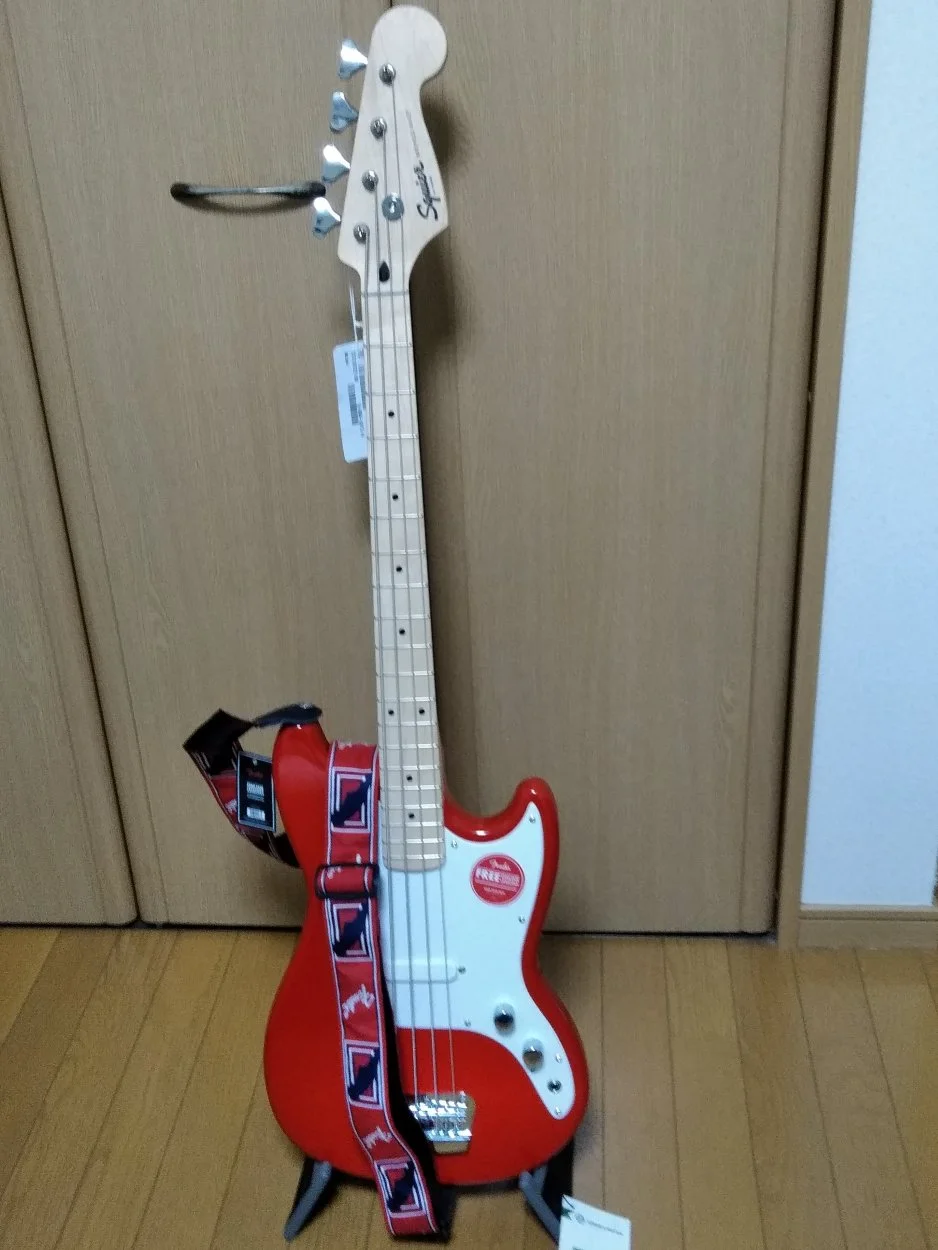
I'm learning to play bass guitar.
私わベースギターの弾き方をまなんでいます

まなん = leaning
but what does ' imasu' mean ?
and what does ' de ' mean ?
thanks

squier bass bronco red.webp
 
は is used for the particle "wa", not わ.

まなんで is a conjugation form (-te form) of まなぶ. It's like "learning" or "learned/learnt" vs. "to learn" in English.

The -te form of a verb + います expresses the present continuous tense "to be doing" here.

Don't you have your textbook you learned from 7 years ago anymore? I believe these grammatical points are explained in it.
 
は is used for the particle "wa", not わ.

まなんで is a conjugation form (-te form) of まなぶ. It's like "learning" or "learned/learnt" vs. "to learn" in English.

The -te form of a verb + います expresses the present continuous tense "to be doing" here.

Don't you have your textbook you learned from 7 years ago anymore? I believe these grammatical points are explained in it.
Thanks
I don't really have anything that I started with years ago. Although I do try to look up stuff before asking, but you folks seem to put it in a way I can understand it.
 
Do you have a basic Japanese textbook of any kind?

Things like the particle は/"wa" and conjugating verbs to the -te form and adding います to express "to be doing" (as Toritoribe-san explained) are among the most fundamental aspects of Japanese grammar, and would be covered in the introductory chapters of any textbook.

If you don't have a textbook, there are free online resources (like this one). The quality can vary, but it is better than nothing and will, if nothing else, help you identify certain patterns and therefore give you at least a foundation to help you make sense of what you are looking at, so you don't have to just guess at everything as if it were a complete mystery.
 
Do you have a basic Japanese textbook of any kind?

Things like the particle は/"wa" and conjugating verbs to the -te form and adding います to express "to be doing" (as Toritoribe-san explained) are among the most fundamental aspects of Japanese grammar, and would be covered in the introductory chapters of any textbook.

If you don't have a textbook, there are free online resources (like this one). The quality can vary, but it is better than nothing and will, if nothing else, help you identify certain patterns and therefore give you at least a foundation to help you make sense of what you are looking at, so you don't have to just guess at everything as if it were a complete mystery.
Thanks
Just checked it out.
I used to have some training material, but I don't have any of it anymore , nor my old computer that just suddenly cranked out.
That site is now bookmarked and looks like what been puzzling me.


The ている form of a verb can then be conjugated like other ichidan verbs. Here are a few basic conjugations of 〜ている.

Present〜ている
Present (Polite)〜ています
Past〜ていた
Past (Polite)〜ていました
Negative〜ていない
Negative (Polite)〜ていません
Past〜ていなかった
Past (Polite)〜ていませんでした
 
Yep, that's the same structure that was in your original sentence.
If you go further down in the page after the conjugation chart, there are also example sentences with English definitions.

These sites can be a bit overwhelming if you try to read everything at once, but if you don't have access to a structured class/textbook, they're better than nothing.

Anyhow, if have any other questions about things you see on the site (or elsewhere), feel free to ask us here.
 
Yep, that's the same structure that was in your original sentence.
If you go further down in the page after the conjugation chart, there are also example sentences with English definitions.

These sites can be a bit overwhelming if you try to read everything at once, but if you don't have access to a structured class/textbook, they're better than nothing.

Anyhow, if have any other questions about things you see on the site (or elsewhere), feel free to ask us here.
Thanks. Kind thoughts you have.
 
Back
Top Bottom