Help with long-passage reading question

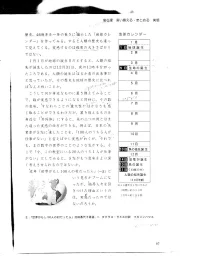
It's quite common to show that the writer/speaker understands the opposite side's opinion but can't agree it to make clear the point of the discussion, just like I might say "I understand your point. Indeed it's really confusing since the subjects are omitted, BUT..." to you. In fact, the writer said でも right after the sentence.

Remember it's a best seller book. It's popular, thus, many people want to read it soon. If there is just one book in the library and 20 people wait to borrow it, the 20th person has to wait for nearly 10 months since they can usually borrow it for 2 weeks. So, some visitors/users of the library requested to buy the same book.
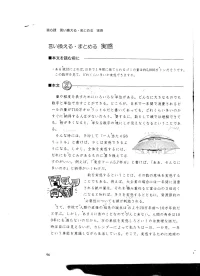
 
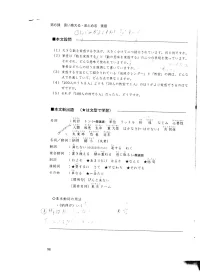
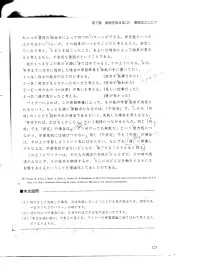
I don't really understand these questions, although I can read and understand all the text. Please help me answer the questions!
My answers:
1. だれにもなじみがあるものに置き換えて示す方法と置き換えるものを身近な共同体にする方法

2. 程度の大きさ、と、ことの重大性やはかなさを感じ取ることができる
筆者は数の意味を実感するのほうを強調する

3. 共通するのは実感にするものを身近なものに置き換えて、異なるのは置き換えるものを共同体にする

4. 自分が失業するの危幾?

5. ???
 

Attachments

  • New_Approach_Japanese_Pre-Advanced_Course_Book.webp
    New_Approach_Japanese_Pre-Advanced_Course_Book.webp
    138.1 KB · Views: 253
  • New_Approach_Japanese_Pre-Advanced_Course_Book2.webp
    New_Approach_Japanese_Pre-Advanced_Course_Book2.webp
    136.1 KB · Views: 265
  • New_Approach_Japanese_Pre-Advanced_Course_Book3.webp
    New_Approach_Japanese_Pre-Advanced_Course_Book3.webp
    95.9 KB · Views: 274
Last edited:
1)
The second one is wrong.

2)
The first answer is wrong.
The second answer is correct, but your answer is ungrammatical.

3)
共通する点 is correct, but 異なる点 is wrong. Your sentence is ungrammatical also here.

4)
Wrong.

5)
You need to understand it from the writer's opinion.

Just for confirmation, your textbook doesn't have the answer?
 
Aren't you going to try to think about them again?
 
Alright.

1)
The second one in your answer is a variation of the first one. The writer mentioned about another way before だれにもなじみがあるものに置き換えて示す方法.

2)
The writer mentioned 数の意味を実感しないこと in the first paragraph, and explained 数の意味を実感すること with using another expression in the third paragraph.

3)
置き換えるもの is not just 共同体.

4)
The writer wrote why 100人のうちの5人 is not enough.

5)
It's not mentioned anywhere. You yourself think about it by using the writer's opinion.
 
Just out of curiosity, is the textbook for non-native learners of Japanese?
 
Sorry but I'm going to pass this. :D Don't feel like making effort to answer at the moment. Thank you for your hints anyway.
 
Yes. It is for non-native students who aim for the 留学試験 (EJU).
I see. It seems like a question in an exam of 国語 for native Japanese students.

Sorry but I'm going to pass this.
I, too, think it's better to do so. It's enough if you understand the meaning of the paragraph correctly. To write your answers in correct grammar would be more helpful for your learning Japanese, for instance;

1)
筆者は数の意味を実感するほう(の is unnecessary)を強調している

3)
共通しているのは実感する(に is unnecessary)ものを身近なものに置き換えることで異なっているのは置き換えるものを共同体にすること

4)
自分が失業する危幾(の is unnecessary)
 
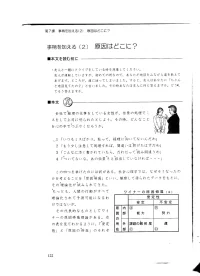
そんなことは前から分かっていたことではないかと思うかもしれないが、実は寿命が伸びるスピードが予想以上に速かったのである。全人口の中で65歳以上の人が占める割合は2000年の統計では17。3%であるが、7%から14%へと2倍になるのにかかった年数を比較してみると、福祉といえばすぐ名前が挙がる国、スウェーデンが82年、そしてイギリスが46年、ドイツが42年かかった。それに対して、日本はなんと24年しかかからなかったのである。その上、少子化の波も押し寄せ、まさにダブルパンチを食らう形になった。というわけで、人生80年の時代における社会福祉や保険制度がどうあるべきかを十分に議論する間もなく、高齢化が進行したと言える。

と is for quotation right? But what is 7% and 14% doing here? Are they point to Sweden and England/German respectively?
 
The answers are no and no.

と is a particle attached to adverbial phrase (e.g. 道は西へと向かっている, 雨は雪へと変わった). The meaning is almost the same without と, but it's said that と puts more focus on the result of the action or state.

If you don't understand what those two numbers refer to, you don't understand the paragraph itself yet. (Hint: what is the topic of that sentence?)
 
The topic is: Sweden dealt with 福祉 in 1982, England 1946, German 1942, but Japan is from 1924 (?)
The people above 65 increased from 7% to 14%? (Still don't know where those numbers came from :()
 
Last edited:
The 82/46/42 are not calendar years but durations. The かかった ("took" as in "took X amount of time") makes this clear.
The percentages indeed refer to the part of the population that's 65 or older.
 
You understand the sentence? What do you think the topic of the sentence is now?
 
No. Sadly I've no idea about 福祉. It seems the writer is worrying about the condition of 高齢化 of Japan (I'm confident of this because I've read the whole editorial).
 
Then, I might say the same thing previously, you should say so instead of just clicking "thank you" button.
What is your translation of 全人口の中で65歳以上の人が占める割合は2000年の統計では17.3%である?
 
?
According to the statistics of the year 2000 the ratio of the persons above 65 takes 17.3% of the whole population.
 
Yes, that's correct. As you can see, the topic is 全人口の中で65歳以上の人が占める割合 "the ratio of the persons above 65", not just in this clause but the whole sentence (since the topic rules the whole sentence), thus, the whole sentence is talking about this topic, so you need to interpret by yourself that the numbers 7% and 14% are also regarding this ratio. This is exactly interpretation. You already got that 全人口 is not the whole population in the world, right?
 
同じ内部でも安定の場合は、どうせやっても無駄だという無力感につながり、学習意欲には結びつかない
Is this でも equivalent to とともに?
 

Attachments

  • New_Approach_Japanese_Pre-Advanced_Course_Book.webp
    New_Approach_Japanese_Pre-Advanced_Course_Book.webp
    146.5 KB · Views: 255
  • New_Approach_Japanese_Pre-Advanced_Course_Book2.webp
    New_Approach_Japanese_Pre-Advanced_Course_Book2.webp
    114.4 KB · Views: 254
Not really. Don't you know other meanings of でも? (Hint: は in 安定の場合は is the contrastive marker.)
 
I wrote a hint while you were writing. It'll be helpful, I believe.
 
Back
Top Bottom