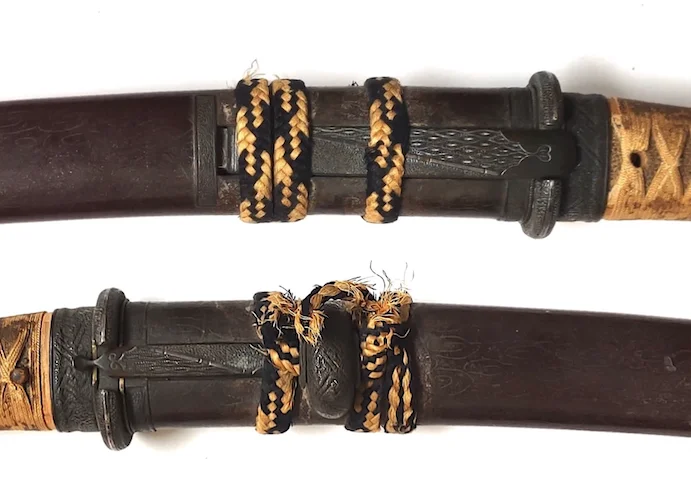
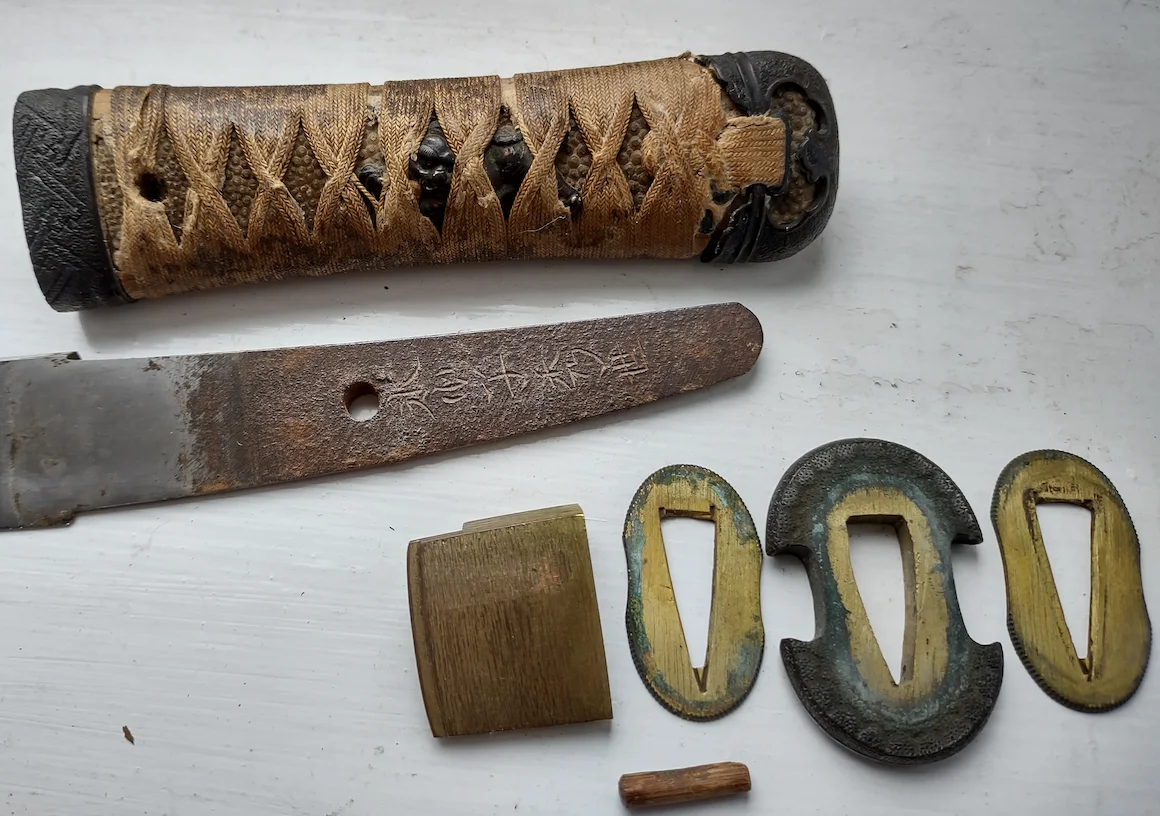
Edo period Wakizashi

Bade

後輩
Joined
1 Mar 2022
Messages
6
Reaction score
6
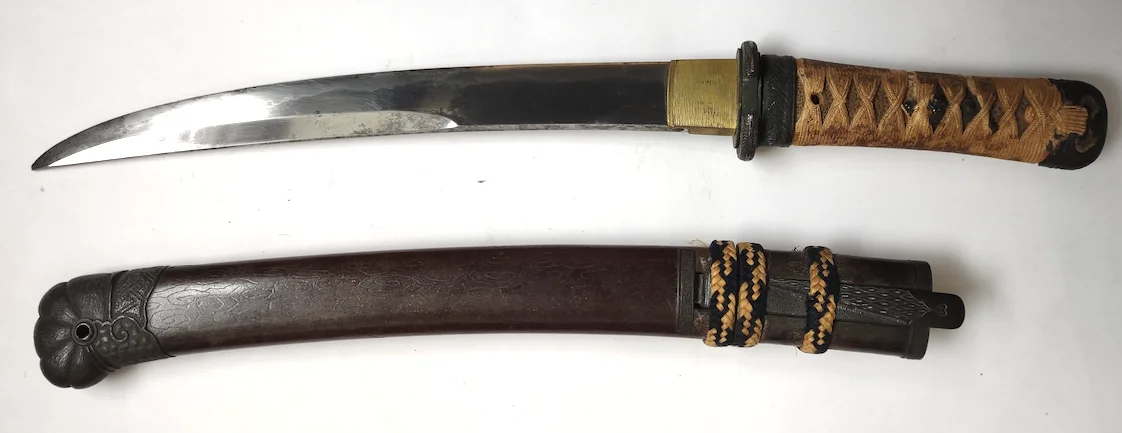
Hi, can anyone help provide any information about this Wakizashi sword, I believe it's from the Edo period due to the Bamboo pattern on the Kogatana and Kōgai.
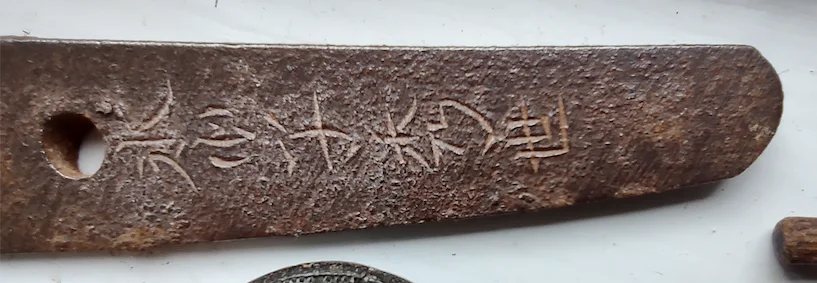
There's a signature on the Nakago.

Many Thanks
Screenshot 2023-04-24 at 16.07.50.webp

Screenshot 2023-04-24 at 16.09.32.webp

Screenshot 2023-04-24 at 16.04.39.webp

Screenshot 2023-04-24 at 16.05.14.webp
 
氷心子秀世
Hyoshinshi Hideyo

Late Edo period. This smith is the son-in-law of a very big name in the sword world. He never became as skilled/talented as his father-in-law, but the name would attract some interest from collectors. Don't attempt any restoration or polishing yourself, as this kind of blade should only be polished by a well-trained polisher of Japanese swords. The scabbard and surrounding implements are age-appropriate, and its very nice to have a period ensemble like this.
 
氷心子秀世
Hyoshinshi Hideyo

Late Edo period. This smith is the son-in-law of a very big name in the sword world. He never became as skilled/talented as his father-in-law, but the name would attract some interest from collectors. Don't attempt any restoration or polishing yourself, as this kind of blade should only be polished by a well-trained polisher of Japanese swords. The scabbard and surrounding implements are age-appropriate, and its very nice to have a period ensemble like this.
Many thanks, for the quick reply and information. Would you be happy to share the name of the Swordsmith so I can do a bit of further research. Fully agree with your advice, I wouldn't dream of trying to restore anything as I don't have the skill and really prefer this type of historical artifact to remain age appropriate.
 
Actually it looks more like a tantō than a wakizashi. What's the length of the cutting edge? (cutting edge means the tip to the notch where the tang fits into the pommel).
 
You could be right as the blade's 29cm so right on the edge lengthwise, however as the blade's curved rather than straight and it has a Kōgai and Kogatana
categorisation depends on how you interpret the differences.

Well spotted, thanks
 
Back
Top Bottom