


- 14 Mar 2002
- 21,050
- 18,903
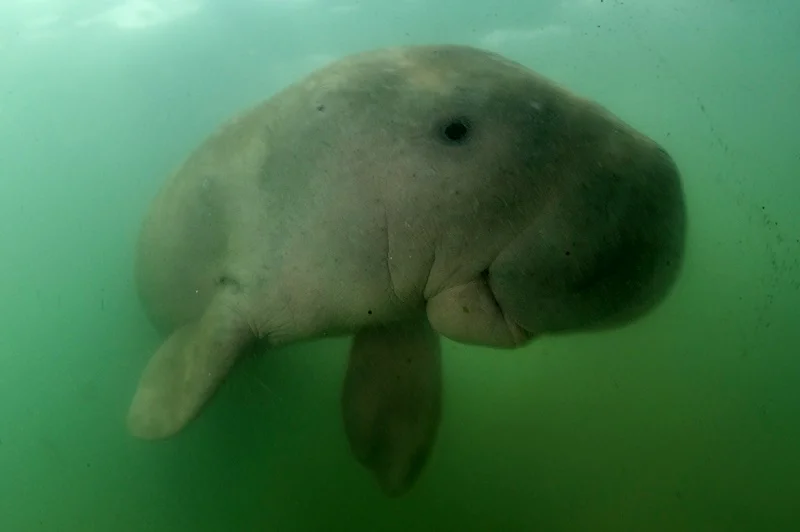
According to scientists, the dugong, a marine mammal facing extinction and recognized as a protected species by the Japanese government, is believed to have a widespread presence throughout the Ryukyu Islands in Okinawa Prefecture. This conclusion is drawn mainly from studying DNA found in faeces, an emerging research area. A collaborative effort involving scientists from the Incorporated Foundation Okinawa Prefecture Environment Science Center, Ryukoku University, Kyoto University, and other organizations has verified the dugongs inhabiting the Miyako Islands, marking the first such confirmation in approximately 50 years.
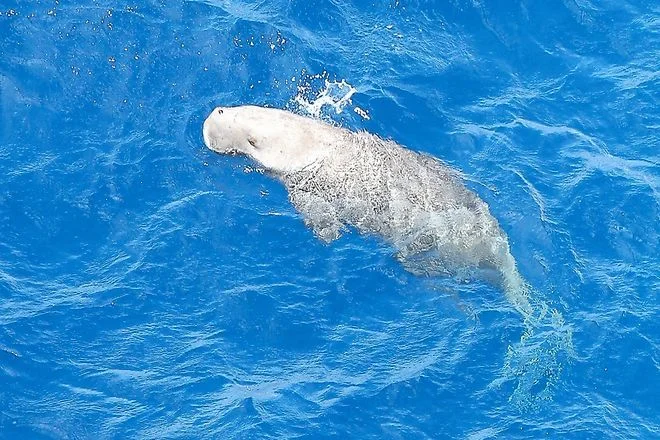
Japanese dugong, photo taken by an Asahi Shimbun helicopter
Some researchers believe the dugong species may have become extinct in the Nansei Islands after no sightings after 2019. Yet DNA found in faeces in 2022 suggests their presence near Miyakojima and Okinawa. Records of sightings and feeding trails from 2010 to 2023 indicate dugongs likely live around Okinawa and neighbouring islands. Alternatively, they might be migrants of waters off northern Luzon Island in the Philippines, carried by the Kuroshio current.
Read more:

 mainichi.jp
Japanese dugong, photo taken by an Asahi Shimbun helicopter
However, the team members stressed that the population of dugongs in the region is tiny, cautioning that their geographical distribution needs to be studied further. They called for measures to preserve seagrass beds, which serve as feeding grounds for the creatures. The dugong, regarded as the inspiration for ancient seafaring tales of mermaids, is a mammal species that feeds mainly on seagrass. The waters around Japan's southwestern Nansei Islands, many of which lie in Okinawa Prefecture, are believed to demarcate the northern limit of the dugong's habitat areas in the Pacific. However, the dugong population in the region has declined since the Meiji Era (1868-1912) due to overhunting for their fatty meat.
Some researchers believe the dugong species may have become extinct in the Nansei Islands after no sightings after 2019. Yet DNA found in faeces in 2022 suggests their presence near Miyakojima and Okinawa. Records of sightings and feeding trails from 2010 to 2023 indicate dugongs likely live around Okinawa and neighbouring islands. Alternatively, they might be migrants of waters off northern Luzon Island in the Philippines, carried by the Kuroshio current.
Read more:
Okinawa dugong now critically endangered, possibly due to US base move: conservationists - The Mainichi
Dugongs inhabiting waters off of Okinawa Prefecture had their extinction threat level raised to Critically Endangered (CR), two levels above their wor


