


- 14 Mar 2002
- 21,050
- 18,903
That's a real shame. Has it become accepted to hoist the Hinomaru and openly express anti-foreigner sentiments? I can understand opposition to the plan of converting farmland to condominiums, but sadly, the protests took a racist turn:
Asakura in Fukuoka Prefecture said on Tuesday that a planned condominium project has been scrapped, after opposition grew over the prospect of mostly foreign residents. The plan had been discussed with locals in Asakura in 2024. The developer said at the time it expected around 40% of residents to be from China, and another 40% from Hong Kong and Taiwan. Reaction was limited at first. That changed around last autumn, when criticism spread online, often tied to anti-immigration messaging.
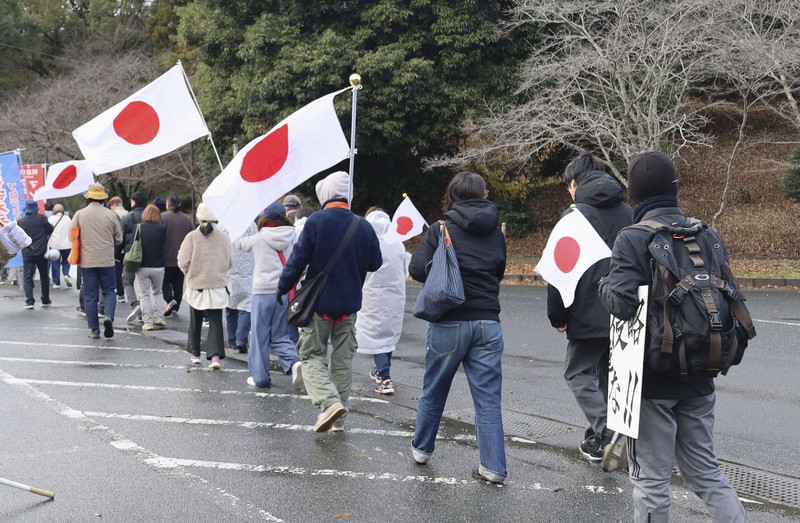
Photo credit: Kyodo.
The city said the company that owns the proposed site told the developer on 14 April it would go back to the drawing board. The developer accepted that decision. The city itself was informed on Monday.
A person close to the municipal government expressed disappointment that the city had become a prime target for people across the country who oppose immigration.

 mainichi.jp
Paywall alert:

 asia.nikkei.com
Asakura in Fukuoka Prefecture said on Tuesday that a planned condominium project has been scrapped, after opposition grew over the prospect of mostly foreign residents. The plan had been discussed with locals in Asakura in 2024. The developer said at the time it expected around 40% of residents to be from China, and another 40% from Hong Kong and Taiwan. Reaction was limited at first. That changed around last autumn, when criticism spread online, often tied to anti-immigration messaging.
Photo credit: Kyodo.
The city said the company that owns the proposed site told the developer on 14 April it would go back to the drawing board. The developer accepted that decision. The city itself was informed on Monday.
In an apparent bid to mollify opponents of the original plan, the developer said in October that it would sell condo units to anyone, regardless of nationality. But the property owner has since expressed reservations about providing the land for the project. Asakura, which lies about 20 kilometers southeast of the city of Fukuoka, has a population of 50,000. An expressway that connects Fukuoka and Oita prefectures runs through it. In December, about 60 people hoisting the Hinomaru flag marched in the city center while chanting slogans such as "Asakura City must protect the safety of its citizens." A local who organized the demonstration said roughly one-third of the protesters were city residents and many others came from outside the city as supporters.
A person close to the municipal government expressed disappointment that the city had become a prime target for people across the country who oppose immigration.
Condo plan in southwest Japan scrapped amid opposition to foreign occupants - The Mainichi
FUKUOKA (Kyodo) -- A city in the southwestern Japan prefecture of Fukuoka said Tuesday a condo project envisioning mostly foreign occupants has been s
What rattled the locals in Asakura was not just the idea of multiple high-rises springing up in the middle of mostly farmland and forests, but the expected composition of new residents. Most, 90%, were planned to be foreign nationals: 40% mainland Chinese, 40% from Hong Kong and Taiwan, and the remaining 20% a mix of South Koreans and Japanese. Among them, 40% were to be permanent residents. The Chinese developer, in its latest and only press statement, published last October on its website, explained that the ethnic composition was a "supposition" based on expected demand. It stressed that the units would be "sold with no regard to nationalities."
Paywall alert:
How a Chinese property plan doomed the mayor of a sleepy Japanese city
Election winner opposed to apartment project: 'This could happen anywhere'
asia.nikkei.com


