


- 14 Mar 2002
- 21,050
- 18,903
A UNESCO advisory body has recommended that a group of ancient archaeological sites in Nara Prefecture linked to the formation of Japan's early centralised state be added to the World Cultural Heritage list, the Agency for Cultural Affairs said on Saturday. The nomination, titled "Asuka-Fujiwara: Archaeological Sites of Japan's Ancient Capitals and Related Properties," is expected to be formally considered during a meeting of the UNESCO World Heritage Committee in South Korea from 19 to 29 July. The sites are associated with the Asuka and Fujiwara capitals, political and cultural centres of Japan during the sixth to eighth centuries, when the foundations of the imperial state were taking shape.
PM Takaichi, whose constituency is located in Nara Prefecture, welcomed the recommendation in a post on X. She said she was extremely pleased that Japan's cultural heritage had received such high international recognition. Takaichi also said the government would continue working towards official inscription of the sites. If approved, Japan would have a total of 27 UNESCO World Heritage sites, including 22 cultural properties and five natural sites.

 english.kyodonews.net
PM Takaichi, whose constituency is located in Nara Prefecture, welcomed the recommendation in a post on X. She said she was extremely pleased that Japan's cultural heritage had received such high international recognition. Takaichi also said the government would continue working towards official inscription of the sites. If approved, Japan would have a total of 27 UNESCO World Heritage sites, including 22 cultural properties and five natural sites.
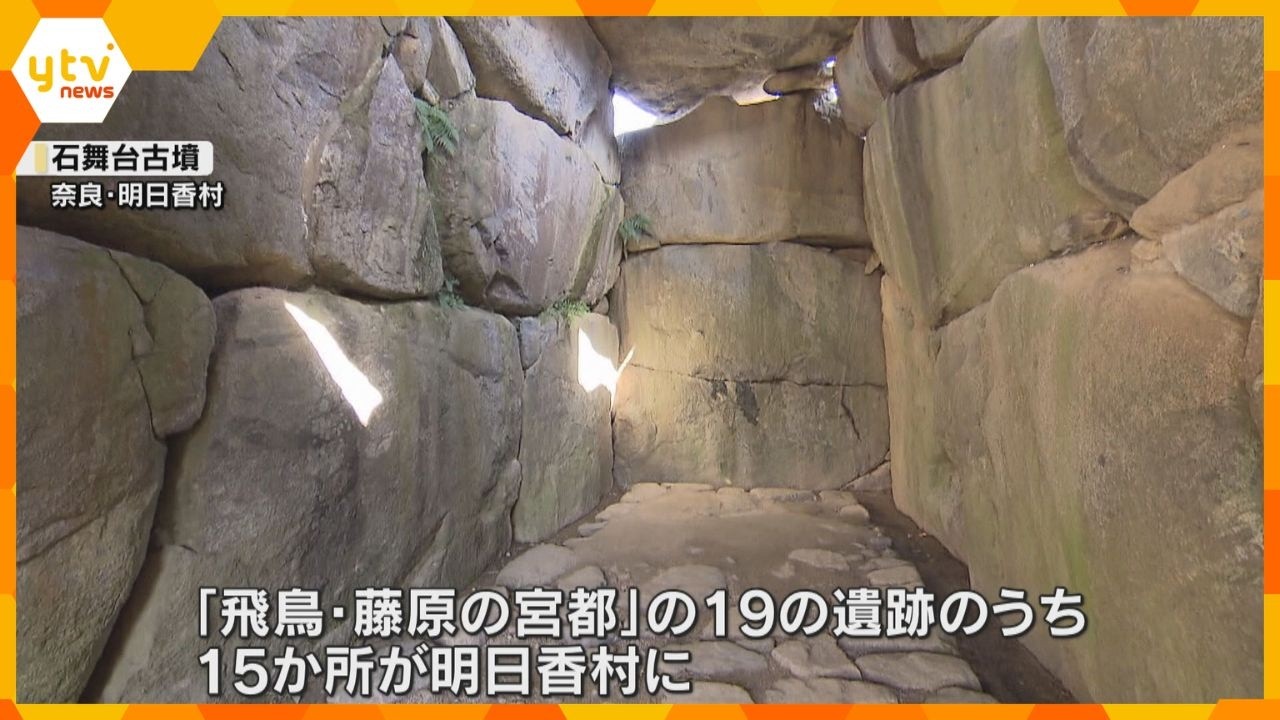
The Asuka-Fujiwara cluster consists of 19 archaeological sites dating from the late sixth to the early eighth century. Major sites include the ruins of the Asuka Palace (飛鳥宮跡 Asuka-kyū Ato) and Fujiwara Palace (藤原宮跡 Fujiwara-kyū Ato), both linked to the formation of Japan's early centralised state, as well as the remains of Fujiwara-kyō (藤原京), considered Japan's first full-scale planned capital. The nomination also includes Buddhist temple ruins and ancient burial mounds (kofun 古墳). Among the best-known tombs are the Takamatsuzuka Mounded Tomb (高松塚古墳 Takamatsuzuka Kofun), famous for its vividly coloured wall paintings, and the Kitora Mounded Tomb (キトラ古墳 Kitora Kofun), which contains what is regarded as the oldest astronomical chart discovered in East Asia. According to UNESCO's World Heritage Centre, the ruins demonstrate strong cultural and technological influences from mainland China and the Korean Peninsula, reflecting the close contacts that existed between Japan and other parts of East Asia during the formation of the early Japanese state.
UNESCO body recommends Japan's Asuka-Fujiwara sites for heritage list
A UNESCO advisory body has recommended adding a group of ancient sites in Nara Prefecture that show the formation of Japan's centralized state to the World Cultural Heritage list, the cultural affairs agency said Saturday.


