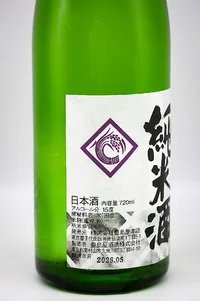
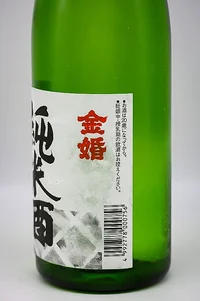
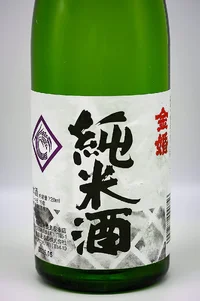
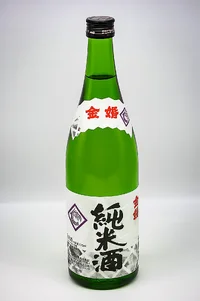
Sake specs
- Prefecture
- Tōkyō (東京)
- Rice type
- Koshiibuki (こしいぶき)
- Polishing rate (semaibuai)
- 65%
- Alcohol content
- 15-16%
- SMV
- +1.0
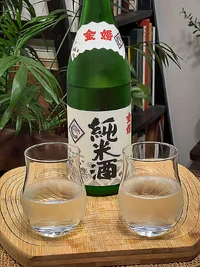
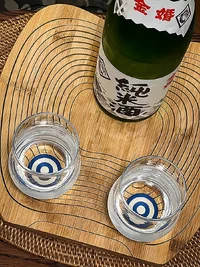
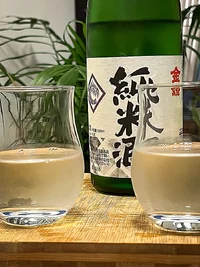
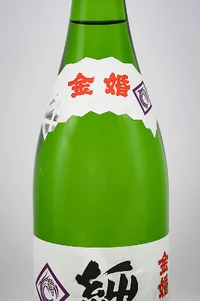
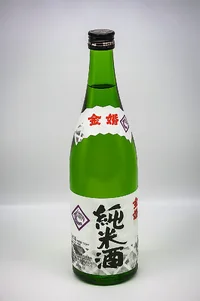
Toshimaya Kinkon Junmai (金婚 純米酒) is the standard junmai sake in Toshimaya Shuzō's flagship Kinkon range, one of Tokyo's oldest sake breweries. It is widely served as a celebratory sake and is also supplied as omiki (御神酒, sacred sake) to both Meiji Jingū and Kanda Myōjin .
Brewed from Koshiibuki (こしいぶき) rice polished to 65%, it is made to bring out the rice's natural flavour and richness while maintaining a clean, straightforward style. The brewery describes it as having a fresh aroma, balanced rice character and a crisp finish, making it well-suited to accompany a wide variety of Japanese cuisine.
Kinkon Junmai can be enjoyed in several ways, including over ice, chilled, at room temperature, gently warmed (nurukan), or hot (atsukan), allowing different aspects of its character to be appreciated depending on the serving temperature.





About the brewery
- Brewery
- Toshimaya Shuzō
- Name in Japanese
- 豊島屋酒造
- Address
- 3-14-10 Kumegawa-chō, Higashimurayama-shi, Tōkyō 189-0003
- Phone
- 042-391-0601
- Website
東京都東村山市の酒蔵|豊島屋酒造|屋守や金婚などの日本酒を作っています。
東京都東村山市の酒蔵、豊島屋酒造の公式ホームページです。屋守や金婚などの日本酒を作っています。www.toshimayasyuzou.co.jp
- Online store
Toshimaya Shuzō (豊島屋酒造) is one of Tōkyō's oldest brewing companies, with origins dating back to Keichō 1 (慶長元年, 1596), when Toshimaya Jūemon (豊島屋十右衛門) opened a sake shop and tavern near the Kamakura riverbank in Edo. At the time, construction of Edo Castle was attracting large numbers of workers, merchants, and travellers, creating demand for food, drink, and lodging. The business prospered and gradually established itself as one of the leading sake merchants in the growing city.
The company is generally regarded as Tōkyō's oldest sake merchant. During the Edo period , it became particularly famous for its shirozake (白酒), a sweet rice-based alcoholic beverage traditionally consumed during the Girls' Festival (Hinamatsuri 雛祭り). Contemporary records describe long queues of customers gathering outside the shop to purchase it, and Toshimaya became a familiar name throughout Edo. Its prominence was such that the establishment was later depicted in the famous illustrated guidebook Edo Meisho Zue (江戸名所図会).
The roots of the modern brewery can be traced to this long history of mercantilism. While the original Toshimaya business operated in central Edo, the company expanded into sake production during the Meiji period . In the early Shōwa era, a dedicated brewery was established in Higashimurayama, in western Tōkyō, where brewing operations were consolidated. Toshimaya Shuzō subsequently became the brewing arm of the historic Toshimaya business, focusing exclusively on sake production.
Brewing at the present Higashimurayama site began in 1935. The location was selected in part for its access to abundant, high-quality groundwater. Even today, the brewery relies on water drawn from deep underground aquifers associated with the ancient Chichibu geological formation, an important component of its brewing process.
Today, Toshimaya Shuzō remains one of the few sake breweries operating within metropolitan Tōkyō. Its flagship brand, Kinkon (金婚), has been associated with the company for generations and remains one of the brewery's most recognisable labels. In more recent decades, Toshimaya has also gained a strong following through Yamori (屋守), officially read Okunokami but widely known among sake enthusiasts as Yamori. The name is a play on the Japanese word for gecko, traditionally regarded as a protector of the home. It reflects the brewery's wish that the brand would support and protect both the brewery itself and the restaurants and retailers that serve it.
Alongside Yamori, Toshimaya has introduced several modern and experimental releases, including the colourful NEON series, which has helped attract younger consumers and collectors. These newer products sit alongside more traditional offerings, reflecting the brewery's willingness to innovate while remaining rooted in techniques and traditions developed over centuries.
More than four hundred years after its founding in Edo, Toshimaya Shuzō continues to bridge the gap between old and new. Its history as a merchant house, its role in Edo's drinking culture, and its position as one of the last active sake breweries within Tōkyō make it one of the capital's most distinctive and historically significant producers.
The company is generally regarded as Tōkyō's oldest sake merchant. During the Edo period , it became particularly famous for its shirozake (白酒), a sweet rice-based alcoholic beverage traditionally consumed during the Girls' Festival (Hinamatsuri 雛祭り). Contemporary records describe long queues of customers gathering outside the shop to purchase it, and Toshimaya became a familiar name throughout Edo. Its prominence was such that the establishment was later depicted in the famous illustrated guidebook Edo Meisho Zue (江戸名所図会).
The roots of the modern brewery can be traced to this long history of mercantilism. While the original Toshimaya business operated in central Edo, the company expanded into sake production during the Meiji period . In the early Shōwa era, a dedicated brewery was established in Higashimurayama, in western Tōkyō, where brewing operations were consolidated. Toshimaya Shuzō subsequently became the brewing arm of the historic Toshimaya business, focusing exclusively on sake production.
Brewing at the present Higashimurayama site began in 1935. The location was selected in part for its access to abundant, high-quality groundwater. Even today, the brewery relies on water drawn from deep underground aquifers associated with the ancient Chichibu geological formation, an important component of its brewing process.
Today, Toshimaya Shuzō remains one of the few sake breweries operating within metropolitan Tōkyō. Its flagship brand, Kinkon (金婚), has been associated with the company for generations and remains one of the brewery's most recognisable labels. In more recent decades, Toshimaya has also gained a strong following through Yamori (屋守), officially read Okunokami but widely known among sake enthusiasts as Yamori. The name is a play on the Japanese word for gecko, traditionally regarded as a protector of the home. It reflects the brewery's wish that the brand would support and protect both the brewery itself and the restaurants and retailers that serve it.
Alongside Yamori, Toshimaya has introduced several modern and experimental releases, including the colourful NEON series, which has helped attract younger consumers and collectors. These newer products sit alongside more traditional offerings, reflecting the brewery's willingness to innovate while remaining rooted in techniques and traditions developed over centuries.
More than four hundred years after its founding in Edo, Toshimaya Shuzō continues to bridge the gap between old and new. Its history as a merchant house, its role in Edo's drinking culture, and its position as one of the last active sake breweries within Tōkyō make it one of the capital's most distinctive and historically significant producers.