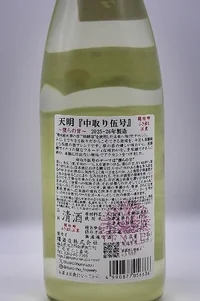
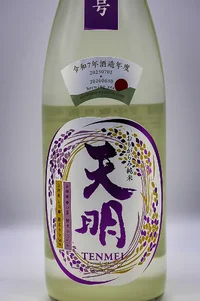
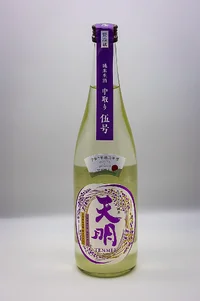
Sake specs
- Prefecture
- Fukushima (福島)
- Rice type
- Yume no Kaori (夢の香)
- Polishing rate (semaibuai)
- 50%
- Alcohol content
- 16%
- SMV
- -5.0
- Acidity
- 1.6
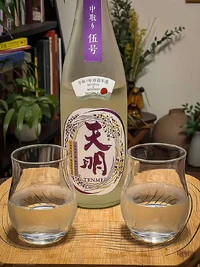
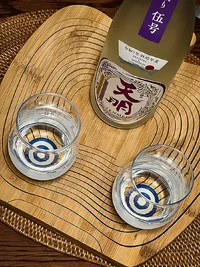
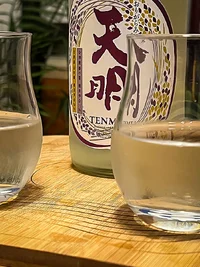
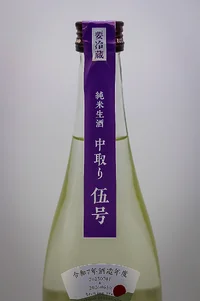
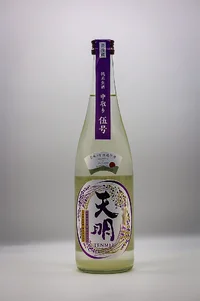
Tenmei Nakadori No. 5 Origarami Junmai Nama (Yamadanishiki × Yume no Kaori) (天明 中取り伍号 山田錦×夢の香 おりがらみ純米 生酒) is the final release in Tenmei's seasonal Nakatori series. This year's No. 5 is an origarami (lightly cloudy) junmai nama sake made from a blend of Yamadanishiki (milled to 50%) and Yumenokaori rice (milled to 65%), both grown in Aizu-Bange, with an 83% Yumenokaori and 16% Yamadanishiki ratio. The brewery frames the concept as "our kind of sweetness". The sake opens with a soft, strawberry-like aroma, followed by gentle rice umami from the lees. Acidity derived from a kimoto-style component provides structure and keeps the profile in balance. The overall impression is slightly sweet, yet clean and light on the finish. The texture is smooth and rounded, while the flavour retains clear definition. It presents sweetness without cloying.
When well chilled, the sake shows a fresh aroma and a crisp texture. As the temperature rises slightly, the umami becomes more pronounced, and the flavour gains depth. It pairs well with spring dishes such as whitebait tempura, rape blossom with vinegared miso, and firefly squid, as well as steamed clams with spring cabbage. Its balance of sweetness, umami, and acidity complements light, slightly bitter seasonal ingredients. This is a limited spring release with a well-judged balance and strong food compatibility. It suits both those who follow the Nakatori series and those seeking a clear introduction to Tenmei's style.




About the brewery
- Brewery
- Akebono Shuzō
- Name in Japanese
- 曙酒造
- Address
- Inui 2, Aizubange, Kawanuma-gun, Fukushima 969-6537
- Phone
- 0242-83-2065
- Website

Akebono Sake Brewery (曙酒造株式会社), based in Aizubange-machi, Fukushima Prefecture, and founded in 1904, began as Daikokuya Sake Shop (大黒屋酒造店) in the early Meiji era , deriving its name from "akebono," which evokes the first light of dawn. For decades, its brewing relied on the traditional Nanbu tōji (南部杜氏) master brewers. Following changes in the industry and the unexpected death of a predecessor around 1992, the Suzuki family—sixth-generation owner Takayoshi Suzuki and his wife, Akemi—decided to abolish the tōji system entirely and take complete control of production, working alongside local brewery staff and their families.
Determined to start anew, they spent three years attending the Fukushima Prefectural Sake Academy. They worked at breweries across Niigata and Yamagata, immersing themselves deeply in the craft of sake. Their graduation song was named Isshō Seishun ("Forever Youth"), symbolising their enduring entrepreneurial spirit. This brand has earned three consecutive gold awards at national sake competitions since 1998.
In 2001, they launched Tenmei, meaning "dawn"—a nod to both their company name and a new era of brewing focused on quality and individuality. Amid setbacks from the Great East Japan Earthquake, they reinvested in their facilities, appointed their son as the new tōji, and introduced innovative products, such as Snowdrop, a sake–yoghurt liqueur designed to appeal to non-traditional sake drinkers.
Akebono maintains several core brands, including Ishshō Seishun, Tenmei, and Karōsan, and continues to emphasise sensitivity to the seasonal climate and rice characteristics unique to the Aizu region. They've also created commemorative blends, such as Kizuna Musubu (2017) and Kizunamai (2018), using rice from all 47 prefectures to support regional recovery after the earthquake. Both blends won prestigious awards at regional sake evaluations.
In summary, Akebono Sake Brewery is a century-old, family-run estate that has transformed itself by discarding traditional tōji dependence, immersing itself in craft schooling, and pioneering both classic and modern sake to honour local heritage while embracing innovation, earning acclaim at national competitions and fostering an inclusive appeal across generations.
Determined to start anew, they spent three years attending the Fukushima Prefectural Sake Academy. They worked at breweries across Niigata and Yamagata, immersing themselves deeply in the craft of sake. Their graduation song was named Isshō Seishun ("Forever Youth"), symbolising their enduring entrepreneurial spirit. This brand has earned three consecutive gold awards at national sake competitions since 1998.
In 2001, they launched Tenmei, meaning "dawn"—a nod to both their company name and a new era of brewing focused on quality and individuality. Amid setbacks from the Great East Japan Earthquake, they reinvested in their facilities, appointed their son as the new tōji, and introduced innovative products, such as Snowdrop, a sake–yoghurt liqueur designed to appeal to non-traditional sake drinkers.
Akebono maintains several core brands, including Ishshō Seishun, Tenmei, and Karōsan, and continues to emphasise sensitivity to the seasonal climate and rice characteristics unique to the Aizu region. They've also created commemorative blends, such as Kizuna Musubu (2017) and Kizunamai (2018), using rice from all 47 prefectures to support regional recovery after the earthquake. Both blends won prestigious awards at regional sake evaluations.
In summary, Akebono Sake Brewery is a century-old, family-run estate that has transformed itself by discarding traditional tōji dependence, immersing itself in craft schooling, and pioneering both classic and modern sake to honour local heritage while embracing innovation, earning acclaim at national competitions and fostering an inclusive appeal across generations.