How to determine when to use "noun の" instead of an adjective?

healer

Sempai
Joined
13 May 2019
Messages
687
Reaction score
10
The examples in the groups below seem to mean the same thing. So how to choose what to use?
Where there is an adjective of the same word, why don't we use it?
In terms of の, lots of names or proper nouns omit it and simply concatenate the nouns together or adjective and noun together. I suppose these are a different kettle of fish. And we just have to memorize them for they need to be the shortest.

白の長袖シャツ
白い長袖シャツ
白長袖シャツ

In English "many or much of something" refers to not all of something.
Example: Many of the beggars were blind. Many were unable to attend.
Has the Japanese version got the same connotation.
多くの人
多い人
大勢の人

I also remember some な-adjectives have the same situation. The な-adjectives are often nouns as well. Instead of saying な-adjectives + noun, it says "noun の noun". If I replace "noun の" with its adjective version, I was told it's not acceptable. I forget the example that I could quote for reference though.
 
The examples in the groups below seem to mean the same thing. So how to choose what to use?
Where there is an adjective of the same word, why don't we use it?

白の長袖シャツ
白い長袖シャツ
白長袖シャツ
白い長袖シャツ is just "white long sleeve shirt".
白長袖シャツ is understandable, but uncommon.
白の長袖シャツ can have different meaning. Refer to the following thread.

You can think it's better to use 白い simply for "the color is white" in most cases.

In terms of の, lots of names or proper nouns omit it and simply concatenate the nouns together or adjective and noun together. I suppose these are a different kettle of fish.
For instance, 松本の城(まつもとのしろ) refers to a castle/castles in a city Matsumoto, whereas 松本城(まつもとじょう) is the name of a specific castle "Matsumoto Castle ".

In English "many or much of something" refers to not all of something.
Example: Many of the beggars were blind. Many were unable to attend.
Has the Japanese version got the same connotation.
多くの人
多い人
大勢の人
多くの人 can mean both "many of the people (not all the people)" and "many people", whereas 大勢の人 only means "many people".
多い人 is used only when what is many/much is stated.
e.g.
友達が/の多い人
one(s) who has/have many friends
独り言が/の多い人
one(s) who often talks/talk to themselves

As you can see, 人 can be singular in this case, and it doesn't mean either "many of people" or "many people".

I also remember some な-adjectives have the same situation. The な-adjectives are often nouns as well. Instead of saying な-adjectives + noun, it says "noun の noun". If I replace "noun の" with its adjective version, I was told it's not acceptable. I forget the example that I could quote for reference though.
Refer to the following threads.
 
Na-adjectives usually can't be used as nouns.
I'm not sure what that means. A lot if not most of the na-adjectives are classified as nouns as well in the dictionary I used, just like the example of 健康 you gave. I have always expected the word before の should be a noun so I can appreciate the difference between "自由な女神 vs. 自由の女神"

The no-adjectives we are talking about here(e.g. 大荒れ, 上々, がらあき)
Incidentally all three example words quoted above are categorized as nouns and na-adjectives in the dictionary. So I don't understand why can't they take が or を.

They also can't take な when modifying nouns, so it's not a na-adjective.
If they are also na-adjectives, why can't they modify nouns directly?

黒髪[くろかみ]; "black hair", 黒猫[くろねこ]; "black cat".
Should we say the hair of Japanese and Chinese is 黒髪 or 黒い髪 or 黒の髪? I would say 黒い髪. What could be the diffence? Having read all the suggested posts I'm still not quite sure. I do appreciate some of them like "自由な女神 vs. 自由の女神" and 黒い砂糖 vs 黒砂糖. However I still can't figure out 黒髪 or 黒い髪 or 黒の髪 and 黒猫 or 黒い猫 or 黒の猫 and 青の祓魔師 . Perhaps those with の, the word before it has a figurative meaning but I can't work out what figurative meaning they could have.
 
I'm not sure what that means. A lot if not most of the na-adjectives are classified as nouns as well in the dictionary I used, just like the example of 健康 you gave.
Simply because those words belong to the group 2 "overlapping of noun and na-adjective".

Incidentally all three example words quoted above are categorized as nouns and na-adjectives in the dictionary.
Simply because there is no other way to write that. As I wrote, "no-adjective" is not officially accepted. Dictionaries are not grammar books in the first place. There would be no intention (and space) to write those grammatical issues in detail, I think.

I often recommend 新明解国語辞典 in this forum since this dictionary has very detailed explanations about grammar including the usages of verbs/adjectives, for instance which particle should be used for people, things, locations, etc. (well, the explanations are written all in Japanese, so it's basically for intermediate or advanced learners, though.)
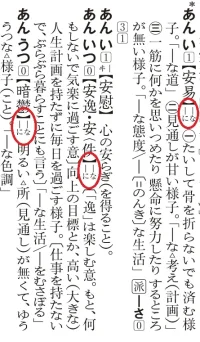
However, this dictionary doesn't have a category "na-adjectives(形容動詞)", and all stems of na-adjectves are classified into nouns. Instead, な is added under the word when this suffix is used for the attributive form. Similarly, に is added when it has the adverbial form.
na-adjective.jpg
This is from a theory that all the stems of na-adjectives should be treated as nouns. Some linguists think the only difference between stems of na-adjective and nouns is that the suffix (or particle in a theory) な is used for the attributive form. I don't agree with this theory since stems of some na-adjectives can't work as a noun, as I wrote in another thread. However, it's practical in a sense to think that the point is what suffix/particle should be used for the attributive form of the word whether it's the stem of a na-adjective or a noun.

There are many dictionaries available. You can choose which one is better for you, continuing using not-so-useful free on-line dictionaries and being frastrated with them or paying for a useful dictionary suitable for you and being satisfied with it (or, checking many free on-line dictionaries and/or googling example sentences to confirm what the most standard usage is until being satisfied with the search results).

So I don't understand why can't they take が or を.
Simply, that's a fact. You can't find any examples where those words are used as a noun.

If they are also na-adjectives, why can't they modify nouns directly?
They are not na-adjectives, as I wrote in the thread. Check your dictionaries. Are there any example sentences that contain 大荒れな, 上々な or がらあきな?
What do you mean by "directly"? You mean without な, by any chance?

Should we say the hair of Japanese and Chinese is 黒髪 or 黒い髪 or 黒の髪? I would say 黒い髪.
黒髪 is also common. No problem with 黒い髪, of course.

What could be the diffence? Having read all the suggested posts I'm still not quite sure.
No difference. 黒髪 is one of the examples that simply the color is black without any special meanings as well as 黒猫, 黒雲, 白シャツ, 白犬, etc. You need to remember the meaning of 黒砂糖 (completely different from 黒い砂糖) and 黒猫( the same as 黒い猫) as vocabulary learning.

However I still can't figure out 黒髪 or 黒い髪 or 黒の髪 and 黒猫 or 黒い猫 or 黒の猫 and 青の祓魔師 . Perhaps those with の, the word before it has a figurative meaning but I can't work out what figurative meaning they could have.
I already explained about 青の祓魔師 in the thread. Notice that only the readers of the manga can know the figurative meaning of 青, which the writer implies in the title. People in general don't know the connotation unless reading it (but we can feel that 青 must have a special meaning in the title, not simply "the color is blue", because of の).
 
Here's a classification system of nouns and adjectives propounded by a linguist 村木新次郎.
Knowing the classification is one thing, being able to use the words effectively and correctly is more important to me.

Overlapping I think you mean the word has a dual role of being a noun as well as an adjective, but what is partial overlapping on group 7 and group 8? Could I have some examples please? Thanks!

What is group 5? Is it a na-adjective which is also a noun used to modify another noun with the particle の?
What is the difference between group 4 and group 5?

This is from a theory that all the stems of na-adjectives should be treated as nouns.
I had supposed the nouns exist before na-adjectives. That is na-adjectives were created from nouns.

Simply, that's a fact. You can't find any examples where those words are used as a noun.
I shall try to remember them as exceptions in order to justify the rules I have learnt so far.

What do you mean by "directly"? You mean without な, by any chance?
Yes, that was what I meant. I think linguist calls them attributives.

黒髪 is also common. No problem with 黒い髪, of course.
Then which one is most common? 黒の髪?

黒砂糖 (completely different from 黒い砂糖)
It seems to me not every adjective+noun without the の or い in between has a non-literal meaning, such as 黒猫( the same as 黒い猫) as you provided.

白の長袖シャツ can have different meaning.
By the same token, is it possible "noun/adjective+の noun" has no non-literal meaning since you say "CAN HAVE"? In other words, it simply means nothing else but white long-sleeved shirt in the example quoted.
 
(Note: I used the term "adnominal form" in the table in another thread. This is another English translation of 連体形, i.e., it's the same as attributive form. I changed it to attributive form in the table, to avoid being confused.)

what is partial overlapping on group 7 and group 8? Could I have some examples please?
As you can see "+" and "-" in the table, adjectives in group 7 have two attributive and predicative forms, the ones as a na-adjective and an i-adjective.
e.g.
暖かな部屋 暖かい部屋
この部屋は暖かだ。 この部屋は暖かい。

Similarly, group 8 have two attributive forms.
e.g.
大きなリンゴ 大きいリンゴ

The adverbial from is ―く(暖かく, 大きく), not ―に(暖かに, 大きに), so the base of these words can be considered i-adjective, but partially (only attributive and predicative forms or only attributive forms) overlapping with na-adjectives.

Incidentally, 大きな, 小さな and おかしな are often classified into attributive(連体詞: non-inflected adjective), i.e., not a conjugation form of each i-adjective for convenience sake.

What is group 5? Is it a na-adjective which is also a noun used to modify another noun with the particle の?
Group 5 are not nouns. We can't make a natural sentence using them with が or を.
The attributive form ―の exists other than ―な in this group.
e.g.
わずかの違い わずかな違い

What is the difference between group 4 and group 5?
Group 4 don't have ―な attributive form, unlike group 5.

I already explained about these differences in the post I linked above, by the way.

I shall try to remember them as exceptions in order to justify the rules I have learnt so far.
Here's a list of na-adjectives used in JLPT, i.e., relatively common ones.


In the na-adjectives for N5 and N4 (except loan words), the ones that can be used also as a noun are 34, the ones that can't are 73. Which should be treated as "exceptions"? Or, the concept/classification "exceptions" is reasonable in the first place?
(You can check the ones in N3~N1 by yourself. Notice that just "a dictionary says it's a noun" is not enough, as you can see so far. You need to check example sentences in several dictionaries where the word is really used as a noun. I checked a corpus to confirm my impression whether it can be used as a noun or not in N5 and N4.)

Yes, that was what I meant.
The attributive form(連体形) is used when a na-adjective modifies a noun. The stem can't modify a noun directly. That's more likely a usage as a noun.
e.g.
〇自由な落下
〇自由落下
〇静かな落下
×静か落下

〇親切な心
〇親切心
〇穏やかな心
×穏やか心

I think linguist calls them attributives.
The attributive form is different from a part of speech "attributive (連体詞)", as I mentioned above regarding 大きな, 小さな or おかしな.

Then which one is most common? 黒の髪?
黒髪 and 黒い髪 are equally common. 黒の髪 is uncommon.

It seems to me not every adjective+noun without the の or い in between has a non-literal meaning, such as 黒猫( the same as 黒い猫) as you provided.
That's exactly what I meant.

By the same token, is it possible "noun/adjective+の noun" has no non-literal meaning since you say "CAN HAVE"? In other words, it simply means nothing else but white long-sleeved shirt in the example quoted.
Right. That's why I used "can". Unlike 黒の髪, 白のシャツ usually simply refers to "white shirt".

Knowing the classification is one thing, being able to use the words effectively and correctly is more important to me.
As I already wrote in my initial reply, when you make a Japanese sentence, it's safe to use the attributive form of adjectives (黒い髪, 白いシャツ) even if 黒髪 or 白のシャツ has the same meaning.

When you come across words such like 黒砂糖, 白魔術 or 赤紙, where it doesn't simply refer to the color of it, the context would help you. You remember "かぜ(wind) vs. かぜ(a cold: illness)" case you asked before? You don't need to worry too much about these words. You must feel that these words are somehow strange in the context, and would think that 赤紙 might not mean just "a paper whose color is red".
 
As you can see "+" and "-" in the table, adjectives in group 7 have two attributive and predicative forms,
I wan't sure what those + or - meant at first glance.
I do have problems with those adjectives which are na-adjectives as well i-adjectives. I have looked up for examples the following on the Internet. Some say one refers to the attribute of physicality and the other abstractness. However I have never got a conclusive answer because discussions from various sites are contradictory.
大きな 大きい
小さな 小さい
暖かな 暖かい

Group 5 are not nouns.
Incidentally all the given examples are classified as na-adjectives and nouns in dictionary.

わずか Na-adjective, Adverb, Noun

おだやか Na-adjective, Noun

特別 Na-adjective, No-adjective, Adverb, Noun

さまざま Na-adjective, Noun

We can't make a natural sentence using them with が or を.
I would taken them as exceptions to the norms. Is it appropriate?

The attributive form ―の exists other than ―な in this group.
Do you mean as an attributive these adjectives will ALWAYS take a の instead of a な?
For some reasons only 特別 out of the examples is set out as No-adjective as well. And it also happens that this seems to be the only one more Chinese originated.

Group 4 don't have ―な attributive form,
Incidentally all the given examples are classified as na-adjectives and nouns in dictionary.

大荒れ Na-adjective, Noun

上々 No-adjective, Na-adjective, Noun

がらあき Noun, Na-adjective

The no-adjectives we are talking about here(e.g. 大荒れ, 上々, がらあき) have completely different characteristics from 静か, 健康 or 自由. They can't take が or を, so it's not a noun. They also can't take な when modifying nouns, so it's not a na-adjective. They basically act as an adjective, but take の when modifying nouns.
Are you saying in spite of what the dictionaries classify them as all these don't behave like na-adjectives or nouns? I wonder why the dictionaries would have to classify them as such. Isn't it confusing and unhelpful?

The attributive form(連体形) is used when a na-adjective modifies a noun. The stem can't modify a noun directly.
I can understand 自由 and 親切 which are classified as na-adjectives as well as nouns whereas 静か is a na-adjective only. However 穏やか is classified as both na-adjectives as well as nouns. See 穏やか - Jisho.org.
 
I do have problems with those adjectives which are na-adjectives as well i-adjectives. I have looked up for examples the following on the Internet. Some say one refers to the attribute of physicality and the other abstractness. However I have never got a conclusive answer because discussions from various sites are contradictory.
Indeed there is a tendency that 大きな is relatively often used with abstractness, and 大きい is with physicality, but it's not so strictly distinguished. You just need to pay attention to some set phrases such like 大きなお世話だ, 大きな顔をする or 大きな口をたたく, where 大きい sounds awkward. Roughly speaking, 大きな/小さな can be used as an attributive (= when modifying a noun) in almost all cases.

Incidentally all the given examples are classified as na-adjectives and nouns in dictionary.
As I already pointed out and explained in this post, the definitions in dictionaries are useless for this matter.

I would taken them as exceptions to the norms. Is it appropriate?
The most common definition of nouns is whether we can make a natural sentence using the word with が or を. Thus, if a word can't be used with が or を, it shouldn't be classified into nouns.

Do you mean as an attributive these adjectives will ALWAYS take a の instead of a な?
If you mean whether な and の are interchangeable, yes. There might be some cases that one is more common/natural than the other, though.

For some reasons only 特別 out of the examples is set out as No-adjective as well. And it also happens that this seems to be the only one more Chinese originated.
Other examples of this group; 遺憾, 一律, 格段, 肝心, 自在, etc., etc.. Is there a reason you mentioned "Chinese origin"?

Incidentally all the given examples are classified as na-adjectives and nouns in dictionary.
Again and again, the definitions in dictionaries are useless for this matter. You can't find ANY examples that those words are used as a noun (i.e., a natural sentence that contains for instance 大荒れが or 大荒れを).

Are you saying in spite of what the dictionaries classify them as all these don't behave like na-adjectives or nouns? I wonder why the dictionaries would have to classify them as such. Isn't it confusing and unhelpful?
Exactly. It's useless, as I wrote above. Native speakers naturally feel that a word can or cannot be used with の, が or を unconsciously whether it's called a noun, na-adjective or no-adjective in dictionaries. Some non-native learners realize the problem in the definition, as several members asked about it even just in this forum so far like you. Linguists know the problem, of course. In fact, what we are talking about here is a highly linguistic issue. That's another reason general standard dictionaries are useless in this case.

I can understand 自由 and 親切 which are classified as na-adjectives as well as nouns whereas 静か is a na-adjective only. However 穏やか is classified as both na-adjectives as well as nouns. See 穏やか - Jisho.org.
Again and again and again, the definitions in dictionaries are useless for this matter. You don't need to post the links to dictionaries anymore since they can't be an evidence.

静か and 穏やか are not nouns. Hope you understand the reason from my explanations so far.
 
わずか- 特別- さまざま-
Is there a reason you mentioned "Chinese origin"?
I was trying to figure out why 特別 was indicated as の-adjective as well in the dictionary I used while the other two were not. So I was wondering whether it was because the word consists of kanji and read with 音読み.

Again and again and again, the definitions in dictionaries are useless for this matter.
Do you think those Japanese to Japanese dictionaries you recommended before would do a better job in this regard? I shall certainly consider having one of them when my language ability is good enough.
 
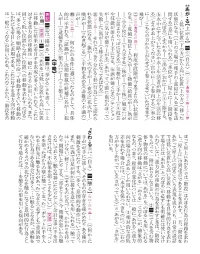
As for the "noun vs. adjective" issue, even 新明解国語辞典 might not be so useful, unfortunately. As you can see in the excerpt I pasted in this post, you can judge that 安逸 can work as a noun in the example phrase 安逸むさぼる, or at the end of 安易, "派―さ"(=派生語 derivative 安易さ) suggests that the noun form is 安易さ, and therefore 安易 can't used as a noun, but these examples are not given to all the words.

This dictionary has detailed explanations about what particle should be used for what target (people, things, locations, etc.), so I think it would be worth to purchase even for this purpose. (You need to read explanations in Japanese, though.)
Here's an example page. You can check before buying it.
shinmeikai2.webp
 
Back
Top Bottom