(Note: I used the term "adnominal form" in the table in another thread. This is another English translation of 連体形, i.e., it's the same as attributive form. I changed it to attributive form in the table, to avoid being confused.)
what is partial overlapping on group 7 and group 8? Could I have some examples please?
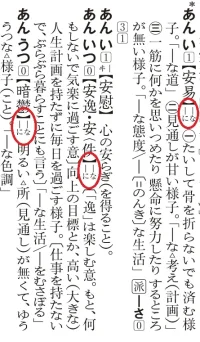
As you can see "+" and "-" in the table, adjectives in group 7 have two attributive and predicative forms, the ones as a na-adjective and an i-adjective.
e.g.
暖かな部屋 暖かい部屋
この部屋は暖かだ。 この部屋は暖かい。
Similarly, group 8 have two attributive forms.
e.g.
大きなリンゴ 大きいリンゴ
The adverbial from is ―く(暖かく, 大きく), not ―に(暖かに, 大きに), so the base of these words can be considered i-adjective, but partially (only attributive and predicative forms or only attributive forms) overlapping with na-adjectives.
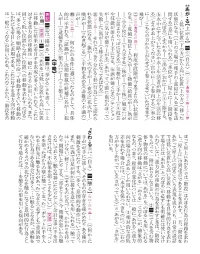
Incidentally, 大きな, 小さな and おかしな are often classified into attributive(連体詞: non-inflected adjective), i.e., not a conjugation form of each i-adjective for convenience sake.
What is group 5? Is it a na-adjective which is also a noun used to modify another noun with the particle の?
Group 5 are not nouns. We can't make a natural sentence using them with が or を.
The attributive form ―の exists other than ―な in this group.
e.g.
わずかの違い わずかな違い
What is the difference between group 4 and group 5?
Group 4 don't have ―な attributive form, unlike group 5.
I already explained about these differences in
the post I linked above, by the way.
I shall try to remember them as exceptions in order to justify the rules I have learnt so far.
Here's a list of na-adjectives used in JLPT, i.e., relatively common ones.

nihongonosensei.net
In the na-adjectives for N5 and N4 (except loan words), the ones that can be used also as a noun are 34, the ones that can't are 73. Which should be treated as "exceptions"? Or, the concept/classification "exceptions" is reasonable in the first place?
(You can check the ones in N3~N1 by yourself. Notice that just "a dictionary says it's a noun" is not enough, as you can see so far. You need to check example sentences in several dictionaries where the word is really used as a noun. I checked a corpus to confirm my impression whether it can be used as a noun or not in N5 and N4.)
Yes, that was what I meant.
The attributive form(連体形) is used when a na-adjective modifies a noun. The stem can't modify a noun directly. That's more likely a usage as a noun.
e.g.
〇自由な落下
〇自由落下
〇静かな落下
×静か落下
〇親切な心
〇親切心
〇穏やかな心
×穏やか心
I think linguist calls them attributives.
The attributive form is different from a part of speech "attributive (連体詞)", as I mentioned above regarding 大きな, 小さな or おかしな.
Then which one is most common? 黒の髪?
黒髪 and 黒い髪 are equally common. 黒の髪 is uncommon.
It seems to me not every adjective+noun without the の or い in between has a non-literal meaning, such as 黒猫( the same as 黒い猫) as you provided.
That's exactly what I meant.
By the same token, is it possible "noun/adjective+の noun" has no non-literal meaning since you say "CAN HAVE"? In other words, it simply means nothing else but white long-sleeved shirt in the example quoted.
Right. That's why I used "can". Unlike 黒の髪, 白のシャツ usually simply refers to "white shirt".
Knowing the classification is one thing, being able to use the words effectively and correctly is more important to me.
As I already wrote in my initial reply, when you make a Japanese sentence, it's safe to use the attributive form of adjectives (黒い髪, 白いシャツ) even if 黒髪 or 白のシャツ has the same meaning.
When you come across words such like 黒砂糖, 白魔術 or 赤紙, where it doesn't simply refer to the color of it, the context would help you. You remember "かぜ(wind) vs. かぜ(a cold: illness)" case you asked before? You don't need to worry too much about these words. You must feel that these words are somehow strange in the context, and would think that 赤紙 might not mean just "a paper whose color is red".